Department of Psychiatry and Neurochemistry, Institute of Neuroscience and Physiology, the Sahlgrenska Academy at the University of Gothenburg, Mölndal, Sweden.
King's College London, Institute of Psychiatry, Psychology and Neuroscience, Maurice Wohl Institute Clinical Neuroscience Institute, London, UK.
Nat Med. 2022 Dec;28(12):2555-2562. doi: 10.1038/s41591-022-02074-w. Epub 2022 Dec 1.
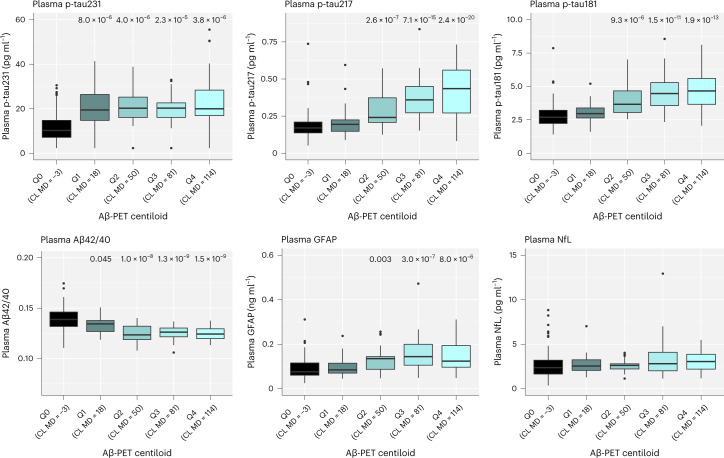
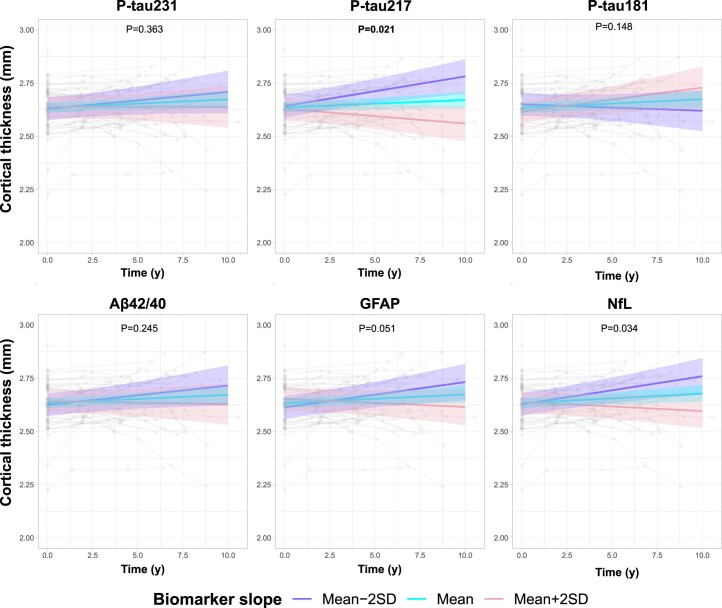
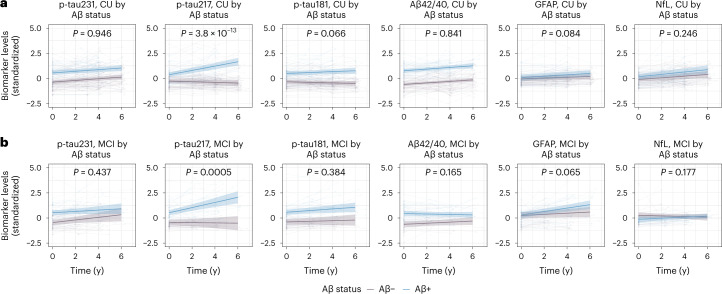
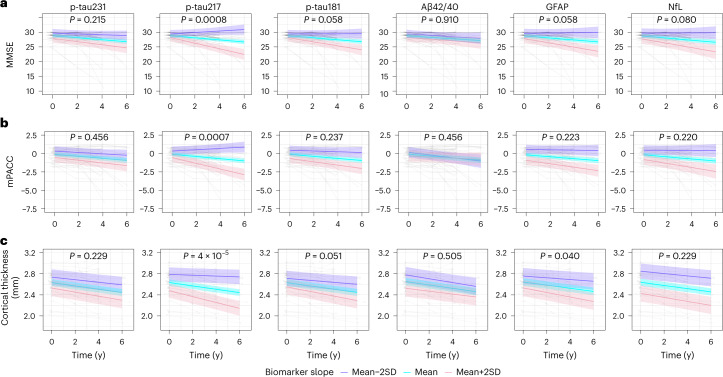
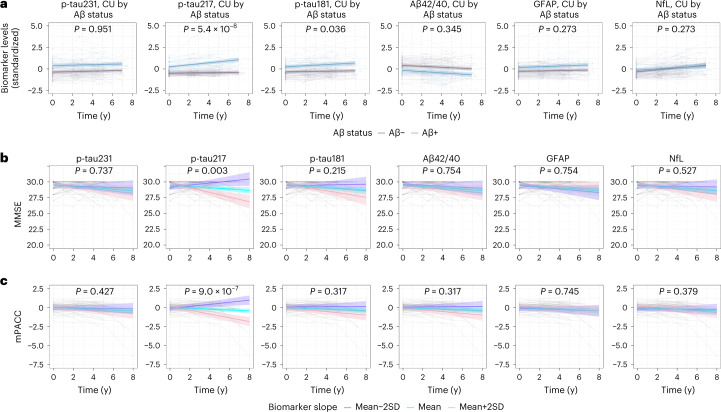
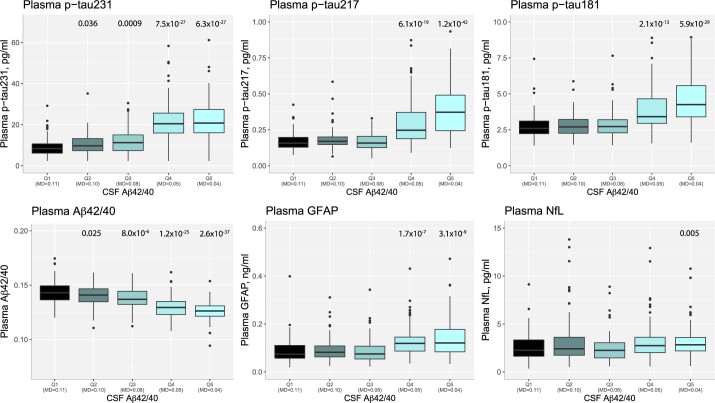
Blood biomarkers indicative of Alzheimer's disease (AD) pathology are altered in both preclinical and symptomatic stages of the disease. Distinctive biomarkers may be optimal for the identification of AD pathology or monitoring of disease progression. Blood biomarkers that correlate with changes in cognition and atrophy during the course of the disease could be used in clinical trials to identify successful interventions and thereby accelerate the development of efficient therapies. When disease-modifying treatments become approved for use, efficient blood-based biomarkers might also inform on treatment implementation and management in clinical practice. In the BioFINDER-1 cohort, plasma phosphorylated (p)-tau231 and amyloid-β42/40 ratio were more changed at lower thresholds of amyloid pathology. Longitudinally, however, only p-tau217 demonstrated marked amyloid-dependent changes over 4-6 years in both preclinical and symptomatic stages of the disease, with no such changes observed in p-tau231, p-tau181, amyloid-β42/40, glial acidic fibrillary protein or neurofilament light. Only longitudinal increases of p-tau217 were also associated with clinical deterioration and brain atrophy in preclinical AD. The selective longitudinal increase of p-tau217 and its associations with cognitive decline and atrophy was confirmed in an independent cohort (Wisconsin Registry for Alzheimer's Prevention). These findings support the differential association of plasma biomarkers with disease development and strongly highlight p-tau217 as a surrogate marker of disease progression in preclinical and prodromal AD, with impact for the development of new disease-modifying treatments.
血液生物标志物可指示阿尔茨海默病(AD)的病理学变化,这些标志物在疾病的临床前和症状期均发生改变。独特的生物标志物可能最适合用于鉴定 AD 病理学或监测疾病进展。与疾病进程中的认知和萎缩变化相关的血液生物标志物可用于临床试验,以鉴定有效的干预措施,从而加速有效的治疗方法的开发。当疾病修饰疗法获得批准使用时,有效的基于血液的生物标志物也可能为临床实践中的治疗实施和管理提供信息。在 BioFINDER-1 队列中,血浆磷酸化(p)-tau231 和淀粉样蛋白-β42/40 比值在淀粉样蛋白病理的较低阈值下变化更大。然而,纵向研究仅显示 p-tau217 在疾病的临床前和症状期的 4-6 年内表现出明显的淀粉样蛋白依赖性变化,而 p-tau231、p-tau181、淀粉样蛋白-β42/40、胶质酸性纤维蛋白或神经丝轻链则无此变化。仅 p-tau217 的纵向增加也与临床前 AD 中的临床恶化和脑萎缩相关。在一个独立的队列(威斯康星州阿尔茨海默病预防登记处)中证实了 p-tau217 的选择性纵向增加及其与认知能力下降和萎缩的关联。这些发现支持了血浆生物标志物与疾病发展的不同关联,并强烈强调了 p-tau217 作为临床前和前驱 AD 中疾病进展的替代标志物,对新的疾病修饰治疗的发展具有重要意义。