Department of Physics, Ningbo University, Ningbo 315211, China.
State Key Laboratory of Surface Physics and Department of Physics, Fudan University, Shanghai 200433, P. R. China.
J Chem Inf Model. 2023 Jan 9;63(1):308-320. doi: 10.1021/acs.jcim.2c01202. Epub 2022 Dec 1.
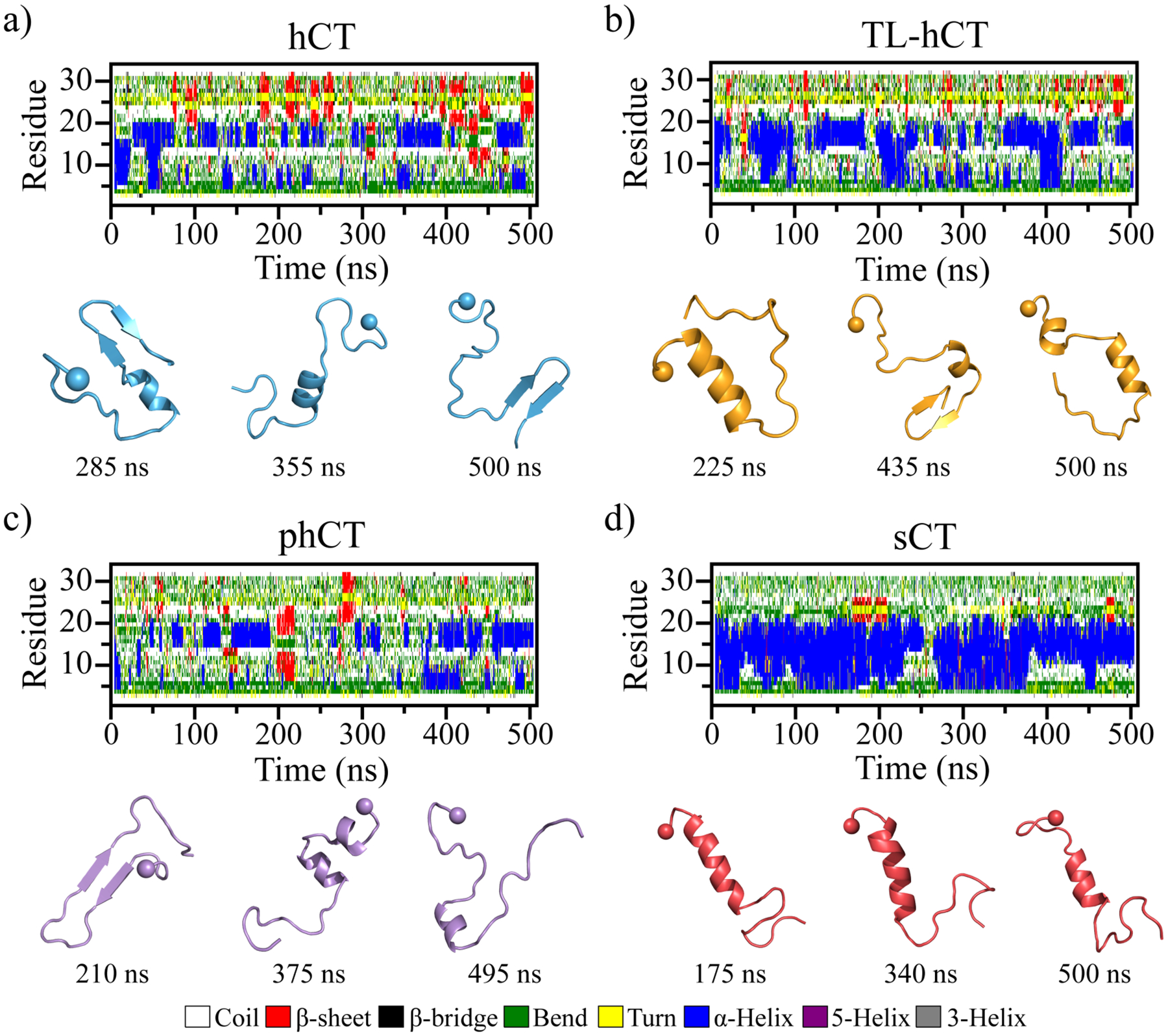
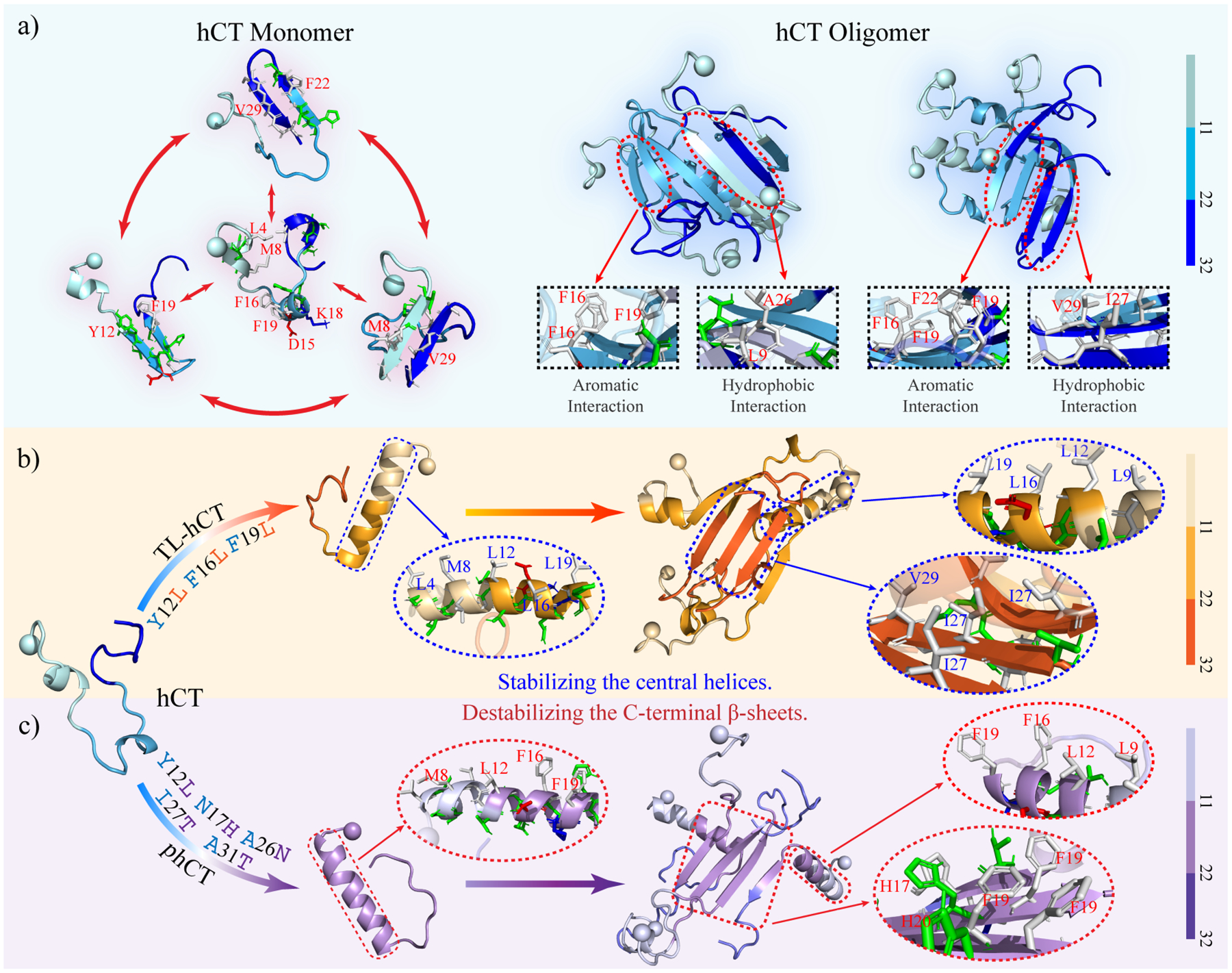
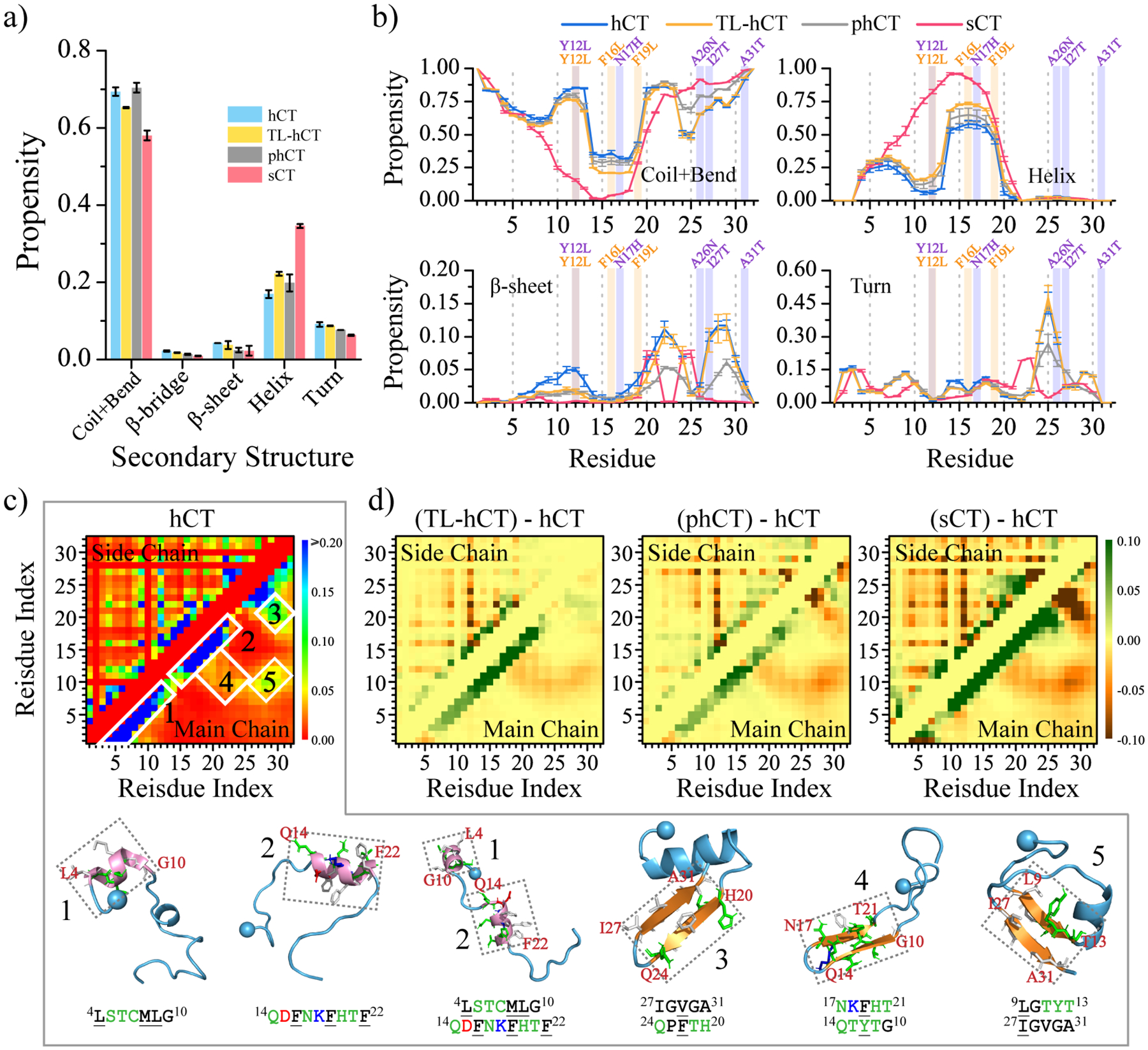
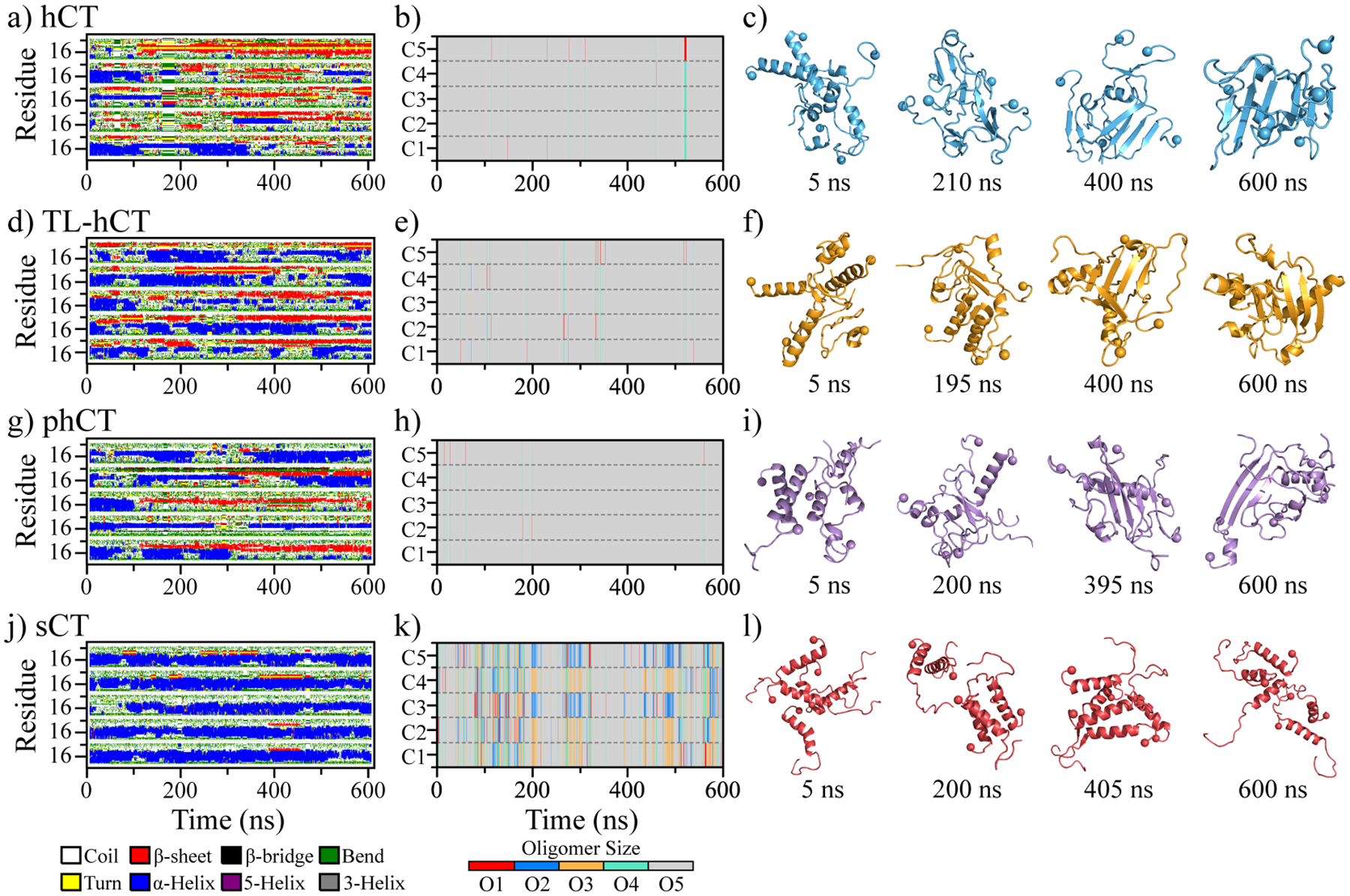
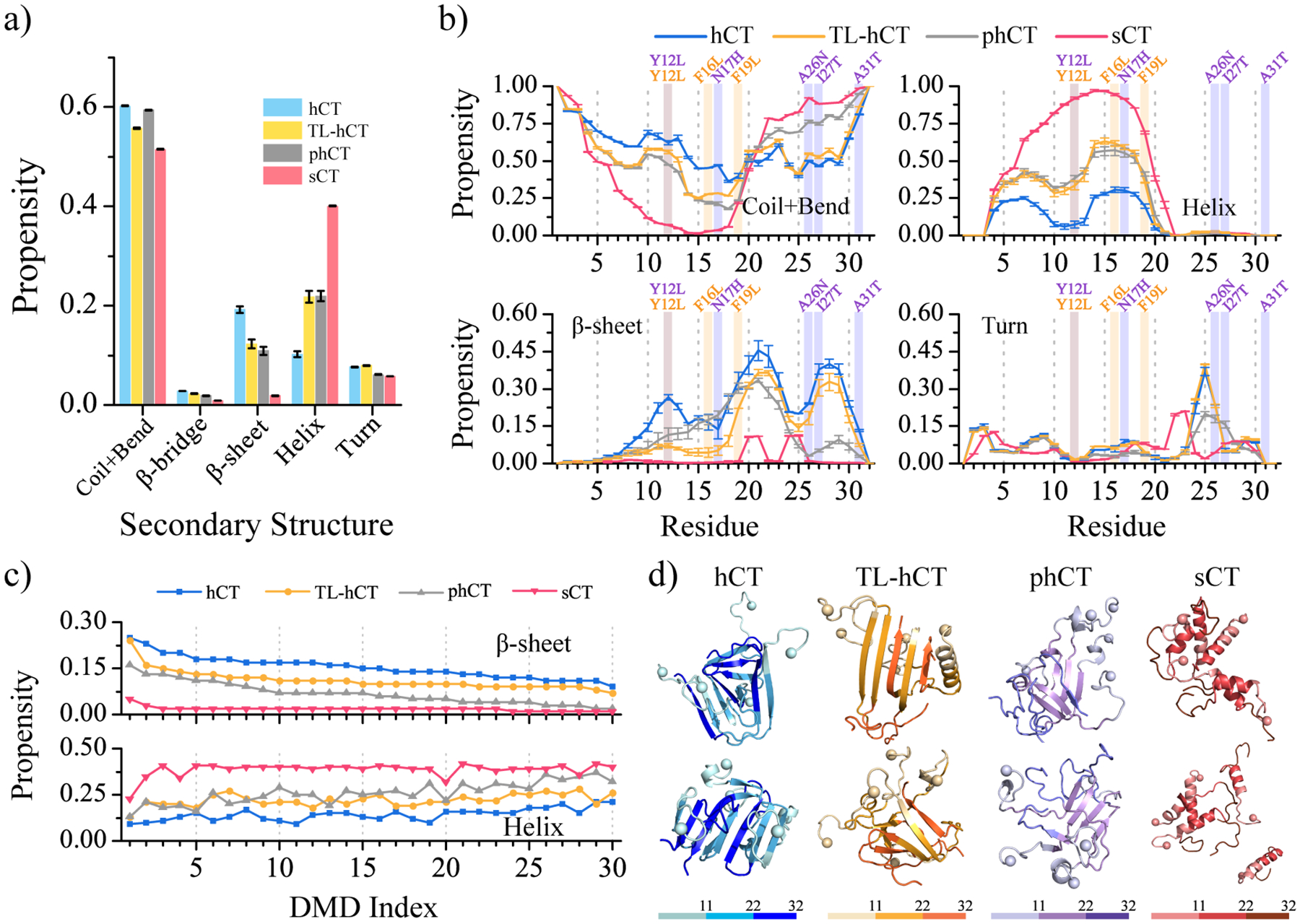
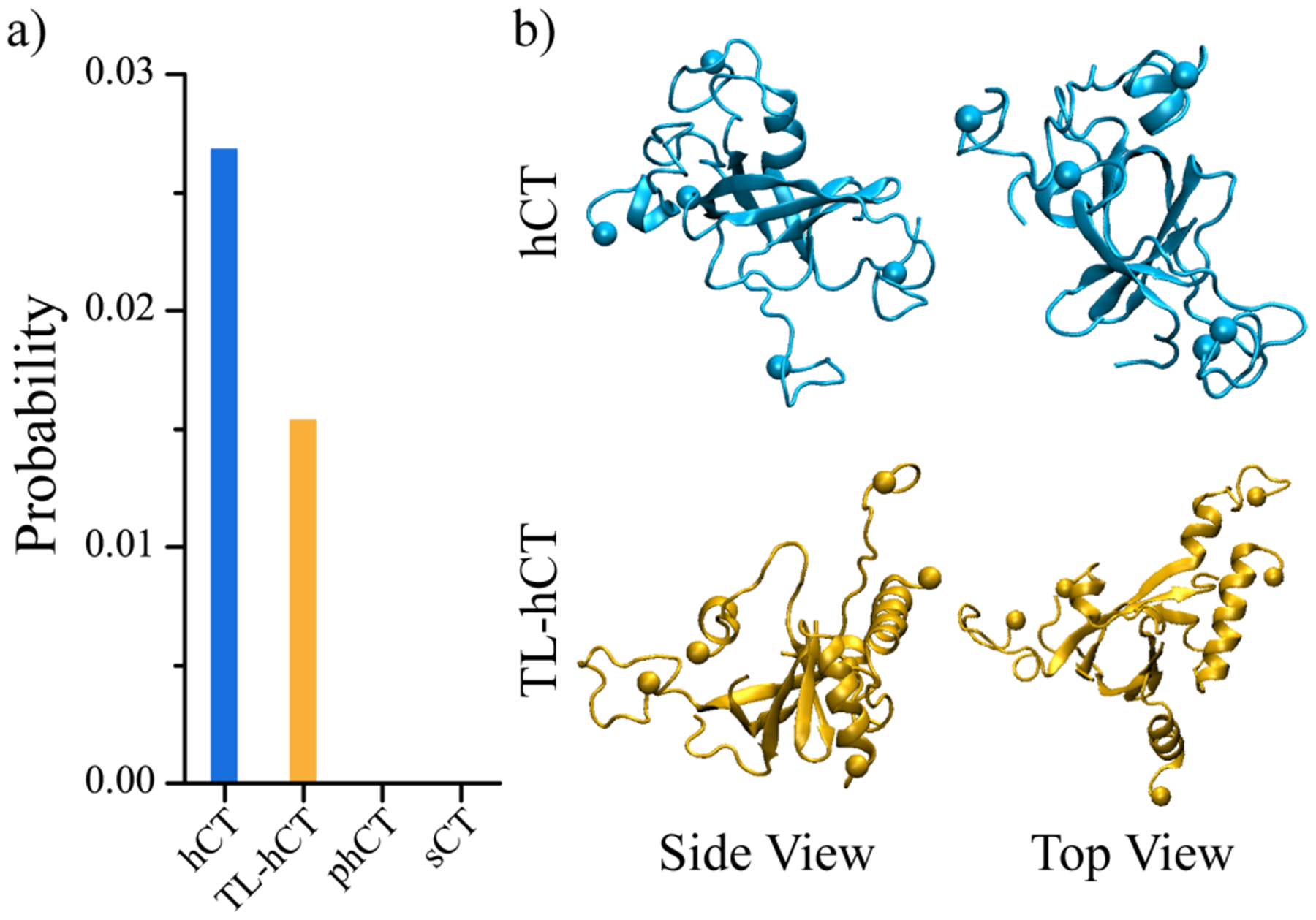
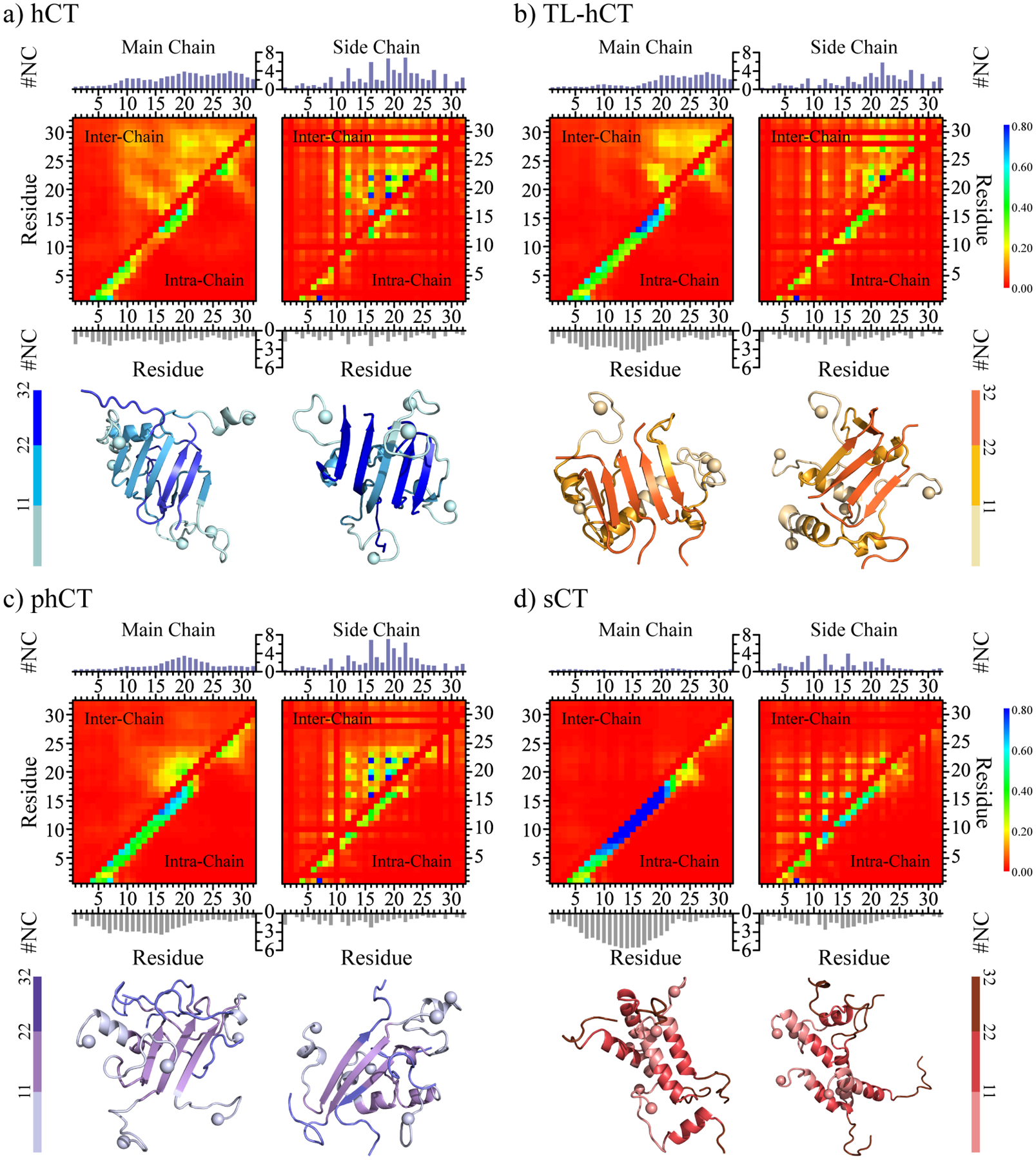
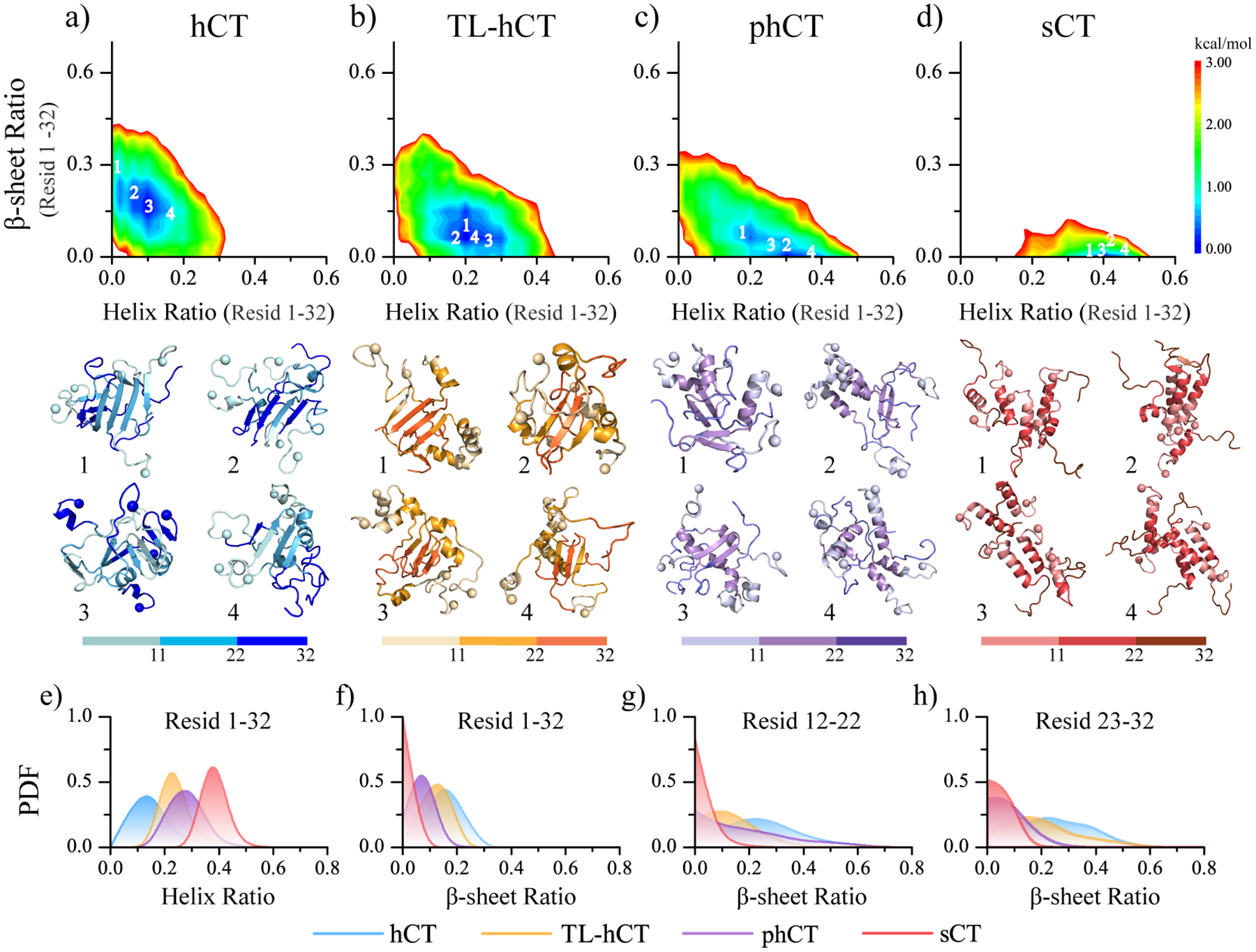
Human calcitonin (hCT) is a polypeptide hormone that participates in calcium-phosphorus metabolism. Irreversible aggregation of 32-amino acid hCT into β-sheet-rich amyloid fibrils impairs physiological activity and increases the risk of medullary carcinoma of the thyroid. Amyloid-resistant hCT derivatives substituting critical amyloidogenic residues are of particular interest for clinical applications as therapeutic drugs against bone-related diseases. Uncovering the aggregation mechanism of hCT at the molecular level, therefore, is important for the design of amyloid-resistant hCT analogues. Here, we investigated the aggregation dynamics of hCT, non-amyloidogenic salmon calcitonin (sCT), and two hCT analogues with reduced aggregation tendency─TL-hCT and phCT─using long timescale discrete molecular dynamics simulations. Our results showed that hCT monomers mainly adopted unstructured conformations with dynamically formed helices around the central region. hCT self-assembled into helix-rich oligomers first, followed by a conformational conversion into β-sheet-rich oligomers with β-sheets formed by residues 10-30 and stabilized by aromatic and hydrophobic interactions. Our simulations confirmed that TL-hCT and phCT oligomers featured more helices and fewer β-sheets than hCT. Substitution of central aromatic residues with leucine in TL-hCT and replacing C-terminal hydrophobic residue with hydrophilic amino acid in phCT only locally suppressed β-sheet propensities in the central region and C-terminus, respectively. Having mutations in both central and C-terminal regions, sCT monomers and dynamically formed oligomers predominantly adopted helices, confirming that both central aromatic and C-terminal hydrophobic residues played important roles in the fibrillization of hCT. We also observed the formation of β-barrel intermediates, postulated as the toxic oligomers in amyloidosis, for hCT but not for sCT. Our computational study depicts a complete picture of the aggregation dynamics of hCT and the effects of mutations. The design of next-generation amyloid-resistant hCT analogues should consider the impact on both amyloidogenic regions and also take into account the amplification of transient β-sheet population in monomers upon aggregation.
人降钙素(hCT)是一种参与钙磷代谢的多肽激素。32 个氨基酸的 hCT 不可逆地聚集形成富含β-折叠的淀粉样纤维,会损害生理活性并增加甲状腺髓样癌的风险。取代关键淀粉样形成残基的抗淀粉样 hCT 衍生物对于作为治疗骨相关疾病的治疗药物的临床应用具有特别的意义。因此,在分子水平上揭示 hCT 的聚集机制对于设计抗淀粉样 hCT 类似物很重要。在这里,我们使用长时间离散分子动力学模拟研究了 hCT、非淀粉样形成的鲑鱼降钙素(sCT)以及两种聚集倾向降低的 hCT 类似物 TL-hCT 和 phCT 的聚集动力学。我们的结果表明,hCT 单体主要采用无结构构象,在中心区域周围动态形成螺旋。hCT 首先自组装成富含螺旋的低聚物,然后通过构象转换形成富含β-折叠的低聚物,β-折叠由残基 10-30 形成,并由芳香族和疏水性相互作用稳定。我们的模拟证实,TL-hCT 和 phCT 低聚物比 hCT 具有更多的螺旋和更少的β-折叠。TL-hCT 中用亮氨酸取代中心芳香族残基,phCT 中用亲水氨基酸取代 C 末端疏水性残基,仅在局部抑制了中心区域和 C 末端的β-折叠倾向。具有中央和 C 末端两个区域突变的 sCT 单体和动态形成的低聚物主要采用螺旋,证实中央芳香族和 C 末端疏水性残基在 hCT 的纤维化中都起着重要作用。我们还观察到 hCT 形成β-桶中间体,而 sCT 则没有,这些中间体被推测为淀粉样变性中的毒性低聚物。我们的计算研究描绘了 hCT 聚集动力学和突变影响的完整图景。下一代抗淀粉样 hCT 类似物的设计应考虑到对淀粉样形成区域的影响,并且还应考虑到聚集时单体中瞬态β-折叠的放大。