Eursiriwan Sudarat, Okascharoen Chusak, Vallibhakara Sakda Arj-Ong, Pattanaprateep Oraluck, Numthavaj Pawin, Attia John, Thakkinstian Ammarin
Department of Clinical Epidemiology and Biostatistics, Faculty of Medicine, Ramathibodi Hospital, Mahidol University, Bangkok, Thailand.
Cardiology Unit, Department of Pediatrics, Faculty of Medicine, Vajira Hospital, Navamindradhiraj University, Bangkok, Thailand.
Biomed Hub. 2022 Oct 24;7(3):125-145. doi: 10.1159/000526318. eCollection 2022 Sep-Dec.
Various pharmacological treatments are available for preterm infants with patent ductus arteriosus (PDA), but their risks and benefits are controversial. This study aimed to identify the best treatment for PDA using network meta-analysis (NMA) and risk-benefit assessment (RBA).
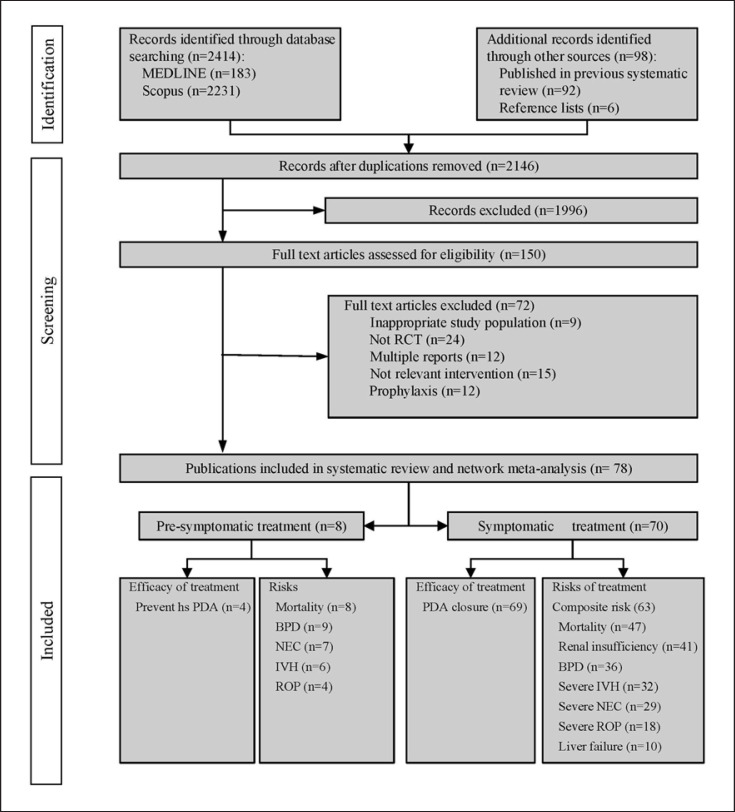
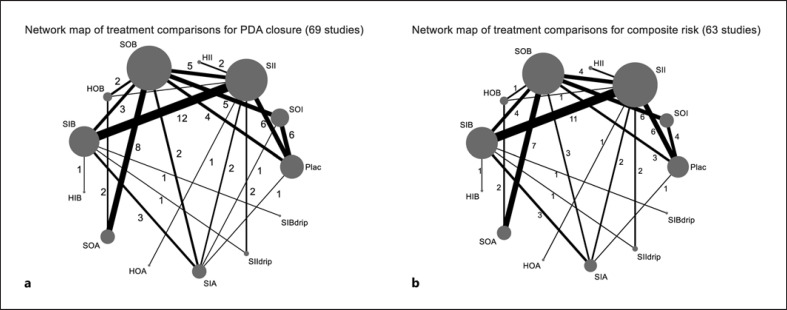
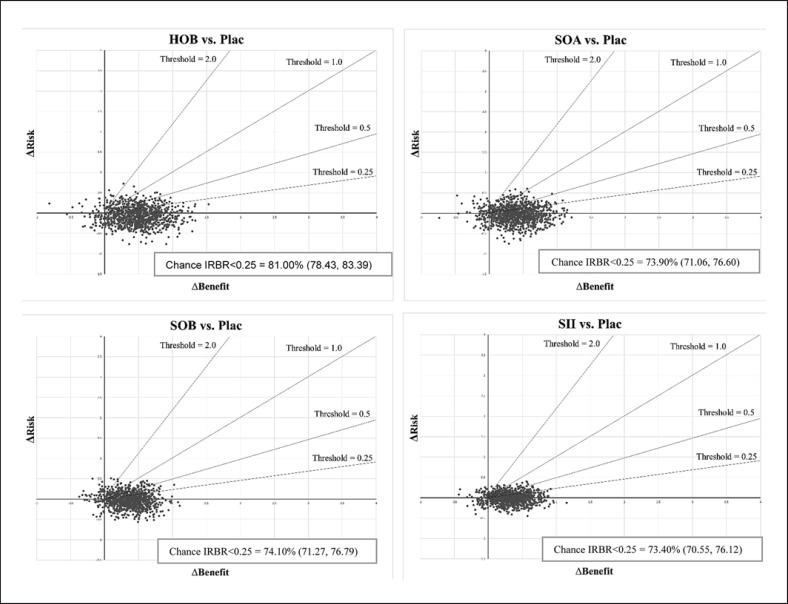
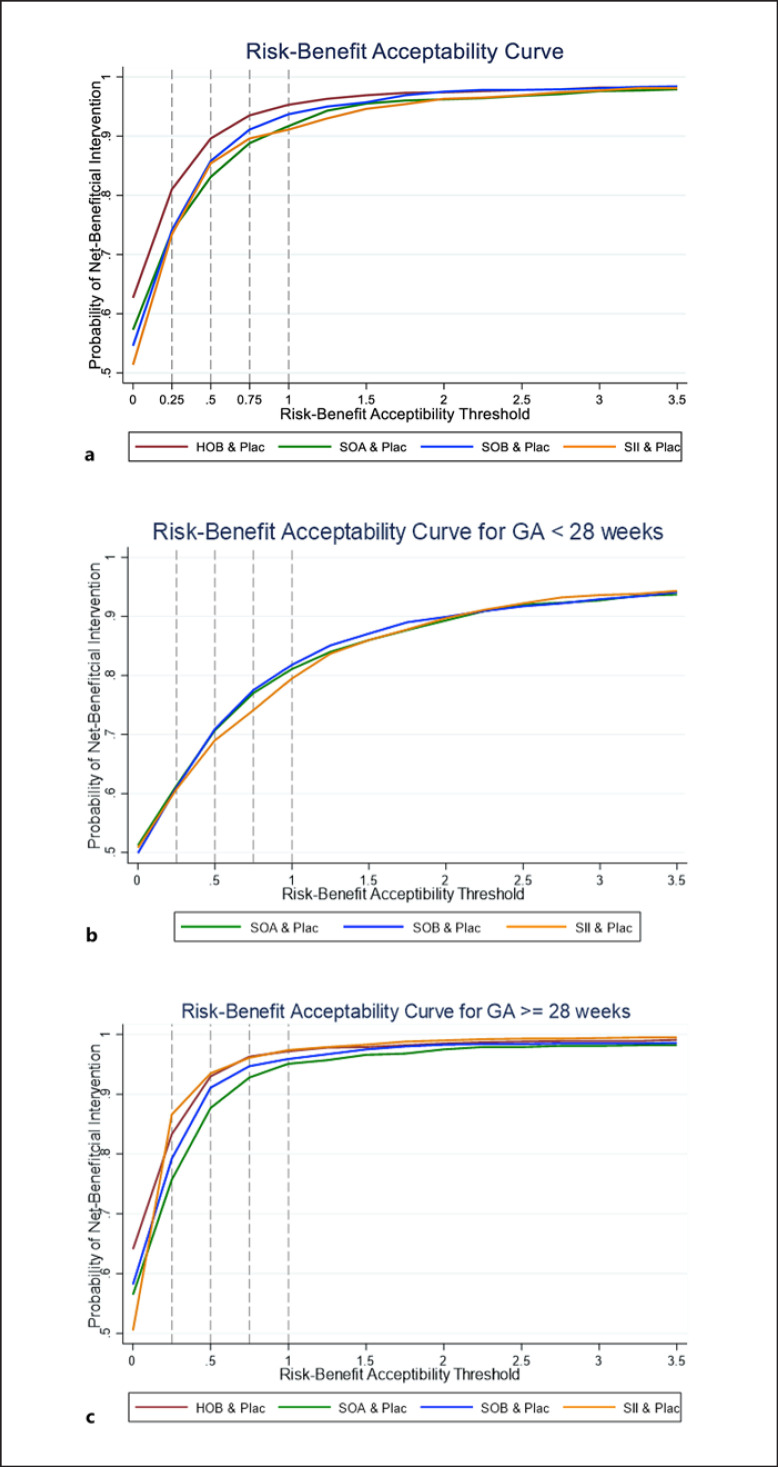
Relevant randomized controlled trials (RCTs) were identified from MEDLINE, Scopus, and the Cochrane Library. RCTs were eligible if they were studied for preterm or low birth weight infants with presymptomatic PDA and hemodynamically significant PDA (hsPDA). The outcomes were PDA closure for a benefit and the composite risk outcome of adverse effects (AEs) for risk. An NMA was used to estimate the treatment effects of benefit and risk. The RBA helped to incorporate the risk and benefits of multiple treatments. Then, an incremental risk-benefit ratio was calculated by dividing the incremental risk by benefit using data from NMA, and they were jointly simulated using Monte Carlo methods. Finally, net clinical benefit (NCB) probability curves were constructed at varying acceptability thresholds.
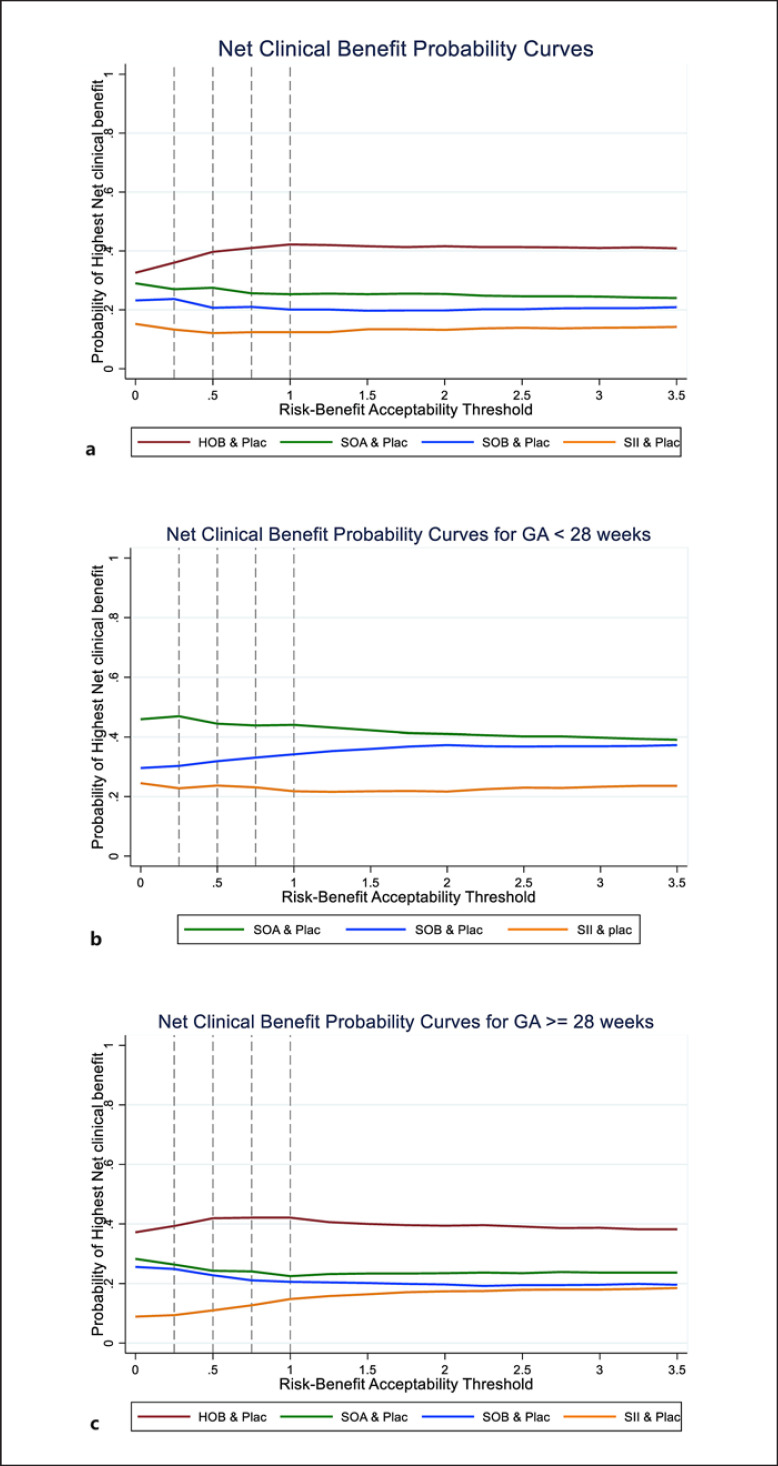
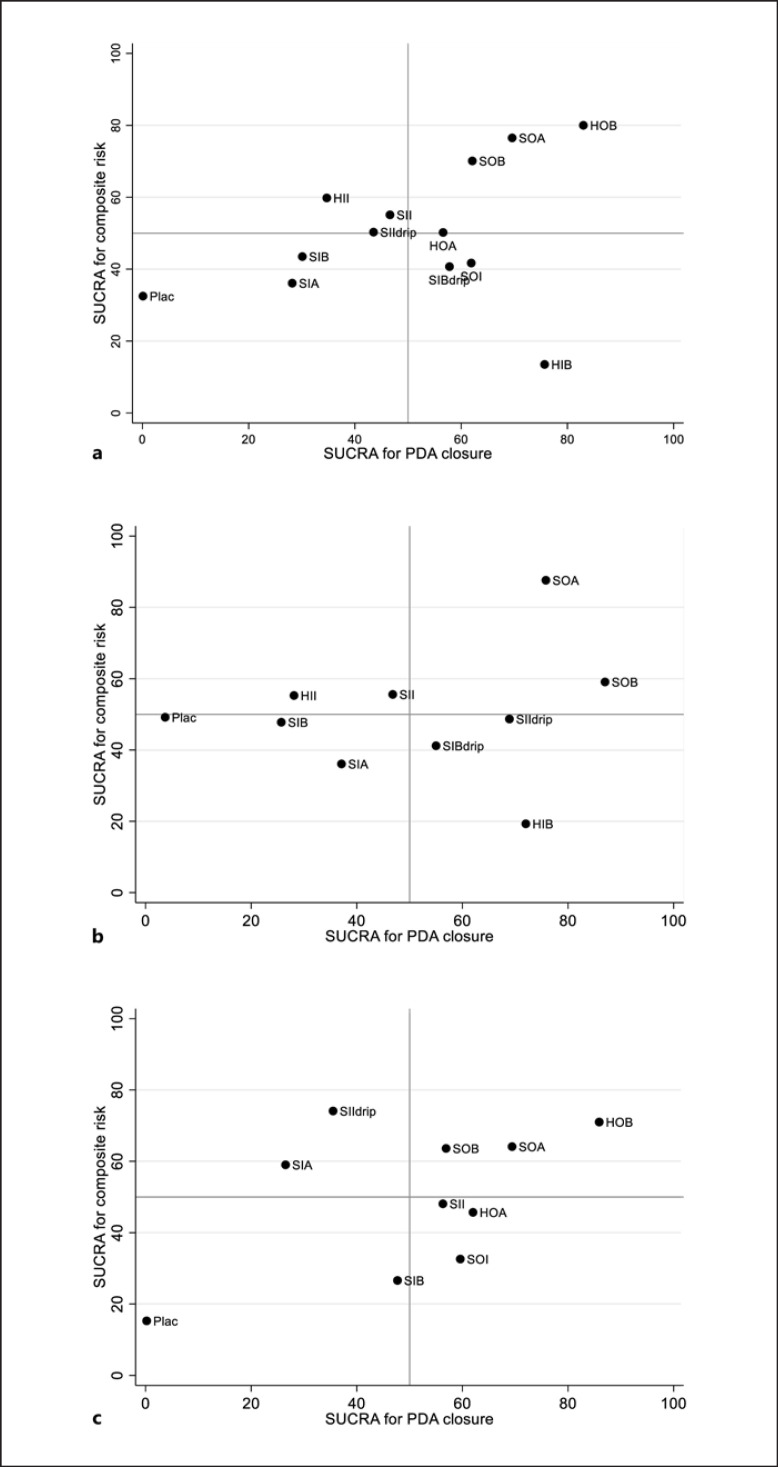
Seventy RCTs with hsPDA were eligible considering 13 different interventions, but data on presymptomatic PDA were not enough for pooling. The clustered ranking plot from NMA indicated that 3 interventions (i.e., high-dose oral ibuprofen, standard-dose oral acetaminophen, and standard-dose oral ibuprofen) yielded high PDA closure and low AE. These three treatments and additional commonly used indomethacin were considered in the RBA. Given an acceptable threshold of 25% or having one AE out of four PDA closures, high-dose oral ibuprofen had a 36% chance of having the highest NCB, followed by standard-dose oral acetaminophen (27%), and oral ibuprofen (23.7%). Subgroup analysis indicated that the chances of having the highest NCB of GA ≥28 weeks were similar to that of all available studies. The best for GA <28 weeks, no data for high-dose oral ibuprofen, was standard-dose oral acetaminophen, followed by standard-dose oral ibuprofen.
Trade-off RBA indicated that high-dose oral ibuprofen might be the best treatment for preterm, GA ≥28 weeks, with hsPDA followed by the standard-dose oral acetaminophen and ibuprofen. Preferably, optimal high doses, postnatal age to start treatment, and long-term outcomes are needed to study in the future.
对于患有动脉导管未闭(PDA)的早产儿有多种药物治疗方法,但其风险和益处存在争议。本研究旨在通过网状Meta分析(NMA)和风险效益评估(RBA)确定PDA的最佳治疗方法。
从MEDLINE、Scopus和Cochrane图书馆中检索相关随机对照试验(RCT)。若研究对象为有症状前PDA和血流动力学显著PDA(hsPDA)的早产儿或低体重儿,则该RCT符合纳入标准。结局指标中,PDA闭合作为益处,不良反应(AE)的复合风险结局作为风险。使用NMA估计益处和风险的治疗效果。RBA有助于综合多种治疗的风险和益处。然后,利用NMA数据通过将增量风险除以益处来计算增量风险效益比,并使用蒙特卡罗方法进行联合模拟。最后,在不同可接受阈值下构建净临床效益(NCB)概率曲线。
考虑13种不同干预措施时,有70项hsPDA的RCT符合纳入标准,但症状前PDA的数据不足以进行汇总分析。NMA的聚类排序图表明,3种干预措施(即高剂量口服布洛芬、标准剂量口服对乙酰氨基酚和标准剂量口服布洛芬)实现了较高的PDA闭合率且AE较低。RBA纳入了这三种治疗方法以及另外常用的吲哚美辛。设定可接受阈值为25%或每4次PDA闭合中有1次出现AE时,高剂量口服布洛芬有36%的概率获得最高NCB,其次是标准剂量口服对乙酰氨基酚(27%)和口服布洛芬(23.7%)。亚组分析表明,孕龄≥28周时获得最高NCB的概率与所有可用研究相似。对于孕龄<28周,高剂量口服布洛芬无相关数据,最佳治疗方法是标准剂量口服对乙酰氨基酚,其次是标准剂量口服布洛芬。
权衡RBA表明,对于孕龄≥28周、患有hsPDA的早产儿,高剂量口服布洛芬可能是最佳治疗方法,其次是标准剂量口服对乙酰氨基酚和布洛芬。未来最好能研究最佳高剂量、开始治疗的出生后年龄以及长期结局。