Morris Daniel P, Snipes Lucy C, Hill Stephanie A, Woods Michael M, Mbugua Maria M, Wade Lydia R, McMurry Jonathan L
Department of Molecular and Cellular Biology, Kennesaw State University, Kennesaw, GA, United States.
Front Pharmacol. 2022 Nov 21;13:1070464. doi: 10.3389/fphar.2022.1070464. eCollection 2022.
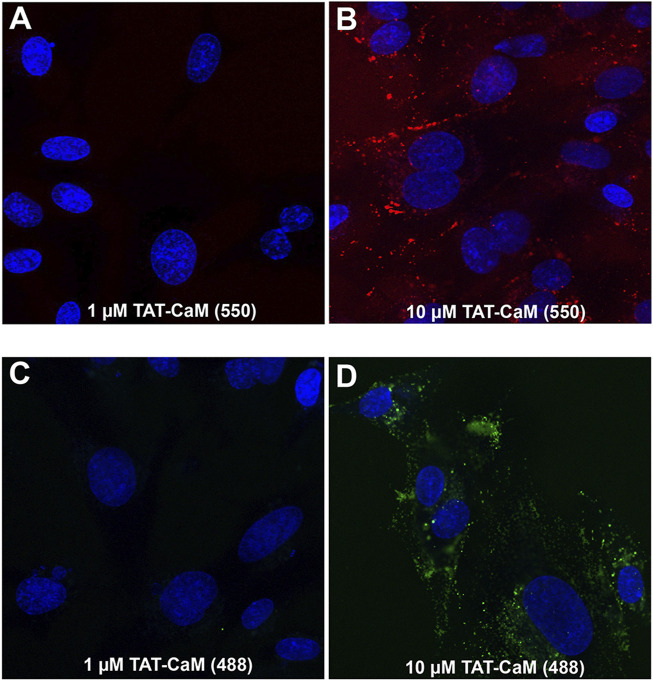
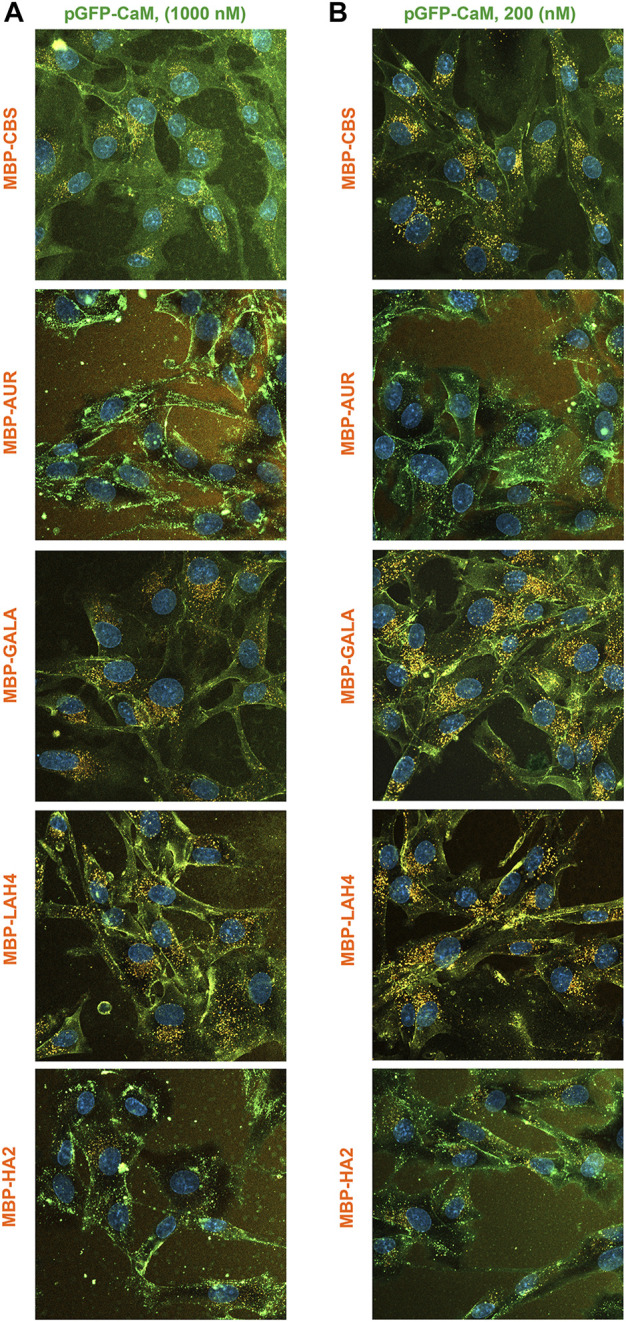
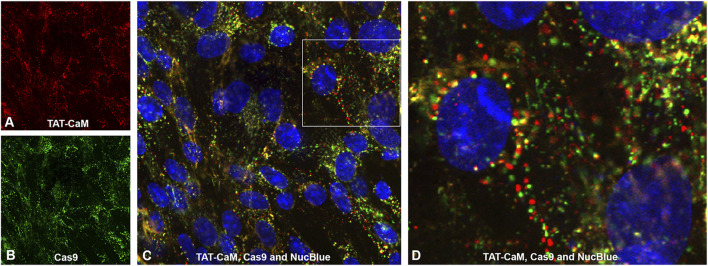
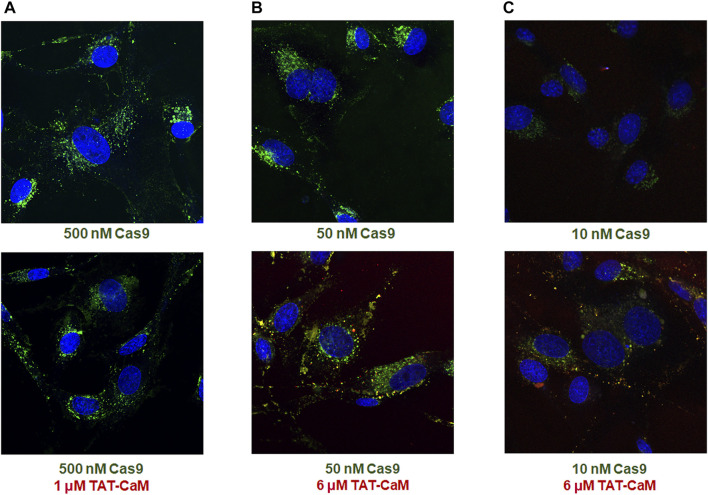
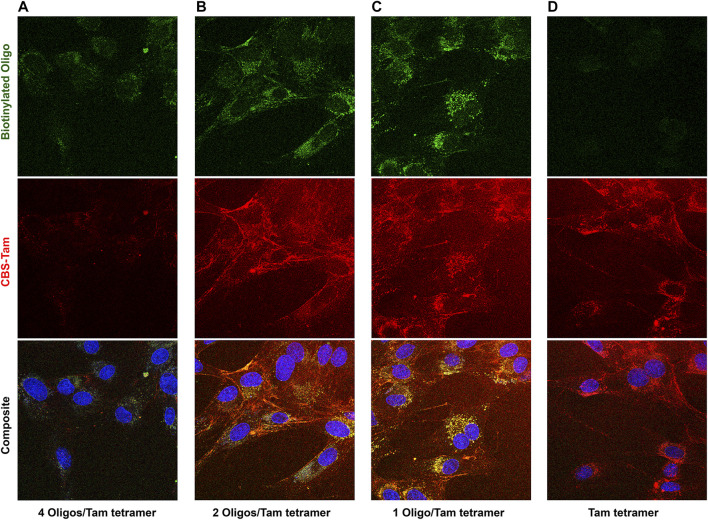
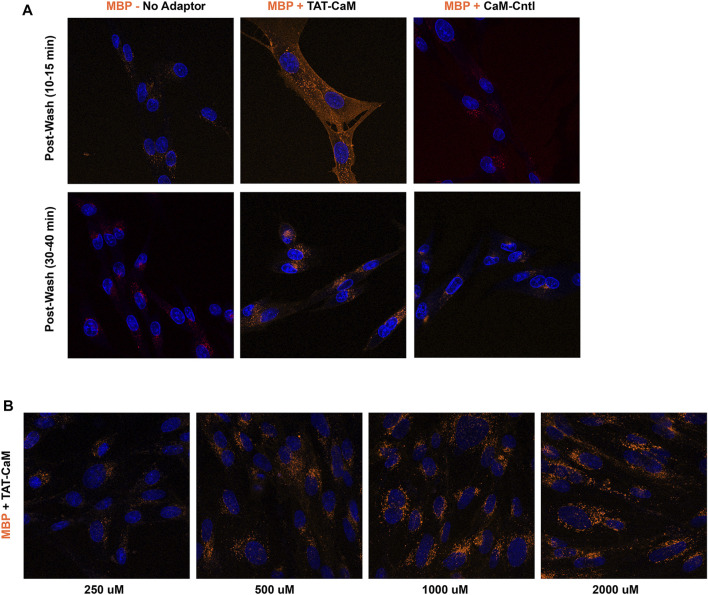
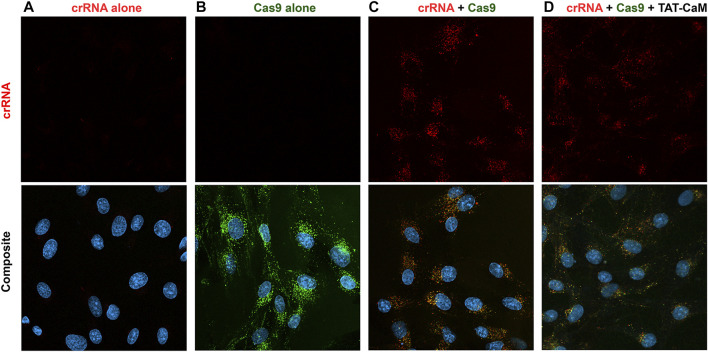
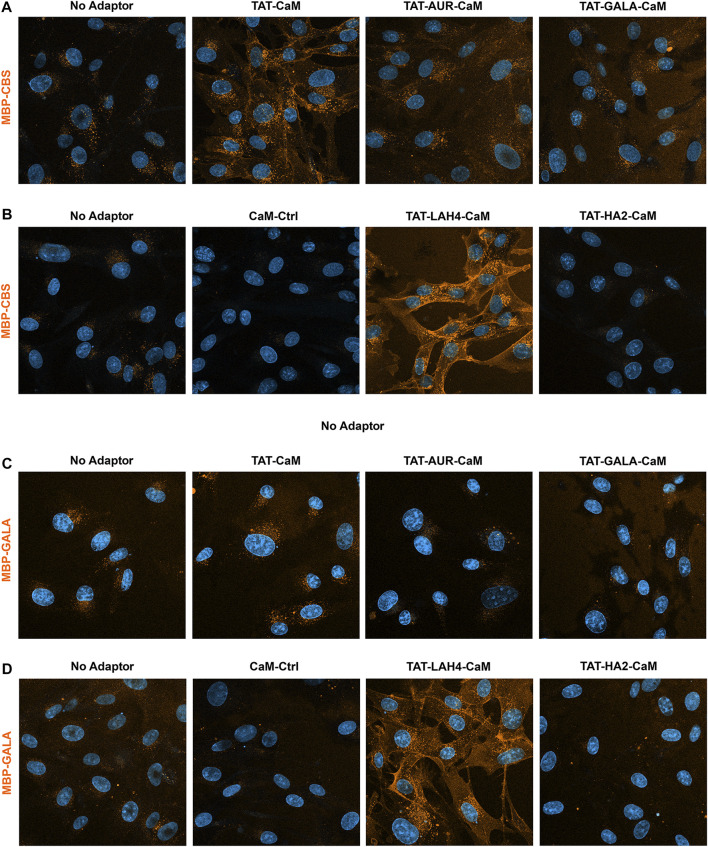
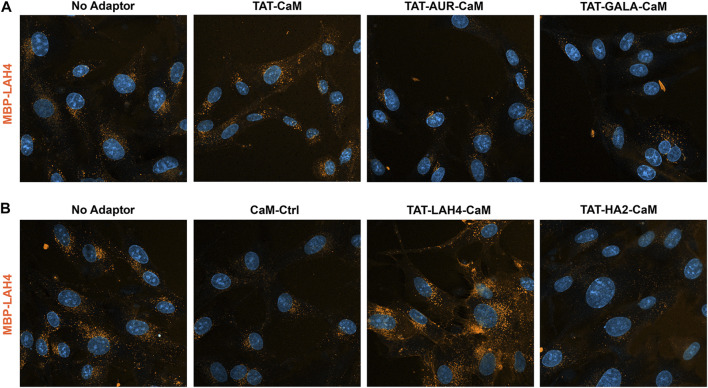
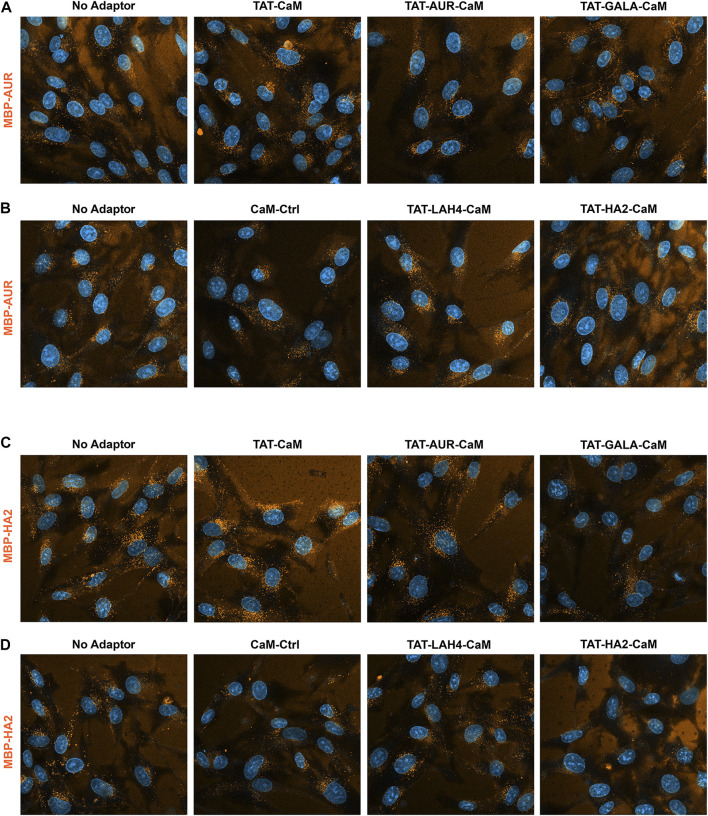
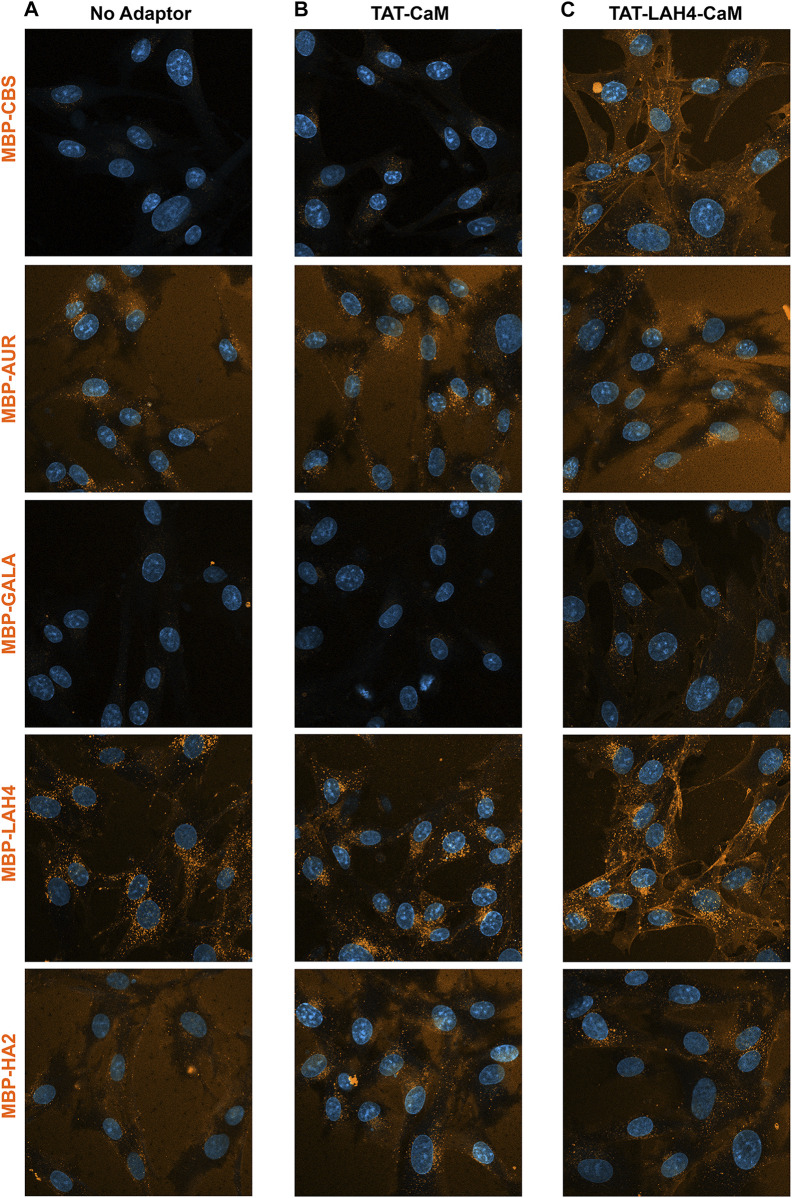
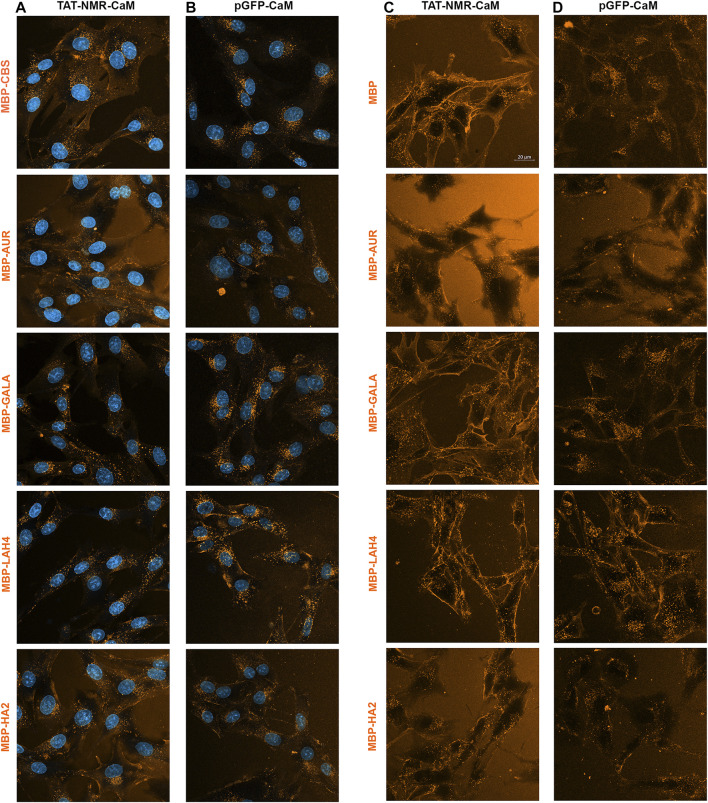
Cell penetrating peptides (CPPs) are a promising technology for therapeutic delivery of macromolecular cargos. CPPs have generally used covalent linkages to cargo, ensuring a common fate as one molecule. Conversely, our CPP-adaptor, TAT-CaM, noncovalently binds calmodulin binding sequence (CBS)-containing cargos in calcium rich media then dissociates in the calcium-poor endosomal environment following internalization, enhancing endosomal escape relative to standard CPPs. In this study, we report cell entry of positively charged protein cargos that were not increased by TAT-CaM while cargos based on the negatively charged maltose binding protein (MBP) displayed little intrinsic internalization but were internalized by TAT-CaM. In addition, association of positively charged proteins with negatively charged nucleic acids reduced internalization. This evidence points to the dominant role cargo charge plays in apparent CPP effectiveness. There has been little systematic investigation as to how interaction between CPPs and cargos impacts internalization efficiency. Our adaptors provide a tool that allows combinatorial assays to detect emergent properties. Toward this end we added 4 endolytic peptide (EP) sequences between cargo CBS and MBP moieties to create 4 new cargos and between TAT and CaM to create 4 new adaptors. The new cargos were assayed for internalization alone and with a panel of CPP-adaptors to identify combinations that displayed increased internalization efficiency or other properties. Among the most important results, addition of the EP LAH4 improved adaptor performance and provided some CPP capability to cargos. MBP-LAH4-CBS was internalized more effectively by most adaptors, suggesting this sequence has general stimulatory ability. Two other EPs, Aurein 1.2 and HA2, also provided some CPP capability to their MBP cargos but were unexpectedly antagonistic to internalization by most adaptors due to retention of adaptor/cargo complexes on the cell surface. We thus identified LAH4 as stimulator of internalization in both adaptors and cargos and uncovered new functionality for Aurein 1.2 and HA2, which may be related to their identification as EPs. Future experiments will test new endolytic capabilities made possible with combinatorial approaches.
细胞穿透肽(CPPs)是一种用于大分子药物递送的很有前景的技术。CPPs通常与药物形成共价连接,确保作为一个分子具有共同的命运。相反,我们的CPP适配体TAT-CaM在富含钙的介质中与含钙调蛋白结合序列(CBS)的药物非共价结合,然后在内化后在低钙的内体环境中解离,相对于标准CPPs增强了内体逃逸。在本研究中,我们报告了带正电荷的蛋白质药物的细胞摄取情况,TAT-CaM并未增加其摄取量,而基于带负电荷的麦芽糖结合蛋白(MBP)的药物几乎没有内在摄取能力,但可被TAT-CaM内化。此外,带正电荷的蛋白质与带负电荷的核酸结合会降低摄取。这一证据表明药物电荷在CPPs的表观有效性中起主导作用。关于CPPs与药物之间的相互作用如何影响内化效率,目前几乎没有系统的研究。我们的适配体提供了一种工具,可用于组合分析以检测新出现的特性。为此,我们在药物CBS和MBP部分之间添加了4个内溶肽(EP)序列以创建4种新药物,并在TAT和CaM之间添加了4个新的适配体。单独检测新药物以及与一组CPP-适配体一起检测,以确定显示出内化效率提高或其他特性的组合。在最重要的结果中,添加EP LAH4改善了适配体性能,并赋予药物一些CPP能力。大多数适配体更有效地内化了MBP-LAH4-CBS,表明该序列具有普遍的刺激能力。另外两种EP,Aurein 1.2和HA2,也赋予其MBP药物一些CPP能力,但由于适配体/药物复合物保留在细胞表面,出人意料地对大多数适配体的内化起拮抗作用。因此,我们确定LAH4是适配体和药物内化的刺激剂,并发现了Aurein 1.2和HA2的新功能,这可能与其作为EP的特性有关。未来的实验将测试组合方法实现的新的内溶能力。