Center for ViroScience and Cure, Laboratory of Biochemical Pharmacology, Department of Pediatrics, Emory University School of Medicine, Atlanta, Georgia, 30322, USA.
Department of Molecular & Cellular Biology, Kennesaw State University, 370 Paulding Ave NW, MD 1201, Kennesaw, Georgia, 30144, USA.
Cancer Rep (Hoboken). 2023 May;6(5):e1810. doi: 10.1002/cnr2.1810. Epub 2023 Mar 28.
Human papillomavirus (HPV) is the causative agent of nearly all forms of cervical cancer, which can arise upon viral integration into the host genome and concurrent loss of viral regulatory gene E2. Gene-based delivery approaches show that E2 reintroduction reduces proliferative capacity and promotes apoptosis in vitro.
This work explored if our calcium-dependent protein-based delivery system, TAT-CaM, could deliver functional E2 protein directly into cervical cancer cells to limit proliferative capacity and induce cell death.
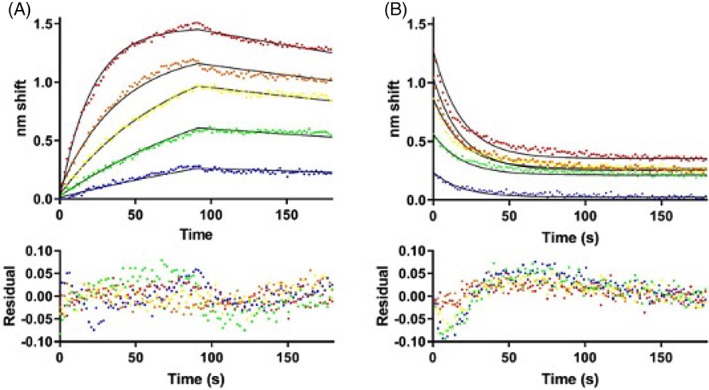
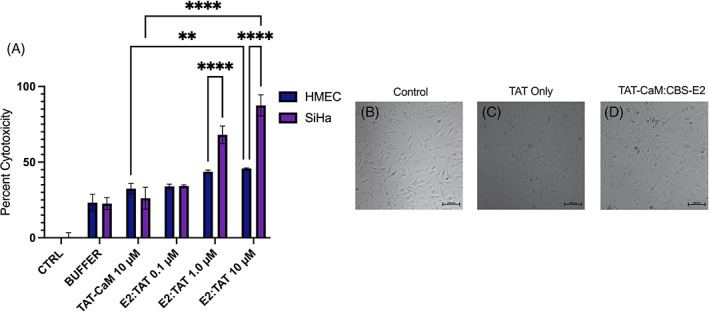
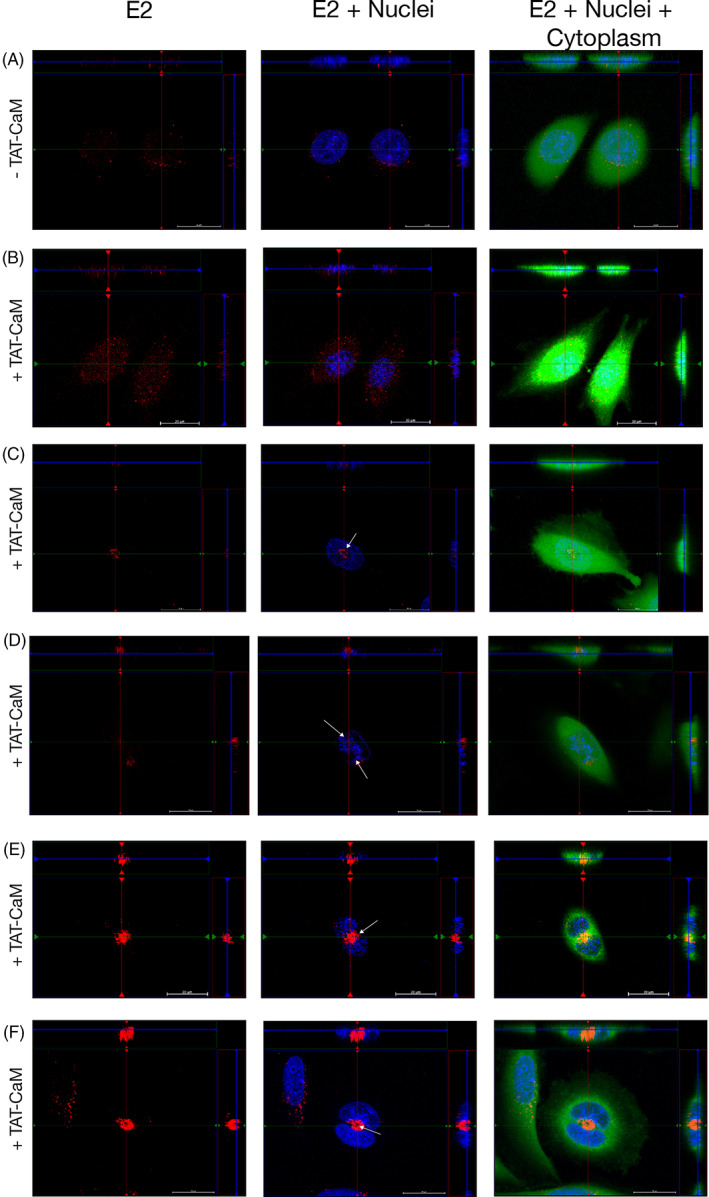
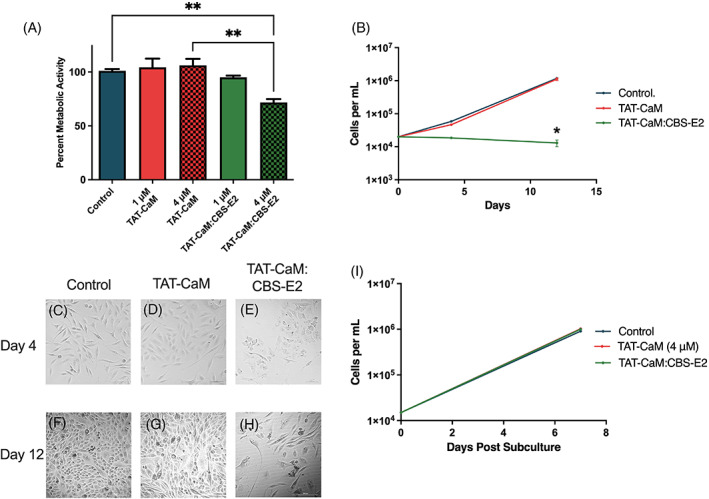
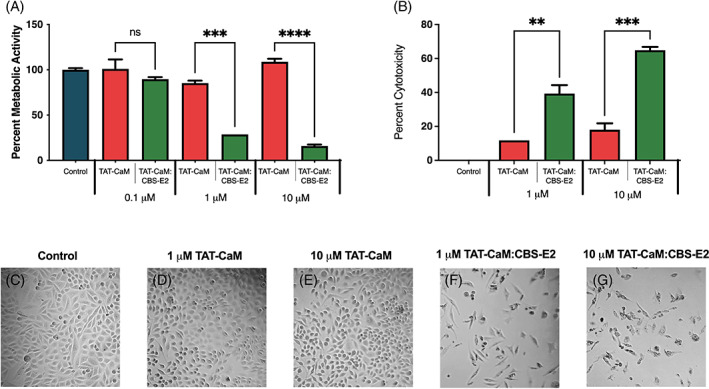
TAT-CaM and the HPV16 E2 protein containing a CaM-binding sequence (CBS-E2) were expressed and purified from Escherichia coli. Calcium-dependent binding kinetics were verified by biolayer interferometry. Equimolar TAT-CaM:CBS-E2 constructs were delivered into the HPV16 SiHa cell line and uptake verified by confocal microscopy. Proliferative capacity was measured by MTS assay and cell death was measured by release of lactate dehydrogenase. As a control, human microvascular cells (HMECs) were used. As expected, TAT-CaM bound CBS-E2 with high affinity in the presence of calcium and rapidly disassociated upon its removal. After introduction by TAT-CaM, fluorescently labeled CBS-E2 was detected in cellular interiors by orthogonal projections taken at the depth of the nucleus. In dividing cells, E2 relocalized to regions associated with the mitotic spindle. Cells receiving a daily dose of CBS-E2 for 4 days showed a significant reduction in metabolic activity at low doses and increased cell death at high doses compared to controls. This phenotype was retained for 7 days with no further treatments. When subcultured on day 12, treated cells regained their proliferative capacity.
Using the TAT-CaM platform, bioactive E2 protein was delivered into living cervical cancer cells, inducing senescence and cell death in a time- and dose-dependent manner. These results suggest that this nucleic acid and virus-free delivery method could be harnessed to develop novel, effective protein therapeutics.
人乳头瘤病毒(HPV)是几乎所有宫颈癌形式的致病因子,它可以在病毒整合到宿主基因组中并同时失去病毒调节基因 E2 时出现。基于基因的递药方法表明,E2 的重新引入可降低体外的增殖能力并促进细胞凋亡。
本工作探索我们的钙依赖性蛋白递药系统 TAT-CaM 是否可以将功能性 E2 蛋白直接递送到宫颈癌细胞中,以限制其增殖能力并诱导细胞死亡。
TAT-CaM 和含有钙调蛋白结合序列(CBS-E2)的 HPV16 E2 蛋白从大肠杆菌中表达和纯化。通过生物层干涉法验证了钙依赖性结合动力学。将等摩尔量的 TAT-CaM:CBS-E2 构建体递送到 HPV16 SiHa 细胞系中,并通过共焦显微镜验证摄取。通过 MTS 测定法测量增殖能力,通过乳酸脱氢酶的释放测量细胞死亡。作为对照,使用人微血管细胞(HMEC)。正如预期的那样,在存在钙的情况下,TAT-CaM 与 CBS-E2 具有高亲和力,并在去除钙后迅速解离。通过 TAT-CaM 引入后,通过在细胞核深度处取正交投影,在细胞内部检测到荧光标记的 CBS-E2。在分裂细胞中,E2 重新定位到与有丝分裂纺锤体相关的区域。与对照相比,连续 4 天每天接受 CBS-E2 剂量的细胞在低剂量时显示出代谢活性的显著降低,在高剂量时显示出细胞死亡增加。在没有进一步治疗的情况下,这种表型保留了 7 天。当在第 12 天传代时,处理过的细胞恢复了它们的增殖能力。
使用 TAT-CaM 平台,将生物活性 E2 蛋白递送到活的宫颈癌细胞中,以时间和剂量依赖的方式诱导衰老和细胞死亡。这些结果表明,这种核酸和病毒自由的递药方法可以被利用来开发新型有效的蛋白质治疗药物。