Department of Molecular Biology and Genetics, Weill Institute for Cell and Molecular Biology, Cornell University, Ithaca, NY, USA.
FEBS Lett. 2023 Mar;597(6):721-733. doi: 10.1002/1873-3468.14557. Epub 2022 Dec 21.
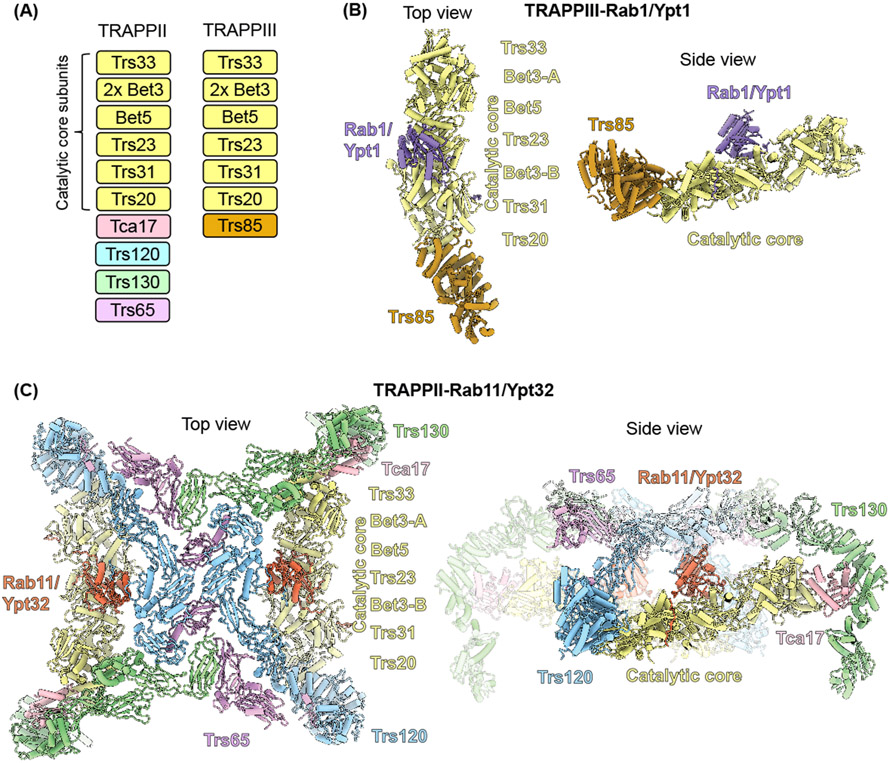
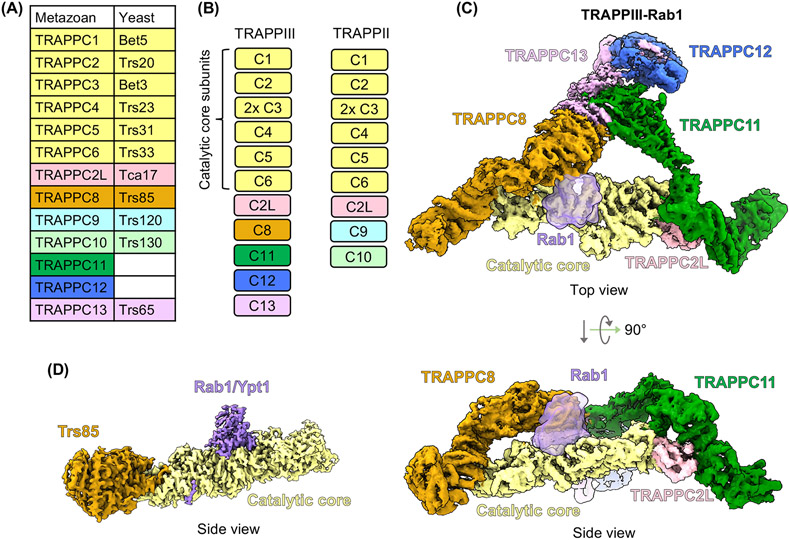
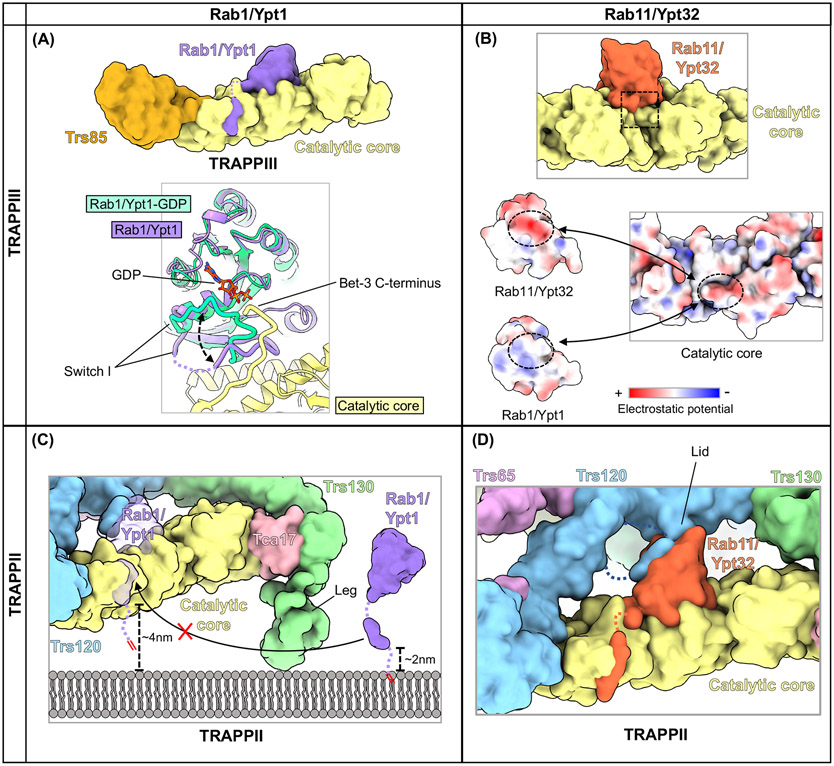
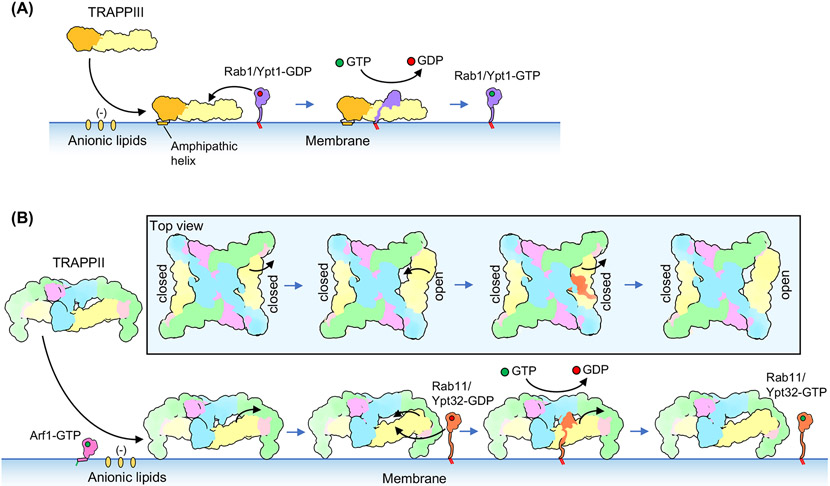
Correct localization of Rab GTPases in cells is critical for proper function in membrane trafficking. Guanine-nucleotide exchange factors (GEFs) act as the primary determinants of Rab localization by activating and stabilizing their Rab substrates on specific organelle and vesicle membranes. The TRAPP complexes TRAPPII and TRAPPIII are two related GEFs that use the same catalytic site to activate distinct Rabs, Rab11 and Rab1, respectively. The Rab C-terminal hypervariable domain (HVD) is an important specificity determinant for the budding yeast TRAPP complexes, with the length of the HVD playing a critical role in counter-selection. Several recent studies have used cryo-EM to illuminate how the yeast and metazoan TRAPP complexes identify and activate their substrates. This review summarizes recently characterized Rab substrate selection mechanisms and highlights how the membrane surface provides critical context for the GEF-GTPase interactions.
正确定位 Rab GTPases 在细胞中对于膜运输中的正常功能至关重要。鸟嘌呤核苷酸交换因子(GEFs)通过激活和稳定它们在特定细胞器和囊泡膜上的 Rab 底物,成为 Rab 定位的主要决定因素。TRAPP 复合物 TRAPPII 和 TRAPPIII 是两种相关的 GEFs,它们使用相同的催化位点分别激活不同的 Rab,即 Rab11 和 Rab1。Rab C 末端超变区(HVD)是芽殖酵母 TRAPP 复合物的一个重要特异性决定因素,HVD 的长度在反选择中起着关键作用。最近的几项研究使用 cryo-EM 阐明了酵母和后生动物 TRAPP 复合物如何识别和激活它们的底物。本综述总结了最近表征的 Rab 底物选择机制,并强调了膜表面如何为 GEF-GTPase 相互作用提供关键背景。