State Key Laboratory of Marine Environmental Science and Key Laboratory of the Ministry of Education for Coastal Wetland Ecosystems, College of the Environment and Ecology, Xiamen University, Fujian 361102, China.
Sino-Danish College, University of Chinese Academy of Sciences, Beijing 100049, China.
Sci Adv. 2022 Dec 9;8(49):eade3061. doi: 10.1126/sciadv.ade3061.
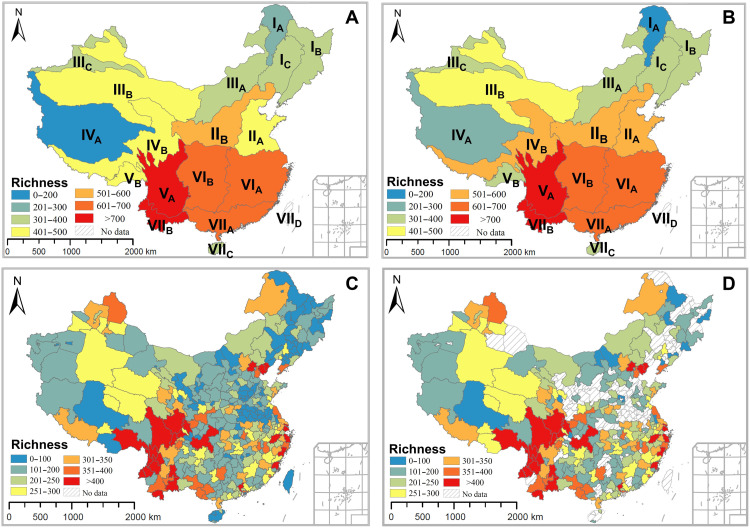
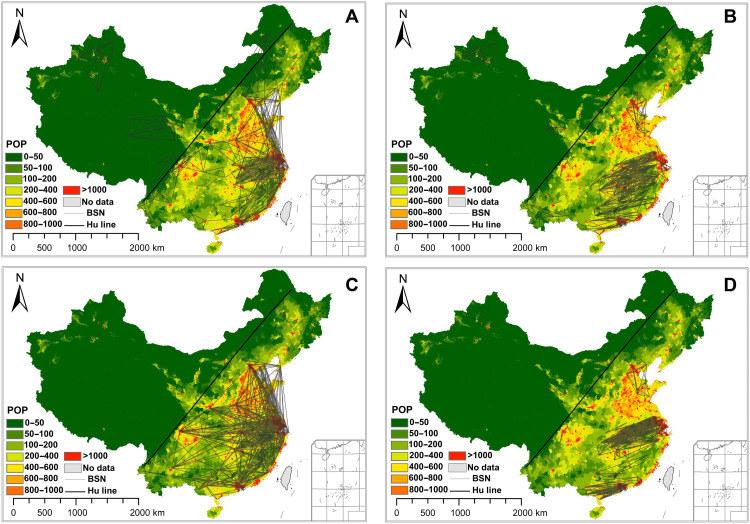
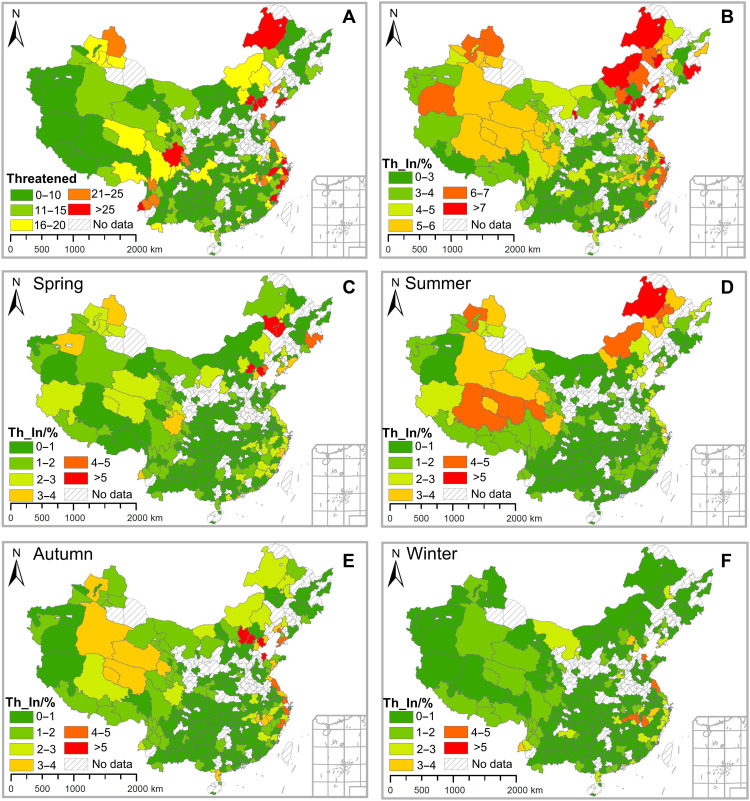
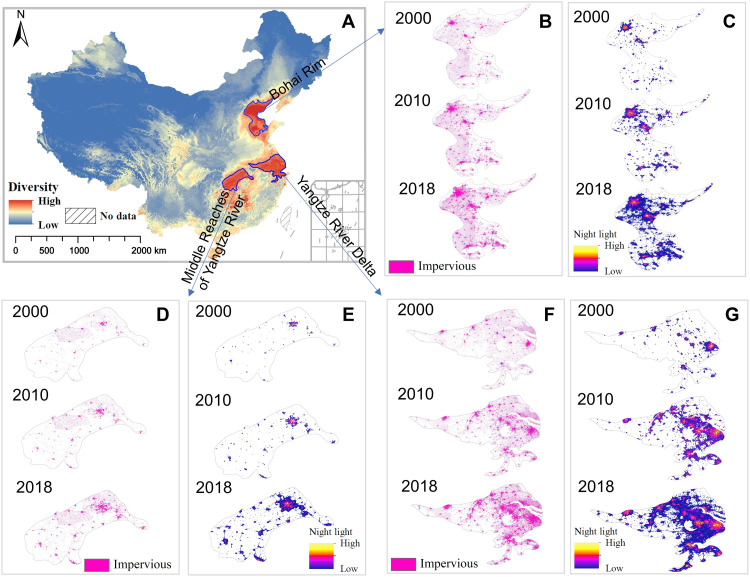
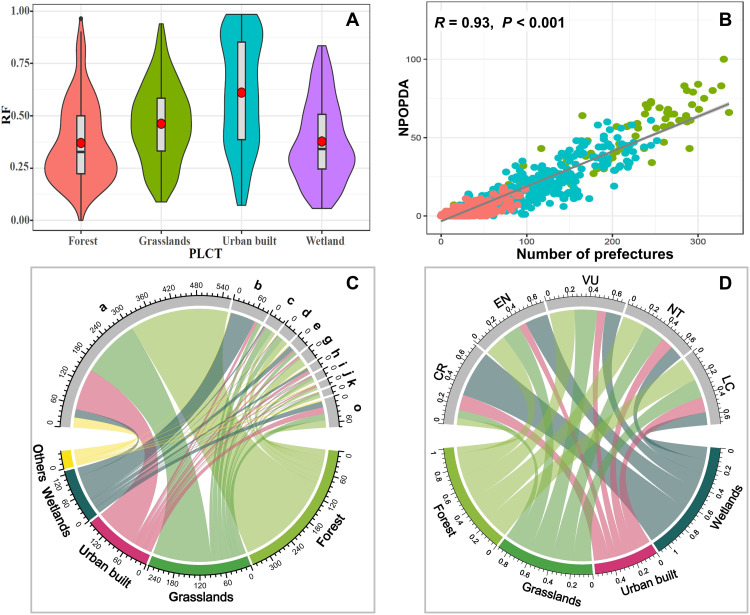
Although cities are human-dominated systems, they provide habitat for many other species. Because of the lack of long-term observation data, it is challenging to assess the impacts of rapid urbanization on biodiversity in Global South countries. Using multisource data, we provided the first analysis of the impacts of urbanization on bird distribution at the continental scale and found that the distributional hot spots of threatened birds overlapped greatly with urbanized areas, with only 3.90% of the threatened birds' preferred land cover type in urban built-up areas. Bird ranges are being reshaped differently because of their different adaptations to urbanization. While green infrastructure can improve local bird diversity, the homogeneous urban environment also leads to species compositions being more similar across regions. More attention should be paid to narrow-range species for the formulation of biodiversity conservation strategies, and conservation actions should be further coordinated among cities from a global perspective.
虽然城市是以人为主导的系统,但它们为许多其他物种提供了栖息地。由于缺乏长期的观测数据,评估快速城市化对全球南方国家生物多样性的影响具有挑战性。本研究使用多源数据,首次分析了城市化对大陆尺度鸟类分布的影响,发现受威胁鸟类的分布热点与城市地区高度重叠,只有 3.90%的受威胁鸟类首选的土地覆盖类型在城市建成区。由于鸟类对城市化的适应方式不同,其分布范围正在发生不同的变化。虽然绿色基础设施可以提高当地鸟类的多样性,但同质的城市环境也导致了不同地区的物种组成更加相似。在制定生物多样性保护策略时,应更加关注分布范围狭窄的物种,从全球角度来看,还应进一步协调城市之间的保护行动。