Department of Pulmonology, Lithuanian University of Health Sciences, LT-44307 Kaunas, Lithuania.
Laboratory of Pulmonology, Department of Pulmonology, Lithuanian University of Health Sciences, LT-44307 Kaunas, Lithuania.
Cells. 2022 Nov 28;11(23):3804. doi: 10.3390/cells11233804.
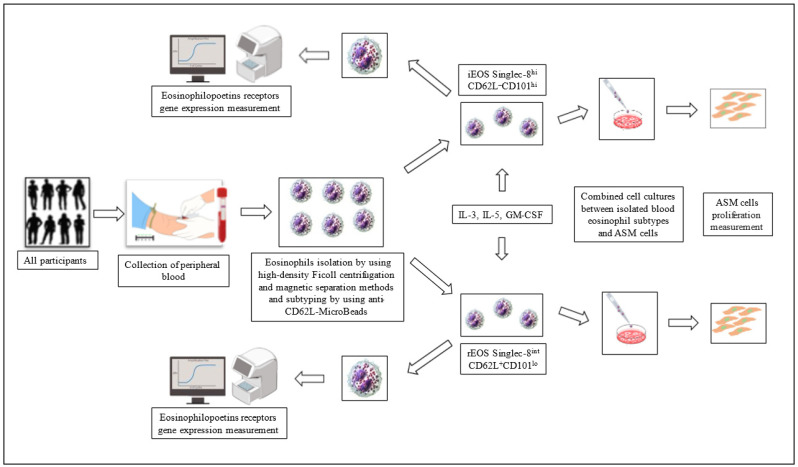
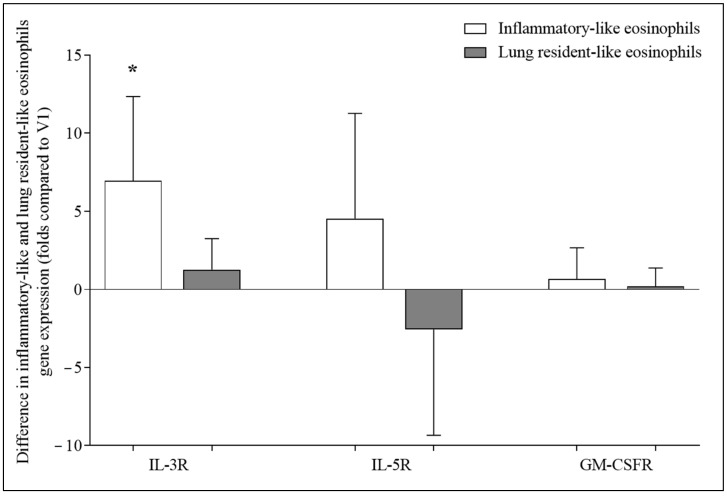
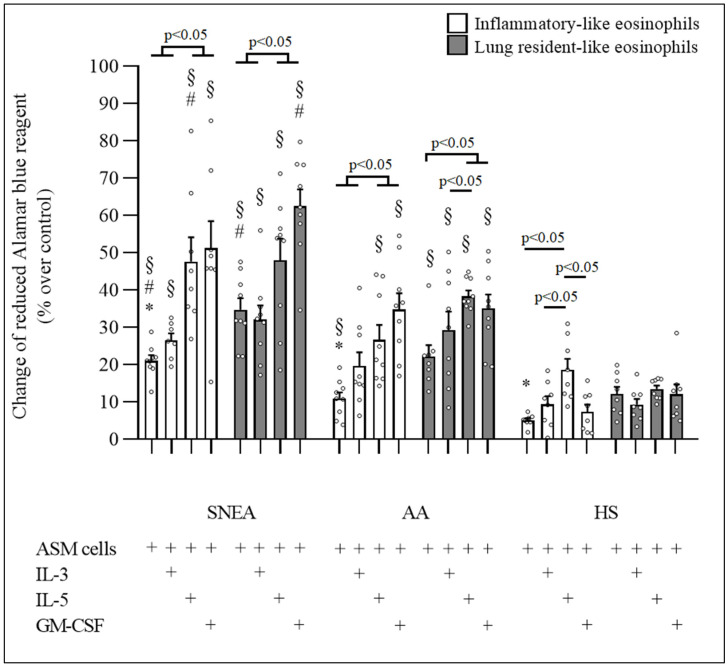
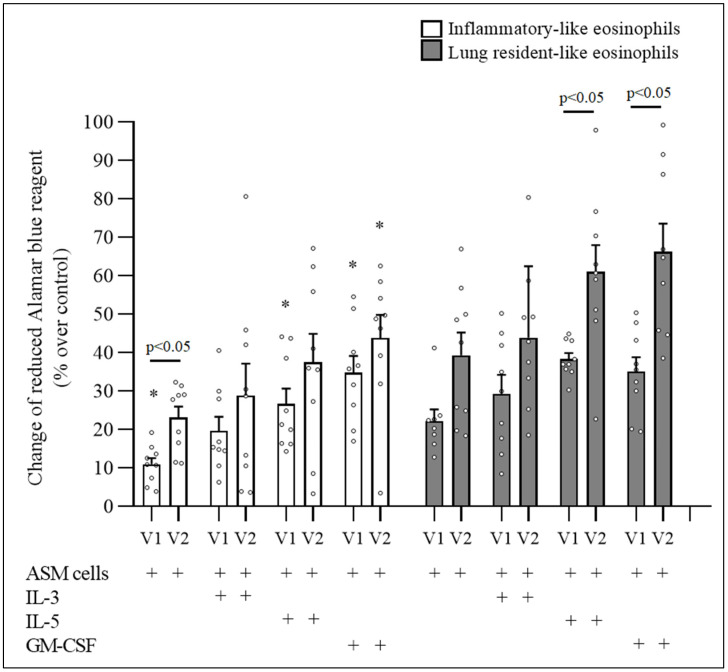
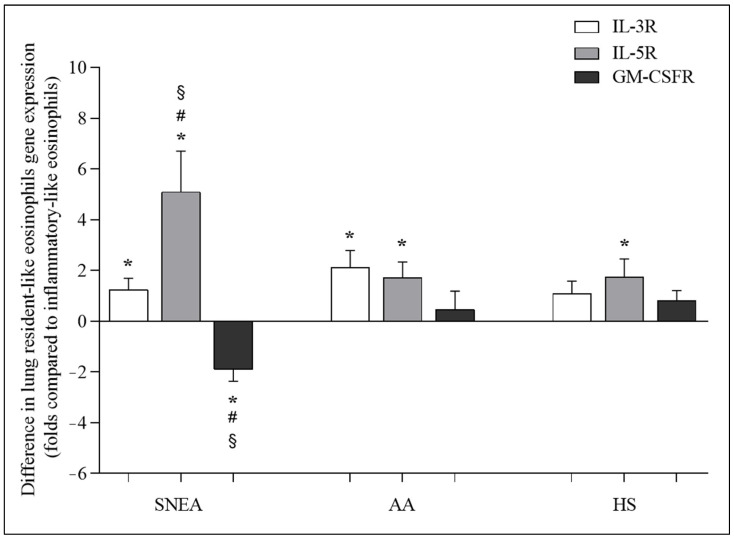
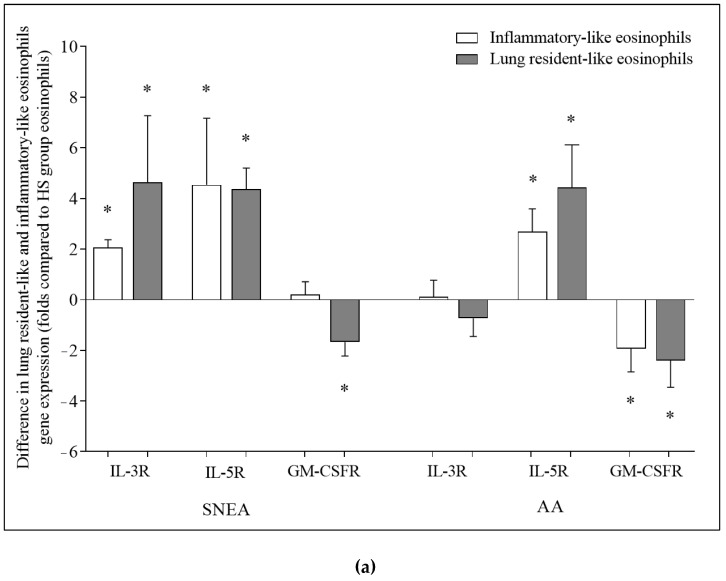
Blood eosinophils can be described as inflammatory-like (iEOS-like) and lung-resident-like (rEOS-like) eosinophils. This study is based on the hypothesis that eosinophilopoetins such as interleukin (IL)-3 and IL-5 and granulocyte-macrophage colony-stimulating factor (GM-CSF) alter the proliferative properties of eosinophil subtypes and may be associated with the expression of their receptors on eosinophils. We investigated 8 individuals with severe nonallergic eosinophilic asthma (SNEA), 17 nonsevere allergic asthma (AA), and 11 healthy subjects (HS). For AA patients, a bronchial allergen challenge with Dermatophagoides pteronyssinus was performed. Eosinophils were isolated from peripheral blood using high-density centrifugation and magnetic separation methods. The subtyping of eosinophils was based on magnetic bead-conjugated antibodies against L-selectin. Preactivation by eosinophilopoetins was performed by incubating eosinophil subtypes with IL-3, IL-5, and GM-CSF, and individual combined cell cultures were prepared with airway smooth muscle (ASM) cells. ASM cell proliferation was assessed using an Alamar blue assay. The gene expression of eosinophilopoetin receptors was analyzed with a qPCR. IL-5 and GM-CSF significantly enhanced the proliferative properties of iEOS-like and rEOS-like cells on ASM cells in both SNEA and AA groups compared with eosinophils not activated by cytokines (p < 0.05). Moreover, rEOS-like cells demonstrated a higher gene expression of the IL-3 and IL-5 receptors compared with iEOS-like cells in the SNEA and AA groups (p < 0.05). In conclusion: IL-5 and GM-CSF promote the proliferative properties of iEOS-like and rEOS-like eosinophils; however, the effect of only IL-5 may be related to the expression of its receptors in asthma patients.
血液嗜酸性粒细胞可以被描述为炎症样(iEOS 样)和肺驻留样(rEOS 样)嗜酸性粒细胞。本研究基于这样的假设,即白细胞介素(IL)-3 和 IL-5 和粒细胞-巨噬细胞集落刺激因子(GM-CSF)等嗜酸性粒细胞生成素改变嗜酸性粒细胞亚型的增殖特性,并且可能与它们在嗜酸性粒细胞上的受体表达有关。我们研究了 8 名严重非过敏性嗜酸性哮喘(SNEA)患者、17 名非严重过敏性哮喘(AA)患者和 11 名健康受试者(HS)。对于 AA 患者,进行了尘螨变应原激发的支气管激发试验。使用高密度离心和磁分离方法从外周血中分离嗜酸性粒细胞。通过使用针对 L-选择素的磁珠偶联抗体对嗜酸性粒细胞进行亚型分类。通过将嗜酸性粒细胞亚型与 IL-3、IL-5 和 GM-CSF 孵育来进行前激活,并与气道平滑肌(ASM)细胞一起制备个体组合细胞培养物。使用 Alamar blue 测定法评估 ASM 细胞的增殖。使用 qPCR 分析嗜酸性粒细胞生成素受体的基因表达。与未被细胞因子激活的嗜酸性粒细胞相比,IL-5 和 GM-CSF 显著增强了 SNEA 和 AA 组中 iEOS 样和 rEOS 样细胞在 ASM 细胞上的增殖特性(p <0.05)。此外,rEOS 样细胞在 SNEA 和 AA 组中显示出比 iEOS 样细胞更高的 IL-3 和 IL-5 受体基因表达(p <0.05)。总之:IL-5 和 GM-CSF 促进 iEOS 样和 rEOS 样嗜酸性粒细胞的增殖特性;然而,仅 IL-5 的作用可能与哮喘患者中其受体的表达有关。