Kimberly and Eric J. Waldman Department of Dermatology, Mark Lebwohl Center for Neuroinflammation and Sensation, Icahn School of Medicine at Mount Sinai, New York, NY.
Division of Allergy and Immunology, Department of Pediatrics, Cincinnati Children's Hospital Medical Center and University of Cincinnati College of Medicine, Cincinnati, Ohio.
J Allergy Clin Immunol. 2024 Apr;153(4):879-893. doi: 10.1016/j.jaci.2023.08.017. Epub 2023 Aug 25.
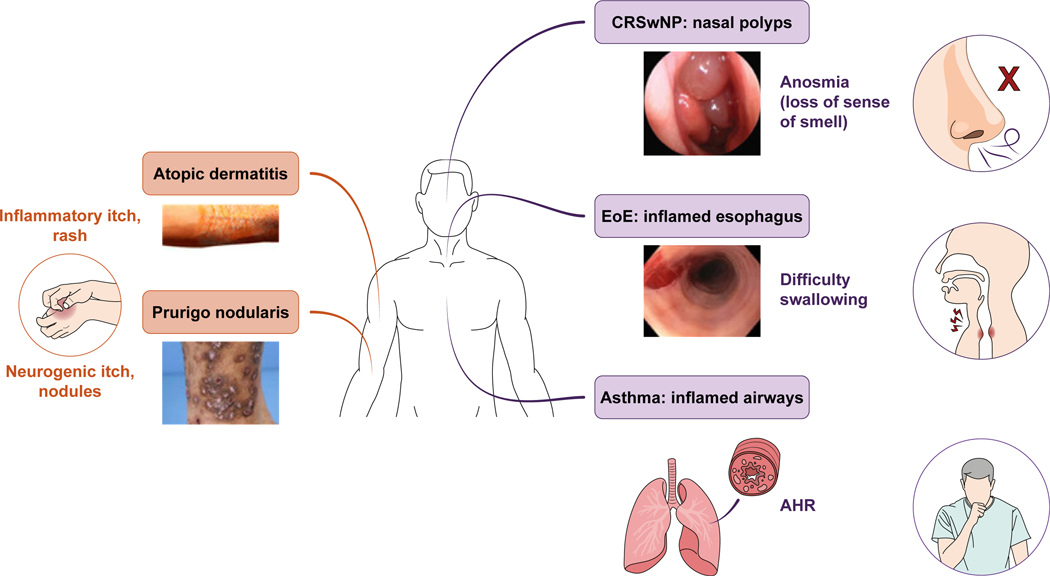
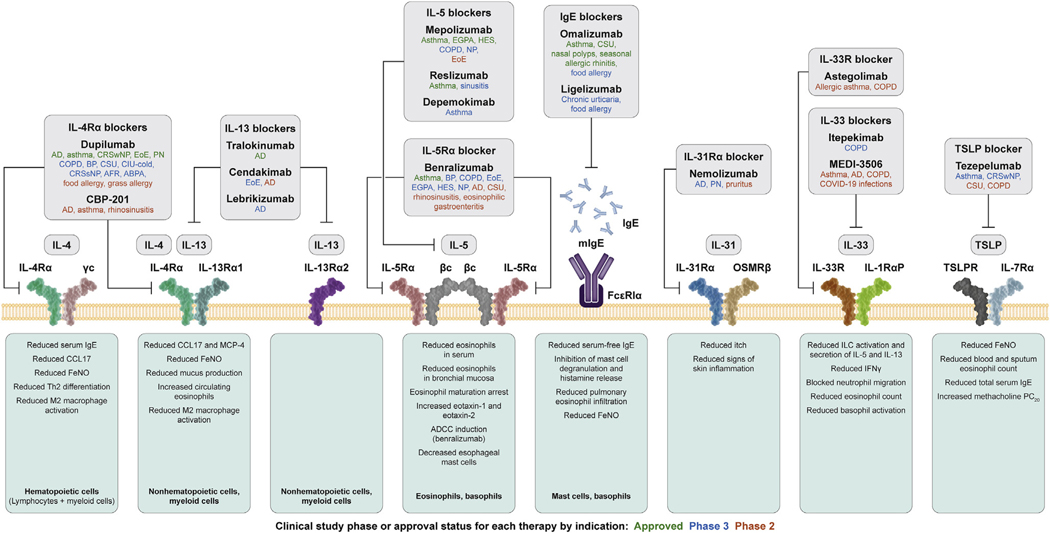
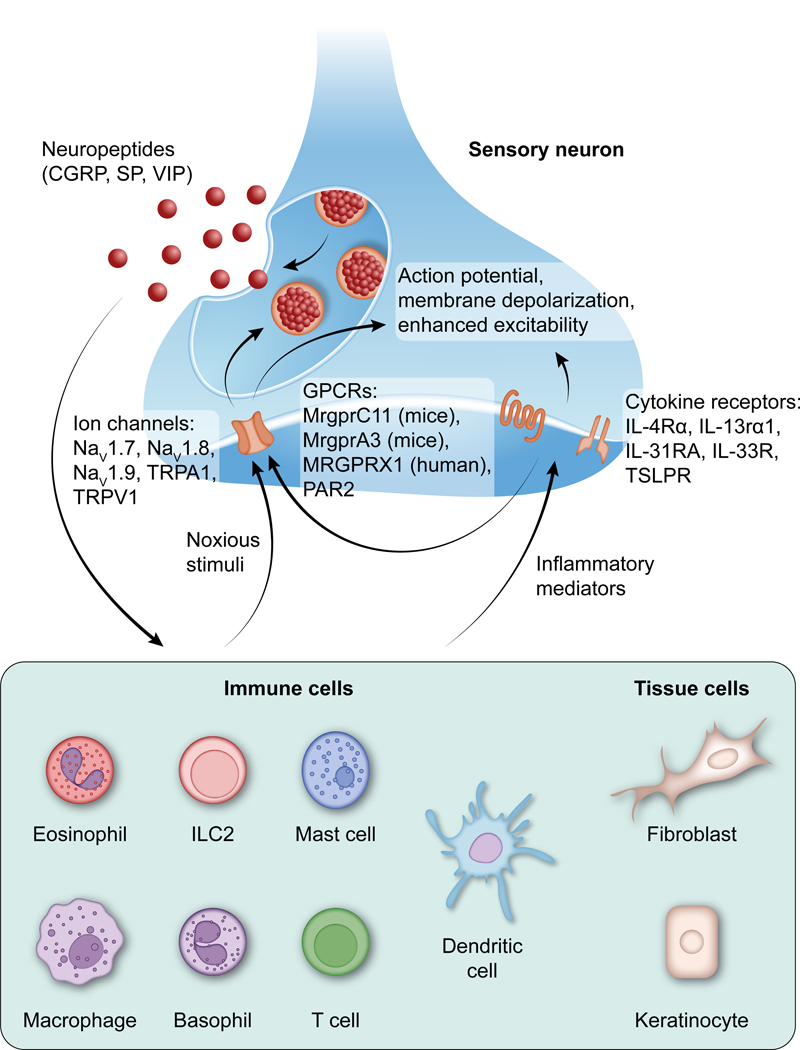
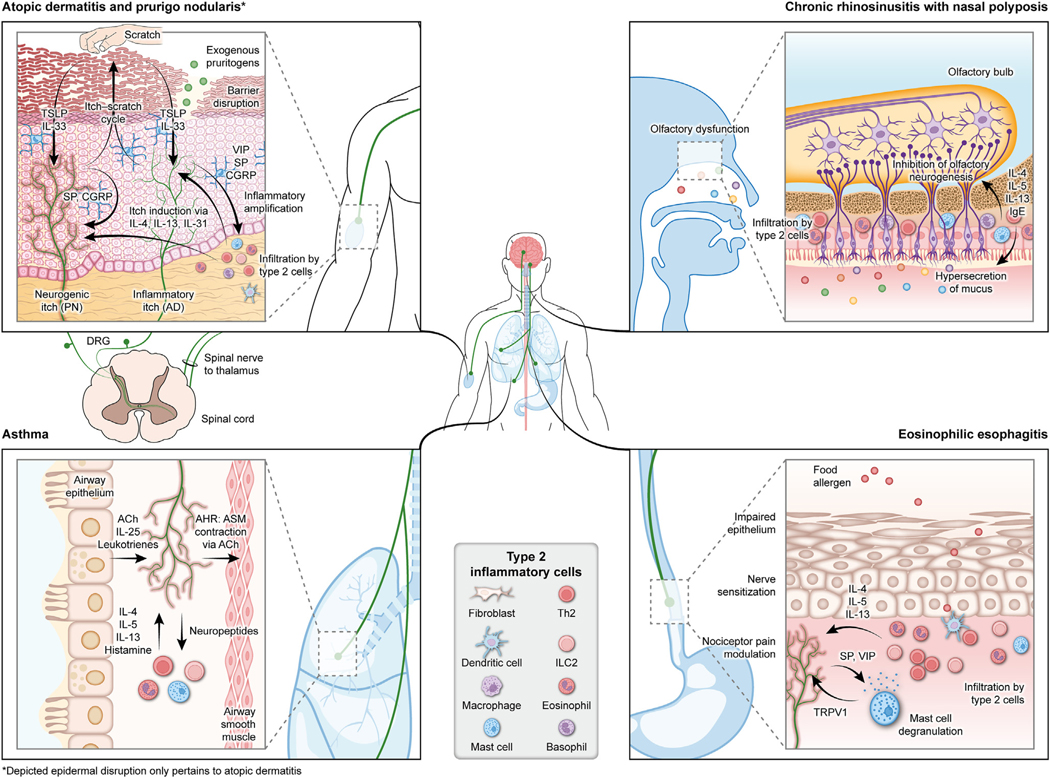
Type 2 inflammation is characterized by overexpression and heightened activity of type 2 cytokines, mediators, and cells that drive neuroimmune activation and sensitization to previously subthreshold stimuli. The consequences of altered neuroimmune activity differ by tissue type and disease; they include skin inflammation, sensitization to pruritogens, and itch amplification in atopic dermatitis and prurigo nodularis; airway inflammation and/or hyperresponsiveness, loss of expiratory volume, airflow obstruction and increased mucus production in asthma; loss of sense of smell in chronic rhinosinusitis with nasal polyps; and dysphagia in eosinophilic esophagitis. We describe the neuroimmune interactions that underlie the various sensory and autonomic pathologies in type 2 inflammatory diseases and present recent advances in targeted treatment approaches to reduce type 2 inflammation and its associated symptoms in these diseases. Further research is needed to better understand the neuroimmune mechanisms that underlie chronic, sustained inflammation and its related sensory pathologies in diseases associated with type 2 inflammation.
2 型炎症的特征是 2 型细胞因子、介质和细胞的过度表达和活性增强,这些细胞因子、介质和细胞驱动神经免疫激活,并对先前处于亚阈值的刺激物产生敏感。神经免疫活性改变的后果因组织类型和疾病而异;它们包括皮肤炎症、对瘙痒原的敏感性增加以及特应性皮炎和结节性痒疹中的瘙痒放大;哮喘中的气道炎症和/或高反应性、呼气量减少、气流阻塞和黏液产生增加;慢性鼻-鼻窦炎伴鼻息肉中的嗅觉丧失;以及嗜酸性食管炎中的吞咽困难。我们描述了 2 型炎症性疾病中各种感觉和自主神经病理学的神经免疫相互作用,并介绍了针对治疗方法的最新进展,以减轻这些疾病中的 2 型炎症及其相关症状。需要进一步研究来更好地理解慢性、持续炎症及其与 2 型炎症相关疾病中的相关感觉病理学的神经免疫机制。