Kang Bo, Zhang Xiaobing, Wang Weibing, She Shiqi, Chen Wenjie, Chen Cheng, Wang Yisha, Pan Xiaoyun, Xu Ouyuan, Wang Yingjie
State Key Laboratory for Diagnosis and Treatment of Infectious Diseases, National Clinical Research Center for Infectious Diseases, National Medical Center for Infectious Diseases, Collaborative Innovation Center for Diagnosis and Treatment of Infectious Diseases, The First Affiliated Hospital, School of Medicine, Zhejiang University, Hangzhou 310003, China.
Center for Integrated Oncology and Precision Medicine, Affiliated Hangzhou First People's Hospital, Zhejiang University School of Medicine, Hangzhou 310006, China.
Cancers (Basel). 2022 Nov 23;14(23):5747. doi: 10.3390/cancers14235747.
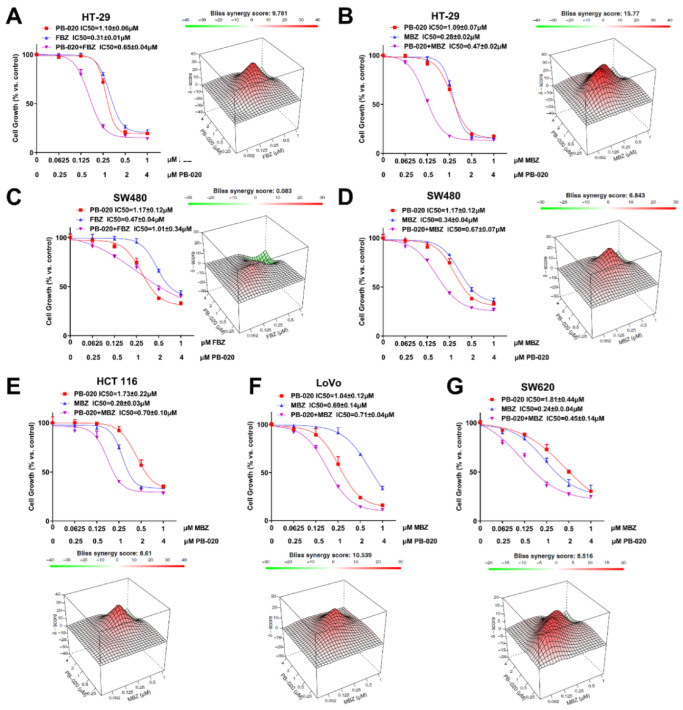
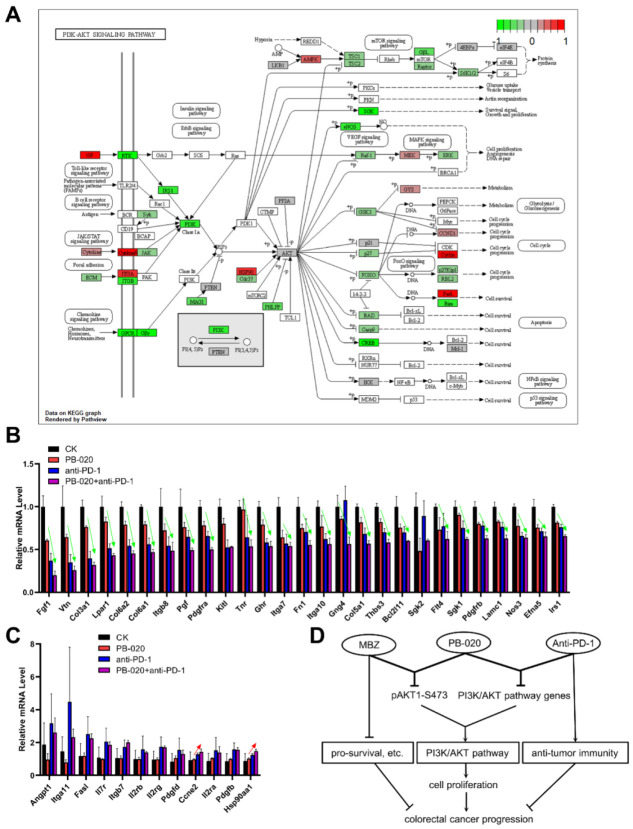
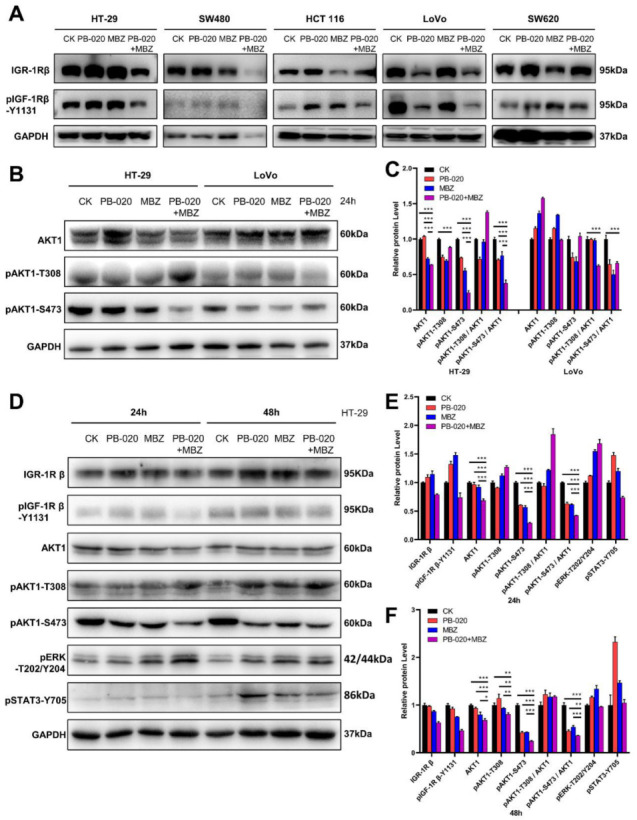
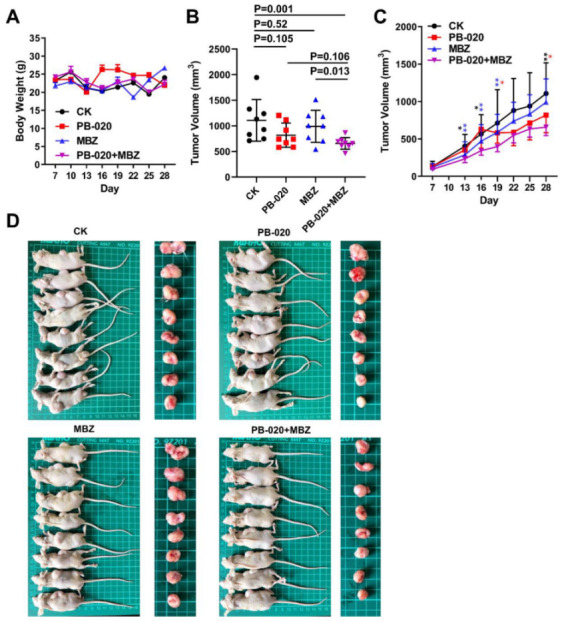
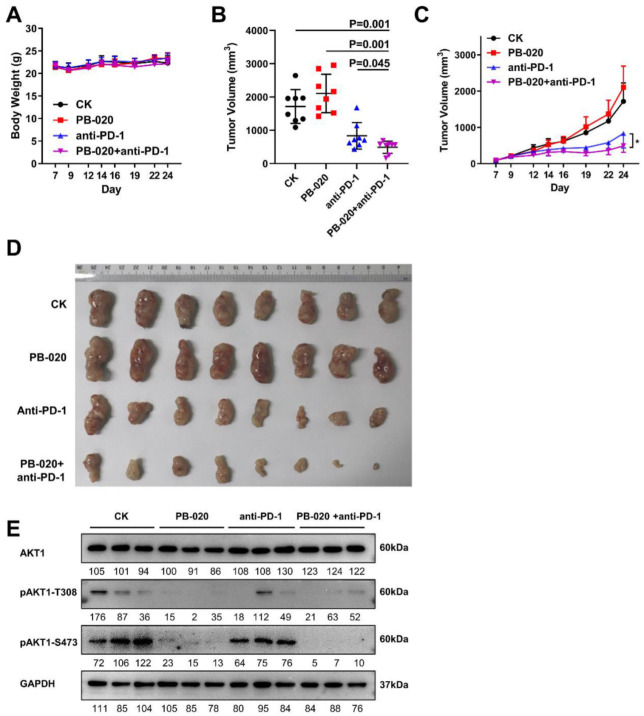
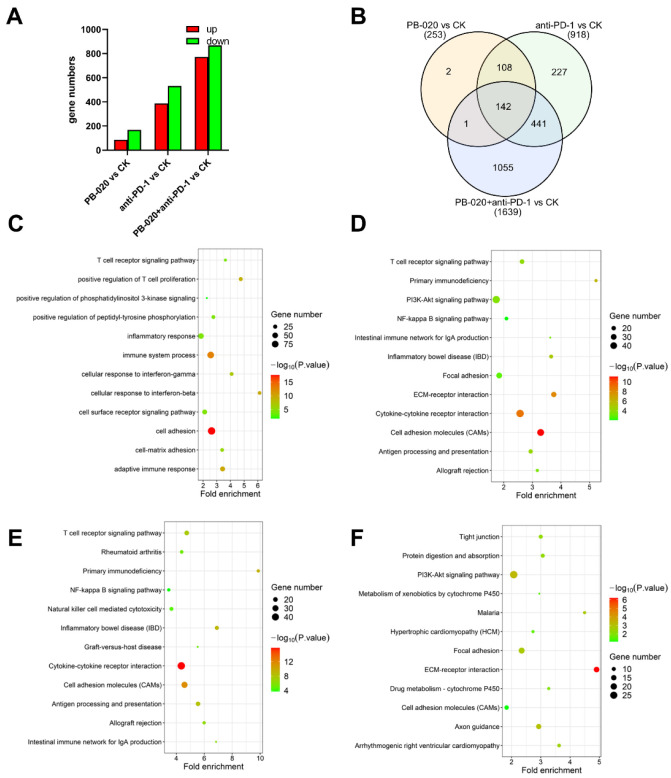
CRC is one of the leading causes of cancer mortality worldwide. Chemotherapy is widely used for the treatment of CRC, but its efficacy remains unsatisfactory, mainly due to drug resistance. Therefore, it is urgent to develop new strategies to overcome drug resistance. Combination therapy that aims to achieve additive or synergistic therapeutic effects is an effective approach to tackle the development of drug resistance. Given its established roles in tumor development, progression and metastasis, IGF-1R is a promising drug target for combination therapy against CRC. In this study, we revealed that the novel IGF-1R inhibitor PB-020 can act synergistically with mebendazole (MBZ) to reduce the viability of CRC cells and block xenograft CRC progression. Moreover, the PB-020/anti-PD-1 combination synergistically blocked CRC propagation in the MC38 murine colon carcinoma model. Both combination therapies potently suppressed the PI3K/AKT signaling pathway genes in CRC that may be associated with the development of drug resistance. Our findings establish a preclinical proof-of-concept for combating CRC using combined multi-target treatment with PB-020 and clinical anticancer drugs, which may provide useful clues for clinical trials to evaluate the efficacy and safety of these drug combinations in CRC patients.
结直肠癌是全球癌症死亡的主要原因之一。化疗广泛用于结直肠癌的治疗,但其疗效仍不尽人意,主要是由于耐药性。因此,迫切需要开发新的策略来克服耐药性。旨在实现相加或协同治疗效果的联合治疗是应对耐药性发展的有效方法。鉴于胰岛素样生长因子-1受体(IGF-1R)在肿瘤发生、发展和转移中已明确的作用,它是结直肠癌联合治疗中一个有前景的药物靶点。在本研究中,我们发现新型IGF-1R抑制剂PB-020可与甲苯达唑(MBZ)协同作用,降低结直肠癌细胞的活力并阻断异种移植结直肠癌的进展。此外,PB-020/抗程序性死亡蛋白1(anti-PD-1)组合在MC38小鼠结肠癌模型中协同阻断了结直肠癌的增殖。两种联合治疗均有效抑制了结直肠癌中可能与耐药性发展相关的磷脂酰肌醇-3激酶/蛋白激酶B(PI3K/AKT)信号通路基因。我们的研究结果为使用PB-020与临床抗癌药物联合多靶点治疗结直肠癌建立了临床前概念验证,这可能为评估这些药物组合在结直肠癌患者中的疗效和安全性的临床试验提供有用线索。