Oncohematology and Pharmaceutical Factory Research Area, Pediatric Cancer Genetics and Epigenetics Unit, Bambino Gesù Children's Hospital-IRCCS, Rome, Italy.
Immunology Research Area, Innate Lymphoid Cells Unit, Bambino Gesù Children's Hospital-IRCCS, Rome, Italy.
Front Immunol. 2024 Feb 14;15:1356321. doi: 10.3389/fimmu.2024.1356321. eCollection 2024.
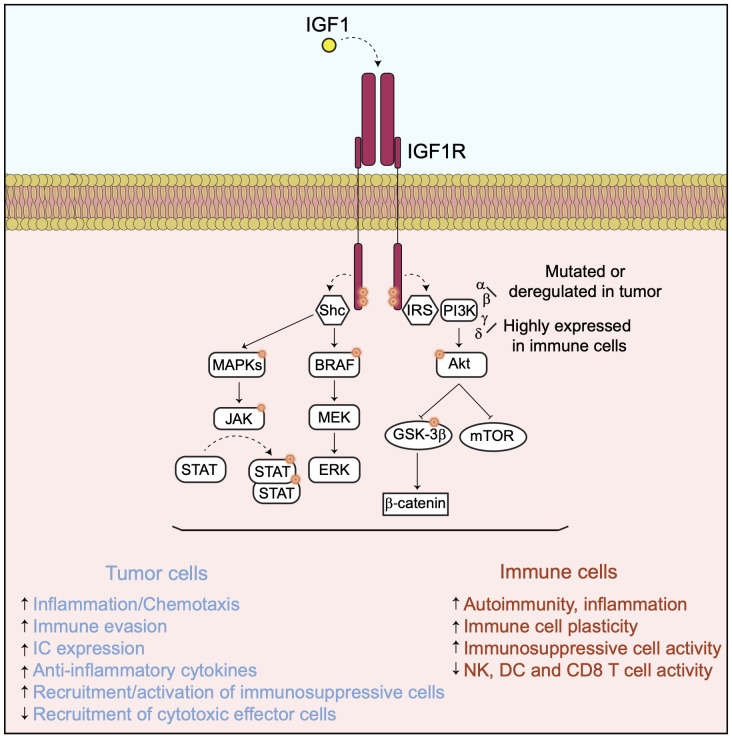
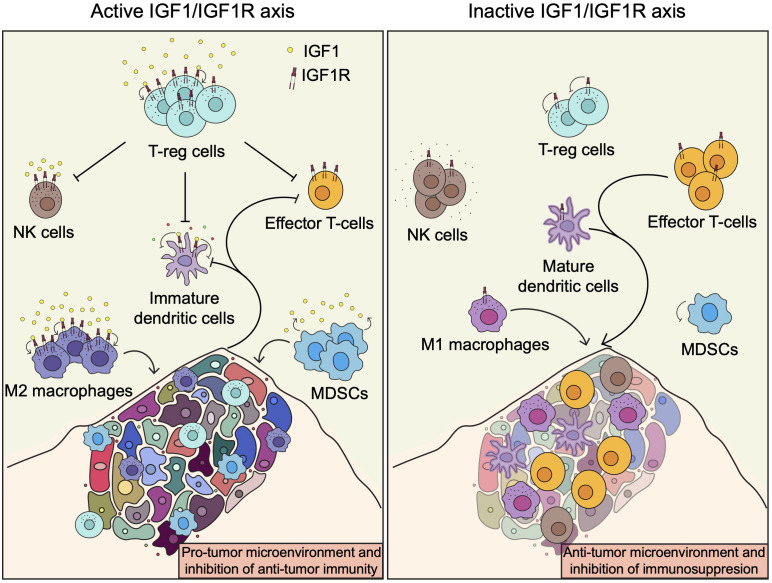
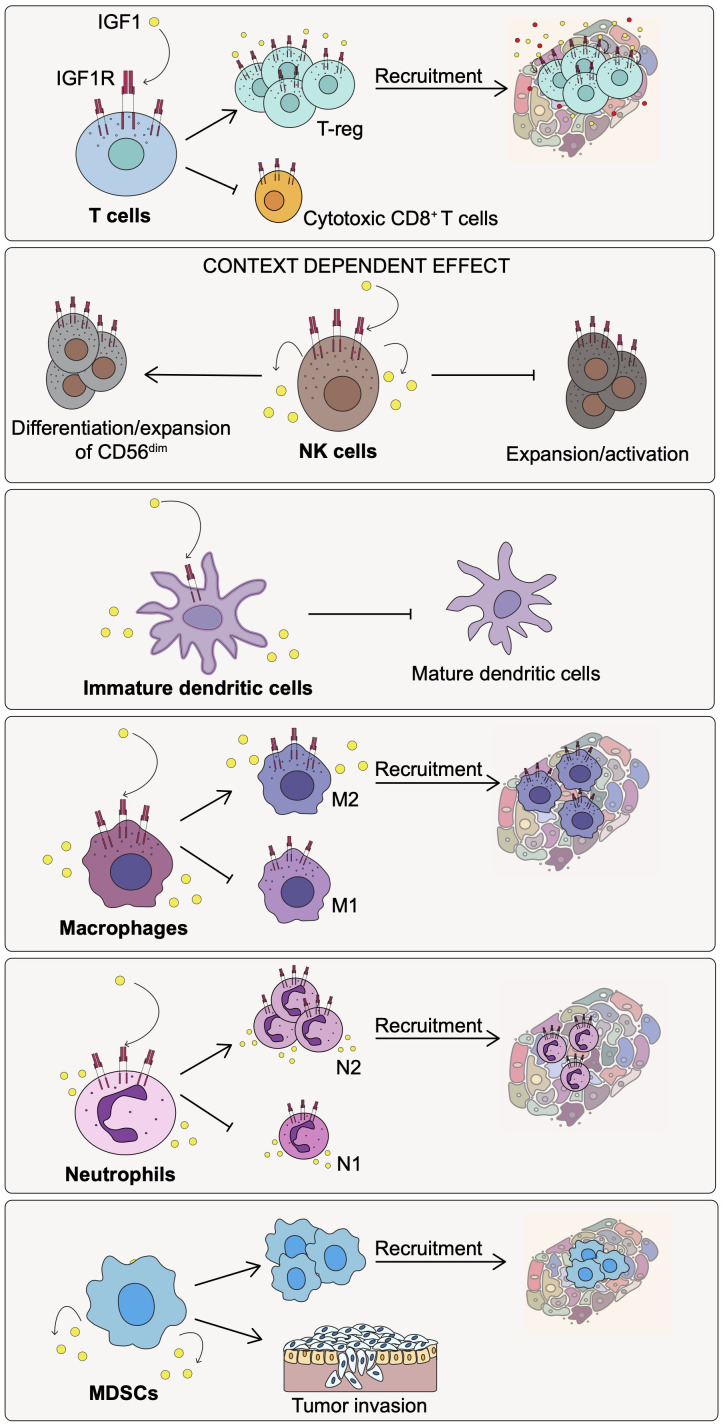
Cancer immunotherapy has made impressive advances in improving the outcome of patients affected by malignant diseases. Nonetheless, some limitations still need to be tackled to more efficiently and safely treat patients, in particular for those affected by solid tumors. One of the limitations is related to the immunosuppressive tumor microenvironment (TME), which impairs anti-tumor immunity. Efforts to identify targets able to turn the TME into a milieu more auspicious to current immuno-oncotherapy is a real challenge due to the high redundancy of the mechanisms involved. However, the insulin-like growth factor 1 receptor (IGF1R), an attractive drug target for cancer therapy, is emerging as an important immunomodulator and regulator of key immune cell functions. Here, after briefly summarizing the IGF1R signaling pathway in cancer, we review its role in regulating immune cells function and activity, and discuss IGF1R as a promising target to improve anti-cancer immunotherapy.
癌症免疫疗法在改善恶性疾病患者的预后方面取得了令人瞩目的进展。然而,仍需要解决一些局限性,以更有效地和安全地治疗患者,特别是那些患有实体瘤的患者。其中一个局限性与抑制肿瘤免疫的免疫抑制性肿瘤微环境(TME)有关。由于涉及的机制高度冗余,因此努力寻找能够将 TME 转变为更有利于当前免疫肿瘤治疗的环境的靶点是一项真正的挑战。然而,胰岛素样生长因子 1 受体(IGF1R)作为癌症治疗的一个有吸引力的药物靶点,正在成为一个重要的免疫调节剂和关键免疫细胞功能的调节剂。在这里,在简要总结了癌症中的 IGF1R 信号通路之后,我们回顾了它在调节免疫细胞功能和活性中的作用,并讨论了 IGF1R 作为改善抗癌免疫治疗的一个有前途的靶点。