Department of Nephrology and Hypertension, University Hospital Erlangen, Friedrich-Alexander University (FAU) Erlangen-Nürnberg, 91054 Erlangen, Germany.
Research Center on Rare Kidney Diseases (RECORD), University Hospital Erlangen, 91054 Erlangen, Germany.
Int J Mol Sci. 2022 Dec 1;23(23):15070. doi: 10.3390/ijms232315070.
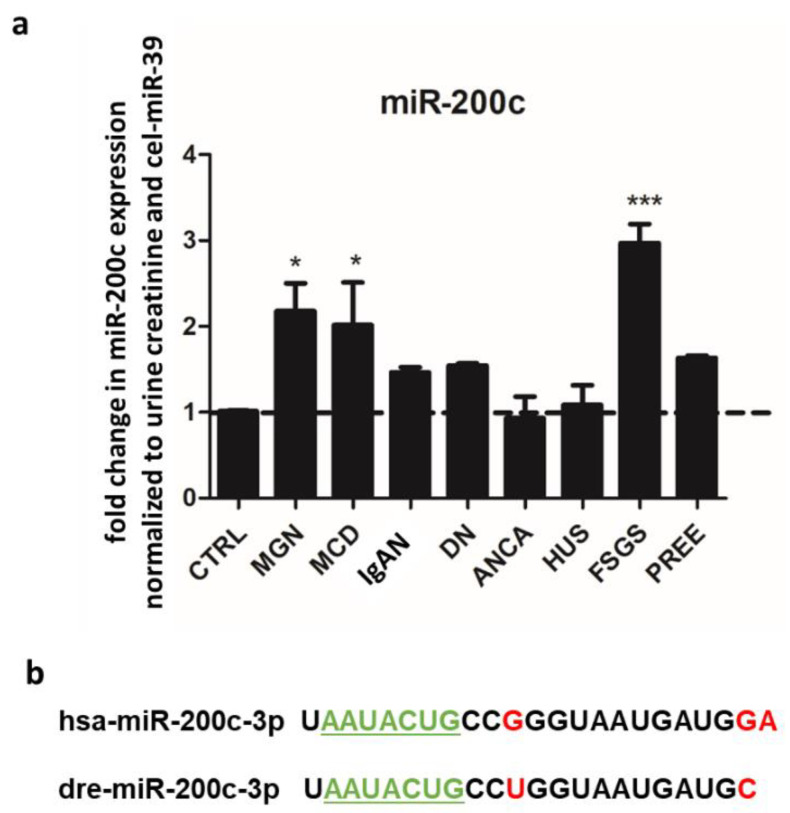
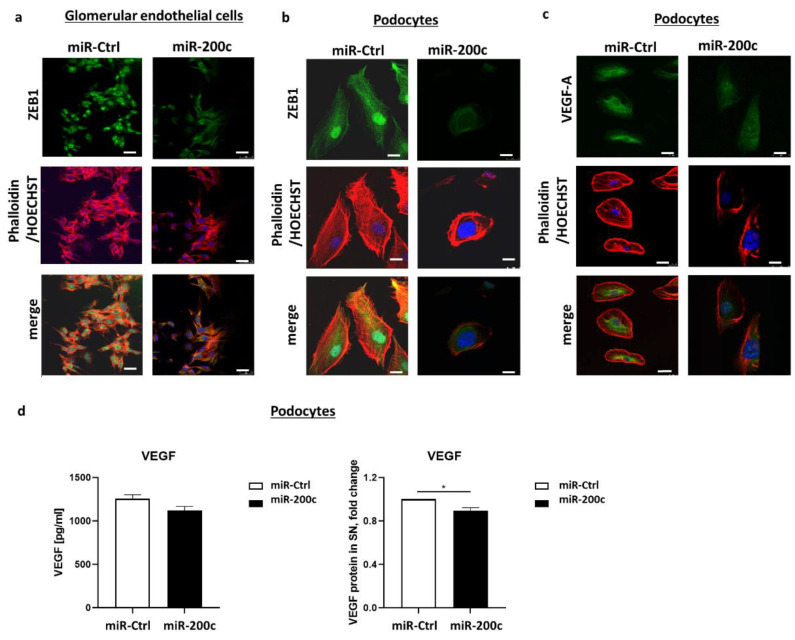
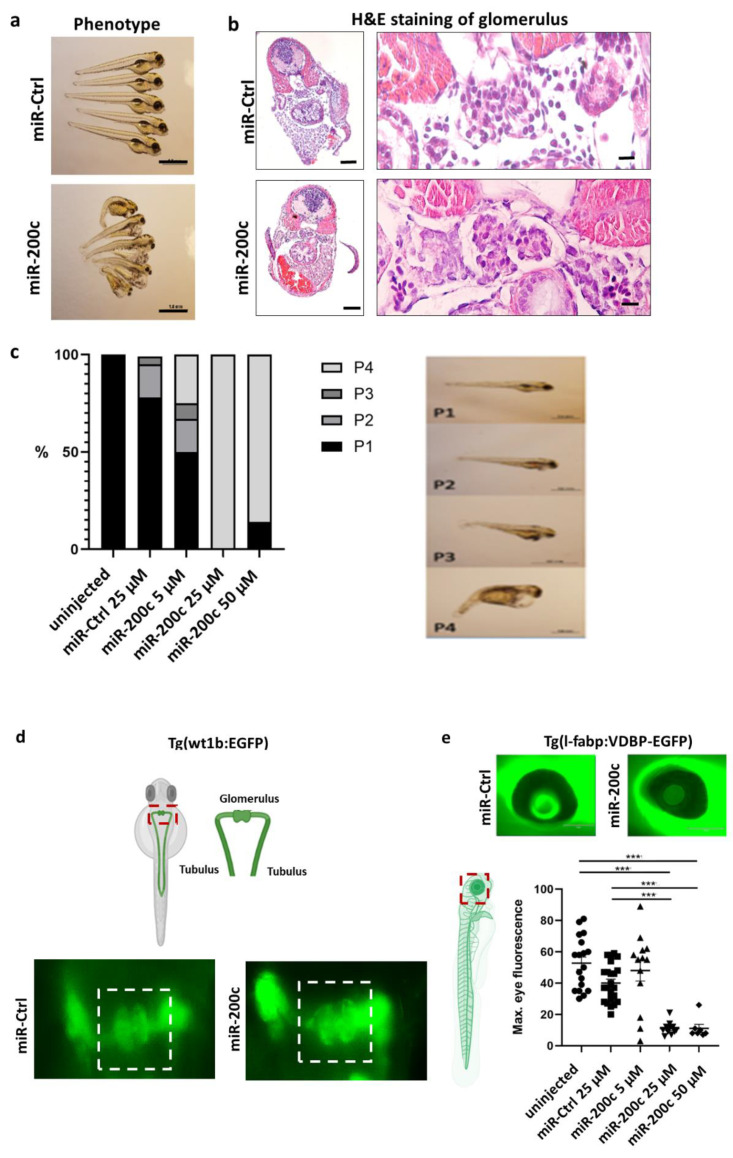
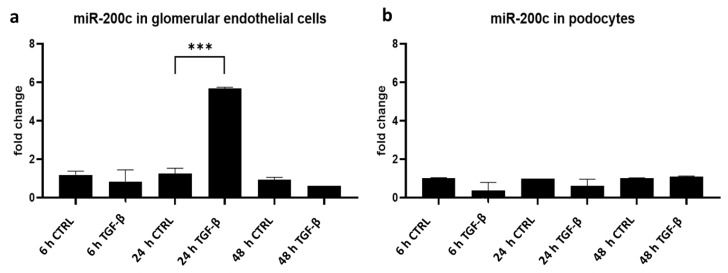
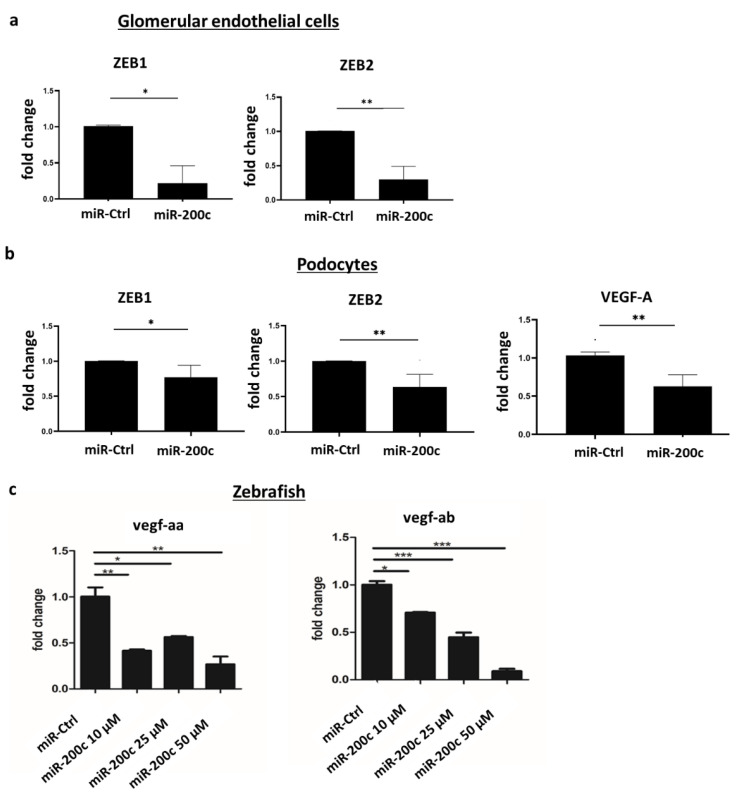
Deciphering the pathophysiological mechanisms of primary podocytopathies that can lead to end-stage renal disease and increased mortality is an unmet need. Studying how microRNAs (miRs) interfere with various signaling pathways enables identification of pathomechanisms, novel biomarkers and potential therapeutic options. We investigated the expression of miR-200c in urine from patients with different renal diseases as a potential candidate involved in podocytopathies. The role of miR-200c for the glomerulus and its potential targets were studied in cultured human podocytes, human glomerular endothelial cells and in the zebrafish model. miR-200c was upregulated in urine from patients with minimal change disease, membranous glomerulonephritis and focal segmental glomerulosclerosis and also in transforming growth factor beta (TGF-β) stressed glomerular endothelial cells, but not in podocytes. In zebrafish, miR-200c overexpression caused proteinuria, edema, podocyte foot process effacement and glomerular endotheliosis. Although zinc finger E-Box binding homeobox 1/2 (ZEB1/2), important in epithelial to mesenchymal transition (EMT), are prominent targets of miR-200c, their downregulation did not explain our zebrafish phenotype. We detected decreased vegfaa/bb in zebrafish overexpressing miR-200c and could further prove that miR-200c decreased VEGF-A expression and secretion in cultured human podocytes. We hypothesize that miR-200c is released from glomerular endothelial cells during cell stress and acts in a paracrine, autocrine, as well as context-dependent manner in the glomerulus. MiR-200c can cause glomerular damage most likely due to the reduction of podocyte VEGF-A. In contrast, miR-200c might also influence ZEB expression and therefore EMT, which might be important in other conditions. Therefore, we propose that miR-200c-mediated effects in the glomerulus are context-sensitive.
解析原发性足细胞病导致终末期肾病和死亡率增加的病理生理机制是未满足的需求。研究 microRNAs(miRs)如何干扰各种信号通路,可以确定病理机制、新的生物标志物和潜在的治疗选择。我们研究了尿液中 miR-200c 在不同肾脏疾病患者中的表达,作为一种可能涉及足细胞病的候选物。在培养的人足细胞、人肾小球内皮细胞和斑马鱼模型中研究了 miR-200c 对肾小球的作用及其潜在靶标。miR-200c 在微小病变性肾病、膜性肾小球肾炎和局灶节段性肾小球硬化症患者的尿液中上调,也在转化生长因子β(TGF-β)应激的肾小球内皮细胞中上调,但不在足细胞中上调。在斑马鱼中,miR-200c 过表达导致蛋白尿、水肿、足细胞足突消失和肾小球内皮细胞病。尽管锌指 E-Box 结合同源盒 1/2(ZEB1/2)在上皮间质转化(EMT)中很重要,但它们是 miR-200c 的重要靶标,但其下调并不能解释我们的斑马鱼表型。我们在过表达 miR-200c 的斑马鱼中检测到 vegfaa/bb 减少,并进一步证明 miR-200c 降低了培养的人足细胞中 VEGF-A 的表达和分泌。我们假设 miR-200c 在细胞应激期间从肾小球内皮细胞释放,并在肾小球中以旁分泌、自分泌和上下文依赖的方式发挥作用。miR-200c 可能导致肾小球损伤,最有可能是由于足细胞 VEGF-A 的减少。相比之下,miR-200c 也可能影响 ZEB 的表达,从而影响 EMT,这在其他情况下可能很重要。因此,我们提出 miR-200c 在肾小球中的作用是上下文敏感的。