Department of Pharmacology, Teikyo University School of Medicine, 2-11-1 Kaga, Itabashi, Tokyo 173-8605, Japan.
Teikyo University Support Center for Women Physicians and Researchers, 2-11-1 Kaga, Itabashi, Tokyo 173-8605, Japan.
Int J Mol Sci. 2022 Dec 1;23(23):15076. doi: 10.3390/ijms232315076.
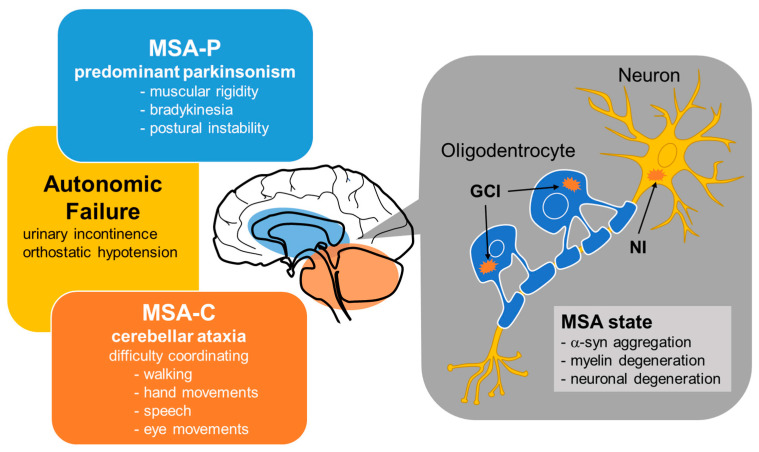
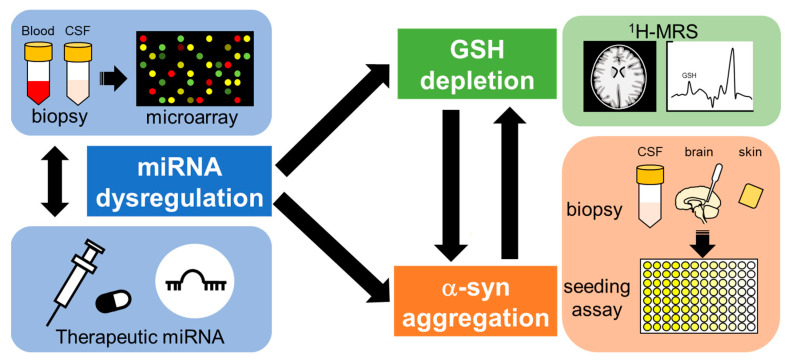
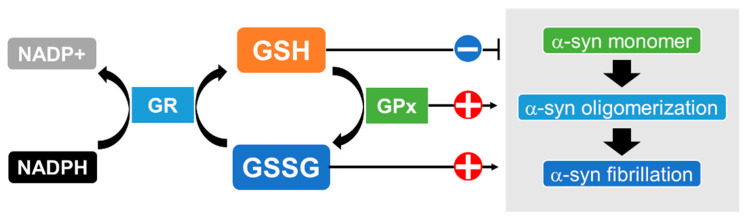
Multiple system atrophy (MSA) is a rare neurodegenerative disease characterized by parkinsonism, cerebellar impairment, and autonomic failure. Although the causes of MSA onset and progression remain uncertain, its pathogenesis may involve oxidative stress via the generation of excess reactive oxygen species and/or destruction of the antioxidant system. One of the most powerful antioxidants is glutathione, which plays essential roles as an antioxidant enzyme cofactor, cysteine-storage molecule, major redox buffer, and neuromodulator, in addition to being a key antioxidant in the central nervous system. Glutathione levels are known to be reduced in neurodegenerative diseases. In addition, genes regulating redox states have been shown to be post-transcriptionally modified by microRNA (miRNA), one of the most important types of non-coding RNA. miRNAs have been reported to be dysregulated in several diseases, including MSA. In this review, we focused on the relation between glutathione deficiency, miRNA dysregulation and oxidative stress and their close relation with MSA pathology.
多系统萎缩(MSA)是一种罕见的神经退行性疾病,其特征为帕金森病、小脑损害和自主神经衰竭。尽管 MSA 的发病和进展原因仍不确定,但它的发病机制可能涉及氧化应激,通过产生过多的活性氧物种和/或破坏抗氧化系统。最强的抗氧化剂之一是谷胱甘肽,它作为抗氧化酶辅因子、半胱氨酸储存分子、主要氧化还原缓冲剂和神经调节剂发挥重要作用,此外还是中枢神经系统中的关键抗氧化剂。已知谷胱甘肽水平在神经退行性疾病中降低。此外,调节氧化还原状态的基因已被证明可被 microRNA(miRNA)进行转录后修饰,miRNA 是最重要的非编码 RNA 之一。已经有报道称,miRNA 在包括 MSA 在内的几种疾病中失调。在这篇综述中,我们重点关注谷胱甘肽缺乏、miRNA 失调与氧化应激之间的关系,以及它们与 MSA 病理的密切关系。