Faculty of Food Technology and Biotechnology, University of Zagreb, 10000 Zagreb, Croatia.
Nutrients. 2022 Nov 24;14(23):4992. doi: 10.3390/nu14234992.
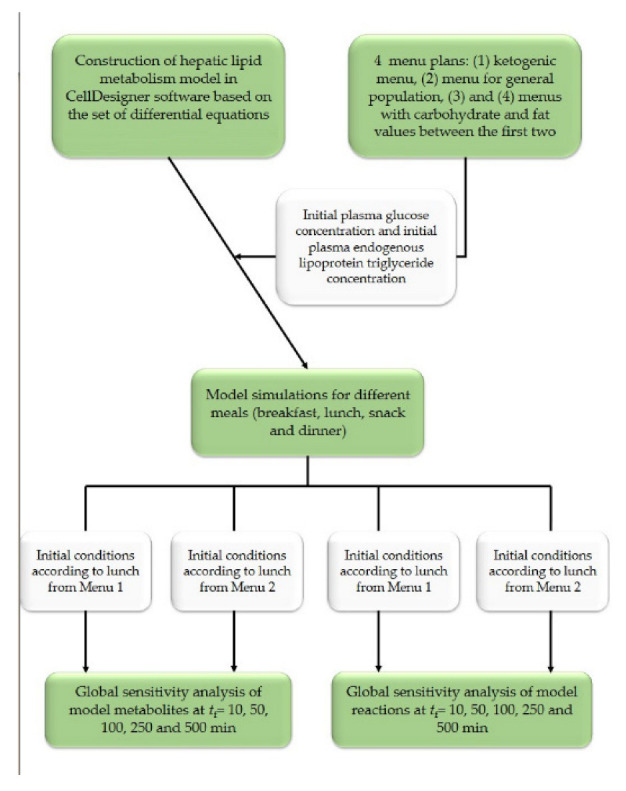
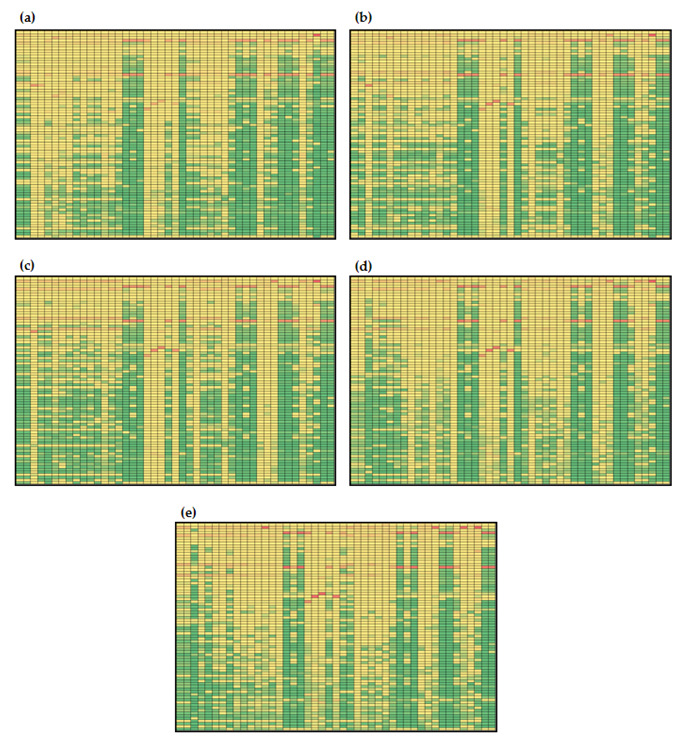
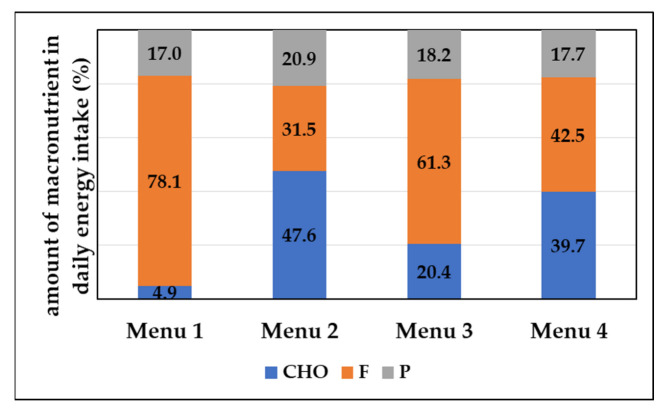
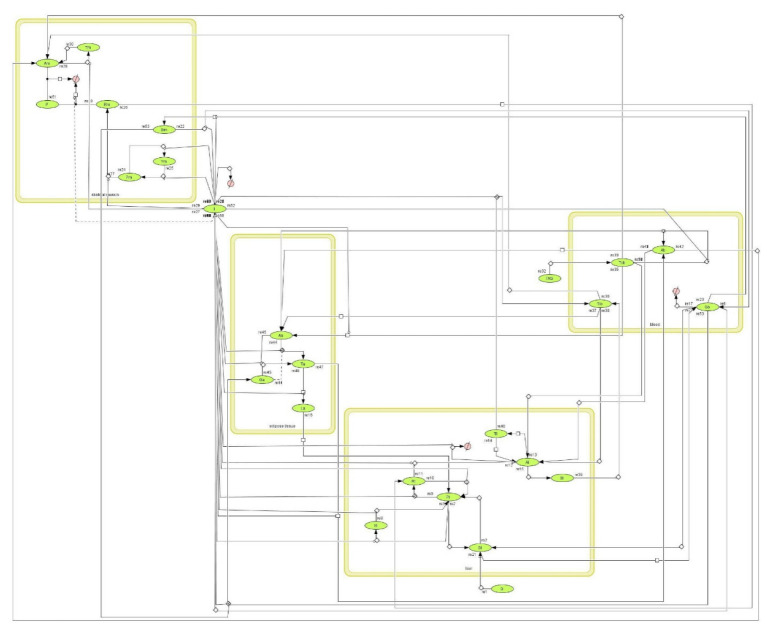
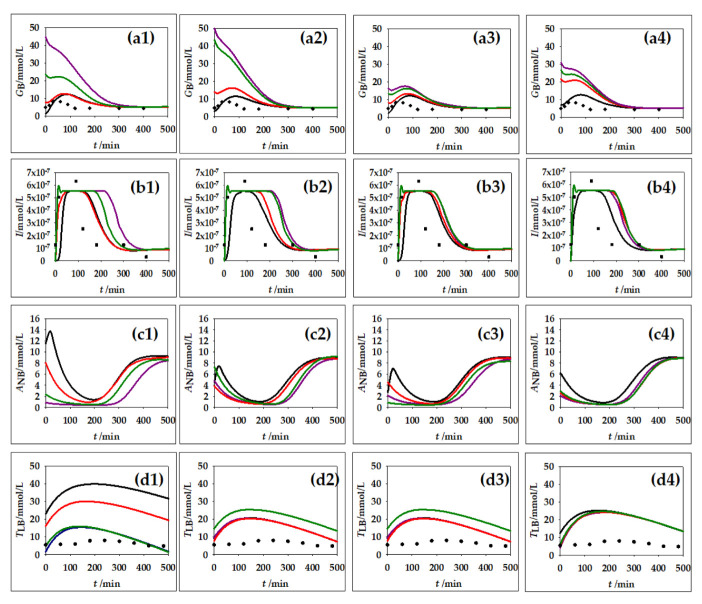
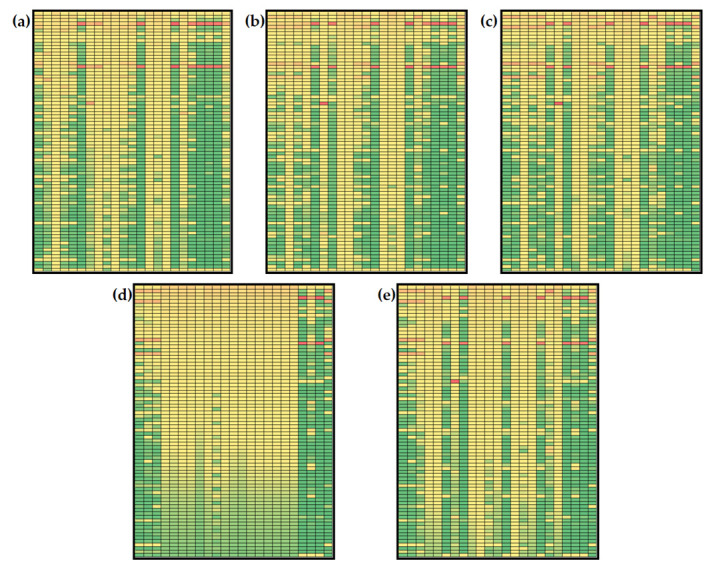
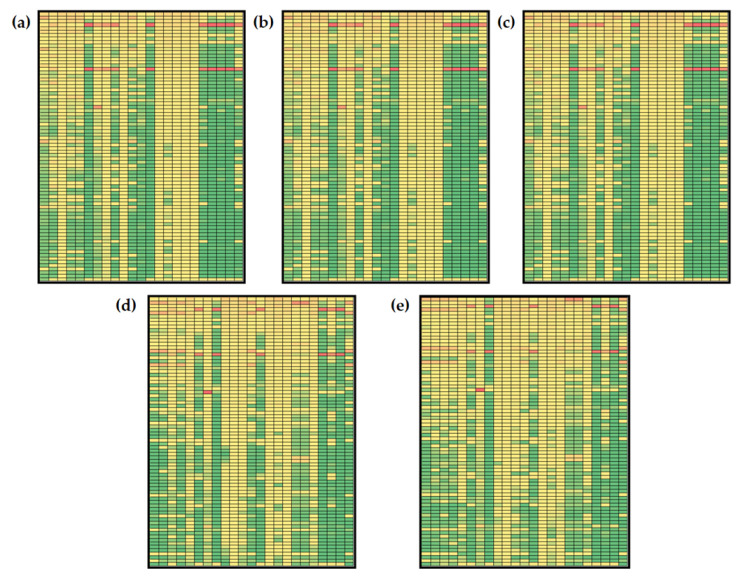
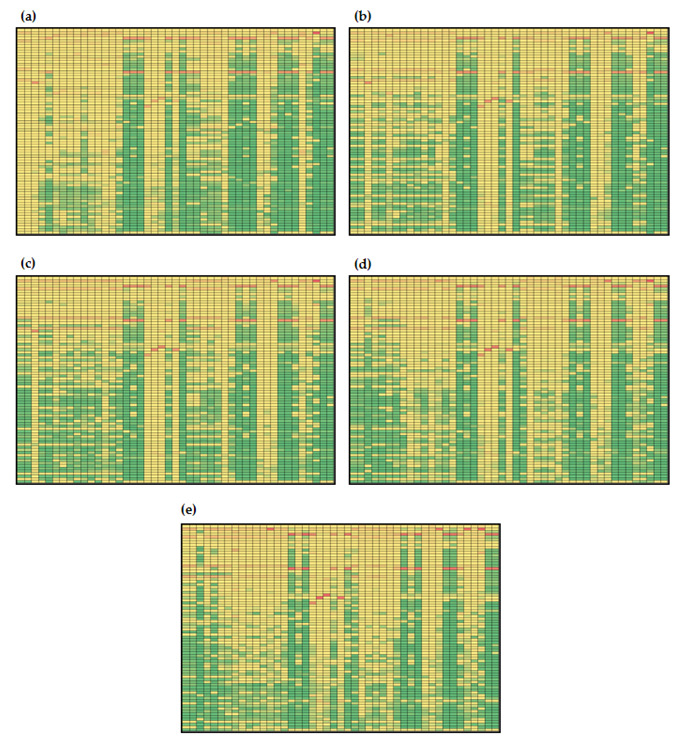
Lipid metabolism is a complex process and it is extremely helpful to simulate its performance with different models that explain all the biological processes that comprise it, which then enables its better understanding as well as understanding the kinetics of the process itself. Typically, kinetic parameters are obtained from a number of sources under specific experimental conditions, and they are a source of uncertainty. Sensitivity analysis is a useful technique for controlling the uncertainty of model parameters. It evaluates a model's dependence on its input variables. In this work, hepatic lipid metabolism was mathematically simulated and analyzed. Simulations of the model were performed using different initial plasma glucose (G) and plasma triacylglyceride (TAG) concentrations according to proposed menus for different meals (breakfast, lunch, snack and dinner). A non-stationary Fourier amplitude sensitivity test (FAST) was applied to analyze the effect of 78 kinetic parameters on 24 metabolite concentrations and 45 reaction rates of the biological part of the hepatic lipid metabolism model at five time points ( = 10, 50, 100, 250 and 500 min). This study examined the total influence of input parameter uncertainty on the variance of metabolic model predictions. The majority of the propagated uncertainty is due to the interactions of numerous factors rather than being linear from one parameter to one result. Obtained results showed differences in the model control regarding the different initial concentrations and also the changes in the model control over time. The aforementioned knowledge enables dietitians and physicians, working with patients who need to regulate fat metabolism due to illness and/or excessive body mass, to better understand the problem.
脂质代谢是一个复杂的过程,通过使用不同的模型来模拟其性能,解释构成它的所有生物学过程,这对更好地理解脂质代谢及其动力学非常有帮助。通常,动力学参数是根据特定实验条件从多个来源获得的,并且它们是不确定性的来源。敏感性分析是控制模型参数不确定性的有用技术。它评估模型对其输入变量的依赖程度。在这项工作中,对肝脏脂质代谢进行了数学模拟和分析。根据不同餐食(早餐、午餐、小吃和晚餐)的建议菜单,使用不同的初始血浆葡萄糖(G)和血浆三酰甘油(TAG)浓度对模型进行模拟。应用非稳态傅里叶幅度灵敏度测试(FAST)分析了 78 个动力学参数对生物部分 24 种代谢物浓度和 45 种肝脂质代谢模型反应速率的影响,该模型在五个时间点(=10、50、100、250 和 500 min)。这项研究检验了输入参数不确定性对代谢模型预测方差的总影响。传播的不确定性主要是由于许多因素的相互作用,而不是从一个参数到一个结果的线性关系。所得结果表明,不同的初始浓度和模型控制随时间的变化对模型控制存在差异。上述知识使营养师和医生能够更好地理解需要调节脂肪代谢的患者的问题,这些患者可能由于疾病和/或超重而需要调节脂肪代谢。