Department of Medicine, College of Medicine, University of Ibadan, Ibadan, Nigeria.
Research Institute of Human Ecology, Seoul National University, Seoul, Republic of Korea.
Int J Stroke. 2023 Jul;18(6):634-644. doi: 10.1177/17474930221147164. Epub 2023 Jan 14.
The burden of stroke (a leading cause of disability and mortality) in Africa appears to be increasing, but a systematic review of the best available data to support or refute this observation is lacking.
To determine the incidence and 1-month case-fatality rates from high-quality studies of stroke epidemiology among Africans.
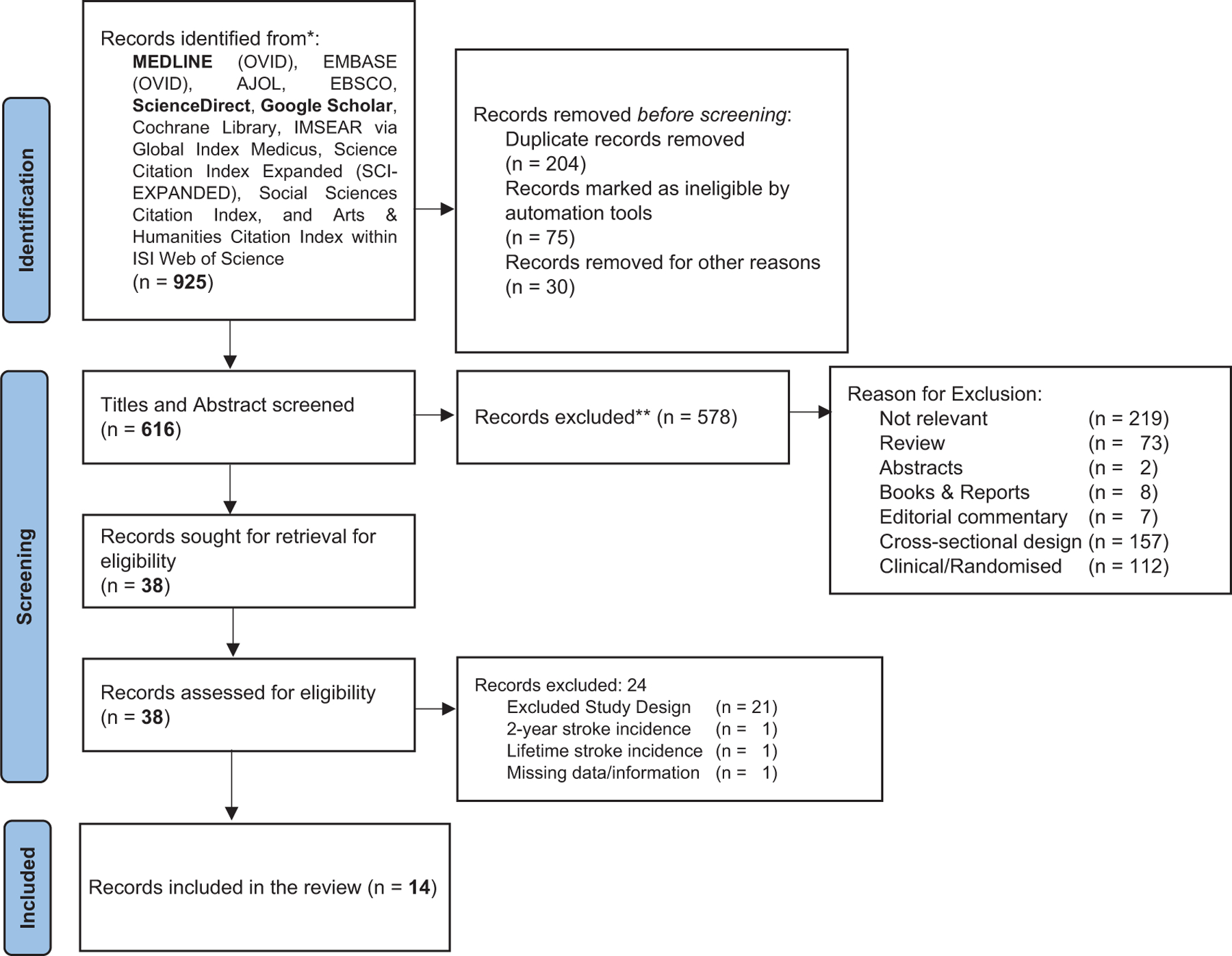
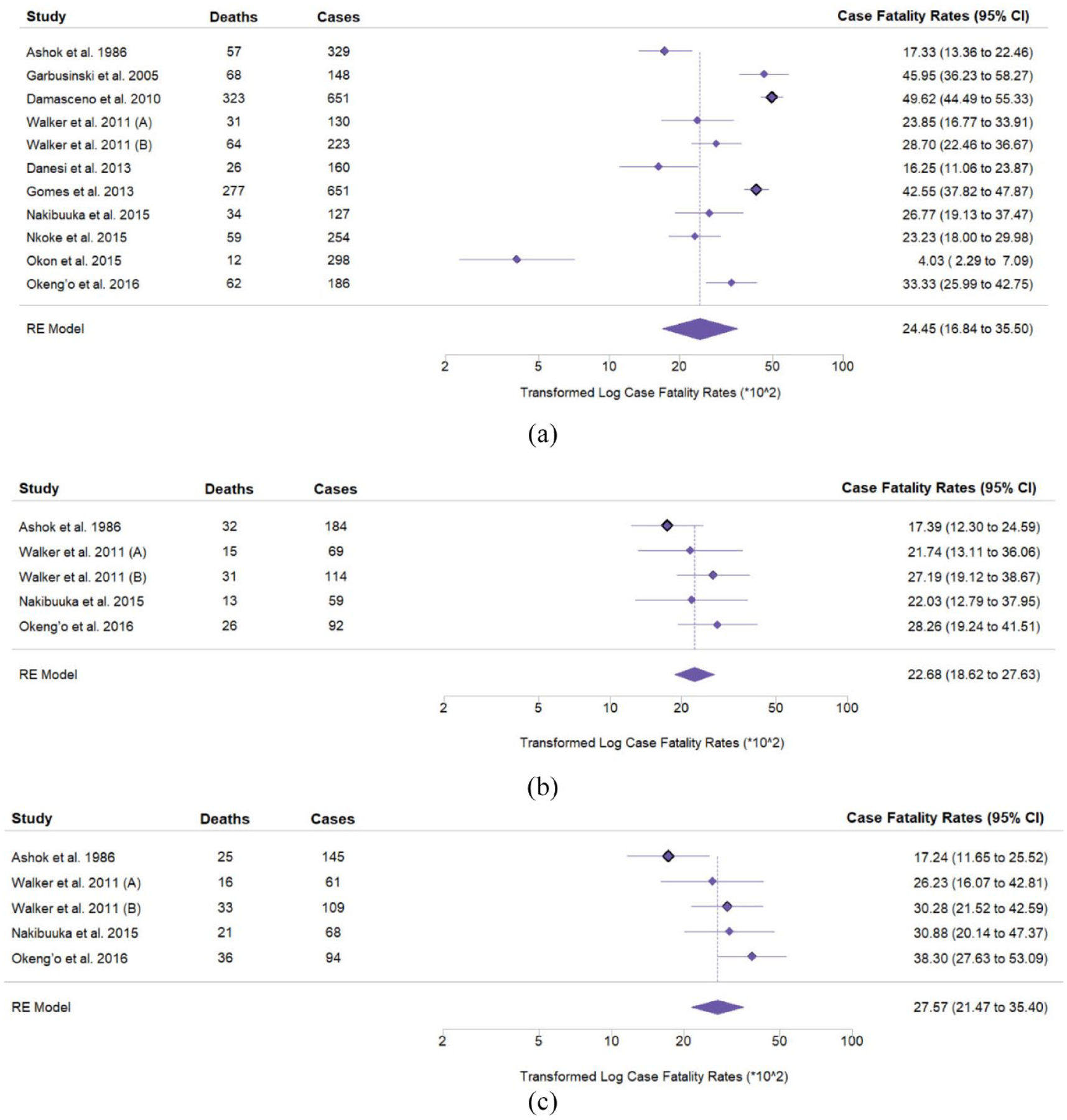
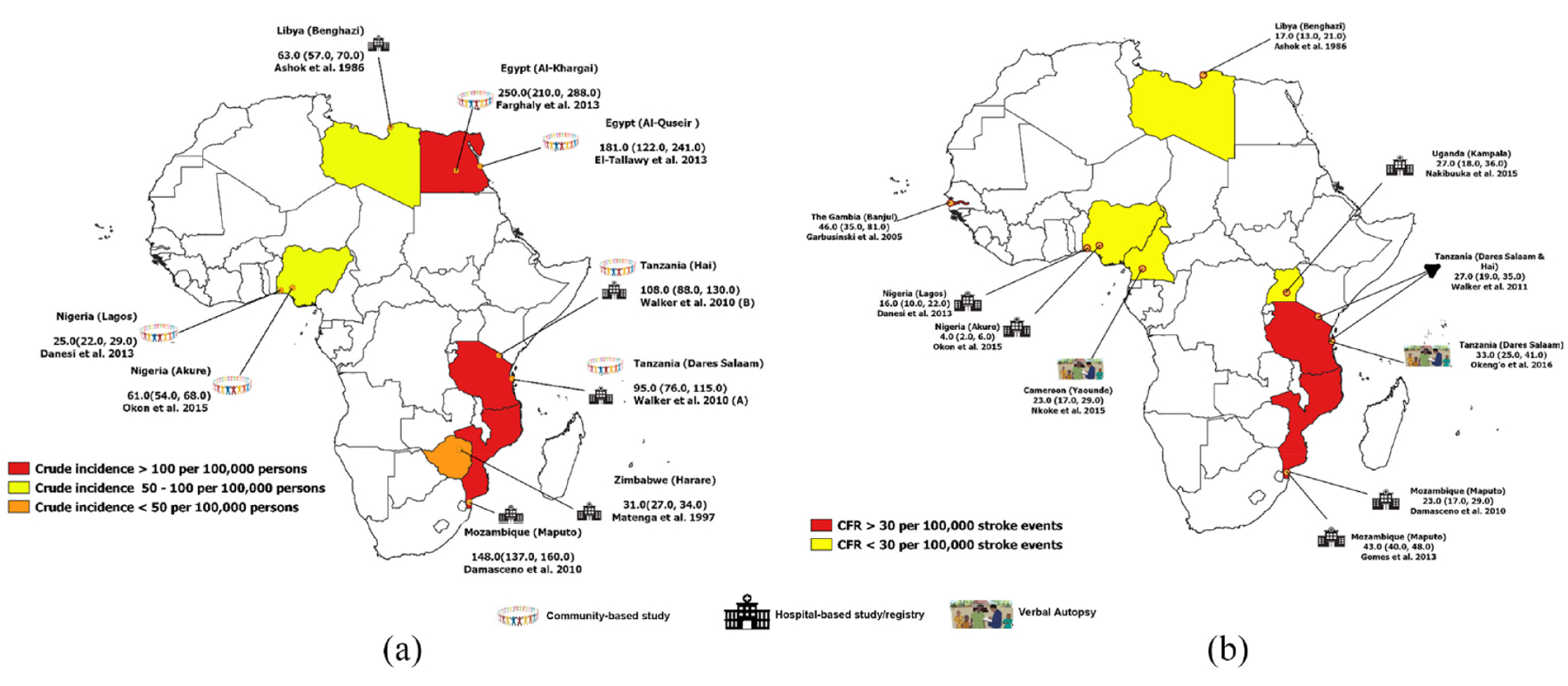
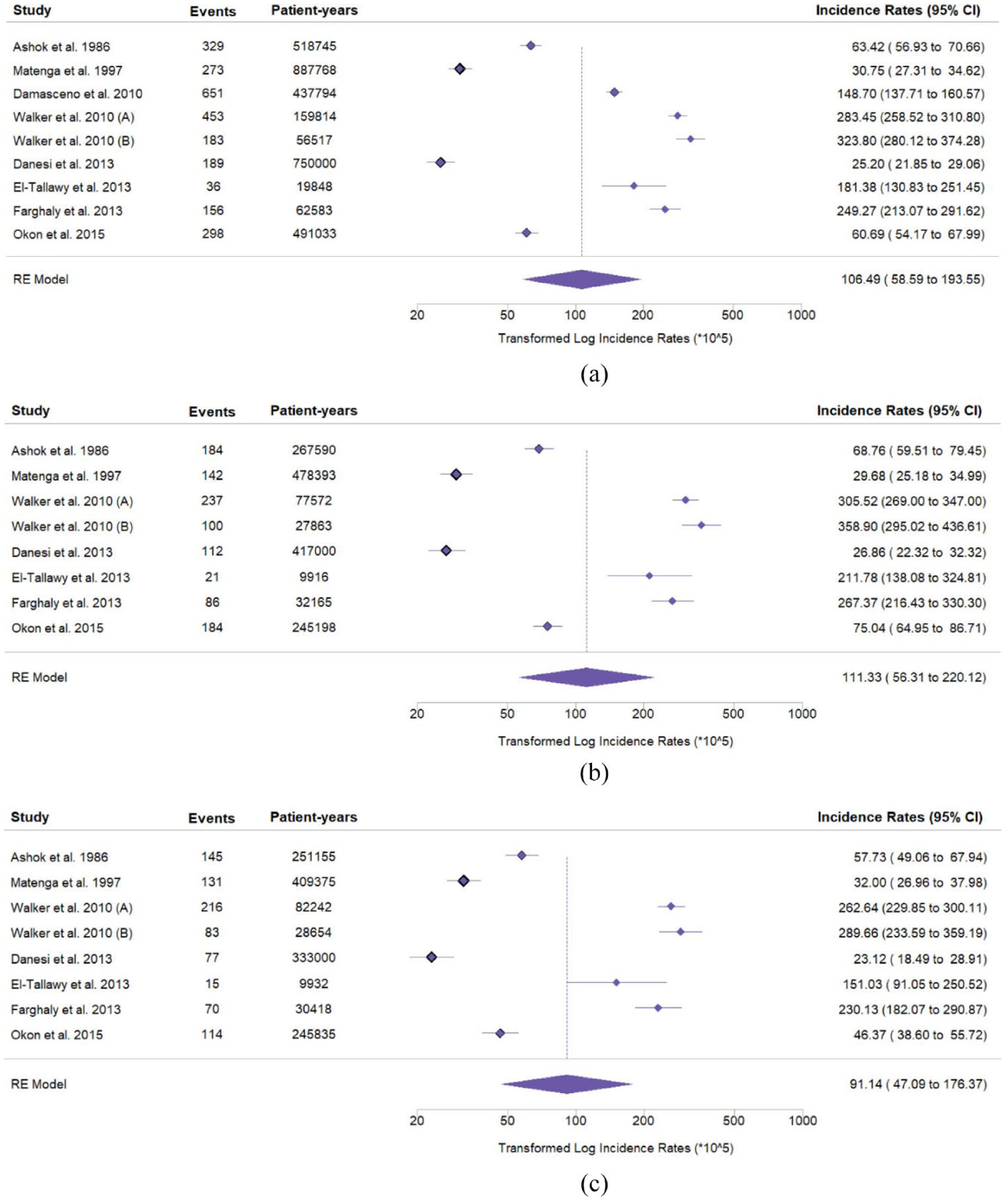
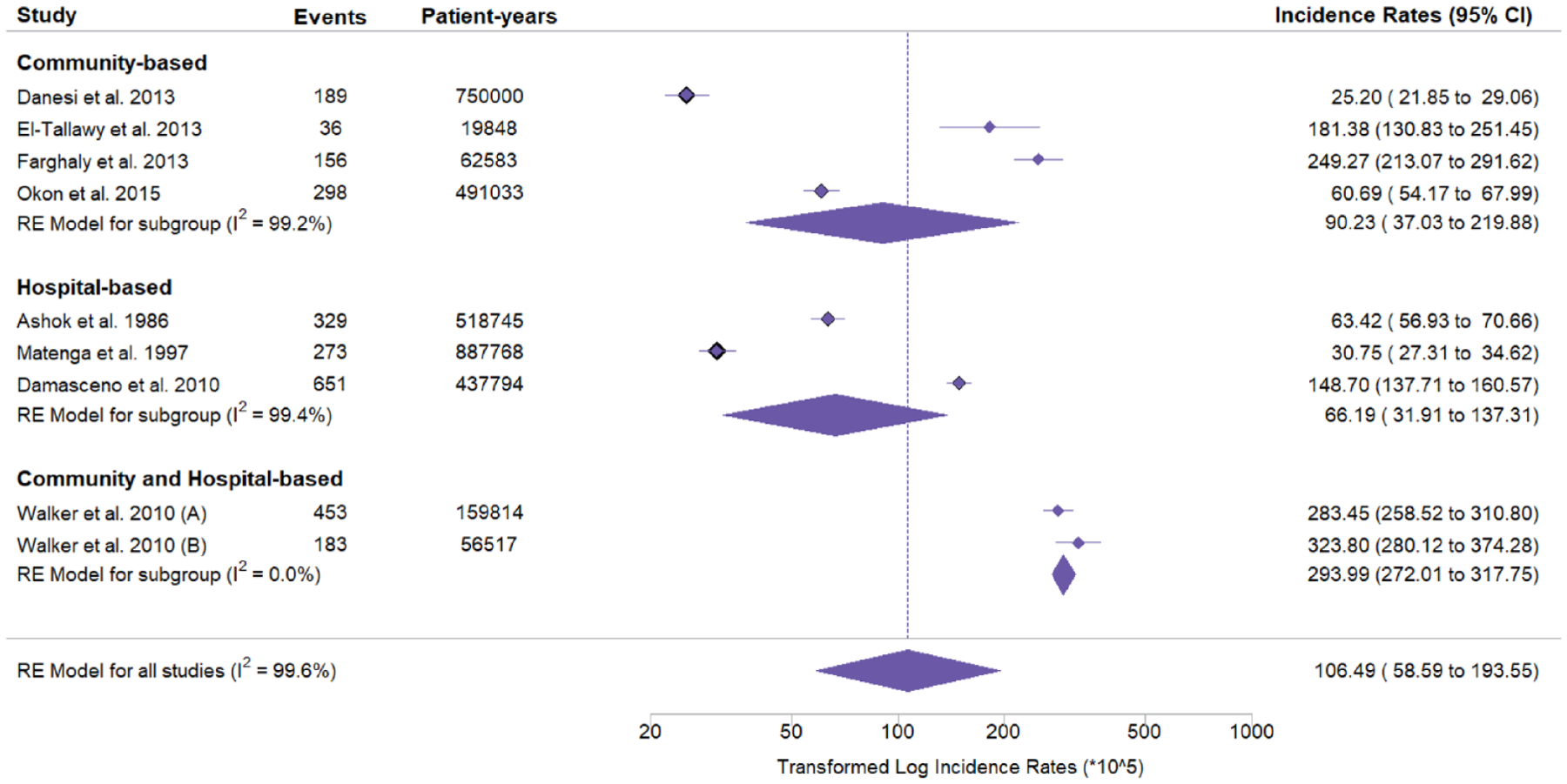
We searched and retrieved eligible articles on stroke epidemiology among indigenous Africans in bibliographic databases (MEDLINE, ScienceDirect, Google Scholar, and Cochrane library) using predefined search terms from the earliest records through January 2022. Methodological assessment of eligible studies was conducted using the Newcastle-Ottawa scale. Pooling of incidence and case-fatality rates was performed via generalized linear models (Poisson-Normal random-effects model). Of the 922 articles retrieved, 14 studies were eligible for inclusion. The total number of stroke cases was 2568, with a population denominator (total sample size included in population-based registries or those who agreed to participate in door-to-door community studies) of 3,384,102. The pooled crude incidence rate of stroke per 100,000 persons in Africa was 106.49 (95% confidence interval (CI) = 58.59-193.55), = 99.6%. The point estimate of the crude incidence rate was higher among males, 111.33 (95% CI = 56.31-220.12), = 99.2%, than females, 91.14 (95% CI = 47.09-176.37), = 98.9%. One-month case-fatality rate was 24.45 (95% CI = 16.84-35.50), = 96.8%, with lower estimates among males, 22.68 (95% CI = 18.62-27.63), = 12.9%, than females, 27.57 (95% CI = 21.47-35.40), = 51.6%.
The burden of stroke in Africa remains very high. However, little is known about the dynamics of stroke epidemiology among Africans due to the dearth of high-quality evidence. Further continent-wide rigorous epidemiological studies and surveillance programs using the World Health Organization STEPwise approach to Surveillance (WHO STEPS) framework are needed.
在非洲,中风(导致残疾和死亡的主要原因之一)的负担似乎在增加,但缺乏对支持或反驳这一观察结果的最佳现有数据进行系统审查。
确定在非洲进行的非洲裔人群中风流行病学的高质量研究中的发病率和 1 个月病死率。
我们使用预定义的搜索词,从最早的记录到 2022 年 1 月,在文献数据库(MEDLINE、ScienceDirect、Google Scholar 和 Cochrane 图书馆)中搜索并检索了关于非洲裔中风流行病学的合格文章。使用纽卡斯尔-渥太华量表对合格研究进行方法学评估。通过广义线性模型(泊松-正态随机效应模型)对发病率和病死率进行汇总。从检索到的 922 篇文章中,有 14 篇符合纳入标准。中风病例总数为 2568 例,人群底数(基于人群的登记处中包含的总样本量或同意参与上门社区研究的人数)为 3384102 人。非洲每 10 万人中风的粗发病率为 106.49(95%置信区间(CI)=58.59-193.55),为 99.6%。男性的粗发病率点估计值较高,为 111.33(95%CI=56.31-220.12),为 99.2%,而女性为 91.14(95%CI=47.09-176.37),为 98.9%。1 个月病死率为 24.45(95%CI=16.84-35.50),为 96.8%,男性的估计值较低,为 22.68(95%CI=18.62-27.63),为 12.9%,女性为 27.57(95%CI=21.47-35.40),为 51.6%。
非洲中风的负担仍然很高。然而,由于高质量证据的缺乏,对于非洲人群中风流行病学的动态,我们知之甚少。需要在整个非洲大陆开展更严格的流行病学研究和监测计划,并使用世界卫生组织的 STEPWISE 监测方法(WHO STEPS)框架。