Department of Radiation Oncology, Ohio State University Wexner Medical Center, Columbus, Ohio, USA.
Department of Radiation Oncology, Massachusetts General Hospital/Harvard Medical School, Boston, Massachusetts, USA.
Cancer. 2023 Mar 1;129(5):764-770. doi: 10.1002/cncr.34574. Epub 2022 Dec 11.
Hippocampal avoidance (HA) has been shown to preserve cognitive function in adult patients with cancer treated with whole-brain radiation therapy for brain metastases. However, the feasibility of HA in pediatric patients with brain tumors has not been explored because of concerns of increased risk of relapse in the peri-hippocampal region. Our aim was to determine patterns of recurrence and incidence of peri-hippocampal relapse in pediatric patients with medulloblastoma (MB).
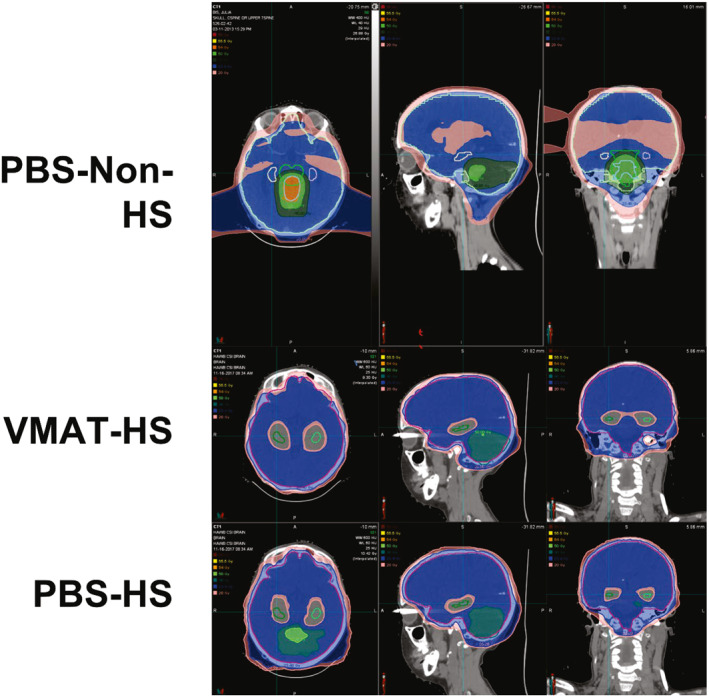
We identified pediatric patients with MB treated with protons between 2002 and 2016 and who had recurrent disease. To estimate the risk of peri-hippocampal recurrence, three hippocampal zones (HZs) were delineated corresponding to ≤5 mm (HZ-1), 6 to 10 mm (HZ-2), and >10 mm (HZ-3) distance of the recurrence from the contoured hippocampi. To determine the feasibility of HA, three standard-risk patients with MB were planned using either volumetric-modulated arc therapy (VMAT) or intensity-modulated proton therapy (IMPT) plans.
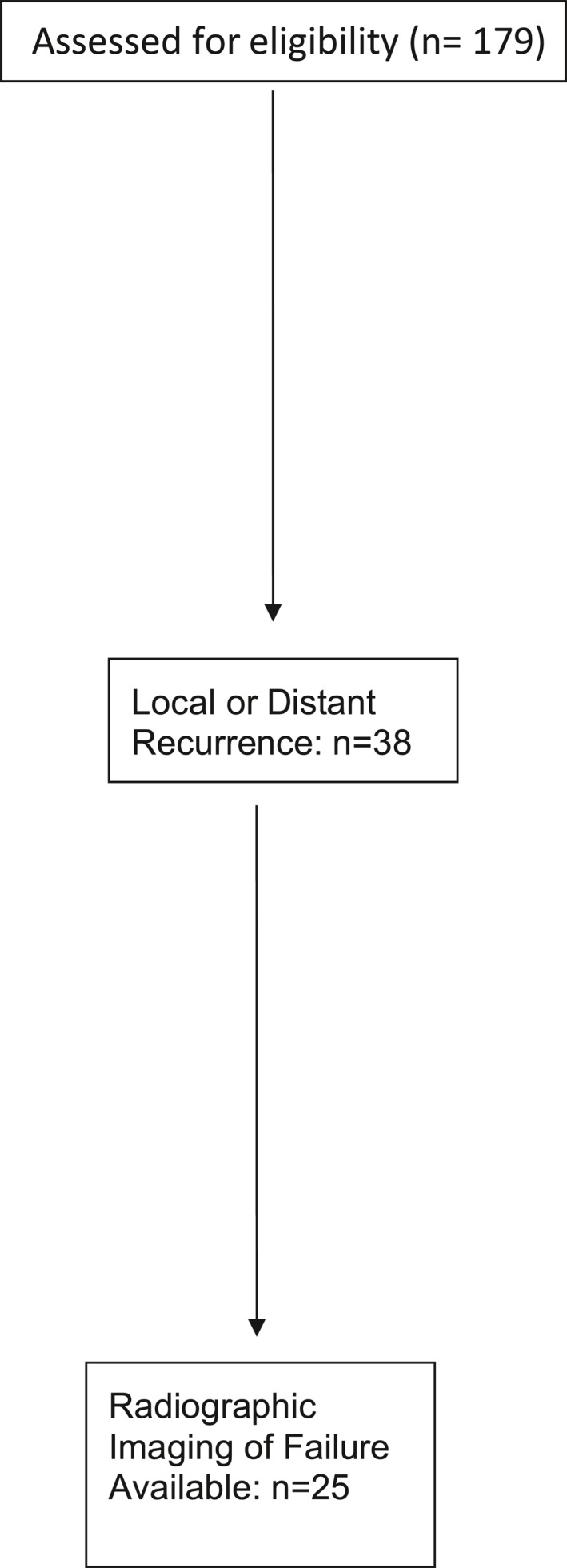
Thirty-eight patients developed a recurrence at a median of 1.6 years. Of the 25 patients who had magnetic resonance imaging of the recurrence, no patients failed within the hippocampus and only two patients failed within HZ-1. The crude incidence of peri-hippocampal failure was 8%. Both HA-VMAT and HA-IMPT plans were associated with significantly reduced mean dose to the hippocampi (p < .05). HA-VMAT and HA-IMPT plans were associated with decreased percentage of the third and lateral ventricles receiving the prescription craniospinal dose of 23.4 Gy.
Peri-hippocampal failures are uncommon in pediatric patients with MB. Hippocampal avoidance should be evaluated in a prospective cohort of pediatric patients with MB.
In this study, the patterns of disease recurrence in patients with a pediatric brain tumor known as medulloblastoma treated with proton radiotherapy were examined. The majority of failures occur outside of an important structure related to memory formation called the hippocampus. Hippocampal sparing radiation plans using proton radiotherapy were generated and showed that dose to the hippocampus was able to be significantly reduced. The study provides the rationale to explore hippocampal sparing in pediatric medulloblastoma in a prospective clinical trial.
海马回避(HA)已被证明可保留接受全脑放射治疗的脑转移癌成年患者的认知功能。但是,由于担心在海马周围区域复发的风险增加,尚未探索其在患有脑肿瘤的儿科患者中的可行性。我们的目的是确定小儿髓母细胞瘤(MB)患者中疾病复发的模式和海马周围复发的发生率。
我们鉴定了 2002 年至 2016 年间接受质子治疗且疾病复发的小儿 MB 患者。为了评估海马周围复发的风险,我们划定了三个海马区(HZ),对应于复发距离勾画的海马体的≤5mm(HZ-1)、6 至 10mm(HZ-2)和>10mm(HZ-3)的距离。为了确定 HA 的可行性,我们对三名标准风险的 MB 患者使用容积调强弧形治疗(VMAT)或强度调制质子治疗(IMPT)计划进行了计划。
38 名患者的中位复发时间为 1.6 年。在 25 名接受了复发磁共振成像的患者中,没有患者在海马体内失败,只有两名患者在 HZ-1 内失败。海马周围失败的粗发生率为 8%。HA-VMAT 和 HA-IMPT 计划均与海马体的平均剂量显著降低相关(p<0.05)。HA-VMAT 和 HA-IMPT 计划均与接受处方颅脊髓剂量 23.4Gy 的第三脑室和外侧脑室的百分比降低相关。
在患有小儿 MB 的患者中,海马周围失败并不常见。应该在小儿 MB 患者的前瞻性队列中评估海马回避。