Nordholt Niclas, O'Hara Kate, Resch-Genger Ute, Blaskovich Mark A T, Rühle Bastian, Schreiber Frank
Division of Biodeterioration and Reference Organisms (4.1), Department of Materials and the Environment, Federal Institute for Materials Research and Testing (BAM), Berlin, Germany.
Division of Biophotonics (1.2), Department of Analytical Chemistry, Reference Materials, Federal Institute for Materials Research and Testing (BAM), Berlin, Germany.
Front Microbiol. 2022 Nov 24;13:1023326. doi: 10.3389/fmicb.2022.1023326. eCollection 2022.
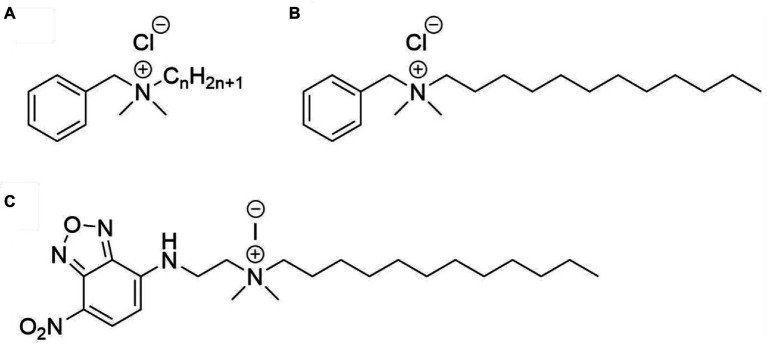
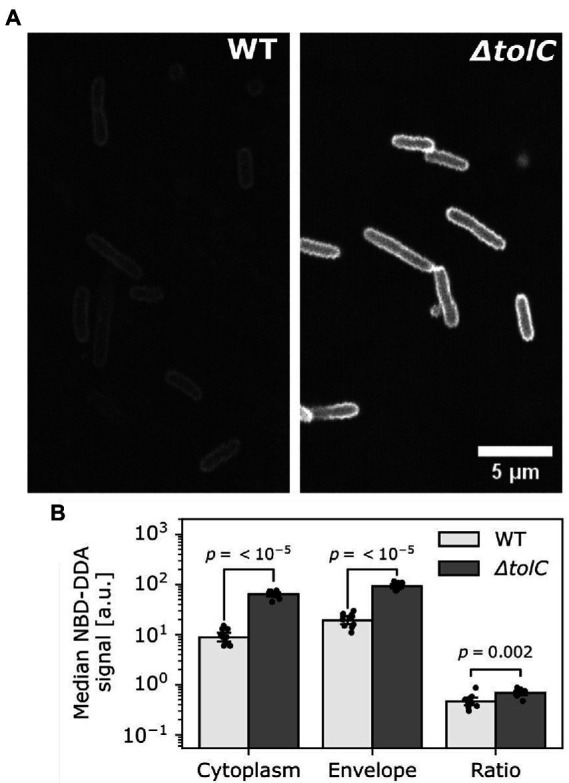
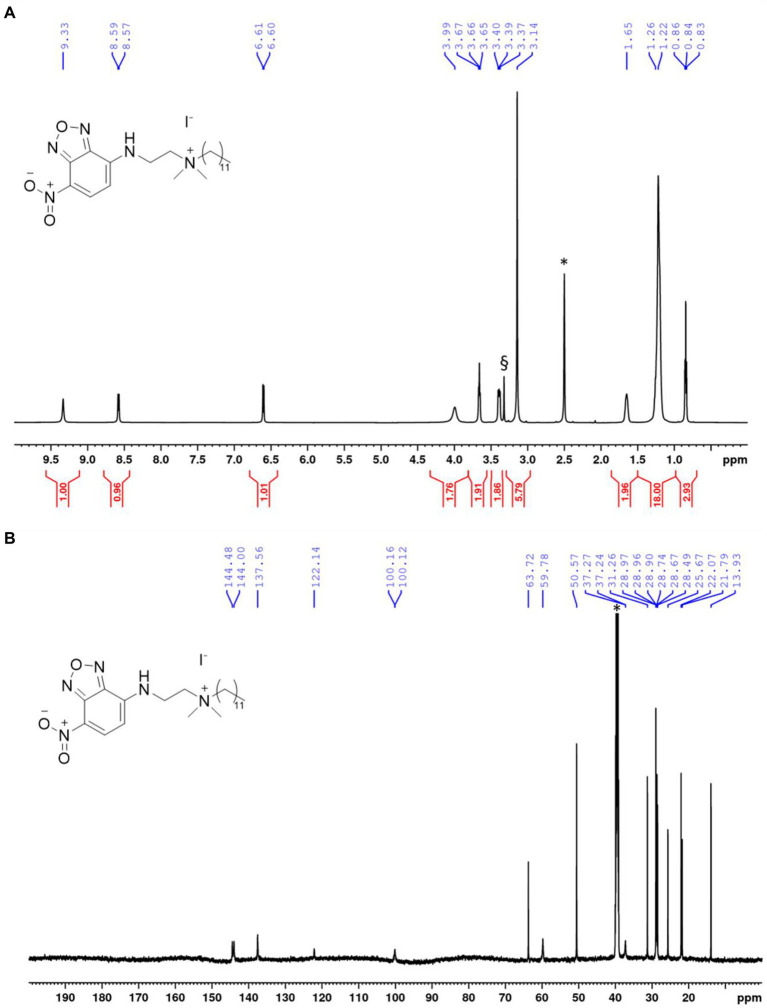
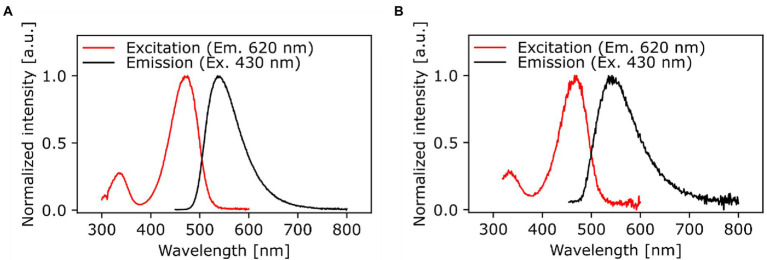
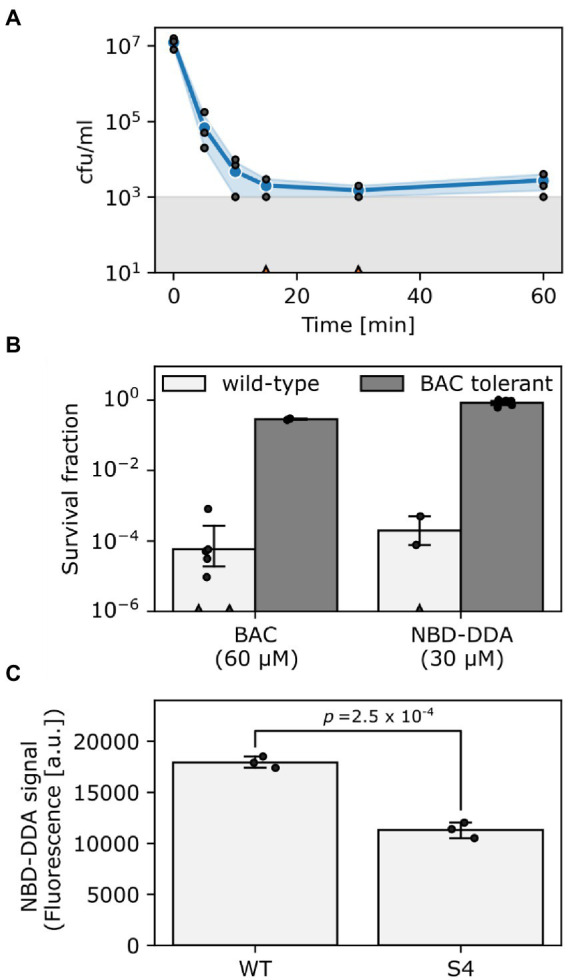
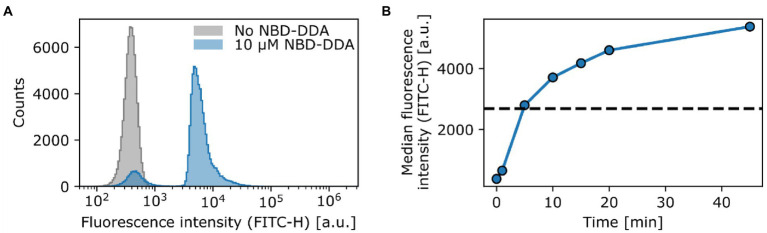
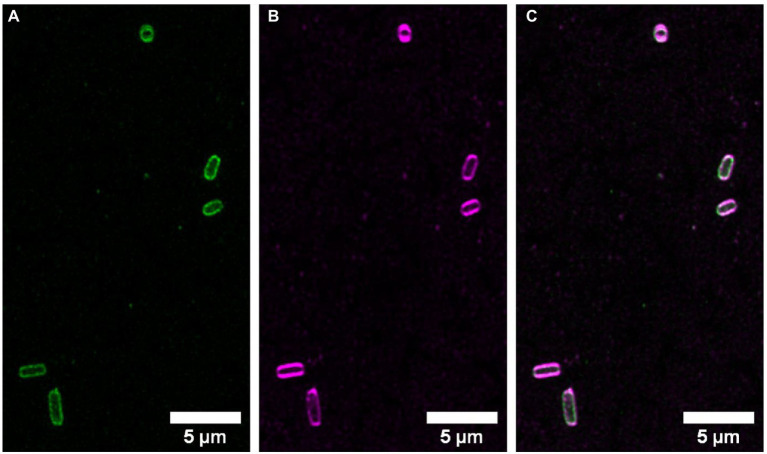
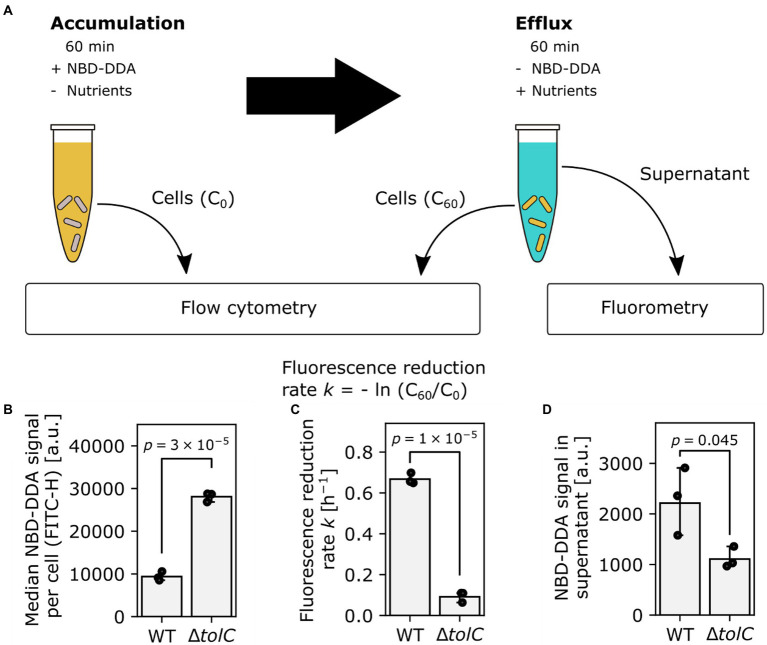
Quaternary ammonium compounds (QACs) are widely used as active agents in disinfectants, antiseptics, and preservatives. Despite being in use since the 1940s, there remain multiple open questions regarding their detailed mode-of-action and the mechanisms, including phenotypic heterogeneity, that can make bacteria less susceptible to QACs. To facilitate studies on resistance mechanisms towards QACs, we synthesized a fluorescent quaternary ammonium compound, namely -dodecyl-,-dimethyl-[2-[(4-nitro-2,1,3-benzoxadiazol-7-yl)amino]ethyl]azanium-iodide (NBD-DDA). NBD-DDA is readily detected by flow cytometry and fluorescence microscopy with standard GFP/FITC-settings, making it suitable for molecular and single-cell studies. As a proof-of-concept, NBD-DDA was then used to investigate resistance mechanisms which can be heterogeneous among individual bacterial cells. Our results reveal that the antimicrobial activity of NBD-DDA against , and is comparable to that of benzalkonium chloride (BAC), a widely used QAC, and benzyl-dimethyl-dodecylammonium chloride (BAC), a mono-constituent BAC with alkyl-chain length of 12 and high structural similarity to NBD-DDA. Characteristic time-kill kinetics and increased tolerance of a BAC tolerant strain against NBD-DDA suggest that the mode of action of NBD-DDA is similar to that of BAC. As revealed by confocal laser scanning microscopy (CLSM), NBD-DDA is preferentially localized to the cell envelope of which is a primary target of BAC and other QACs. Leveraging these findings and NBD-DDA's fluorescent properties, we show that reduced cellular accumulation is responsible for the evolved BAC tolerance in the BAC tolerant strain and that NBD-DDA is subject to efflux mediated by TolC. Overall, NBD-DDA's antimicrobial activity, its fluorescent properties, and its ease of detection render it a powerful tool to study resistance mechanisms of QACs in bacteria and highlight its potential to gain detailed insights into its mode-of-action.
季铵化合物(QACs)作为消毒剂、防腐剂和抗菌剂中的活性剂被广泛使用。尽管自20世纪40年代以来就已投入使用,但关于其详细作用方式以及包括表型异质性在内的使细菌对QACs不敏感的机制,仍存在多个悬而未决的问题。为了促进对QACs耐药机制的研究,我们合成了一种荧光季铵化合物,即 -十二烷基-,-二甲基-[2-[(4-硝基-2,1,3-苯并恶二唑-7-基)氨基]乙基]碘化氮鎓(NBD-DDA)。NBD-DDA可通过流式细胞术和荧光显微镜在标准GFP/FITC设置下轻松检测到,使其适用于分子和单细胞研究。作为概念验证,NBD-DDA随后被用于研究个体细菌细胞间可能存在异质性的耐药机制。我们的结果表明,NBD-DDA对 、 和 的抗菌活性与广泛使用的QAC苯扎氯铵(BAC)以及与NBD-DDA具有12个烷基链长度且结构高度相似的单组分BAC苄基二甲基十二烷基氯化铵相当。特征性的时间杀灭动力学以及一株耐BAC的 菌株对NBD-DDA耐受性的增加表明,NBD-DDA的作用方式与BAC相似。共聚焦激光扫描显微镜(CLSM)显示,NBD-DDA优先定位于 的细胞膜,而细胞膜是BAC和其他QACs的主要作用靶点。利用这些发现以及NBD-DDA的荧光特性,我们表明细胞内积累减少是耐BAC的 菌株中BAC耐受性进化的原因,并且NBD-DDA会受到由TolC介导的外排作用影响。总体而言,NBD-DDA的抗菌活性、荧光特性及其易于检测的特点使其成为研究细菌中QACs耐药机制的有力工具,并突出了其深入了解作用方式的潜力。