
甲酸,一种有机酸食品防腐剂,可诱导细菌进入活的非可培养状态,并在[具体细菌名称1]和[具体细菌名称2]中引发新的抗微生物耐药特性。 (注:原文中“and.”表述不完整,推测可能是有两个细菌名称未完整给出)
Formic acid, an organic acid food preservative, induces viable-but-non-culturable state, and triggers new Antimicrobial Resistance traits in and .
作者信息
Yadav Manisha, Dhyani Samridhi, Joshi Pooja, Awasthi Sakshi, Tanwar Subhash, Gupta Vishal, Rathore Deepak K, Chaudhuri Susmita
机构信息
Department of Multidisciplinary Clinical and Translational Research, Translational Health Science and Technology Institute, Faridabad, Haryana, India.
出版信息
Front Microbiol. 2022 Nov 24;13:966207. doi: 10.3389/fmicb.2022.966207. eCollection 2022.
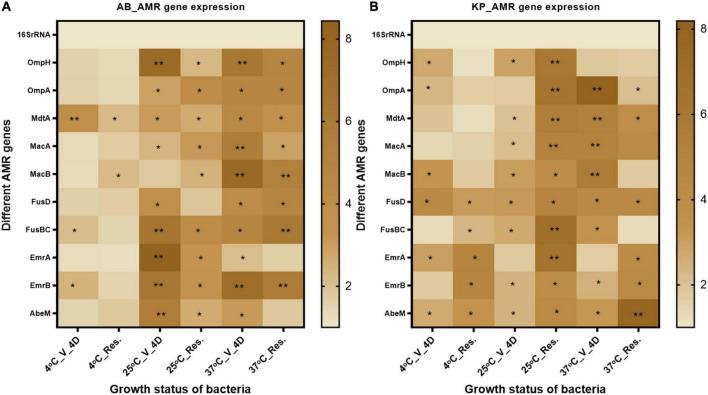
Numerous human pathogens, especially Gram-negative bacteria, are able to enter the viable-but-non-culturable (VBNC) state when they are exposed to environmental stressors and pose the risk of being resuscitated and causing infection after the removal of the trigger. Widely used food preservatives like weak organic acids are potential VBNC inducers in food processing and packaging facilities but have only been reported for food-borne pathogens. In the present study, it is demonstrated for the first time that one such agent, formic acid (FA), can induce a VBNC state at food processing, storage, and distribution temperatures (4, 25, and 37C) with a varied time of treatment (days 4-10) in pathogenic Gram-negative bacteria and . The use of hospital-associated pathogens is critical based on the earlier reports that demonstrated the presence of these bacteria in hospital kitchens and commonly consumed foods. VBNC induction was validated by multiple parameters, e.g., non-culturability, metabolic activity as energy production, respiratory markers, and membrane integrity. Furthermore, it was demonstrated that the removal of FA was able to resuscitate VBNC with an increased expression of multiple virulence and Antimicrobial Resistance (AMR) genes in both . Since food additives/preservatives are significantly used in most food manufacturing facilities supplying to hospitals, contamination of these packaged foods with pathogenic bacteria and the consequence of exposure to food additives emerge as pertinent issues for infection control, and control of antimicrobial resistance in the hospital setting.
许多人类病原体,尤其是革兰氏阴性菌,在暴露于环境应激源时能够进入活的非可培养(VBNC)状态,并在触发因素消除后有复苏并引起感染的风险。广泛使用的食品防腐剂如弱酸是食品加工和包装设施中潜在的VBNC诱导剂,但仅在食源性病原体中有所报道。在本研究中,首次证明了一种这样的试剂,即甲酸(FA),在食品加工、储存和分销温度(4、25和37℃)下,对致病性革兰氏阴性菌和 进行不同处理时间(第4 - 10天)时,能够诱导其进入VBNC状态。基于早期报告显示医院厨房和常见食用食品中存在这些细菌,使用医院相关病原体至关重要。通过多个参数验证了VBNC诱导,例如不可培养性、作为能量产生的代谢活性、呼吸标志物和膜完整性。此外,还证明了去除FA能够使VBNC复苏,且 在两种细菌中多种毒力和抗微生物耐药性(AMR)基因的表达均增加。由于大多数向医院供应食品的制造设施中大量使用食品添加剂/防腐剂,这些包装食品被病原菌污染以及接触食品添加剂的后果成为医院感染控制和抗微生物耐药性控制的相关问题。


 Zotero 插件