University of Chicago Medicine Inflammatory Bowel Disease Center, Chicago, Illinois, USA.
University of Chicago MacLean Center for Clinical Medical Ethics, Chicago, Illinois, USA.
United European Gastroenterol J. 2022 Dec;10(10):1121-1128. doi: 10.1002/ueg2.12336. Epub 2022 Dec 12.
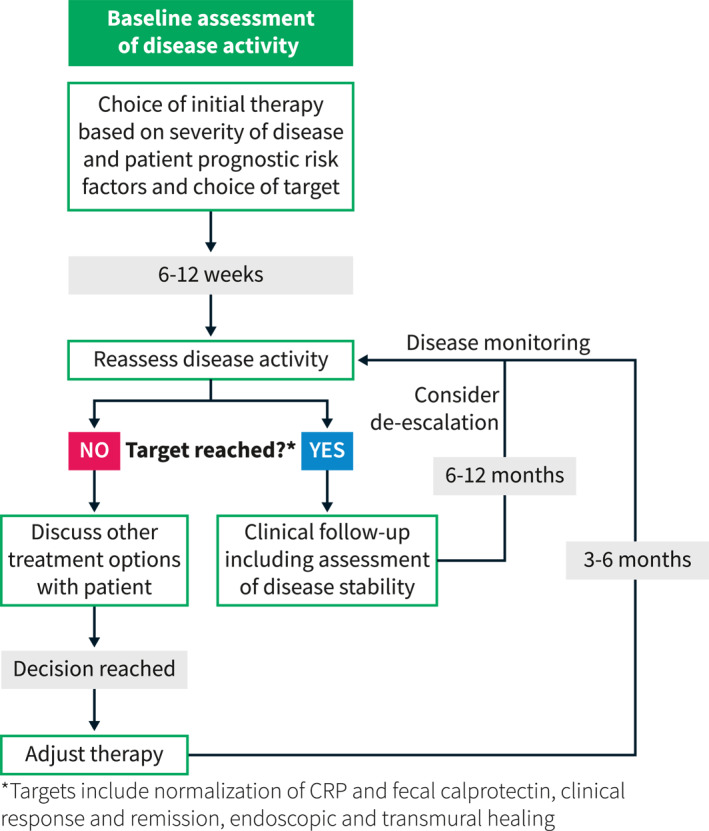
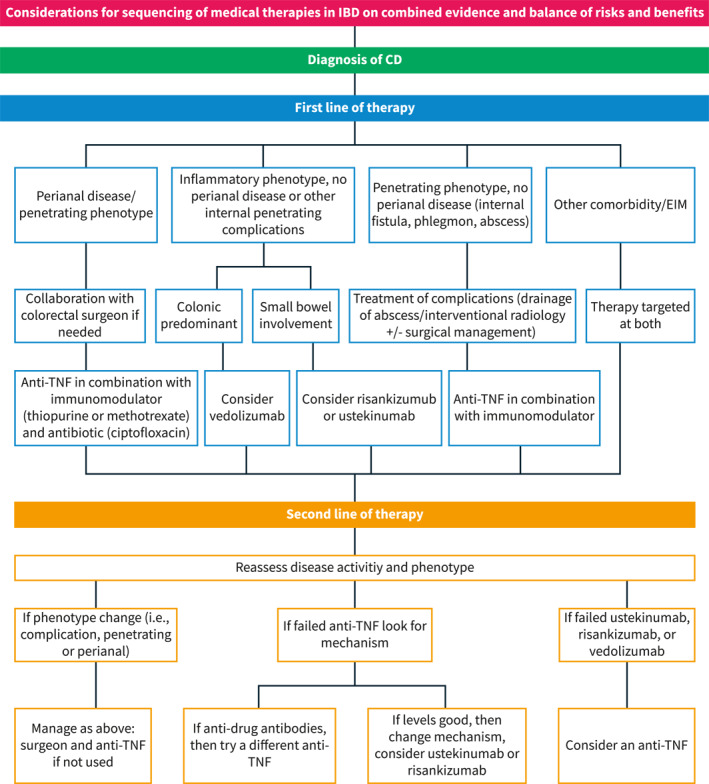
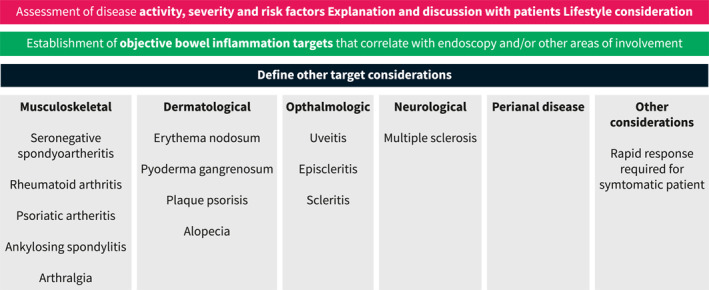
Crohn's disease (CD) is a chronic immune-mediated inflammatory condition which can negatively impact a patient's quality of life. The traditional management strategy for CD has focused on symptomatic control, however, this approach fails to prevent organ damage and to change the progressive course of this disease. Thus, the field has moved towards a treat-to-target strategy that includes identifying individualized objective targets, choosing a therapy based on individual factors that include disease severity and risk, closely monitoring disease activity at predefined time points, and optimizing therapies as needed. Due to the increasing number of therapies approved for CD, this review explores the various factors which should be considered in the sequencing of treatment options together with using the treat-to-target framework to control disease activity early in its course and provide holistic patient care.
克罗恩病(CD)是一种慢性免疫介导的炎症性疾病,可对患者的生活质量产生负面影响。CD 的传统管理策略侧重于症状控制,但这种方法无法预防器官损伤,也无法改变这种疾病的进行性病程。因此,该领域已转向一种针对目标的治疗策略,包括确定个体化的目标,根据包括疾病严重程度和风险在内的个体因素选择治疗方法,在预定的时间点密切监测疾病活动,并根据需要优化治疗方法。由于治疗 CD 的获批疗法数量不断增加,因此本综述探讨了在治疗方案排序中应考虑的各种因素,以及使用针对目标的治疗框架来控制疾病早期的活动度,从而提供整体患者护理。