Department of Pathology, The Netherlands Cancer Institute, Amsterdam, the Netherlands.
Sidney Kimmel Comprehensive Cancer Center, Johns Hopkins University School of Medicine, Baltimore, Maryland.
Clin Cancer Res. 2023 Mar 1;29(5):899-909. doi: 10.1158/1078-0432.CCR-22-2538.
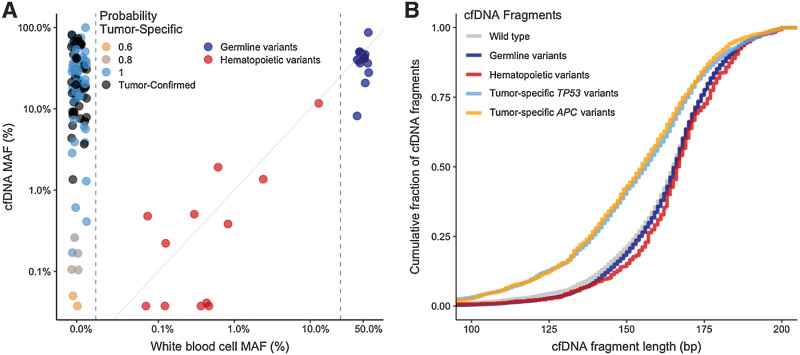
Circulating tumor DNA (ctDNA) has the potential to guide therapy selection and monitor treatment response in patients with metastatic cancer. However, germline and clonal hematopoiesis-associated alterations can confound identification of tumor-specific mutations in cell-free DNA (cfDNA), often requiring additional sequencing of tumor tissue. The current study assessed whether ctDNA-based treatment response monitoring could be performed in a tumor tissue-independent manner by combining ultra-deep targeted sequencing analyses of cfDNA with patient-matched white blood cell (WBC)-derived DNA.
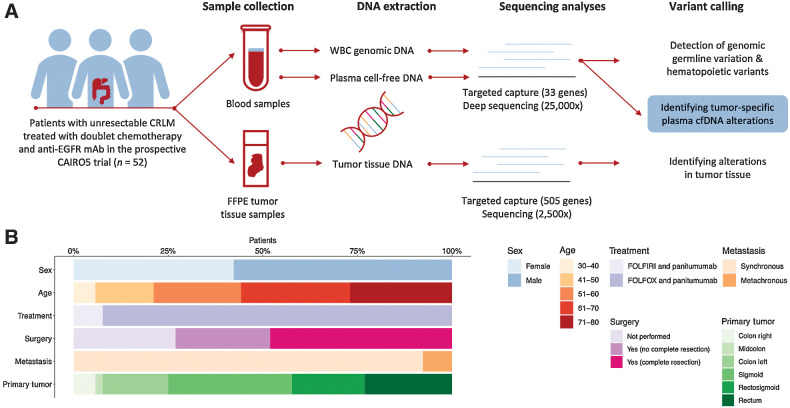
In total, 183 cfDNA and 49 WBC samples, along with 28 tissue samples, from 52 patients with metastatic colorectal cancer participating in the prospective phase III CAIRO5 clinical trial were analyzed using an ultra-deep targeted sequencing liquid biopsy assay.
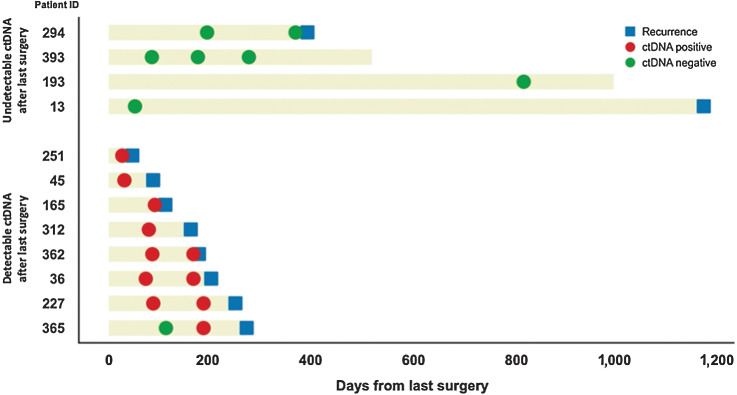
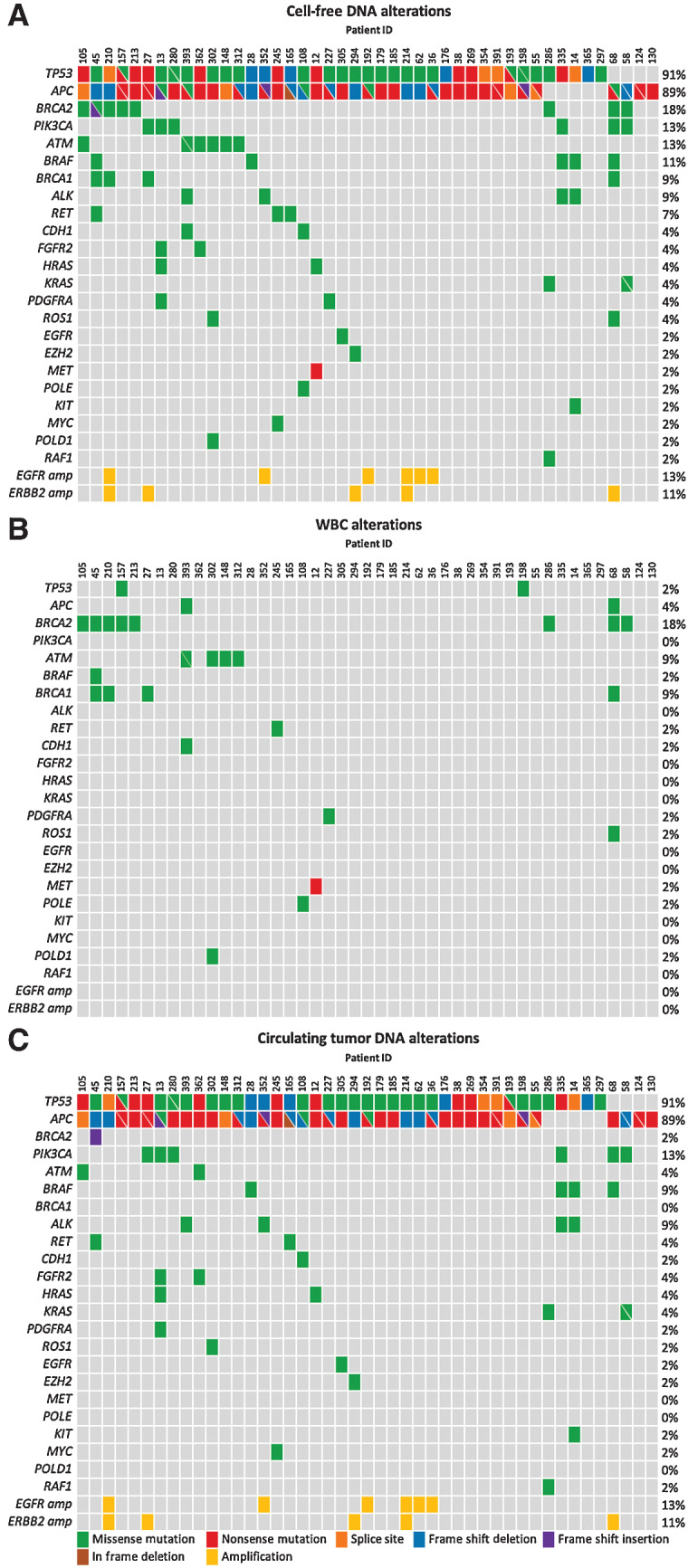
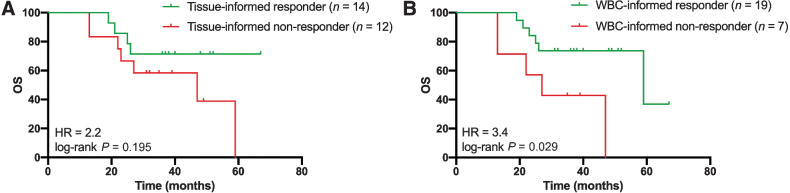
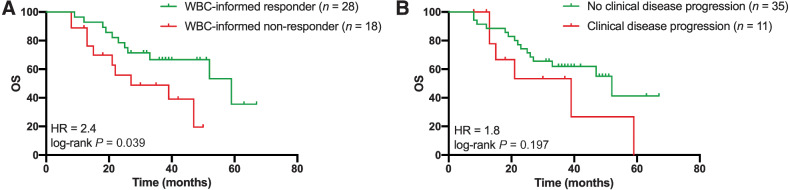
The combined cfDNA and WBC analysis prevented false-positives due to germline or hematopoietic variants in 40% of patients. Patient-matched tumor tissue sequencing did not provide additional information. Longitudinal analyses of ctDNA were more predictive of overall survival than standard-of-care radiological response evaluation. ctDNA mutations related to primary or acquired resistance to panitumumab were identified in 42% of patients.
Accurate calling of ctDNA mutations for treatment response monitoring is feasible in a tumor tissue-independent manner by combined cfDNA and patient-matched WBC genomic DNA analysis. This tissue biopsy-independent approach simplifies sample logistics and facilitates the application of liquid biopsy ctDNA testing for evaluation of emerging therapy resistance, opening new avenues for early adaptation of treatment regimens.
循环肿瘤 DNA(ctDNA)有可能指导转移性癌症患者的治疗选择和监测治疗反应。然而,种系和克隆性造血相关改变可能会干扰游离 DNA(cfDNA)中肿瘤特异性突变的识别,通常需要对肿瘤组织进行额外的测序。本研究通过对 cfDNA 进行超深度靶向测序分析,并结合患者匹配的白细胞(WBC)衍生 DNA,评估了是否可以在不依赖肿瘤组织的情况下进行基于 ctDNA 的治疗反应监测。
共分析了 52 例转移性结直肠癌患者的 183 份 cfDNA 和 49 份 WBC 样本,以及 28 份组织样本,这些患者参加了前瞻性 III 期 CAIRO5 临床试验,采用了超深度靶向测序液体活检检测方法。
联合 cfDNA 和 WBC 分析可防止 40%的患者因种系或造血变异而出现假阳性。患者匹配的肿瘤组织测序没有提供额外的信息。ctDNA 的纵向分析比标准护理的影像学反应评估更能预测总生存期。在 42%的患者中发现了与 panitumumab 原发性或获得性耐药相关的 ctDNA 突变。
通过联合 cfDNA 和患者匹配的 WBC 基因组 DNA 分析,可以在不依赖肿瘤组织的情况下准确检测 ctDNA 突变,以进行治疗反应监测。这种不依赖组织活检的方法简化了样本处理流程,并促进了液体活检 ctDNA 检测在评估新出现的治疗耐药性方面的应用,为早期调整治疗方案开辟了新途径。