Rowett Institute, University of Aberdeen, Ashgrove Rd. W, Aberdeen, AB25 2ZD, UK.
The James Hutton Institute, Craigiebuckler, Aberdeen, AB15 8QH, UK.
BMC Public Health. 2022 Dec 20;22(1):2390. doi: 10.1186/s12889-022-14729-x.
Diet norms are the shared social behaviours and beliefs about diets. In many societies, including the UK, these norms are typically linked to unhealthy diets and impede efforts to improve food choices. Social interactions that could influence one another's food choices, were highly disrupted during the lockdowns in response to the COVID-19 pandemic. A return to workplaces and re-establishment of eating networks may present an opportunity to influence dietary norms by introducing minimum dietary standards to in workplaces, which could then spread through wider home and workplace networks.
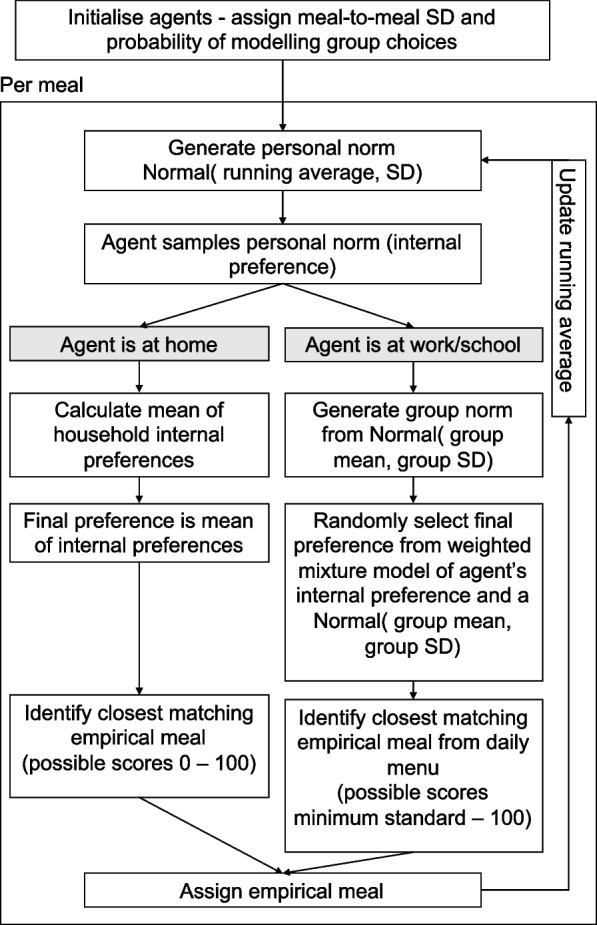
An agent-based model was constructed to simulate a society reflecting the structure of a city population (1000 households) to explore changes in personal and social diet-related norms. The model tracked individual meal choices as agents interact in home, work or school settings and recorded changes in diet quality (range 1 to 100). Scenarios were run to compare individuals' diet quality with the introduction of minimum dietary standards with degrees of working from home.
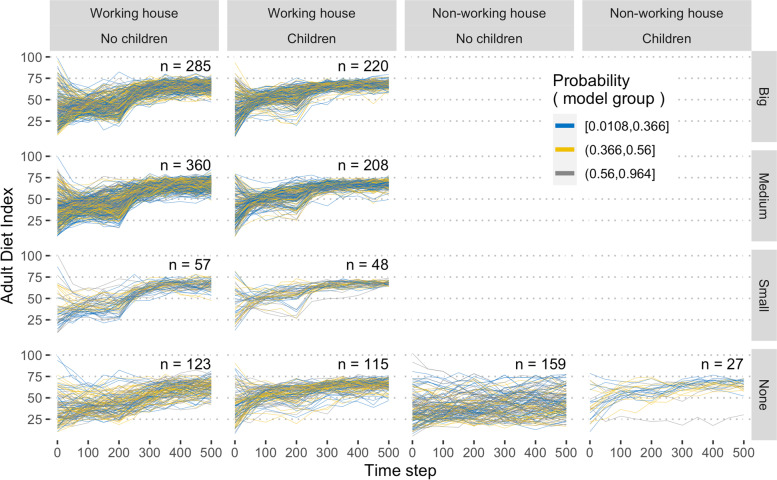
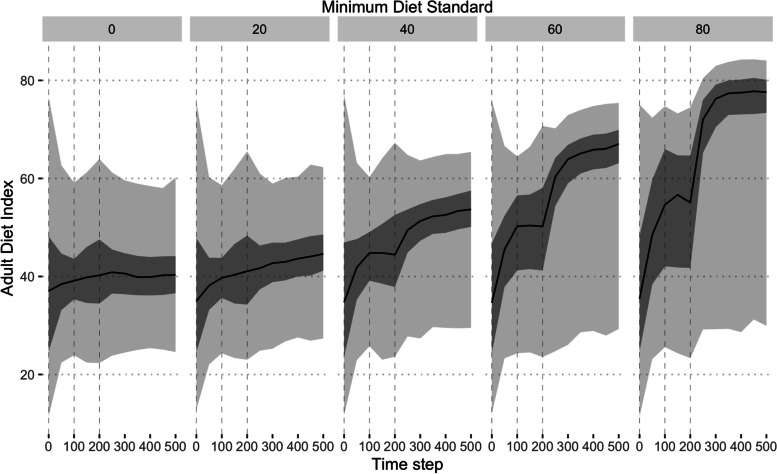
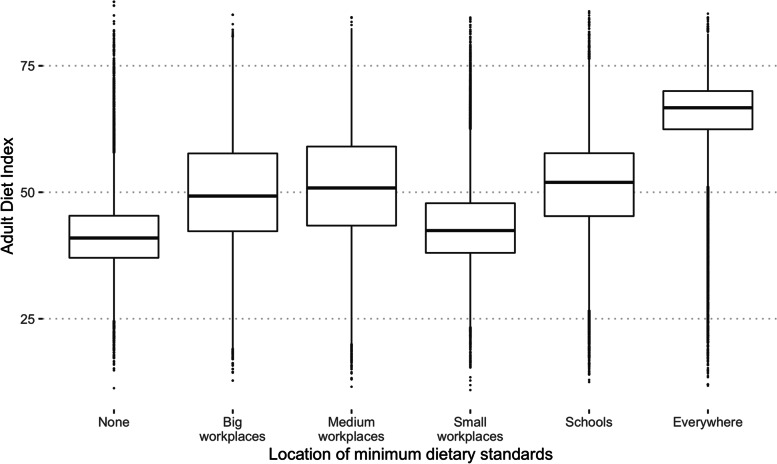
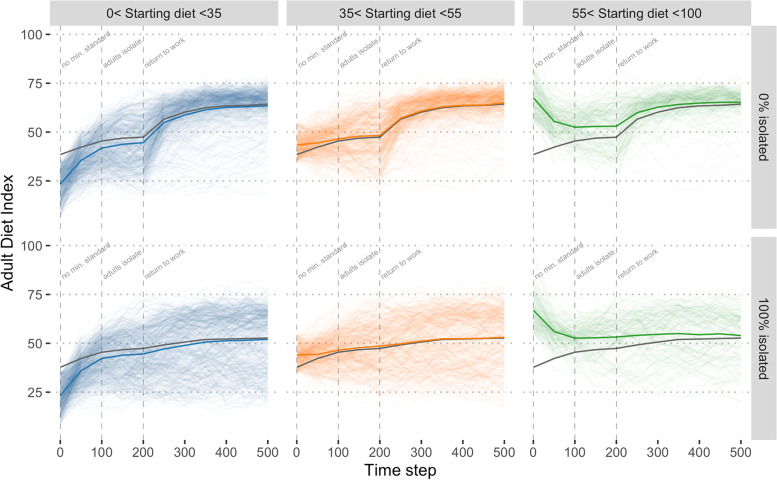
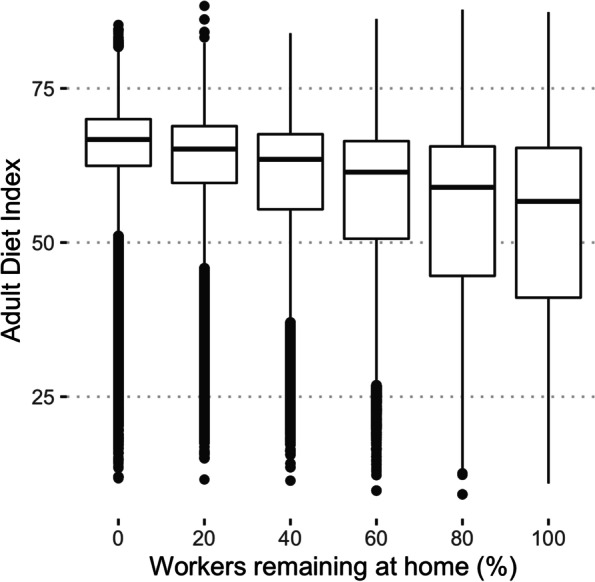
The more people mixed at work the greater the impact of minimum standards on improving diet norms. Socially isolated households remained unaffected by minimum standards, whereas household members exposed directly, in workplaces or schools, or indirectly, influenced by others in the household, had a large and linear increase in diet quality in relation to minimum standards (0.48 [95% CI 0.34, 0.62] per unit increase in minimum standards). Since individuals regressed to the new population mean, a small proportion of diets decreased toward lower population norms. The degree of return to work influenced the rate and magnitude of change cross the population (-2.4 points [-2.40, -2.34] in mean diet quality per 20% of workers isolating).
These model results illustrate the qualitative impact social connectivity could have on changing diets through interventions. Norms can be changed more in a more connected population, and social interactions spread norms between contexts and amplified the influence of, for example, workplace minimum standards beyond those directly exposed. However, implementation of minimum standards in a single type of setting would not reach the whole population and in some cases may decrease diet quality. Any non-zero standard could yield improvements beyond the immediate adult workforce and this could spill between social contexts, but would be contingent on population connectivity.
饮食规范是关于饮食的共同社会行为和信念。在许多社会中,包括英国,这些规范通常与不健康的饮食有关,并阻碍了改善食物选择的努力。在应对 COVID-19 大流行而实施封锁期间,那些可能会影响彼此食物选择的社交互动受到了极大的干扰。随着重返工作场所和重新建立饮食网络,通过在工作场所引入最低饮食标准来影响饮食规范可能会提供一个机会,然后通过更广泛的家庭和工作场所网络传播这些规范。
构建了一个基于代理的模型来模拟反映城市人口结构(1000 户家庭)的社会,以探索个人和社会与饮食相关规范的变化。该模型跟踪个人的用餐选择,因为代理在家庭、工作或学校环境中相互作用,并记录饮食质量的变化(范围为 1 到 100)。通过运行情景来比较个人的饮食质量与引入最低饮食标准以及居家办公程度的关系。
更多的人在工作中混合,最低标准对改善饮食规范的影响就越大。社会孤立的家庭不受最低标准的影响,而直接在工作场所或学校接触或间接受家庭其他成员影响的家庭,其饮食质量与最低标准呈线性增加(最低标准每增加一个单位,饮食质量增加 0.48[95%CI 0.34,0.62])。由于个人回归到新的人口平均值,少数饮食会朝着较低的人口规范下降。返回工作的程度影响了人口的变化率和幅度(每 20%的工人隔离,平均饮食质量下降 2.4 点[-2.40,-2.34])。
这些模型结果说明了社会联系可以通过干预来改变饮食的定性影响。在联系更紧密的人群中,规范可以更容易地改变,并且社会互动在不同的环境中传播规范,并放大了例如工作场所最低标准的影响,超出了直接暴露的范围。然而,在单一类型的环境中实施最低标准不会覆盖整个人口,在某些情况下可能会降低饮食质量。任何非零标准都可以在直接影响成年劳动力之外带来改善,并且这种改善可能会在社会环境之间溢出,但这取决于人口的联系。