Nocturnal Primate Research Group, Department of Social Sciences, Oxford Brookes University, Oxford OX3 0BP, UK.
Centre for Functional Genomics, Department of Health and Life Sciences, Oxford Brookes University, Oxford OX3 0BP, UK.
Toxins (Basel). 2022 Dec 1;14(12):842. doi: 10.3390/toxins14120842.
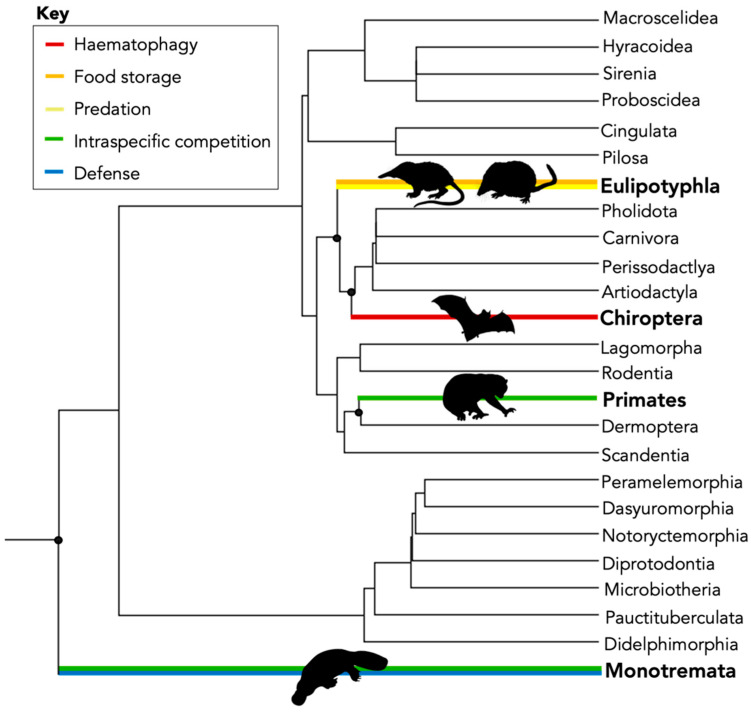
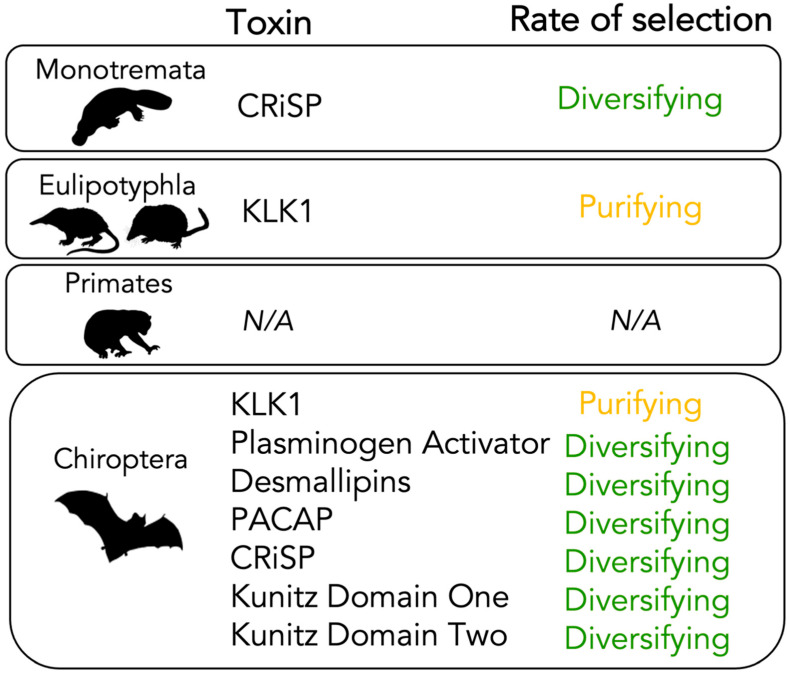
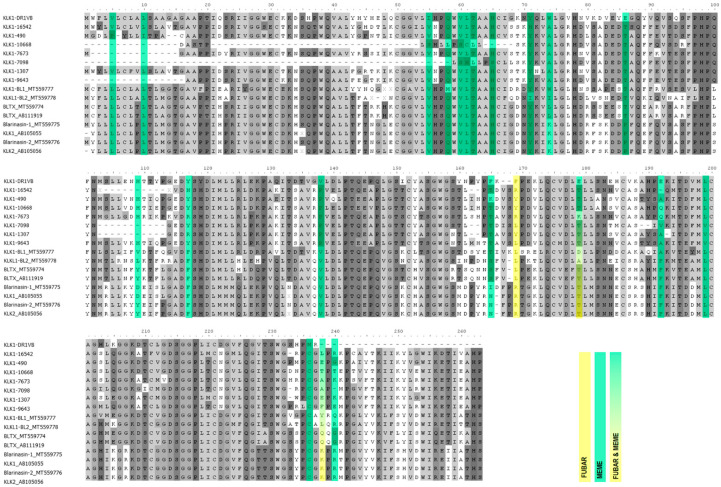
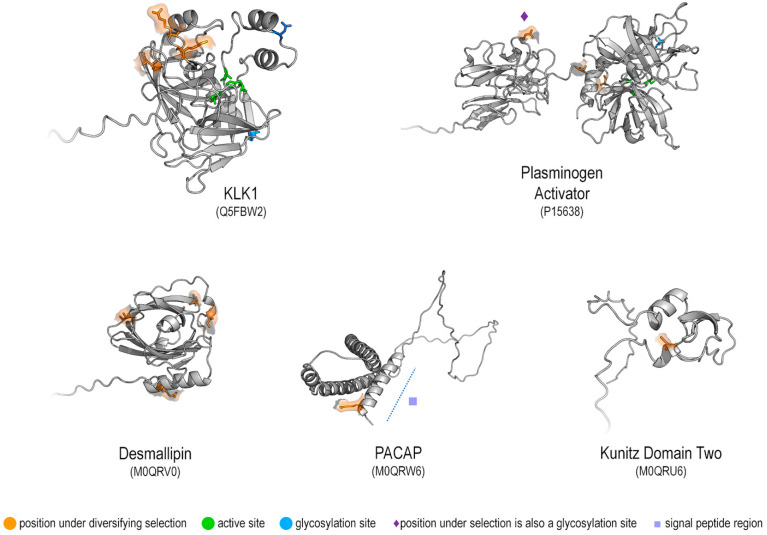
The evolution of venom and the selection pressures that act on toxins have been increasingly researched within toxinology in the last two decades, in part due to the exceptionally high rates of diversifying selection observed in animal toxins. In 2015, Sungar and Moran proposed the 'two-speed' model of toxin evolution linking evolutionary age of a group to the rates of selection acting on toxins but due to a lack of data, mammals were not included as less than 30 species of venomous mammal have been recorded, represented by elusive species which produce small amounts of venom. Due to advances in genomics and transcriptomics, the availability of toxin sequences from venomous mammals has been increasing. Using branch- and site-specific selection models, we present the rates of both episodic and pervasive selection acting upon venomous mammal toxins as a group for the first time. We identified seven toxin groups present within venomous mammals, representing Chiroptera, Eulipotyphla and Monotremata: KLK1, Plasminogen Activator, Desmallipins, PACAP, CRiSP, Kunitz Domain One and Kunitz Domain Two. All but one group (KLK1) was identified by our results to be evolving under both episodic and pervasive diversifying selection with four toxin groups having sites that were implicated in the fitness of the animal by TreeSAAP (Selection on Amino Acid Properties). Our results suggest that venomous mammal ecology, behaviour or genomic evolution are the main drivers of selection, although evolutionary age may still be a factor. Our conclusion from these results indicates that mammalian toxins are following the two-speed model of selection, evolving predominately under diversifying selection, fitting in with other younger venomous taxa like snakes and cone snails-with high amounts of accumulating mutations, leading to more novel adaptions in their toxins.
在过去的二十年中,由于在动物毒素中观察到了极高的多样化选择率,毒素学领域越来越多地研究毒液的进化以及作用于毒素的选择压力。2015 年,Sungar 和 Moran 提出了联系毒素进化的“双速”模型,将一个群体的进化年龄与作用于毒素的选择率联系起来,但由于缺乏数据,哺乳动物未被包括在内,因为记录的有毒哺乳动物不到 30 种,这些物种代表了难以捉摸的,产生少量毒液的物种。由于基因组学和转录组学的进步,有毒哺乳动物的毒素序列可用性一直在增加。使用分支和位点特异性选择模型,我们首次报告了有毒哺乳动物毒素作为一个群体的爆发性和普遍选择的速度。我们确定了七种存在于有毒哺乳动物中的毒素群,代表了 Chiroptera、Eulipotyphla 和 Monotremata:KLK1、纤溶酶原激活物、Desmallipins、PACAP、CRiSP、Kunitz 结构域 1 和 Kunitz 结构域 2。除 KLK1 外,我们的结果表明所有其他毒素群都在爆发性和普遍性的多样化选择下进化,其中四个毒素群的位点通过 TreeSAAP(基于氨基酸特性的选择)被认为与动物的适应性有关。我们的结果表明,有毒哺乳动物的生态学、行为或基因组进化是选择的主要驱动因素,尽管进化年龄可能仍然是一个因素。从这些结果中得出的结论表明,哺乳动物毒素遵循选择的“双速”模型,主要在多样化选择下进化,与蛇和圆锥蜗牛等其他较年轻的有毒分类群相吻合,这些分类群积累了大量的突变,导致其毒素产生更多新的适应。