Peng Tianhang, Ding Meng, Yan Hanhui, Li Qiufang, Zhang Ping, Tian Rui, Zheng Lan
Key Laboratory of Physical Fitness and Exercise Rehabilitation of Hunan Province, Hunan Normal University, Changsha 410012, China.
Biology (Basel). 2022 Nov 30;11(12):1745. doi: 10.3390/biology11121745.
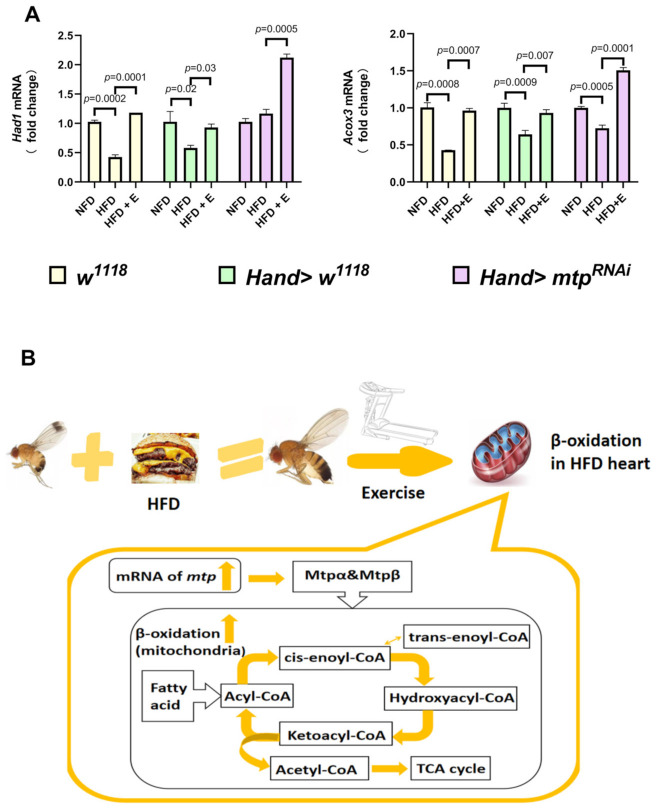
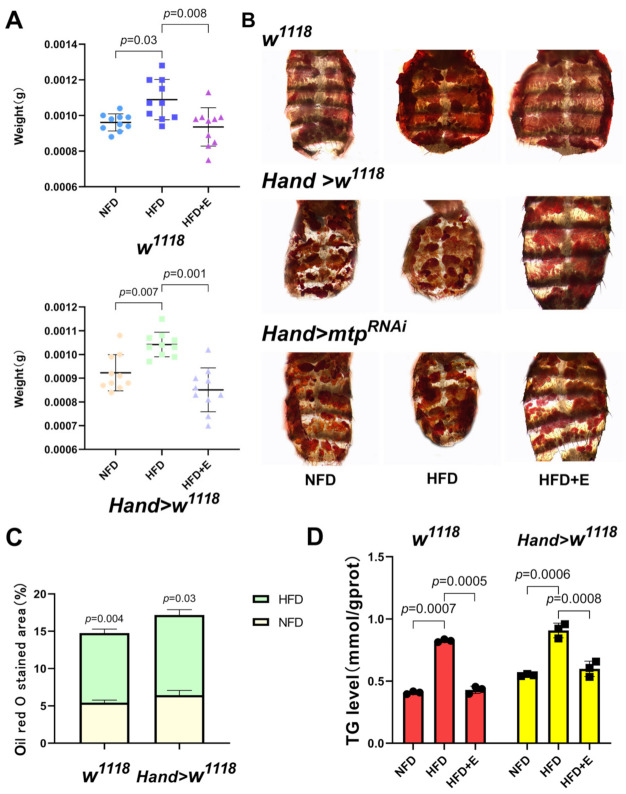
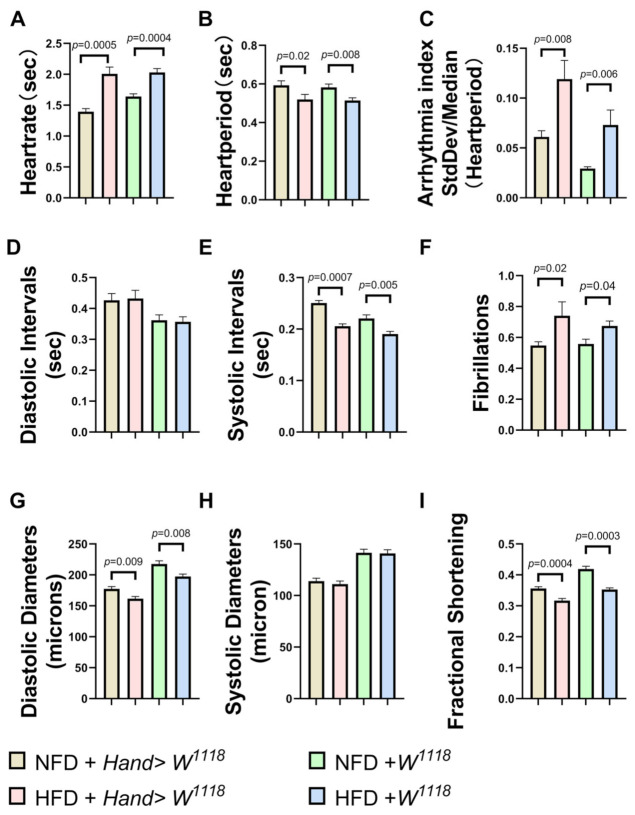
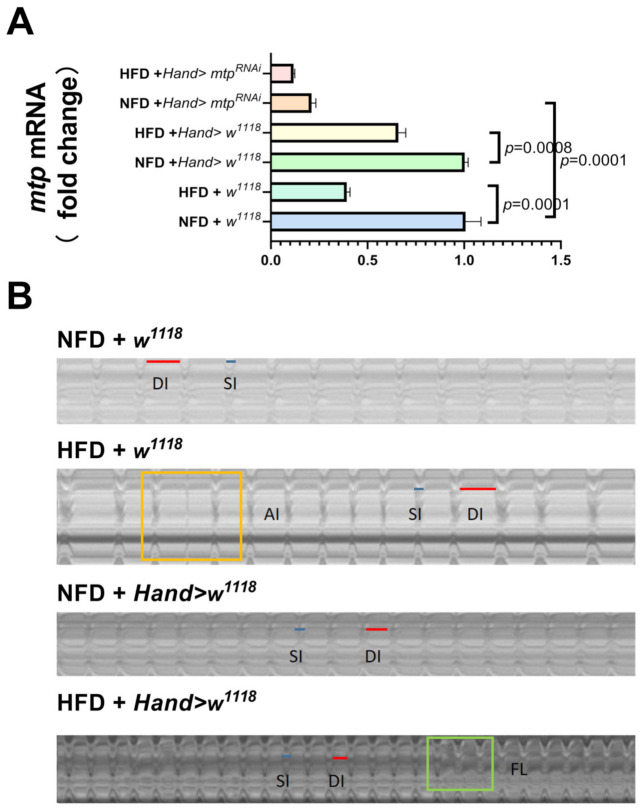
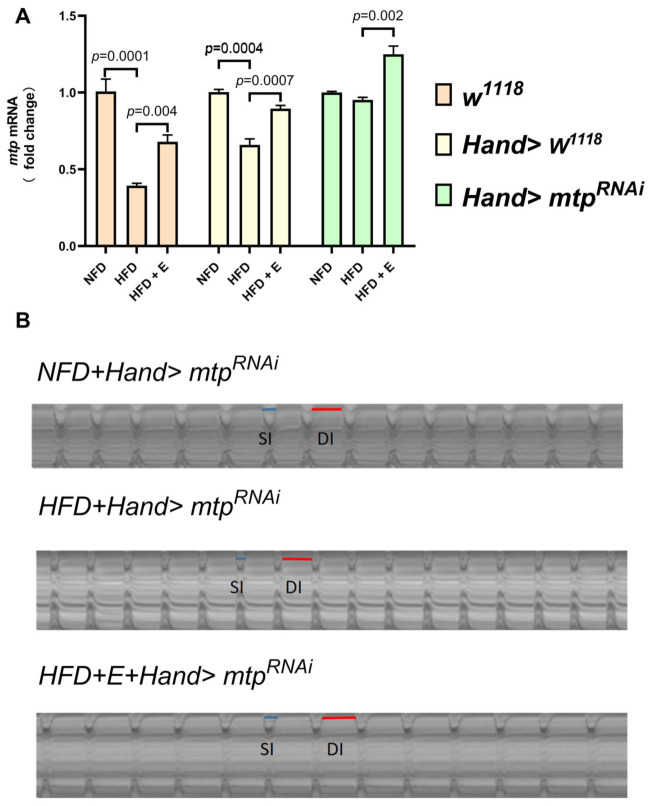
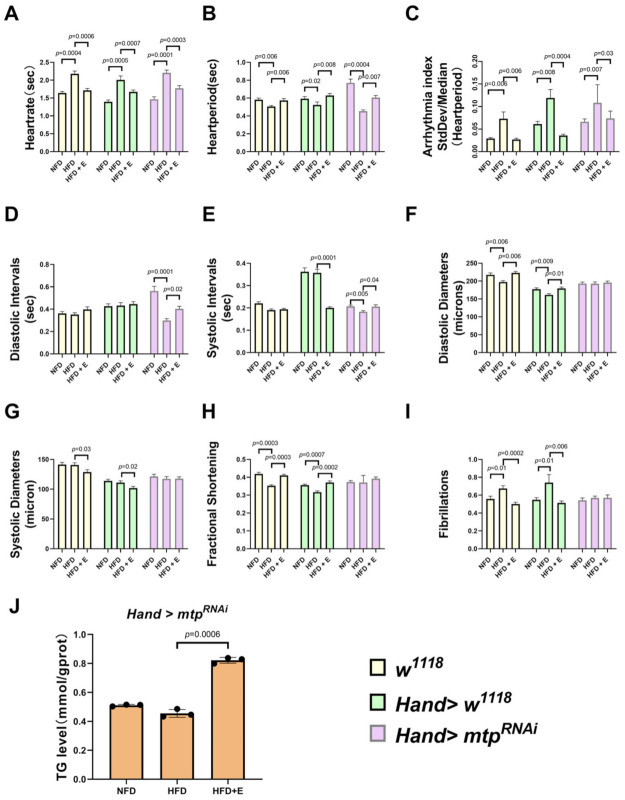
Current evidence suggests that the heart plays an important role in regulating systemic lipid homeostasis, and high-fat diet (HFD)-induced obesity is a major cause of cardiovascular disease, although little is known about the specific mechanisms involved. Exercise training can reportedly improve abnormal lipid metabolism and cardiac dysfunction induced by high-fat diets; however, the molecular mechanisms are not yet understood. In the present study, to explore the relationship between exercise training and cardiac mtp in HFD flies and potential mechanisms by which exercise training affects HFD flies, Drosophila was selected as a model organism, and the GAL4/UAS system was used to specifically knock down the target gene. Experiments revealed that HFD-fed Drosophila exhibited changes in body weight, increased triglycerides (TG) and dysregulated cardiac contractility, consistent with observations in mammals. Interestingly, inhibition of cardiac mtp expression reduced HFD-induced cardiac damage and mitigated the increase in triglycerides. Further studies showed that in HFD +w1118, HFD + Hand > w1118, and HFD+ Hand > mtpRNAi, cardiac mtp expression downregulation induced by HFD was treated by exercise training and mitochondrial β-oxidation capacity in cardiomyocytes was reversed. Overall, knocking down mtp in the heart prevented an increase in systemic TG levels and protected cardiac contractility from damage caused by HFD, similar to the findings observed after exercise training. Moreover, exercise training upregulated the decrease in cardiac mtp expression induced by HFD. Increased Had1 and Acox3 expression were observed, consistent with changes in cardiac mtp expression.
目前的证据表明,心脏在调节全身脂质稳态中起重要作用,高脂饮食(HFD)诱导的肥胖是心血管疾病的主要原因,尽管对其中涉及的具体机制知之甚少。据报道,运动训练可以改善高脂饮食引起的异常脂质代谢和心脏功能障碍;然而,其分子机制尚不清楚。在本研究中,为了探究运动训练与高脂饮食果蝇心脏中微粒体甘油三酯转运蛋白(mtp)之间的关系以及运动训练影响高脂饮食果蝇的潜在机制,选择果蝇作为模式生物,并使用GAL4/UAS系统特异性敲低靶基因。实验表明,高脂饮食喂养的果蝇体重发生变化,甘油三酯(TG)增加,心脏收缩功能失调,这与在哺乳动物中的观察结果一致。有趣的是,抑制心脏mtp表达可减少高脂饮食诱导的心脏损伤,并减轻甘油三酯的增加。进一步研究表明,在高脂饮食 +w1118、高脂饮食 + Hand > w1118和高脂饮食+ Hand > mtpRNAi中,运动训练可治疗高脂饮食诱导的心脏mtp表达下调,并逆转心肌细胞中的线粒体β-氧化能力。总体而言,敲低心脏中的mtp可防止全身TG水平升高,并保护心脏收缩功能免受高脂饮食造成的损害,这与运动训练后的观察结果相似。此外,运动训练上调了高脂饮食诱导的心脏mtp表达的降低。观察到Had1和Acox3表达增加,这与心脏mtp表达的变化一致。