Huang Wen Yan, Hong Jiyoun, Ahn Sung-Il, Han Bok Kyung, Kim Young Jun
Department of Food and Biotechnology, Korea University, Sejong 30019, Republic of Korea.
BK21 FOUR Research Education Team for Omics-Based Bio-Health in Food Industry, Korea University, Sejong 30019, Republic of Korea.
Healthcare (Basel). 2022 Dec 5;10(12):2456. doi: 10.3390/healthcare10122456.
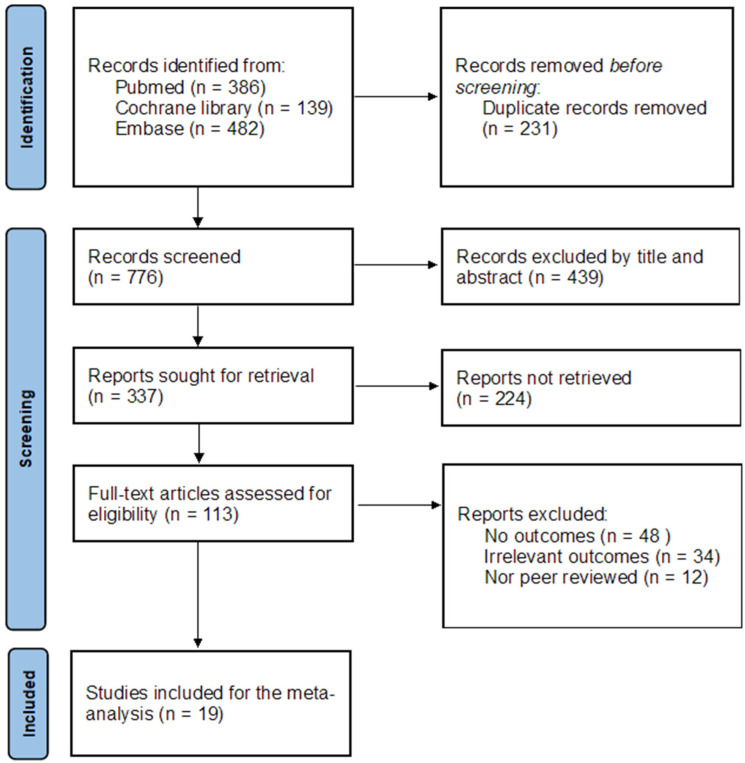
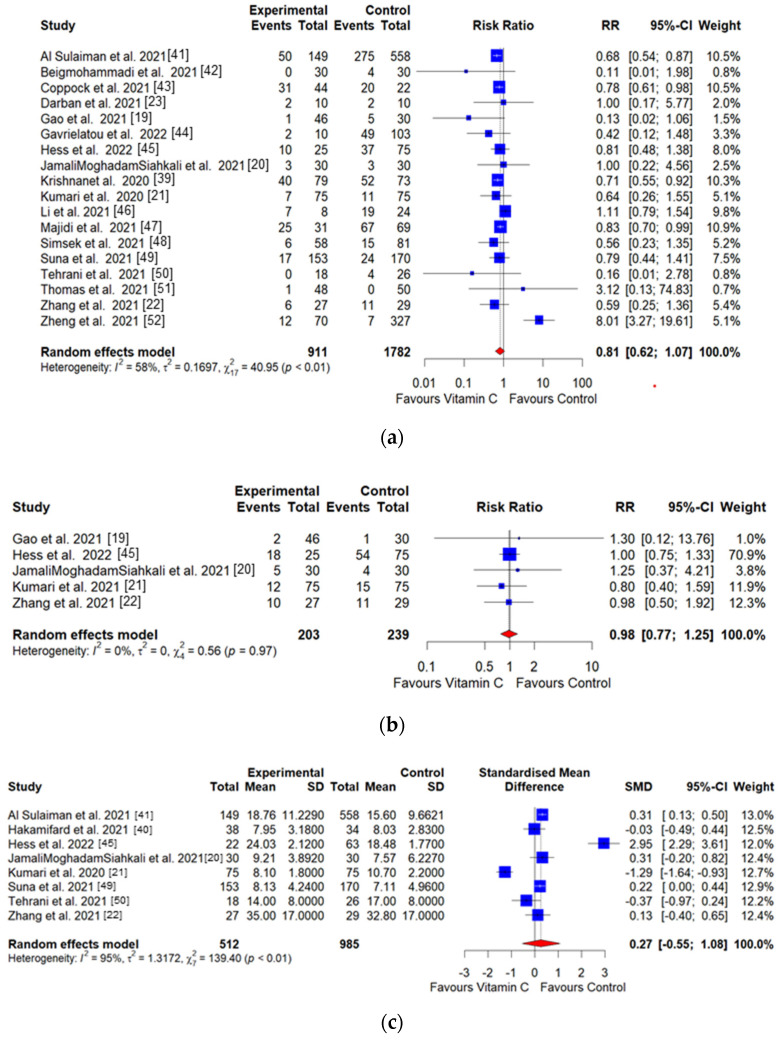
Background: Vitamin C is an essential nutrient that serves as an antioxidant and is known to reduce the inflammatory response associated with pneumonia and acute respiratory distress syndrome in patients with the coronavirus disease (COVID-19), but its clinical effects remain controversial. Methods: This study aimed to investigate the therapeutic effect of vitamin C administration on the clinical outcomes of COVID-19 patients through a systematic review and meta-analysis. Results: Nineteen studies were selected, of which 949 participants administered vitamin C were in the intervention group, and 1816 participants were in the control group. All-cause mortality, hospitalization duration, length of intensive care unit stay, and ventilation incidence in COVID-19 patients were analyzed. The intervention group tends to have a lower risk ratio (RR = 0.81, 95% CI: 0.62 to 1.07; I2 = 58%; Q = 40.95; p < 0.01) in all-cause mortality than the control group. However, there were no significant differences in ventilation incidence, hospitalization duration, and length of ICU stay between the two groups. In the subgroup analysis for all-cause mortality, the risk ratio for RCT as study design, combination therapy, of vitamin C was lower than that of the combination therapy with other agents. A moderate dosage showed a lower RR than a higher dose. Conclusion: The results suggest that vitamin C may lower mortality in COVID-19 patients, but further large-scale studies are required to assess the role of vitamin C in the treatment of COVID-19.
维生素C是一种必需营养素,具有抗氧化作用,已知可减轻冠状病毒病(COVID-19)患者与肺炎和急性呼吸窘迫综合征相关的炎症反应,但其临床效果仍存在争议。方法:本研究旨在通过系统评价和荟萃分析,探讨维生素C给药对COVID-19患者临床结局的治疗效果。结果:共纳入19项研究,其中干预组949例接受维生素C治疗,对照组1816例。分析了COVID-19患者的全因死亡率、住院时间、重症监护病房停留时间和通气发生率。干预组全因死亡率的风险比(RR = 0.81,95%CI:0.62至1.07;I2 = 58%;Q = 40.95;p < 0.01)低于对照组。然而,两组在通气发生率、住院时间和ICU停留时间方面无显著差异。在全因死亡率的亚组分析中,以随机对照试验为研究设计、维生素C联合治疗的风险比低于与其他药物联合治疗。中等剂量的风险比低于高剂量。结论:结果表明,维生素C可能降低COVID-19患者的死亡率,但需要进一步的大规模研究来评估维生素C在COVID-19治疗中的作用。