Kwiatkowska Katarzyna, Rhone Piotr, Wrzeszcz Katarzyna, Ruszkowska-Ciastek Barbara
Department of Pathophysiology, Faculty of Pharmacy, Nicolaus Copernicus University, Collegium Medicum, 85-094 Bydgoszcz, Poland.
Clinical Ward of Breast Cancer and Reconstructive Surgery, Oncology Centre Prof. F. Łukaszczyk Memorial Hospital, 85-796 Bydgoszcz, Poland.
Life (Basel). 2022 Dec 8;12(12):2063. doi: 10.3390/life12122063.
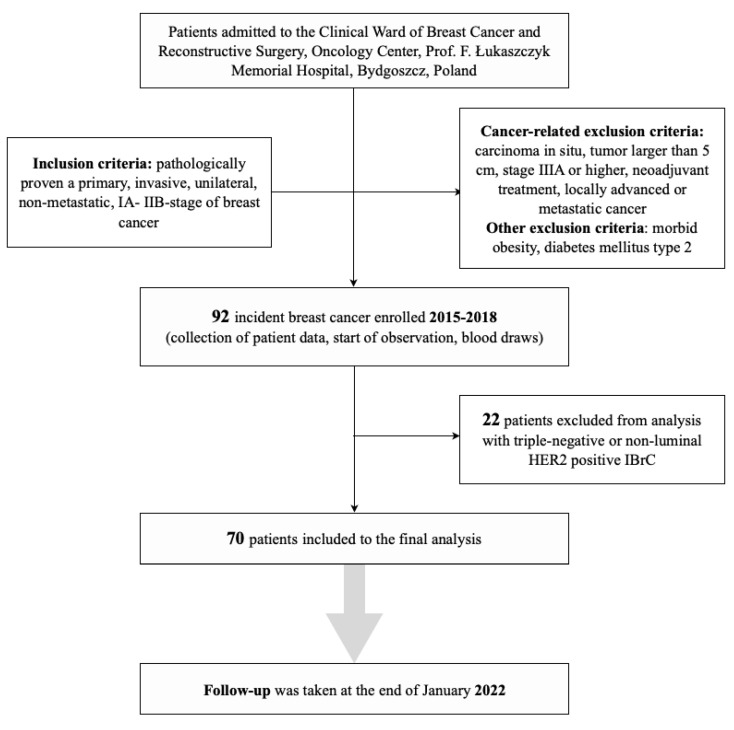
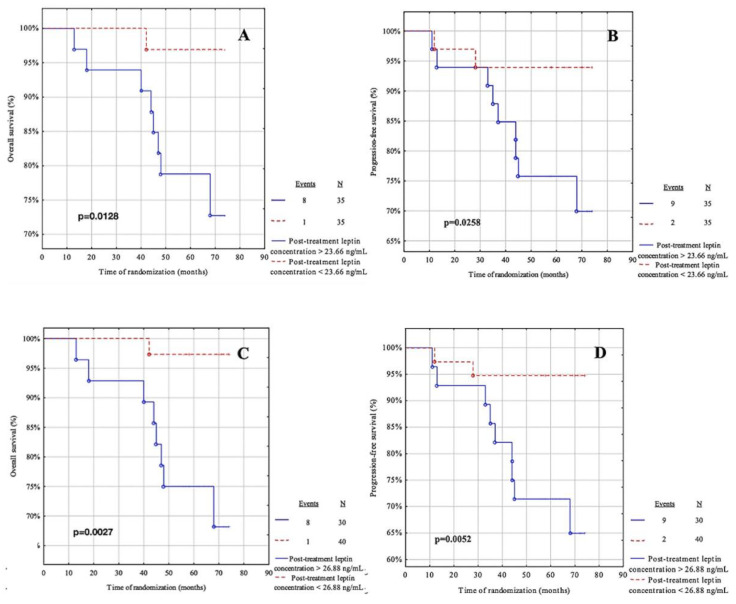
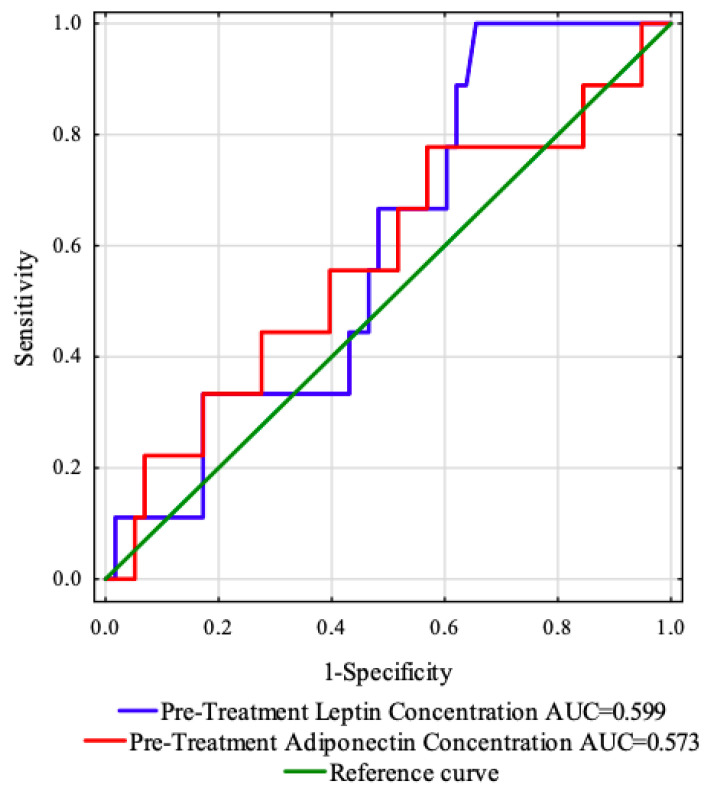
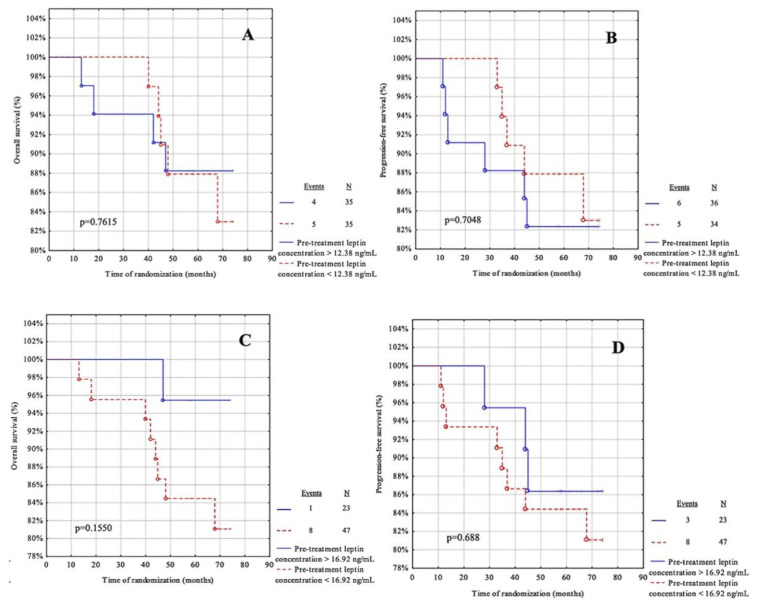
(1) Background: Nowadays, obesity is well-recognised as a significant risk factor for many chronic diseases, for example, hypertension, diabetes, atherosclerosis and cancer. This study is designed to investigate the prognostic value of the pre- and post-treatment serum levels of adiponectin and leptin in luminal A and B invasive breast cancer (IBrC) patients based on six-years follow-up. (2) Methods: Among 70 patients who underwent breast surgery, 35 were Stage I and 35 were Stage II. The concentrations of pre- and post-treatment adiponectin and leptin were evaluated with a specific ELISA kit. The median follow-up was 68.5 months (inter-quartile range (IQR) = 59-72 months) with a recurrence rate of 15.71%. (3) Results: Generally, concentrations of leptin and adiponectin increased after adjuvant therapy. Follow-up showed a significantly higher incidence of disease relapse in IBrC patients with a high post-treatment concentration of leptin (25.71% vs. 5.71% of cases with a low post-treatment concentration of leptin). A post-treatment leptin concentration of 26.88 ng/mL with a specificity of 64.9% and a sensitivity of 88.9% was determined as the best cut-off value to distinguish patients with disease recurrence from those without disease relapse. (4) Conclusions: Our results demonstrated that only the post-treatment serum leptin concentration may be of value as a prognostic indicator and could contribute to predicting a future outcome for patients with early-stage IBrC.
(1) 背景:如今,肥胖已被公认为是许多慢性疾病的重要风险因素,例如高血压、糖尿病、动脉粥样硬化和癌症。本研究旨在基于六年随访,调查管腔 A 型和 B 型浸润性乳腺癌(IBrC)患者治疗前后血清脂联素和瘦素水平的预后价值。(2) 方法:在 70 例行乳腺手术的患者中,35 例为 I 期,35 例为 II 期。使用特定的 ELISA 试剂盒评估治疗前后脂联素和瘦素的浓度。中位随访时间为 68.5 个月(四分位间距(IQR)= 59 - 72 个月),复发率为 15.71%。(3) 结果:一般来说,辅助治疗后瘦素和脂联素的浓度会升高。随访显示,治疗后瘦素浓度高的 IBrC 患者疾病复发的发生率显著更高(治疗后瘦素浓度高的病例为 25.71%,而治疗后瘦素浓度低的病例为 5.71%)。治疗后瘦素浓度为 26.88 ng/mL,特异性为 64.9%,敏感性为 88.9%,被确定为区分疾病复发患者和无疾病复发患者的最佳临界值。(4) 结论:我们的结果表明,只有治疗后血清瘦素浓度可能作为预后指标具有价值,并且有助于预测早期 IBrC 患者的未来结局。