Anderson Karen E, Stevenson Max, Varghese Rency, Hebron Michaeline L, Koppel Erin, McCartin Mara, Kuprewicz Robin, Matar Sara, Ferrante Dalila, Moussa Charbel
MedStar Georgetown University Hospital Huntington's Disease Research, Education and Care Center, Department of Psychiatry and Department of Neurology, Georgetown University Medical Center, 4000 Reservoir Rd, NW, Washington, DC 20057, USA.
Translational Neurotherapeutics Program, Laboratory for Dementia and Parkinsonism, Department of Neurology, Georgetown University Medical Center, Building D, Room 265, 4000 Reservoir Rd, NW, Washington, DC 20057, USA.
Metabolites. 2022 Dec 6;12(12):1225. doi: 10.3390/metabo12121225.
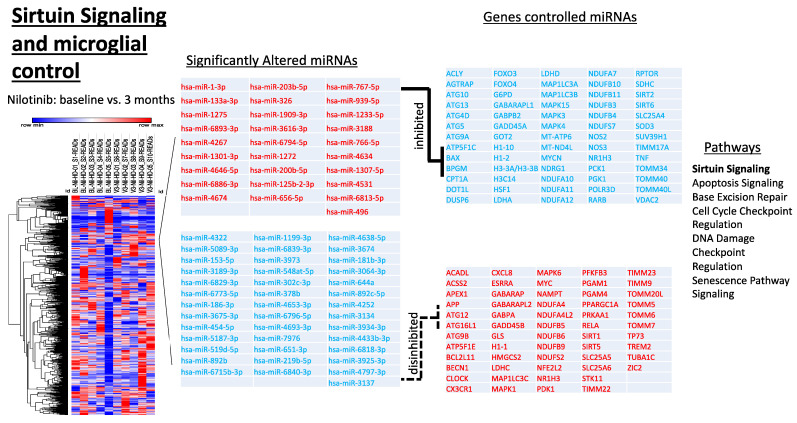
Nilotinib is a tyrosine kinase inhibitor that is safe and tolerated in neurodegeneration, it achieves CSF concentration that is adequate to inhibit discoidin domain receptor (DDR)-1. Nilotinib significantly affects dopamine metabolites, including Homovanillic acid (HVA), resulting in an increase in brain dopamine. HD is a hereditary disease caused by mutations in the (HTT) gene and characterized by neurodegeneration and motor and behavioral symptoms that are associated with activation of dopamine receptors. We explored the effects of a low dose of nilotinib (150 mg) on behavioral changes and motor symptoms in manifest HD patients and examined the effects of nilotinib on several brain mechanisms, including dopamine transmission and gene expression via cerebrospinal fluid (CSF) miRNA sequencing. Nilotinib, 150 mg, did not result in any behavioral changes, although it significantly attenuated HVA levels, suggesting reduction of dopamine catabolism. There was no significant change in HTT, phosphorylated neuro-filament and inflammatory markers in the CSF and plasma via immunoassays. Whole miRNA genome sequencing of the CSF revealed significant longitudinal changes in miRNAs that control specific genes associated with autophagy, inflammation, microglial activity and basal ganglia neurotransmitters, including dopamine and serotonin.
尼罗替尼是一种酪氨酸激酶抑制剂,在神经退行性疾病中安全且耐受性良好,它能达到足以抑制盘状结构域受体(DDR)-1的脑脊液浓度。尼罗替尼显著影响多巴胺代谢产物,包括高香草酸(HVA),导致脑内多巴胺增加。亨廷顿舞蹈症(HD)是一种由亨廷顿蛋白(HTT)基因突变引起的遗传性疾病,其特征为神经退行性变以及与多巴胺受体激活相关的运动和行为症状。我们探讨了低剂量尼罗替尼(150毫克)对显性HD患者行为变化和运动症状的影响,并通过脑脊液(CSF)微小RNA测序研究了尼罗替尼对包括多巴胺传递和基因表达在内的几种脑机制的影响。150毫克尼罗替尼虽显著降低了HVA水平,提示多巴胺分解代谢减少,但未导致任何行为变化。通过免疫测定,脑脊液和血浆中的HTT、磷酸化神经丝和炎症标志物均无显著变化。脑脊液的全微小RNA基因组测序显示,控制与自噬、炎症、小胶质细胞活性以及基底神经节神经递质(包括多巴胺和5-羟色胺)相关特定基因的微小RNA存在显著的纵向变化。