
冷冻保存过程会引起与公牛精子质量相关的蛋白质发生变化:平衡过程可能是一个重要的关键控制点。
The cryopreservation process induces alterations in proteins associated with bull sperm quality: The equilibration process could be a probable critical control point.
机构信息
Theriogenology Laboratory, Southern Regional Station of ICAR-National Dairy Research Institute, Bengaluru, India.
Animal Reproduction, Gynaecology and Obstetrics, ICAR-National Dairy Research Institute, Karnal, India.
出版信息
Front Endocrinol (Lausanne). 2022 Dec 9;13:1064956. doi: 10.3389/fendo.2022.1064956. eCollection 2022.
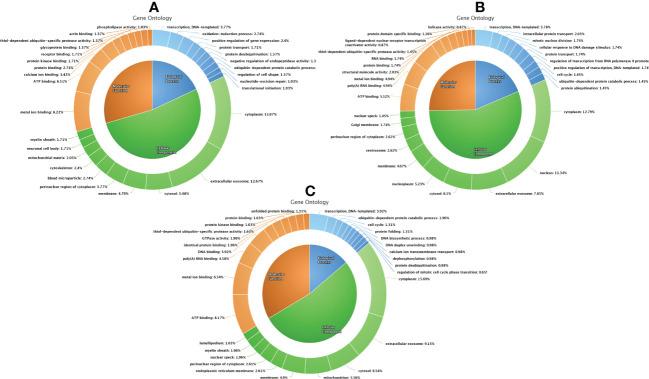
The present study quantitatively characterized the proteomic changes in bull spermatozoa induced by the cryopreservation process. We performed high-throughput comparative global proteomic profiling of freshly ejaculated (before cryopreservation), equilibrated (refrigerated storage; during cryopreservation), and frozen (ultralow temperature; after cryopreservation) bull spermatozoa. Using the liquid chromatography-mass spectrometry (LC-MS/MS) technique, a total of 1,692, 1,415, and 1,286 proteins were identified in fresh, equilibrated, and cryopreserved spermatozoa, respectively. When the proteome of fresh spermatozoa was compared with equilibrated spermatozoa, we found that 166 proteins were differentially expressed. When equilibrated spermatozoa were compared with cryopreserved spermatozoa, we found that 147 proteins were differentially expressed between them. Similarly, we found that 156 proteins were differentially expressed between fresh and cryopreserved spermatozoa. Among these proteins, the abundance of 105 proteins was lowered during the equilibration process itself, while the abundance of 43 proteins was lowered during ultralow temperature preservation. Remarkably, the equilibration process lowered the abundance of sperm proteins involved in energy metabolism, structural integrity, and DNA repair and increased the abundance of proteins associated with proteolysis and protein degradation. The abundance of sperm proteins associated with metabolism, cGMP-PKG (cyclic guanosine 3',5'-monophosphate-dependent protein kinase G) signaling, and regulation of the actin cytoskeleton was also altered during the equilibration process. Collectively, the present study showed that the equilibration step in the bull sperm cryopreservation process was the critical point for sperm proteome, during which a majority of proteomic alterations in sperm occurred. These findings are valuable for developing efficient protocols to minimize protein damage and to improve the quality and fertility of cryopreserved bull spermatozoa.
本研究定量描述了冷冻过程中公牛精子蛋白质组的变化。我们对新鲜射出的(冷冻前)、平衡的(冷藏储存;冷冻过程中)和冷冻的(超低温度;冷冻后)公牛精子进行了高通量比较全局蛋白质组学分析。使用液相色谱-质谱(LC-MS/MS)技术,在新鲜、平衡和冷冻的精子中分别鉴定出 1692、1415 和 1286 种蛋白质。当新鲜精子的蛋白质组与平衡精子的蛋白质组进行比较时,我们发现有 166 种蛋白质表达差异。当平衡精子与冷冻精子进行比较时,我们发现它们之间有 147 种蛋白质表达差异。同样,我们发现新鲜精子和冷冻精子之间有 156 种蛋白质表达差异。在这些蛋白质中,有 105 种蛋白质的丰度在平衡过程中降低,而有 43 种蛋白质的丰度在超低温度保存过程中降低。值得注意的是,平衡过程降低了与能量代谢、结构完整性和 DNA 修复相关的精子蛋白的丰度,增加了与蛋白水解和蛋白降解相关的蛋白的丰度。与代谢、cGMP-PKG(环鸟苷酸 3',5'-单磷酸依赖性蛋白激酶 G)信号转导和肌动蛋白细胞骨架调节相关的精子蛋白的丰度也在平衡过程中发生改变。总的来说,本研究表明,公牛精子冷冻保存过程中的平衡步骤是精子蛋白质组的关键点,在此过程中精子的大多数蛋白质组发生了变化。这些发现对于开发有效的方案以最小化蛋白质损伤,提高冷冻公牛精子的质量和生育能力具有重要价值。


 Zotero 插件