Animal Health & Welfare, Wageningen Livestock Research, WD Wageningen, 6708, The Netherlands.
VitaTrace Nutrition Ltd., Nicosia, 2033, Cyprus.
Poult Sci. 2023 Feb;102(2):102394. doi: 10.1016/j.psj.2022.102394. Epub 2022 Dec 9.
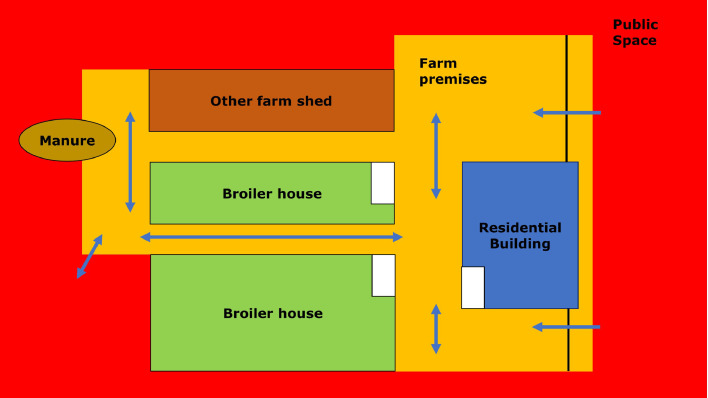
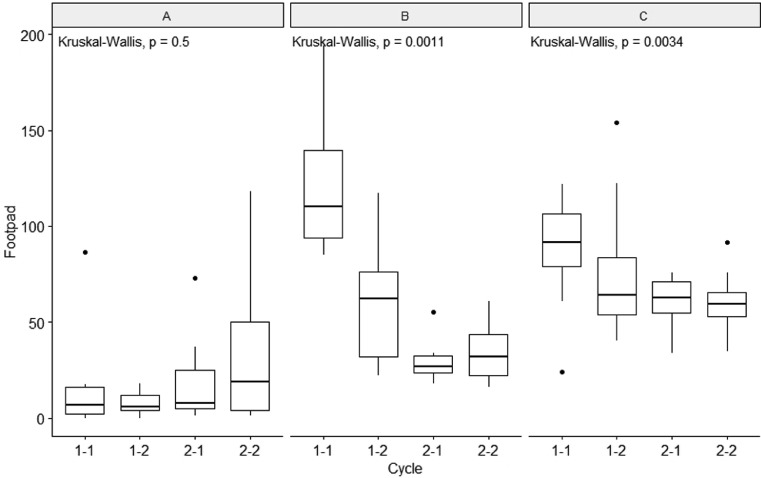
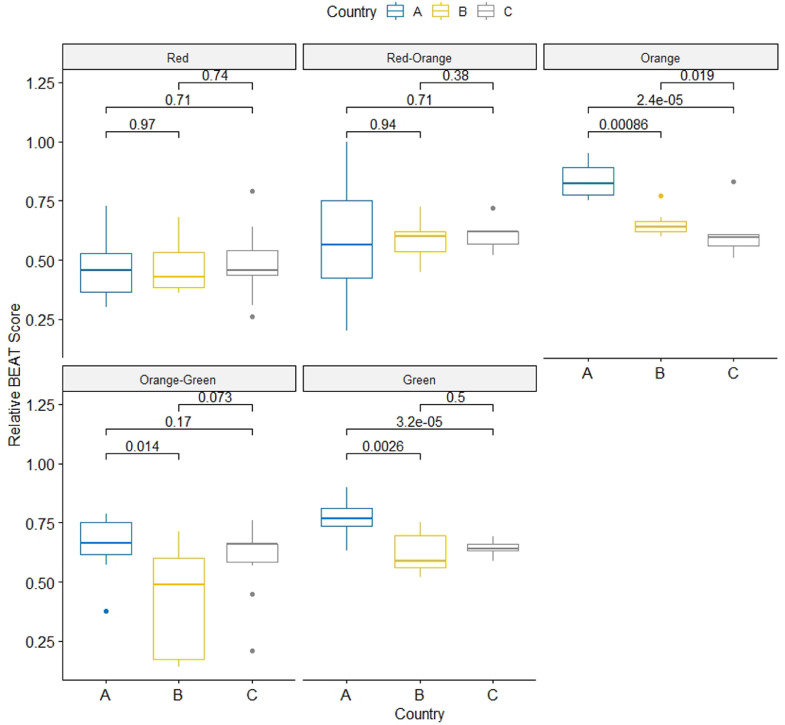
Preventing pathogens from entering and spreading on farms is the first step in reducing health problems. For this study a BiosEcurity Assessment Tool was developed to identify strengths and weaknesses in biosecurity on broiler farms, which was used as a starting point to formulate tailor-made health plans to improve broiler health and reduce antimicrobial use. Farms were divided into 3 separate areas according to associated biosecurity risk; high disease risk external areas (red zone), medium risk service areas (orange zone), and the clean and highly secure access-restricted green zone. In the Netherlands, Cyprus, and Greece, 13, 15, and 7 broiler houses were monitored for 4 production cycles (2 preintervention and 2 postintervention cycles). At the start of the study the BiosEcurity Assessment Tool assessment was performed and a health plan was made in consultation with the veterinarian. After the second cycle a start was made with the implementation of the health plan. Overall, the biosecurity level in the green and orange zones were significantly higher in the Netherlands compared to Greece and Cyprus, but there was no difference for the red zone or the transition zones between the countries. The interventions in the health plans were mostly directed towards those measures that could be implemented in the short term and with low costs in the green zone. In Cyprus a decrease in antimicrobial use was found postintervention. This was not the case in Greece and the Netherlands. In Cyprus and Greece footpad lesion improved after interventions were implemented, although this may have been an effect of season. In Dutch farms no improvement was detected, but both antimicrobial use and footpad lesions were lower at the start of the study compared to Cypriot and Greek farms. In conclusion, the BEAT shows to be a promising tool to assess biosecurity risks on broiler farms. The biosecurity assessment in combination with the farm specific health plans could contribute to antimicrobial reduction on broiler farms.
防止病原体进入和在农场传播是减少健康问题的第一步。为此,本研究开发了一种生物安全评估工具,以确定肉鸡养殖场生物安全的优势和劣势,以此作为制定定制健康计划的起点,以改善肉鸡健康状况并减少抗生素的使用。根据相关生物安全风险,农场分为 3 个独立区域:高疾病风险外部区域(红色区域)、中等风险服务区(橙色区域)和清洁且高度安全的受限访问绿色区域。在荷兰、塞浦路斯和希腊,监测了 13、15 和 7 个肉鸡舍,进行了 4 个生产周期(2 个干预前周期和 2 个干预后周期)的监测。在研究开始时,进行了生物安全评估工具评估,并与兽医协商制定了健康计划。第二个周期后,开始实施健康计划。总体而言,与希腊和塞浦路斯相比,荷兰的绿色和橙色区域的生物安全水平明显更高,但各国的红色区域或过渡区域之间没有差异。健康计划中的干预措施主要针对那些可以在短期内实施且成本较低的措施。在塞浦路斯,干预后发现抗生素使用减少。但在希腊和荷兰并非如此。在塞浦路斯和希腊,实施干预措施后脚垫病变得到改善,尽管这可能是季节的影响。在荷兰的农场中没有发现改善,但与塞浦路斯和希腊的农场相比,抗生素使用和脚垫病变在研究开始时较低。总之,BEAT 被证明是评估肉鸡养殖场生物安全风险的有前途的工具。生物安全评估与特定农场的健康计划相结合,可以有助于减少肉鸡养殖场的抗生素使用。