Gajda Anna, Błądek Tomasz, Gbylik-Sikorska Małgorzata, Nowacka-Kozak Ewelina, Angastiniotis Kyriacos, Simitopoulou Maro, Kefalas George, Ferrari Paolo, Levallois Pierre, Fourichon Christine, Wolthuis-Fillerup Maaike, De Roest Kees
National Veterinary Research Institute, Partyzantow 57, 24-100 Pulawy, Poland.
Vitatrace Nutrition Ltd., 18 Propylaion Street, Strovolos Industrial Estate, 2033 Strovolos, Cyprus.
Antibiotics (Basel). 2023 Feb 4;12(2):326. doi: 10.3390/antibiotics12020326.
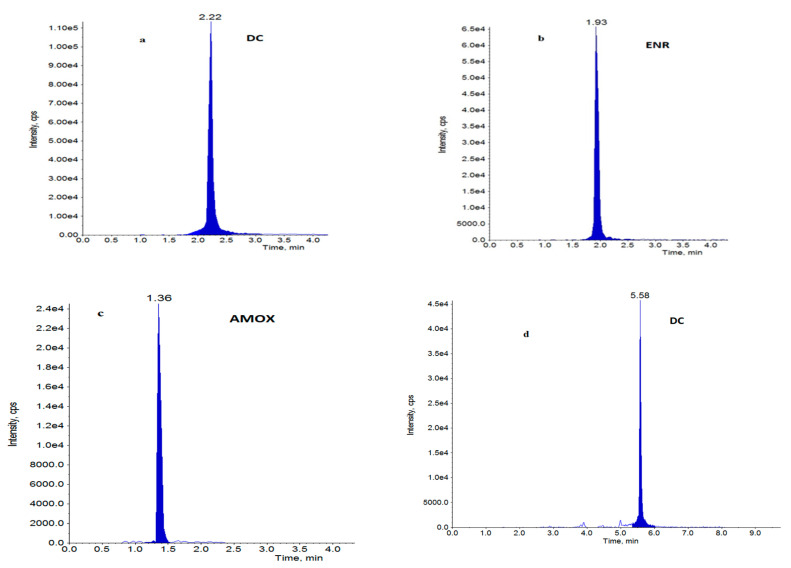
Antimicrobial residues may pose harmful effects on the health of consumers. At the same time, an adequate quality of drinking water for animals is one of the important element to ensure animal welfare and food without antibacterials. The presented study is aimed at estimating the residue levels of antibacterial compounds, such as penicillins, cephalosporin, macrolides, tetracyclines, quinolones, sulphonamides, aminoglycosides, diaminopirymidines, pleuromutilines and lincosamides in meat and on-farm drinking water samples using liquid chromatography-tandem mass spectrometry (LC-MS/MS), as a part of a surveillance system on pig and broiler farms within the project Healthy Livestock. A total of 870 samples of muscle from pig and broiler, as well as 229 water samples were analysed for antibiotic residues. Samples were collected from farms in EU countries in two steps, before and after implementation of a tailor-made health plan. In muscle samples, the detected concentrations of doxycycline in the post-intervention step (15.9-70.8 µg/kg) were lower than concentrations in the pre-intervention step (20.6-100 µg/kg). In water samples, doxycycline in an average concentration of 119 µg/L in the pre- and 23.1 µg/L in the post-intervention step, as well as enrofloxacin at concentrations of 170 µg/L in the pre- and 1.72 µg/L in the post-intervention step were quantified. Amoxicillin was only present before intervention. The obtained results confirm the effectiveness of the intervention actions. The concentrations of antibiotics in muscles and water were lower after implementation of a health plan on the farms.
抗菌药物残留可能对消费者健康造成有害影响。与此同时,为动物提供充足的优质饮用水是确保动物福利和生产无抗菌药物食品的重要因素之一。本研究旨在使用液相色谱 - 串联质谱法(LC-MS/MS),作为“健康家畜”项目中猪和肉鸡养殖场监测系统的一部分,估算肉类和养殖场饮用水样本中青霉素、头孢菌素、大环内酯类、四环素类、喹诺酮类、磺胺类、氨基糖苷类、二氨基嘧啶类、截短侧耳素类和林可酰胺类等抗菌化合物的残留水平。共对870份猪和肉鸡的肌肉样本以及229份水样进行了抗生素残留分析。样本分两步从欧盟国家的养殖场采集,分别在实施量身定制的健康计划之前和之后。在肌肉样本中,干预后阶段检测到的多西环素浓度(15.9 - 70.8 μg/kg)低于干预前阶段(20.6 - 100 μg/kg)。在水样中,干预前多西环素平均浓度为119 μg/L,干预后为23.1 μg/L,同时还定量检测到恩诺沙星,干预前浓度为170 μg/L,干预后为1.72 μg/L。阿莫西林仅在干预前存在。所得结果证实了干预措施的有效性。养殖场实施健康计划后,肌肉和水中的抗生素浓度降低了。