Department of Medicine, University of Florida College of Medicine, Gainesville, Florida, USA.
Office of Clinical Quality and Patient Safety, University of Florida Health, Gainesville, Florida, USA.
BMJ Open Qual. 2022 Dec;11(4). doi: 10.1136/bmjoq-2022-002045.
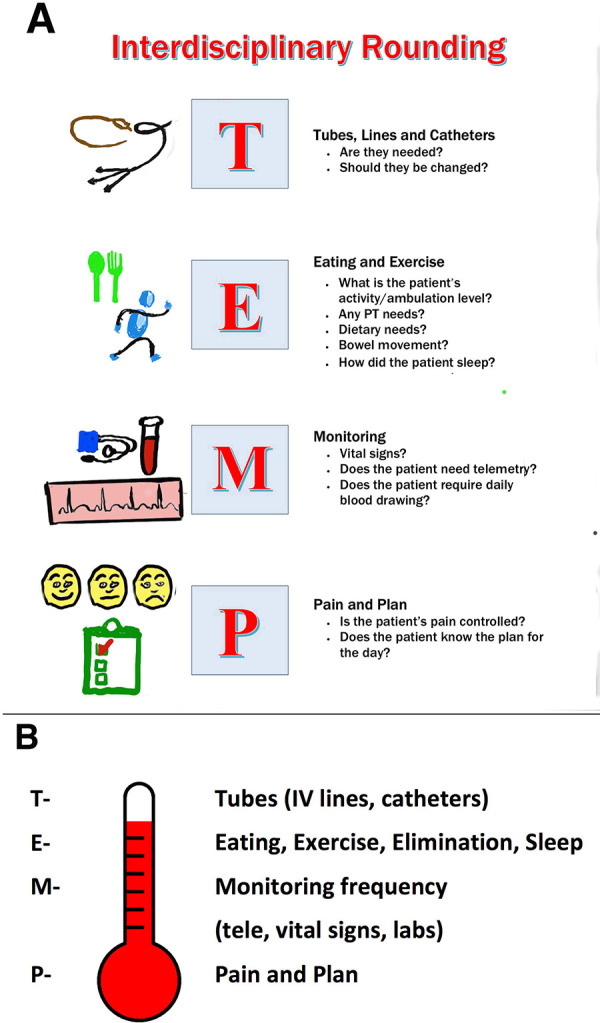
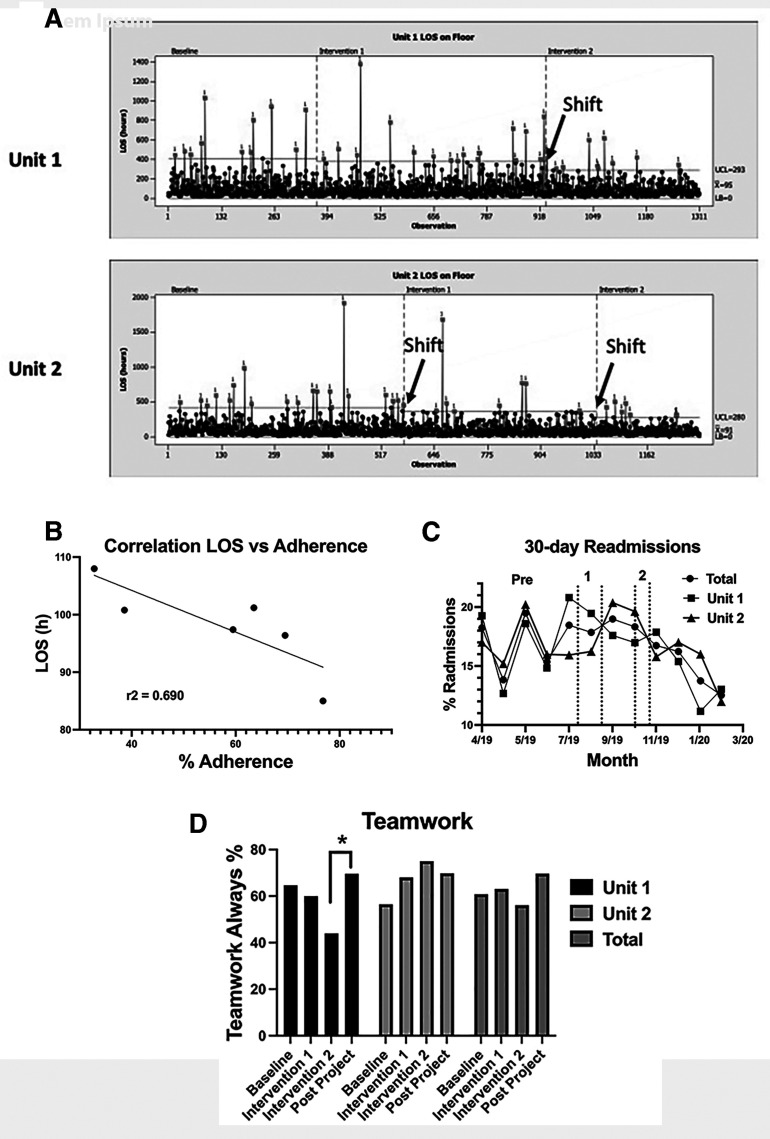
Protocols that enhance communication between nurses, physicians and patients have had a variable impact on the quality and safety of patient care. We combined standardised nursing and physician interdisciplinary bedside rounds with a mnemonic checklist to assure all key nursing care components were modified daily. The mnemonic TEMP allowed the rapid review of 11 elements. T stands for tubes assuring proper management of intravenous lines and foleys; E stands for eating, exercise, excretion and sleep encouraging a review of orders for diet, exercise, laxatives to assure regular bowel movements, and inquiry about sleep; M stands for monitoring reminding the team to review the need for telemetry and the frequency of vital sign monitoring as well as the need for daily blood tests; and P stands for pain and plans reminding the team to discuss pain medications and to review the management plan for the day with the patient and family. Faithful implementation eliminated central line-associated bloodstream infections and catheter-associated urinary tract infections and resulted in a statistically significant reduction in average hospital length of stay of 13.3 hours, one unit achieving a 23-hour reduction. Trends towards reduced 30-day readmissions (20% down to 10%-11%) were observed. One unit improved the percentage of patients who reported nurses and doctors always worked together as a team from a 56% baseline to 75%. However, the combining of both units failed to demonstrate statistically significant improvement. Psychologists well versed in implementing behavioural change were recruiting to improve adherence to our protocols. Following training physicians and nurses achieved adherence levels of over 70%. A high correlation (r=0.69) between adherence and reductions in length of stay was observed emphasising the importance of rigorous training and monitoring of performance to bring about meaningful and reliable improvements in the efficiency and quality of patient care.
促进护士、医生和患者之间沟通的方案对患者护理的质量和安全产生了不同的影响。我们将标准化的护士和医生跨学科床边查房与助记符检查表相结合,以确保每天修改所有关键的护理护理内容。助记符 TEMP 可快速检查 11 个要素。T 代表管道,确保对静脉输液和 Foley 管的正确管理;E 代表饮食、运动、排泄和睡眠,鼓励检查饮食、运动、泻药的医嘱,以确保定期排便,并询问睡眠情况;M 代表监测,提醒团队审查对遥测的需求以及生命体征监测的频率,以及每日血液检查的需求;P 代表疼痛和计划,提醒团队讨论疼痛药物,并与患者和家属一起审查当天的管理计划。忠实执行消除了中心静脉相关血流感染和导管相关尿路感染,并导致平均住院时间显著缩短 13.3 小时,一个单位缩短了 23 小时。观察到 30 天再入院率(从 20%下降到 10%-11%)呈下降趋势。一个单位将报告护士和医生总是作为一个团队合作的患者比例从 56%的基线提高到 75%。然而,两个单位的合并未能显示出统计学上的显著改善。擅长实施行为改变的心理学家正在被招募,以提高对我们的协议的遵守率。经过培训,医生和护士的遵守率达到了 70%以上。观察到遵守率与住院时间缩短之间存在高度相关性(r=0.69),这强调了严格培训和监测绩效的重要性,以实现患者护理效率和质量的有意义和可靠改进。