Infectious Disease Division, Brigham and Women's Hospital, Boston, MA 02115, USA; Ragon Institute of MGH, MIT and Harvard, Cambridge, MA 02139, USA.
Ragon Institute of MGH, MIT and Harvard, Cambridge, MA 02139, USA.
Cell Host Microbe. 2023 Jan 11;31(1):83-96.e5. doi: 10.1016/j.chom.2022.12.002. Epub 2023 Jan 2.
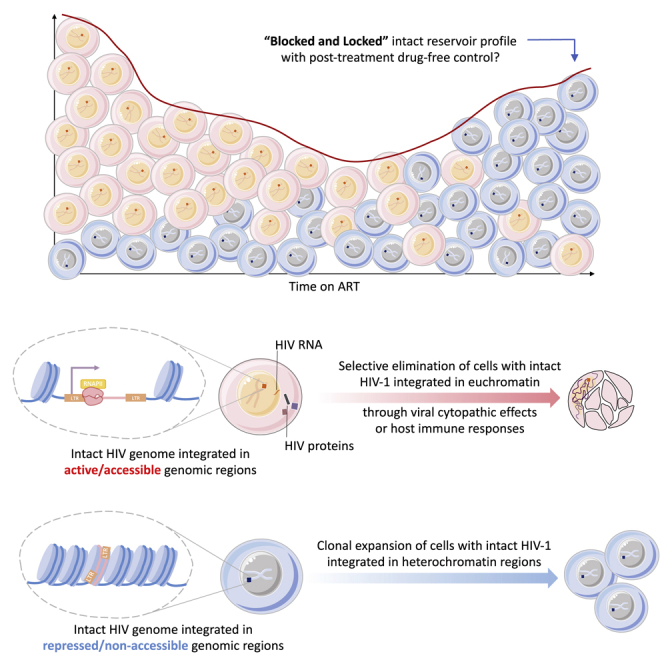
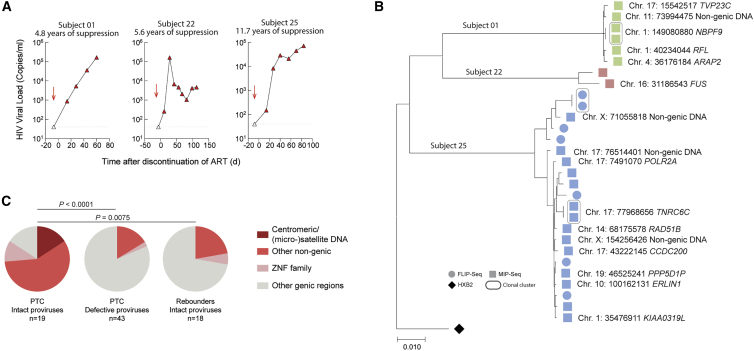
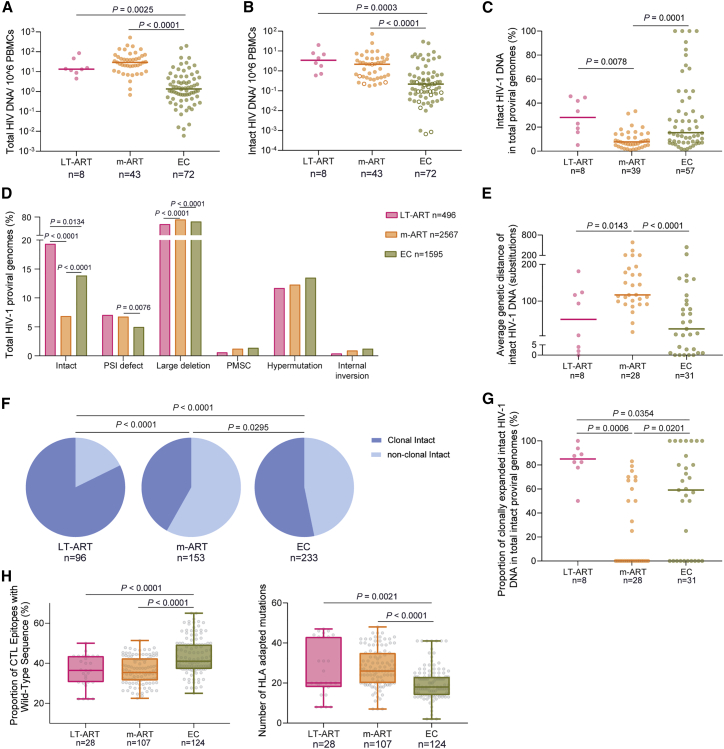
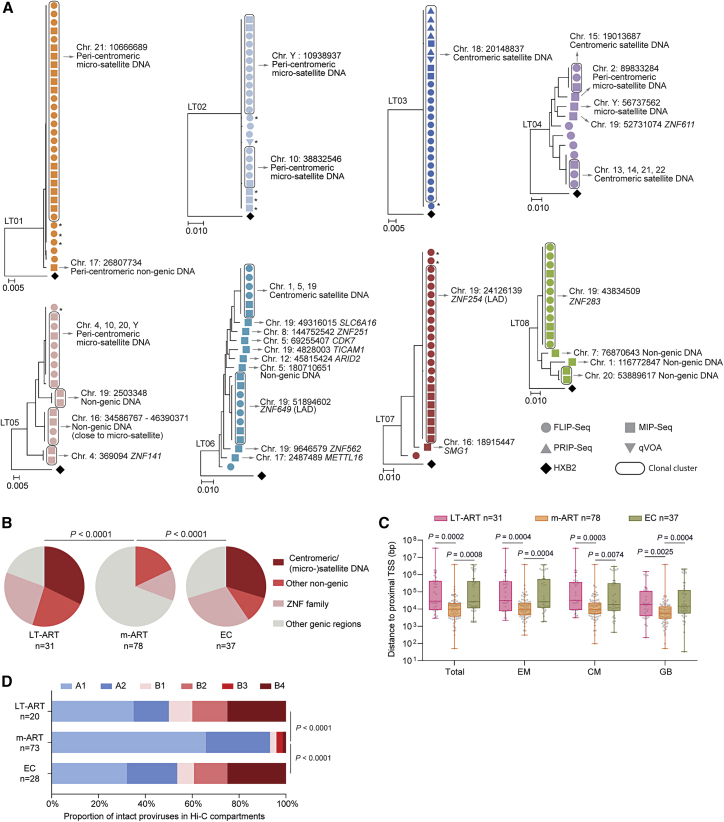
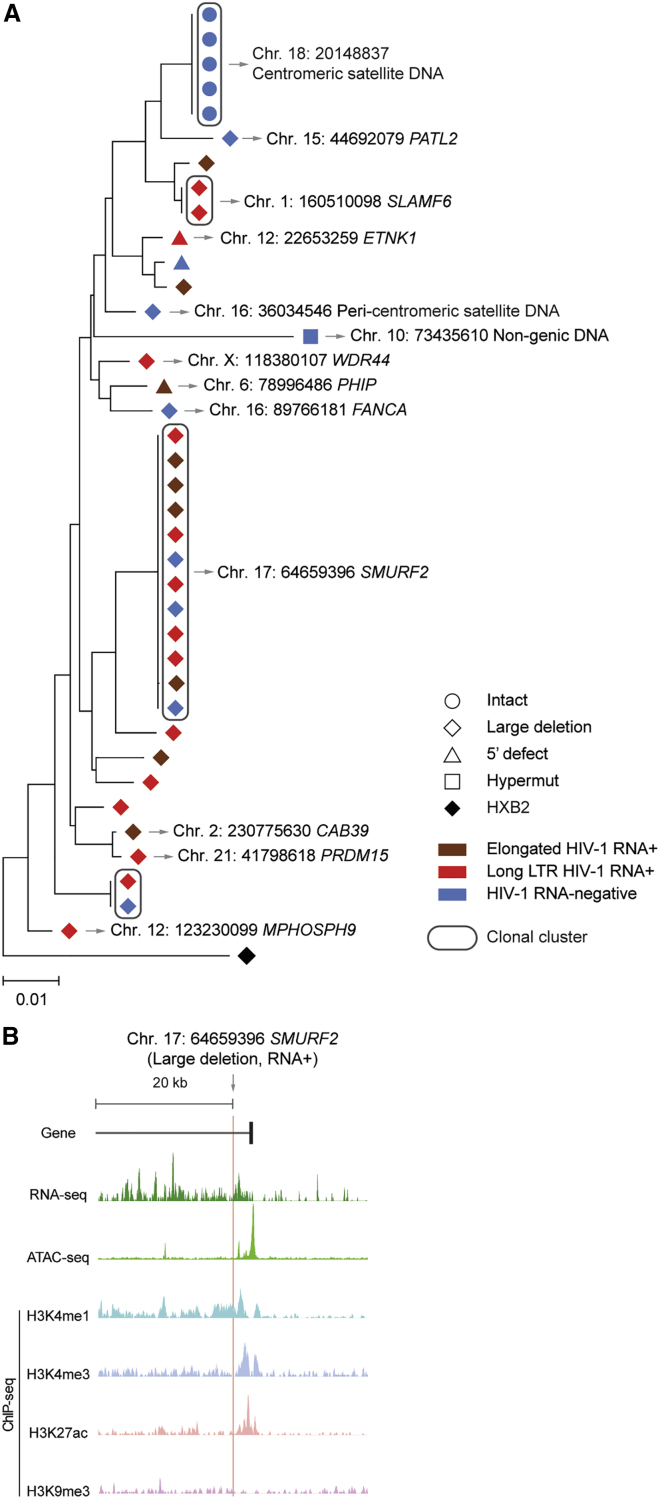
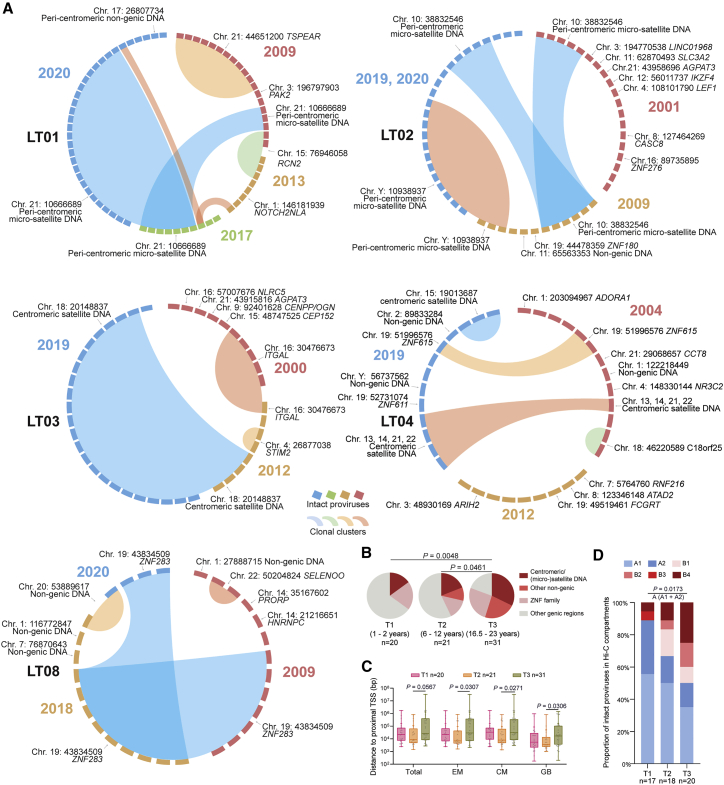
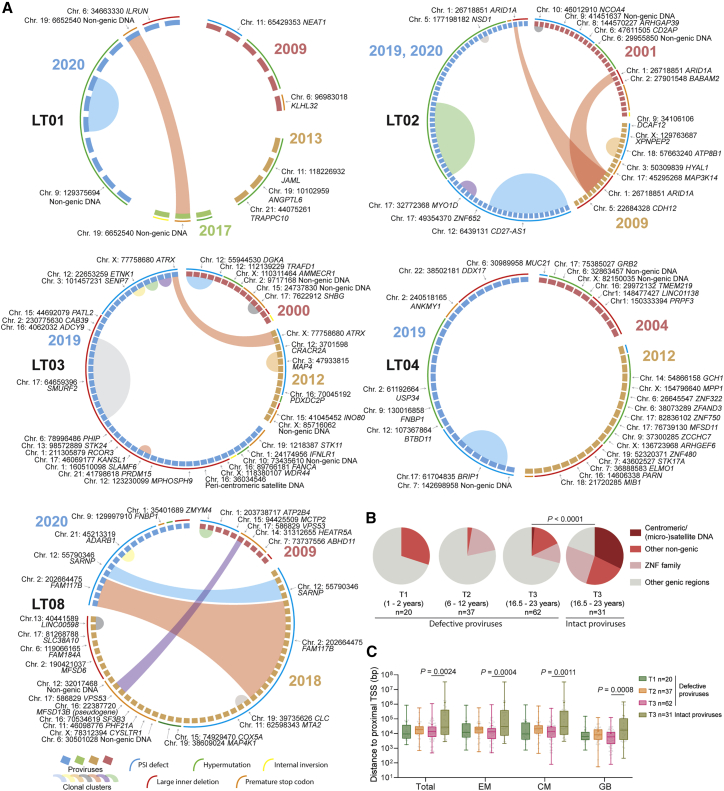
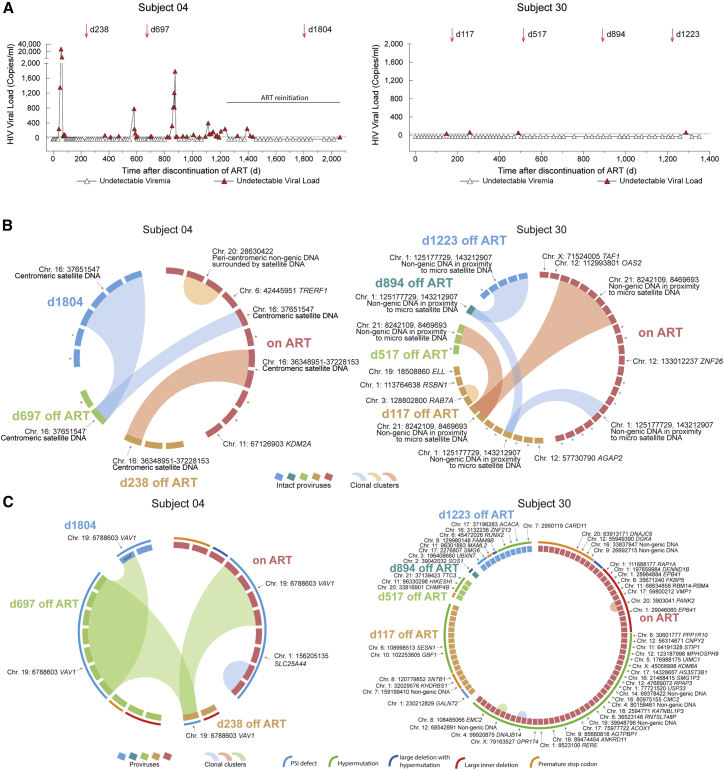
HIV-1 establishes a life-long reservoir of virally infected cells which cannot be eliminated by antiretroviral therapy (ART). Here, we demonstrate a markedly altered viral reservoir profile of long-term ART-treated individuals, characterized by large clones of intact proviruses preferentially integrated in heterochromatin locations, most prominently in centromeric satellite/micro-satellite DNA. Longitudinal evaluations suggested that this specific reservoir configuration results from selection processes that promote the persistence of intact proviruses in repressive chromatin positions, while proviruses in permissive chromosomal locations are more likely to be eliminated. A bias toward chromosomal integration sites in heterochromatin locations was also observed for intact proviruses in study participants who maintained viral control after discontinuation of antiretroviral therapy. Together, these results raise the possibility that antiviral selection mechanisms during long-term ART may induce an HIV-1 reservoir structure with features of deep latency and, possibly, more limited abilities to drive rebound viremia upon treatment interruptions.
HIV-1 建立了一个终身的病毒感染细胞库,抗逆转录病毒疗法 (ART) 无法将其清除。在这里,我们展示了长期接受 ART 治疗的个体中明显改变的病毒库特征,其特征是大量完整前病毒克隆优先整合在异染色质位置,最突出的是着丝粒卫星/微卫星 DNA。纵向评估表明,这种特定的库结构是由选择过程导致的,这些选择过程促进了完整前病毒在抑制性染色质位置的持久性,而在允许的染色体位置的前病毒更有可能被消除。在停止抗逆转录病毒治疗后仍能保持病毒控制的研究参与者中,完整前病毒在异染色质位置的染色体整合位点也存在偏向性。总的来说,这些结果表明,长期 ART 期间的抗病毒选择机制可能诱导具有潜伏深度特征的 HIV-1 库结构,并且在治疗中断时可能更有限地驱动病毒血症反弹的能力。