Department of Rheumatology and Clinical Immunology, Charité - Universitätsmedizin Berlin, corporate member of Freie Universität Berlin and Humboldt Universität zu Berlin, Berlin, Germany.
Institute of Virology, Charité - Universitätsmedizin Berlin, corporate member of Freie Universität Berlin and Humboldt Universität zu Berlin, Berlin, Germany.
RMD Open. 2022 Dec;8(2). doi: 10.1136/rmdopen-2022-002650.
The development of sufficient COVID-19 vaccines has been a big breakthrough in fighting the global SARS-CoV-2 pandemic. However, vaccination effectiveness can be reduced in patients with autoimmune rheumatic diseases (AIRD). The aim of this study was to identify factors that lead to a diminished humoral vaccination response in patients with AIRD.
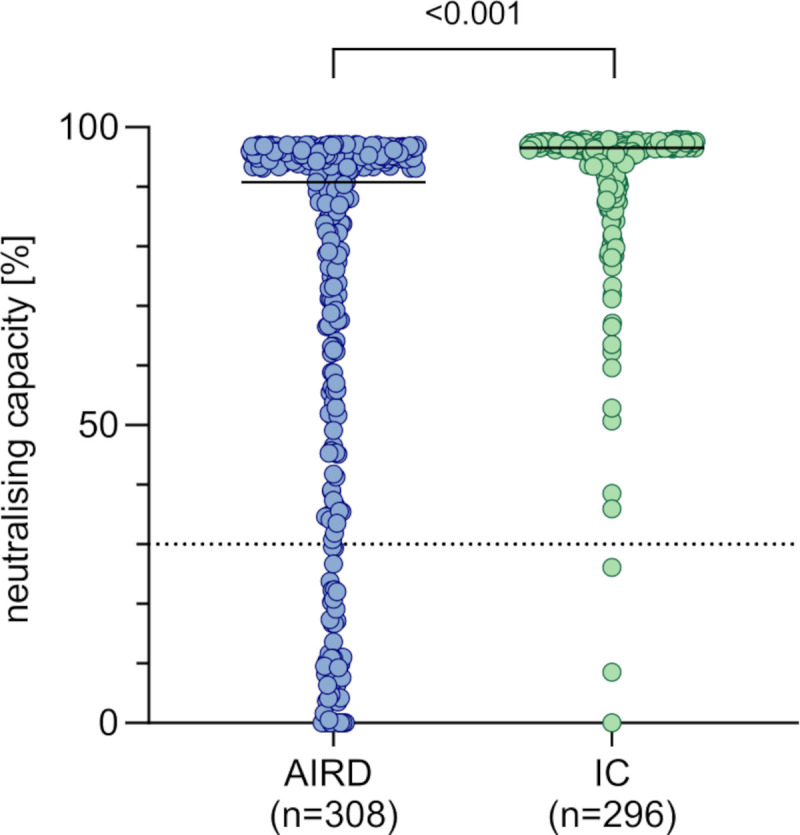
Vaccination response was measured with a surrogate virus neutralisation test and by testing for antibodies directed against the receptor-binding-domain (RBD) of SARS-CoV-2 in 308 fully vaccinated patients with AIRD. In addition, 296 immunocompetent participants were investigated as a control group. Statistical adjusted analysis included covariates with a possible influence on antibody response.
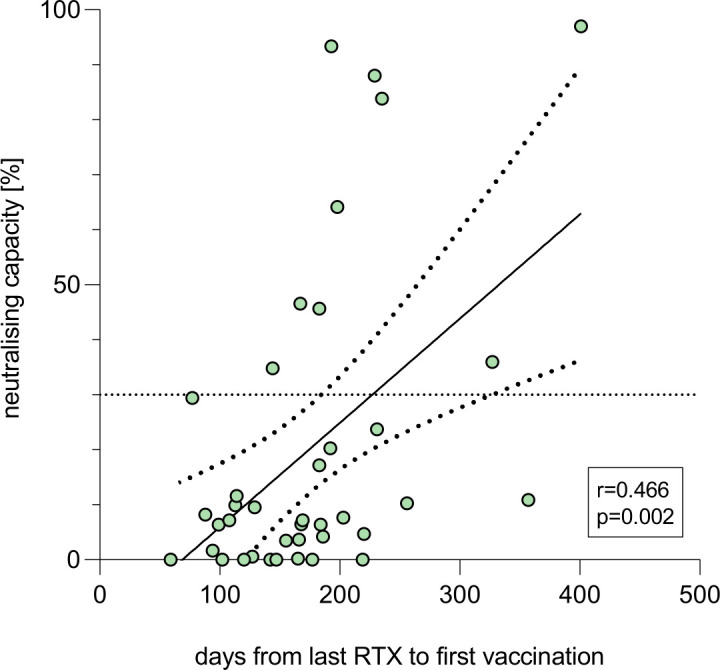
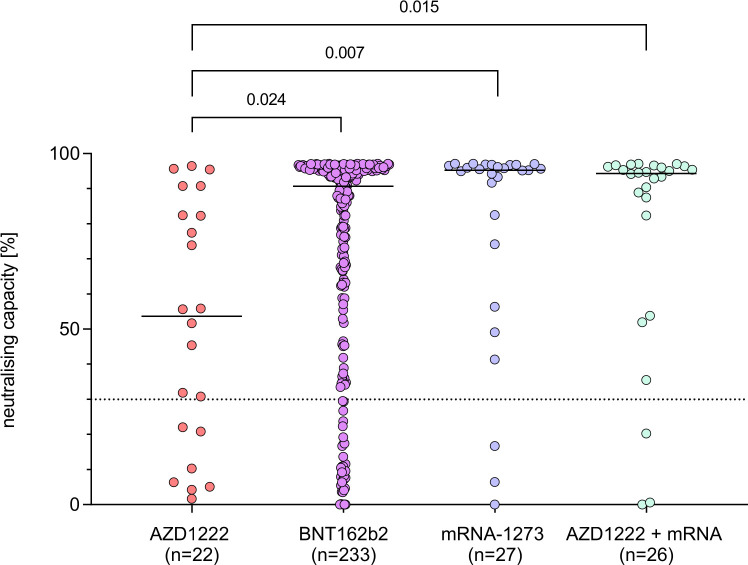
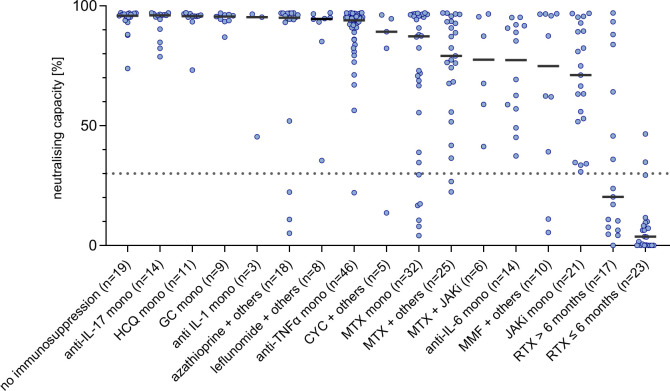
Patients with AIRD showed lower antibody responses compared with immunocompetent individuals (median neutralising capacity 90.8% vs 96.5%, p<0.001; median anti-RBD-IgG 5.6 S/CO vs 6.7 S/CO, p<0.001). Lower antibody response was significantly influenced by type of immunosuppressive therapy, but not by rheumatic diagnosis, with patients under rituximab therapy developing the lowest antibody levels. Patients receiving mycophenolate, methotrexate or janus kinase inhibitors also showed reduced vaccination responses. Additional negative influencing factors were vaccination with AZD1222, old age and shorter intervals between the first two vaccinations.
Certain immunosuppressive therapies are associated with lower antibody responses after vaccination. Additional factors such as vaccine type, age and vaccination interval should be taken into account. We recommend antibody testing in at-risk patients with AIRD and emphasise the importance of booster vaccinations in these patients.
开发充足的 COVID-19 疫苗是抗击全球 SARS-CoV-2 大流行的重大突破。然而,自身免疫性风湿病(AIRD)患者的疫苗有效性可能会降低。本研究旨在确定导致 AIRD 患者体液免疫接种反应减弱的因素。
通过替代病毒中和试验和检测针对 SARS-CoV-2 受体结合域(RBD)的抗体,在 308 名已完全接种疫苗的 AIRD 患者中测量疫苗接种反应。此外,还调查了 296 名免疫功能正常的参与者作为对照组。统计调整分析包括可能影响抗体反应的协变量。
与免疫功能正常的个体相比,AIRD 患者的抗体反应较低(中位数中和能力 90.8%比 96.5%,p<0.001;中位数抗-RBD-IgG 5.6 S/CO 比 6.7 S/CO,p<0.001)。较低的抗体反应明显受到免疫抑制治疗类型的影响,但不受风湿病诊断的影响,接受利妥昔单抗治疗的患者产生的抗体水平最低。接受吗替麦考酚酯、甲氨蝶呤或 Janus 激酶抑制剂治疗的患者也显示出较低的疫苗接种反应。其他负面影响因素包括接种 AZD1222、年龄较大和前两剂疫苗之间的间隔较短。
某些免疫抑制疗法与接种疫苗后的抗体反应降低有关。还应考虑疫苗类型、年龄和接种间隔等其他因素。我们建议对患有 AIRD 的高危患者进行抗体检测,并强调在这些患者中进行加强疫苗接种的重要性。