Division of Infectious Diseases, Department of Medicine, Massachusetts General Hospital, Boston, Massachusetts, USA.
Harvard Medical School, Department of Medicine, Boston, Massachusetts, USA.
mBio. 2023 Feb 28;14(1):e0318422. doi: 10.1128/mbio.03184-22. Epub 2023 Jan 4.
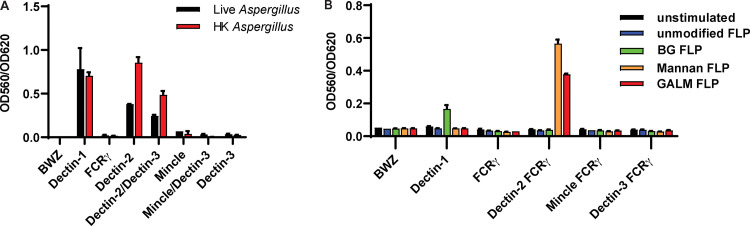
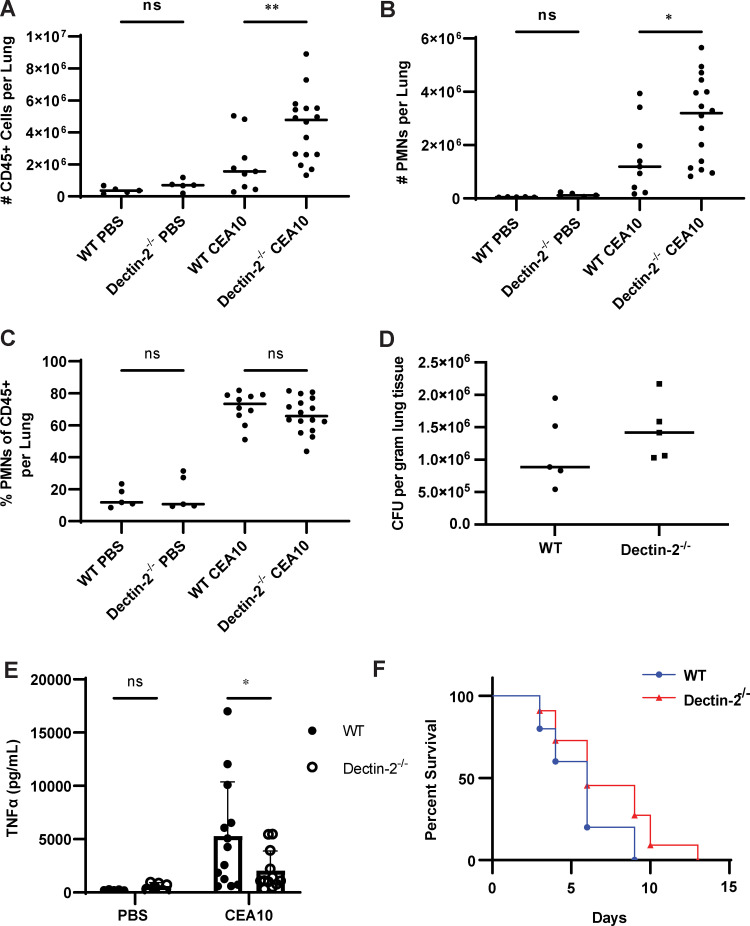
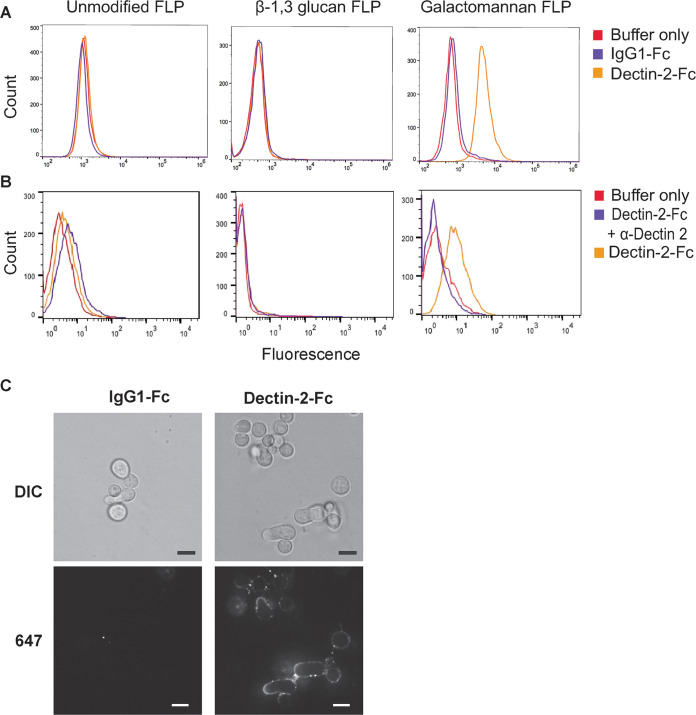
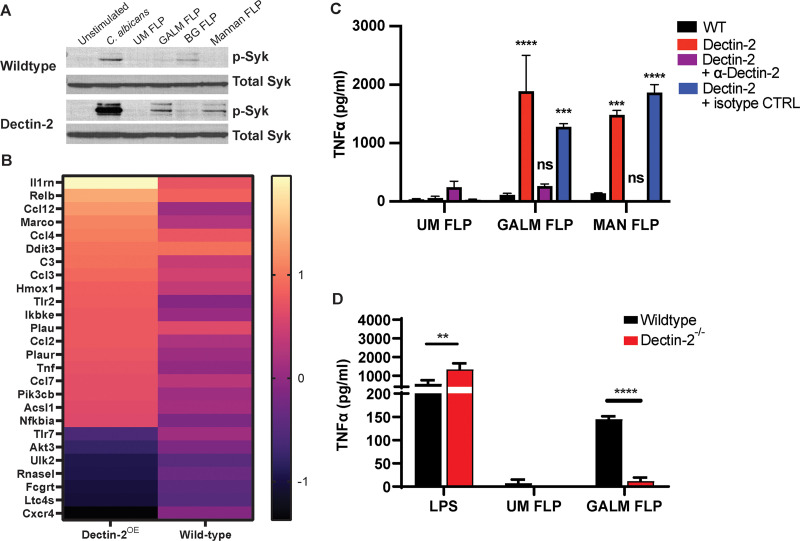
Aspergillus fumigatus is a ubiquitous environmental mold that causes significant mortality particularly among immunocompromised patients. The detection of the -derived carbohydrate galactomannan in patient serum and bronchoalveolar lavage fluid is the major biomarker used to detect A. fumigatus infection in clinical medicine. Despite the clinical relevance of this carbohydrate, we lack a fundamental understanding of how galactomannan is recognized by the immune system and its consequences. Galactomannan is composed of a linear mannan backbone with galactofuranose sidechains and is found both attached to the cell surface of and as a soluble carbohydrate in the extracellular milieu. In this study, we utilized fungal-like particles composed of highly purified galactomannan to identify a C-type lectin host receptor for this fungal carbohydrate. We identified a novel and specific interaction between galactomannan and the C-type lectin receptor Dectin-2. We demonstrate that galactomannan bound to Dectin-2 and induced Dectin-2-dependent signaling, including activation of spleen tyrosine kinase, gene transcription, and tumor necrosis factor alpha (TNF-α) production. Deficiency of Dectin-2 increased immune cell recruitment to the lungs but was dispensable for survival in a mouse model of pulmonary aspergillosis. Our results identify a novel interaction between galactomannan and Dectin-2 and demonstrate that Dectin-2 is a receptor for galactomannan, which leads to a proinflammatory immune response in the lung. Aspergillus fumigatus is a fungal pathogen that causes serious and often fatal disease in humans. The surface of is composed of complex sugar molecules. Recognition of these carbohydrates by immune cells by carbohydrate lectin receptors can lead to clearance of the infection or, in some cases, benefit the fungus by dampening the host response. Galactomannan is a carbohydrate that is part of the cell surface of but is also released during infection and is found in patient lungs as well as their bloodstreams. The significance of our research is that we have identified Dectin-2 as a mammalian immune cell receptor that recognizes, binds, and signals in response to galactomannan. These results enhance our understanding of how this carbohydrate interacts with the immune system at the site of infection and will lead to broader understanding of how release of galactomannan by effects the immune response in infected patients.
烟曲霉是一种无处不在的环境霉菌,它会导致严重的疾病,特别是在免疫功能低下的患者中。检测患者血清和支气管肺泡灌洗液中的 - 衍生碳水化合物半乳甘露聚糖是临床医学中检测烟曲霉感染的主要生物标志物。尽管这种碳水化合物具有临床相关性,但我们对其如何被免疫系统识别及其后果仍缺乏基本了解。半乳甘露聚糖由线性甘露聚糖主链和半乳糖呋喃糖侧链组成,既附着在 的细胞表面,也作为细胞外环境中的可溶性碳水化合物存在。在这项研究中,我们利用由高度纯化的 半乳甘露聚糖组成的真菌样颗粒,鉴定出这种真菌碳水化合物的 C 型凝集素宿主受体。我们鉴定出 半乳甘露聚糖与 C 型凝集素受体 Dectin-2 之间存在一种新的、特异性的相互作用。我们证明,半乳甘露聚糖与 Dectin-2 结合并诱导 Dectin-2 依赖性信号转导,包括脾酪氨酸激酶的激活、基因转录和肿瘤坏死因子-α(TNF-α)的产生。Dectin-2 缺陷会增加免疫细胞向肺部的募集,但在烟曲霉肺部感染的小鼠模型中对生存是可有可无的。我们的结果确定了半乳甘露聚糖与 Dectin-2 之间的一种新的相互作用,并证明 Dectin-2 是半乳甘露聚糖的受体,这会导致肺部的促炎免疫反应。烟曲霉是一种真菌病原体,可导致人类严重且常致命的疾病。 的表面由复杂的糖分子组成。免疫细胞通过碳水化合物凝集素受体识别这些碳水化合物,可导致清除感染,或者在某些情况下,通过抑制宿主反应而有利于真菌。半乳甘露聚糖是一种碳水化合物,是 的细胞表面的一部分,但在感染期间也会释放出来,并在患者的肺部以及血液中被发现。我们研究的意义在于,我们已经确定 Dectin-2 是一种哺乳动物免疫细胞受体,它能识别、结合并对半乳甘露聚糖作出反应。这些结果增强了我们对这种碳水化合物在感染部位与免疫系统相互作用的理解,并将导致对 释放的半乳甘露聚糖如何影响感染患者的免疫反应有更广泛的理解。