Department of Surgery, School of Medicine, University of Louisville, 511 S Floyd ST MDR Bldg Rm326A, Louisville, KY, 40202, USA.
Department of Hematology, Cancer Center, The First Hospital of Jilin University, No. 71. Xinmin Street, Changchun, 130021, Jilin, China.
J Exp Clin Cancer Res. 2023 Jan 5;42(1):3. doi: 10.1186/s13046-022-02589-7.
Excess body weight has been found to associate with an increased risk of lymphomas and some metabolic pathways are currently recognized in lymphomagenesis. Bioactive lipid metabolites such as sphingosine-1-phosphate (S1P) have been proposed to play an important role linking obesity and lymphomas. However, the underlying mechanism(s) of S1P signaling in obesity-lymphomagenesis have not been well addressed.
The gene expression of sphingosine kinase (SPHK), lymphoma prognosis, and S1P production were analyzed using Gene Expression Omnibus (GEO) and human lymphoma tissue array. Obesity-lymphoma mouse models and lymphoma cell lines were used to investigate the S1P/SPHK-YAP axis contributing to obesity-lymphomagenesis. By using the mouse models and a monocyte cell line, S1P-mediated polarization of macrophages in the tumor microenvironment were investigated.
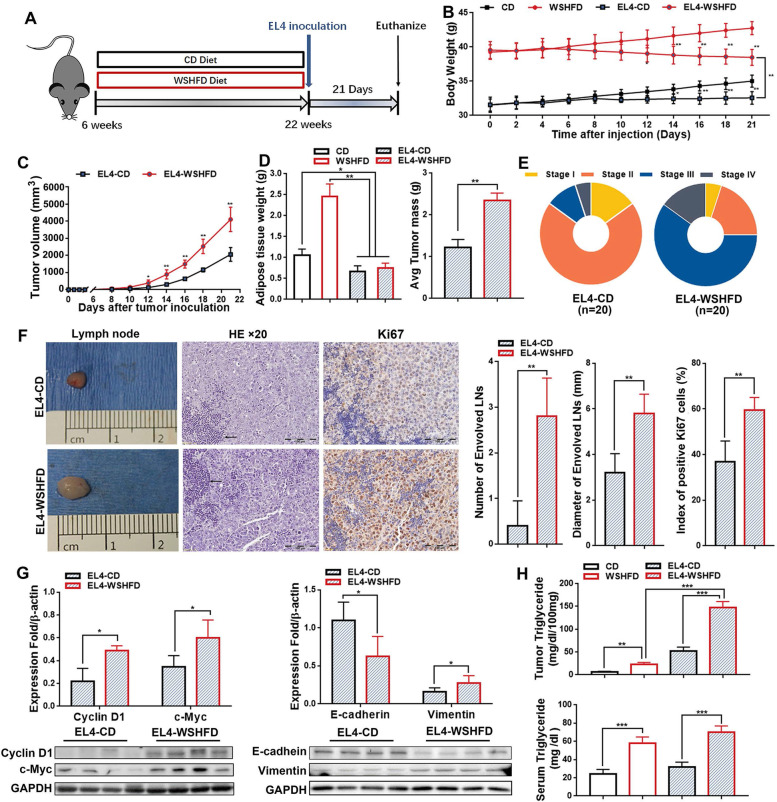
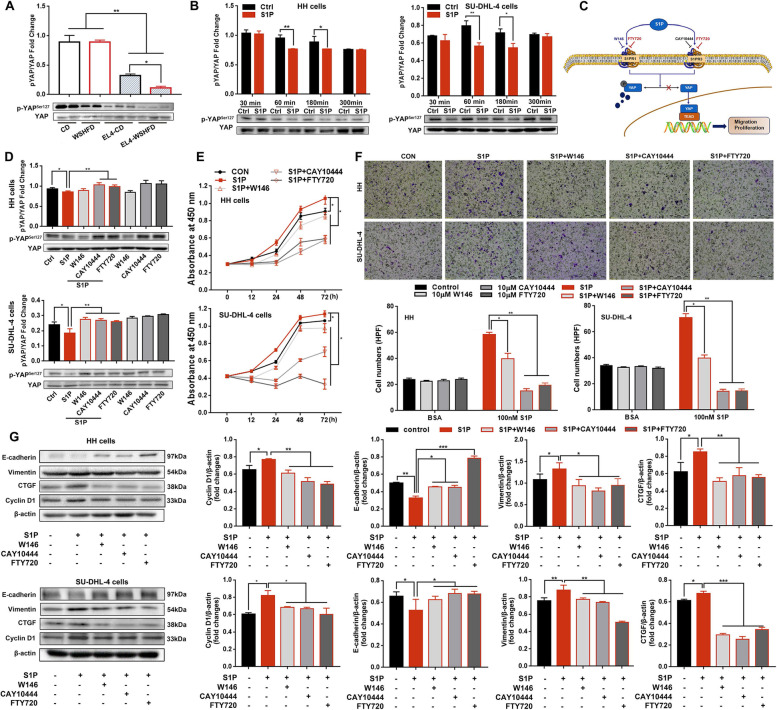
In human study, up-regulated S1P/SPHK1 was found in human lymphomas, while obesity negatively impacted progression-free survival and overall survival in lymphoma patients. In animal study, obesity-lymphoma mice showed an aggressive tumor growth pattern. Both in vivo and in vitro data suggested the existence of S1P-YAP axis in lymphoma cells, while the S1P-ALOX15 signaling mediated macrophage polarization towards TAMs exacerbated the lymphomagenesis. In addition, treatment with resveratrol in obesity-lymphoma mice showed profound effects of anti-lymphomagenesis, via down-regulating S1P-YAP axis and modulating polarization of macrophages.
S1P/S1PR initiated the feedback loops, whereby S1P-S1PR1/S1PR3-YAP signaling mediated lymphomagenesis contributing to tumor aggressive growth, while S1P-ALOX15 signaling mediated TAMs contributing to immunosuppressive microenvironment in obesity-lymphoma. S1P-targeted therapy could be potentially effective and immune-enhancive against obesity-lymphomagenesis.
超重与淋巴瘤风险增加有关,目前一些代谢途径已被认为与淋巴瘤的发生有关。生物活性脂质代谢物,如鞘氨醇-1-磷酸(S1P),被认为在肥胖与淋巴瘤之间起着重要的联系作用。然而,S1P 信号在肥胖-淋巴瘤发生中的潜在机制尚不清楚。
使用基因表达综合数据库(GEO)和人类淋巴瘤组织芯片分析鞘氨醇激酶(SPHK)的基因表达、淋巴瘤预后和 S1P 的产生。使用肥胖-淋巴瘤小鼠模型和淋巴瘤细胞系研究 S1P/SPHK-YAP 轴在肥胖-淋巴瘤发生中的作用。通过使用小鼠模型和单核细胞系,研究 S1P 介导的肿瘤微环境中巨噬细胞的极化。
在人类研究中,发现 S1P/SPHK1 在人类淋巴瘤中上调,而肥胖则对淋巴瘤患者的无进展生存期和总生存期产生负面影响。在动物研究中,肥胖-淋巴瘤小鼠表现出侵袭性肿瘤生长模式。体内和体外数据均表明 S1P-YAP 轴存在于淋巴瘤细胞中,而 S1P-ALOX15 信号介导的巨噬细胞向 TAMs 的极化加剧了淋巴瘤的发生。此外,在肥胖-淋巴瘤小鼠中用白藜芦醇治疗显示出对淋巴瘤发生的显著抑制作用,通过下调 S1P-YAP 轴和调节巨噬细胞的极化。
S1P/S1PR 启动了反馈回路,其中 S1P-S1PR1/S1PR3-YAP 信号介导了淋巴瘤的发生,导致肿瘤的侵袭性生长,而 S1P-ALOX15 信号介导了 TAMs 促进肥胖-淋巴瘤中的免疫抑制微环境。S1P 靶向治疗可能对肥胖-淋巴瘤的发生具有潜在的有效性和免疫增强作用。