Xi'an Key Laboratory of Cardiovascular and Cerebrovascular Diseases, Xi'an No.3 Hospital, Faculty of Life Sciences and Medicine, Northwest University, Xi'an 710018, China.
Key Laboratory of Resource Biology and Biotechnology in Western China, Ministry of Education, School of Medicine, Northwest University, Xi'an 710069, China.
Acta Biochim Biophys Sin (Shanghai). 2022 Nov 25;54(11):1658-1670. doi: 10.3724/abbs.2022166.
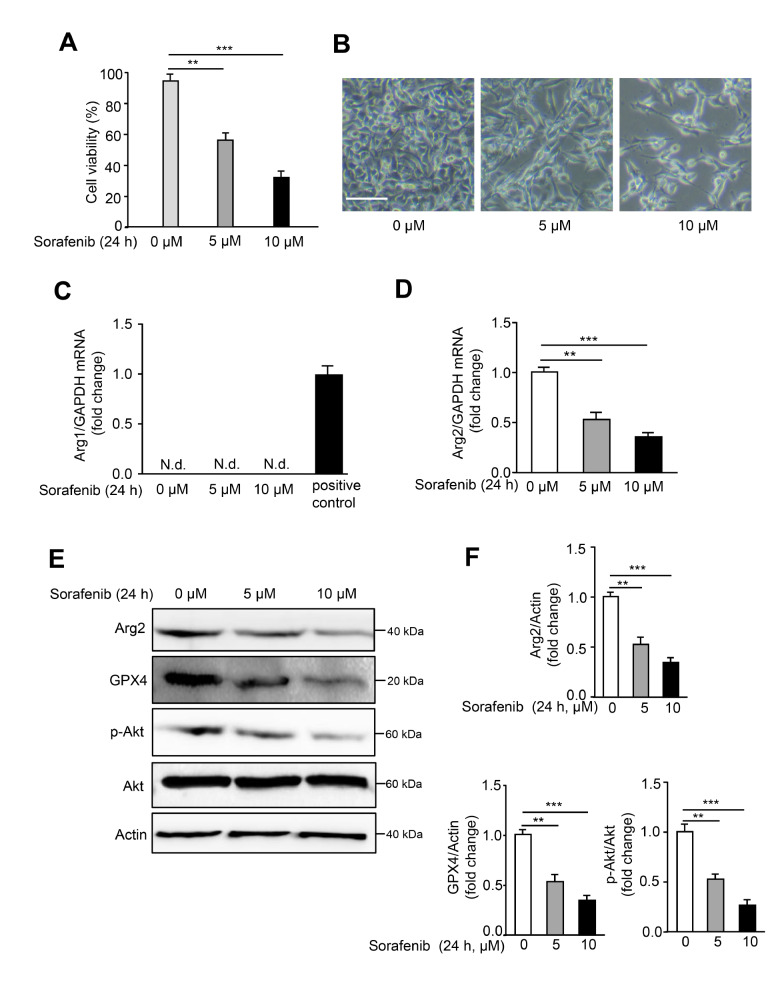
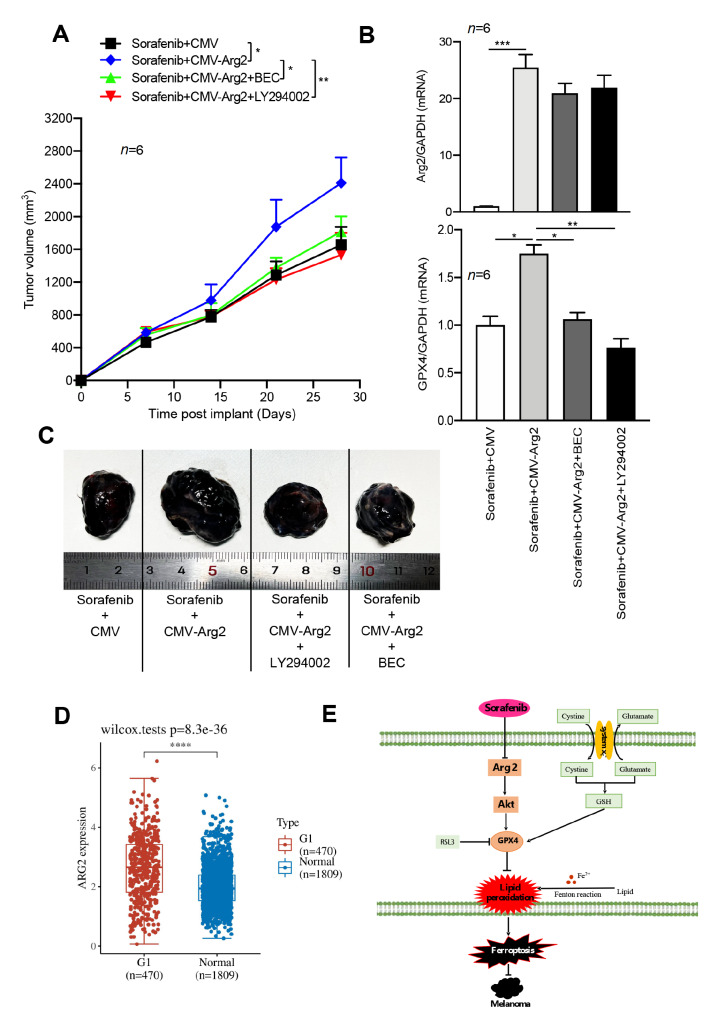
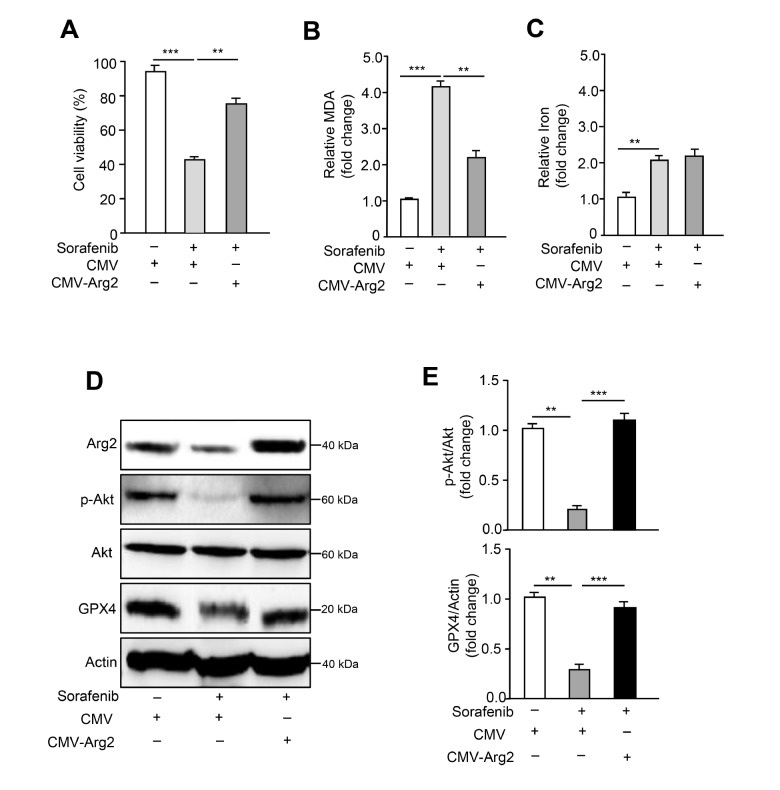
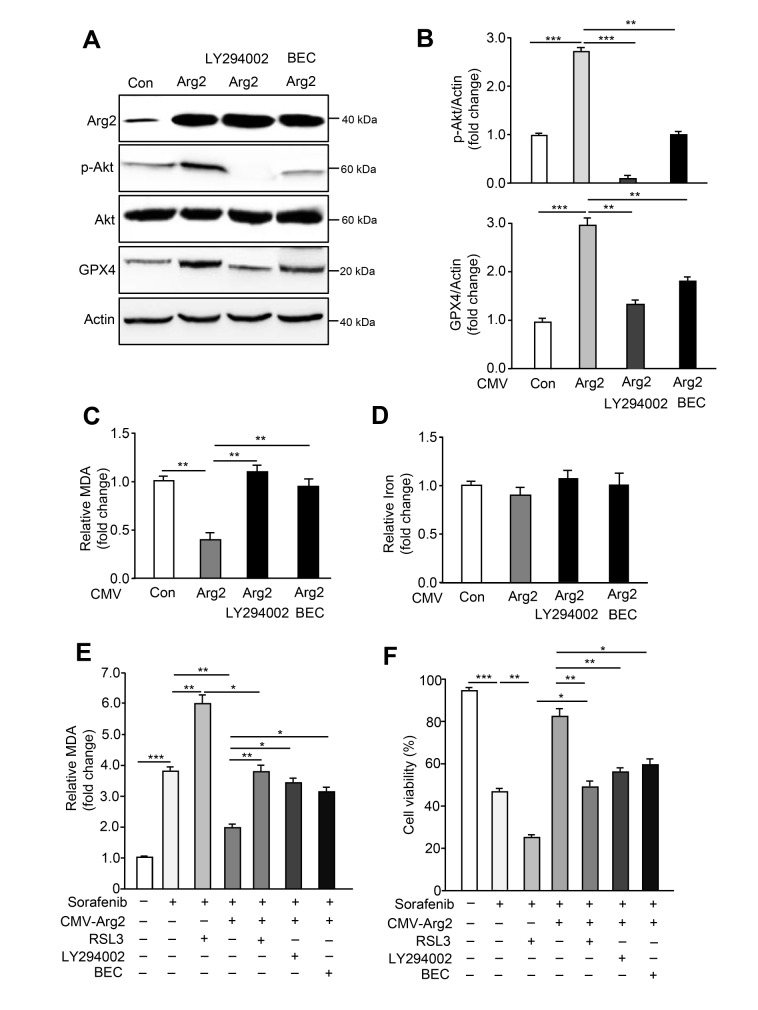
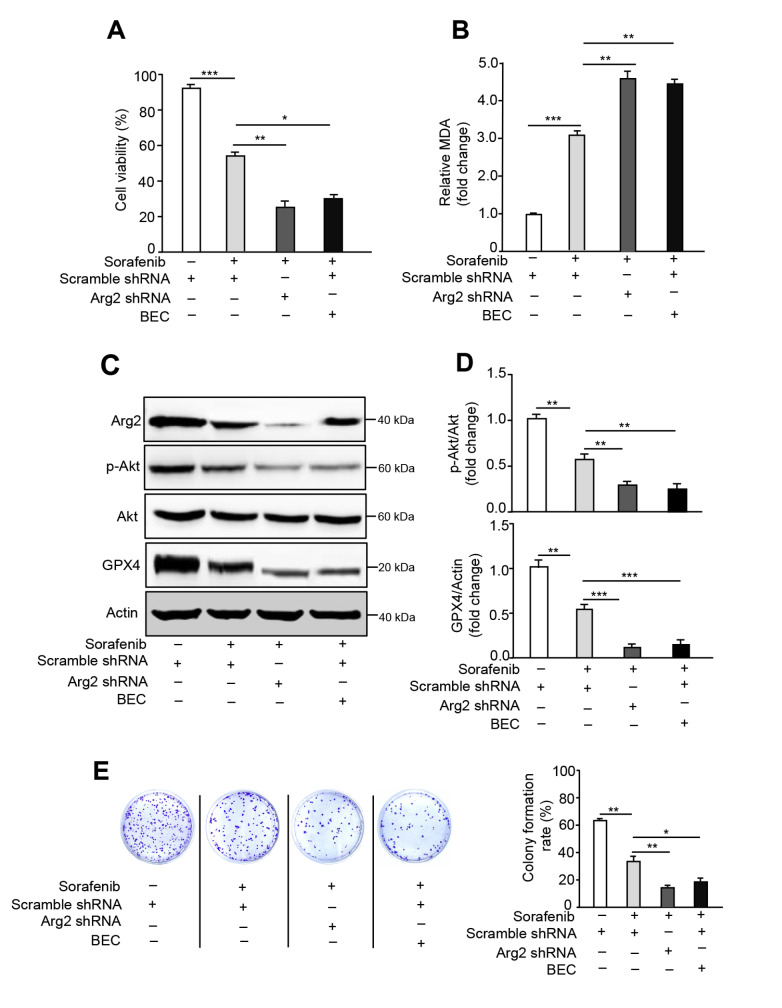
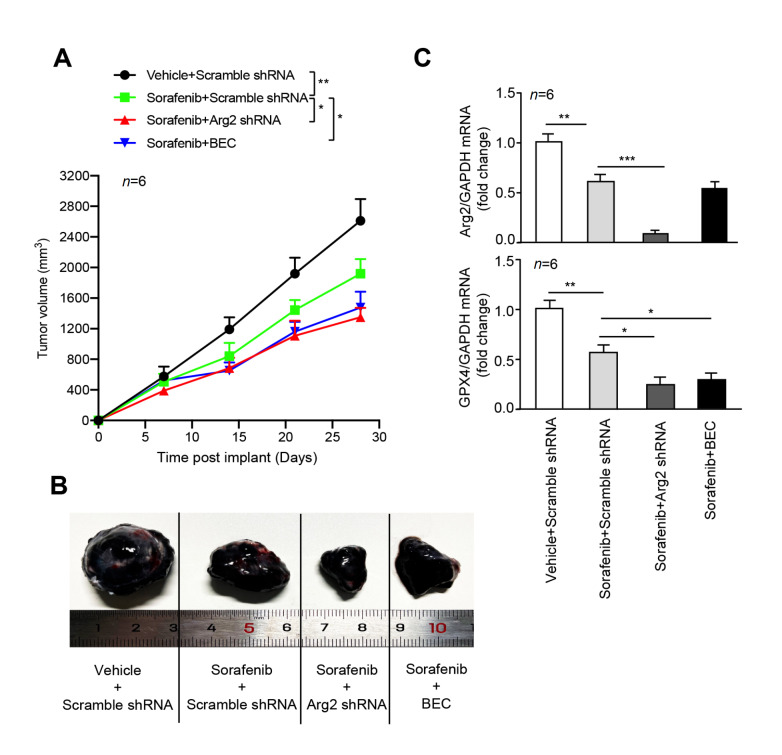
Ferroptosis, a newly defined and iron-dependent cell death, morphologically and biochemically differs from other cell deaths. Melanoma is a serious type of skin cancer, and the poor efficacy of current therapies causes a major increase in mortality. Sorafenib, a multiple kinase inhibitor, has been evaluated in clinical phase trials of melanoma patients, which shows modest efficacy. Emerging evidence has demonstrated that arginase 2 (Arg2), type 2 of arginase, is elevated in various types of cancers including melanoma. To investigate the role and underlying mechanism of Arg2 in sorafenib-induced ferroptosis in melanoma, reverse transcriptase-quantitative polymerase chain reaction, western blot analysis, adenovirus and lentivirus transduction, and tumor homograft model experiments were conducted. In this study, we show that sorafenib treatment leads to melanoma cell death and a decrease in Arg2 at both the mRNA and protein levels. Knockdown of increases lipid peroxidation, which contributes to ferroptosis, and decreases the phosphorylation of Akt. In contrast, overexpression of Arg2 rescues sorafenib-induced ferroptosis, which is prevented by an Akt inhibitor. In addition, genetic and pharmacological suppression of Arg2 is able to ameliorate the anticancer activity of sorafenib in melanoma cells and in tumor homograft models. We also show that Arg2 suppresses ferroptosis by activating the Akt/GPX4 signaling pathway, negatively regulating sorafenib-induced cell death in melanoma cells. Our study not only uncovers a novel mechanism of ferroptosis in melanoma but also provides a new strategy for the clinical applications of sorafenib in melanoma treatment.
铁死亡是一种新定义的、依赖铁的细胞死亡方式,在形态和生化上与其他细胞死亡方式不同。黑色素瘤是一种严重的皮肤癌,目前治疗方法效果不佳,导致死亡率大幅上升。多激酶抑制剂索拉非尼已在黑色素瘤患者的临床阶段试验中进行了评估,显示出适度的疗效。新出现的证据表明,精氨酸酶 2(Arg2),即精氨酸酶 2 型,在包括黑色素瘤在内的各种癌症中升高。为了研究 Arg2 在索拉非尼诱导的黑色素瘤铁死亡中的作用和潜在机制,进行了逆转录定量聚合酶链反应、western blot 分析、腺病毒和慢病毒转导以及肿瘤同源移植模型实验。在这项研究中,我们表明索拉非尼治疗导致黑色素瘤细胞死亡,Arg2 的 mRNA 和蛋白水平均降低。Arg2 的敲低增加了脂质过氧化,这有助于铁死亡,并降低 Akt 的磷酸化。相比之下,Arg2 的过表达挽救了索拉非尼诱导的铁死亡,而 Akt 抑制剂则阻止了这一过程。此外,Arg2 的遗传和药理学抑制能够改善索拉非尼在黑色素瘤细胞和肿瘤同源移植模型中的抗癌活性。我们还表明,Arg2 通过激活 Akt/GPX4 信号通路抑制铁死亡,从而负调控黑色素瘤细胞中索拉非尼诱导的细胞死亡。我们的研究不仅揭示了黑色素瘤中铁死亡的新机制,还为索拉非尼在黑色素瘤治疗中的临床应用提供了新策略。