Ta Na, Jiang Xiaodong, Zhang Yongchun, Wang Hongquan
Department of Neurosurgery, The Affiliated Hospital of Chifeng University, Chifeng, China.
Department of Anatomy, College of Basic Medicine, Chifeng University Health Science Center, Chifeng, China.
Front Pharmacol. 2023 Sep 19;14:1252567. doi: 10.3389/fphar.2023.1252567. eCollection 2023.
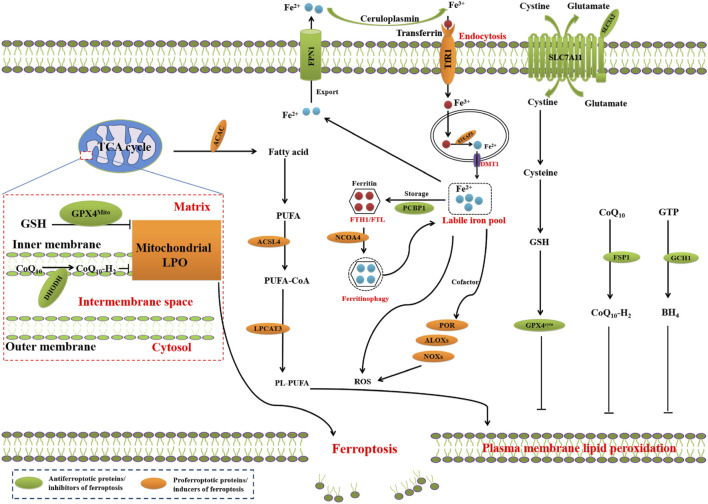
Malignant melanoma (MM) is the most common and deadliest type of skin cancer and is associated with high mortality rates across all races and ethnicities. Although present treatment options combined with surgery provide short-term clinical benefit in patients and early diagnosis of non-metastatic MM significantly increases the probability of survival, no efficacious treatments are available for MM. The etiology and pathogenesis of MM are complex. Acquired drug resistance is associated with a pool prognosis in patients with advanced-stage MM. Thus, these patients require new therapeutic strategies to improve their treatment response and prognosis. Multiple studies have revealed that ferroptosis, a non-apoptotic form of regulated cell death (RCD) characterized by iron dependant lipid peroxidation, can prevent the development of MM. Recent studies have indicated that targeting ferroptosis is a promising treatment strategy for MM. This review article summarizes the core mechanisms underlying the development of ferroptosis in MM cells and its potential role as a therapeutic target in MM. We emphasize the emerging types of small molecules inducing ferroptosis pathways by boosting the antitumor activity of BRAFi and immunotherapy and uncover their beneficial effects to treat MM. We also summarize the application of nanosensitizer-mediated unique dynamic therapeutic strategies and ferroptosis-based nanodrug targeting strategies as therapeutic options for MM. This review suggests that pharmacological induction of ferroptosis may be a potential therapeutic target for MM.
恶性黑色素瘤(MM)是最常见且最致命的皮肤癌类型,在所有种族和民族中都与高死亡率相关。尽管目前的治疗方案结合手术可为患者提供短期临床益处,且非转移性MM的早期诊断显著提高了生存概率,但目前尚无有效的MM治疗方法。MM的病因和发病机制复杂。获得性耐药与晚期MM患者的不良预后相关。因此,这些患者需要新的治疗策略来改善治疗反应和预后。多项研究表明,铁死亡是一种以铁依赖性脂质过氧化为特征的非凋亡形式的调节性细胞死亡(RCD),可以预防MM的发展。最近的研究表明,靶向铁死亡是一种有前景的MM治疗策略。本文综述总结了MM细胞中铁死亡发生发展的核心机制及其作为MM治疗靶点的潜在作用。我们强调了通过增强BRAFi的抗肿瘤活性和免疫疗法诱导铁死亡途径的新型小分子,并揭示了它们对治疗MM的有益作用。我们还总结了纳米敏化剂介导的独特动态治疗策略和基于铁死亡的纳米药物靶向策略作为MM治疗选择的应用。本文综述表明,铁死亡的药理学诱导可能是MM的潜在治疗靶点。