Department of Special Medical Services, Hainan ChengMei Hospital, Haikou, Hainan, People's Republic of China.
Department of Special Medical Services, Hainan Cancer Hospital, Haikou, Hainan, People's Republic of China.
J Cardiothorac Surg. 2023 Jan 5;18(1):2. doi: 10.1186/s13019-023-02106-7.
To evaluate the learning curve of minimally invasive mitral valvuloplasty (MVP).
Minimally invasive MVP is characterized by minimal trauma, minimal bleeding, and short postoperative recovery time. The learning curve of any new procedure needs to be evaluated for learning and replication. However, minimally invasive mitral valve technique is a wide-ranging concept, no further analysis of the outcomes and learning curve of minimally invasive Mitral valvuloplasty has been performed.
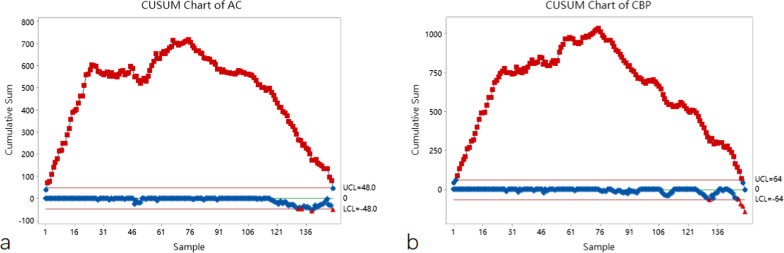
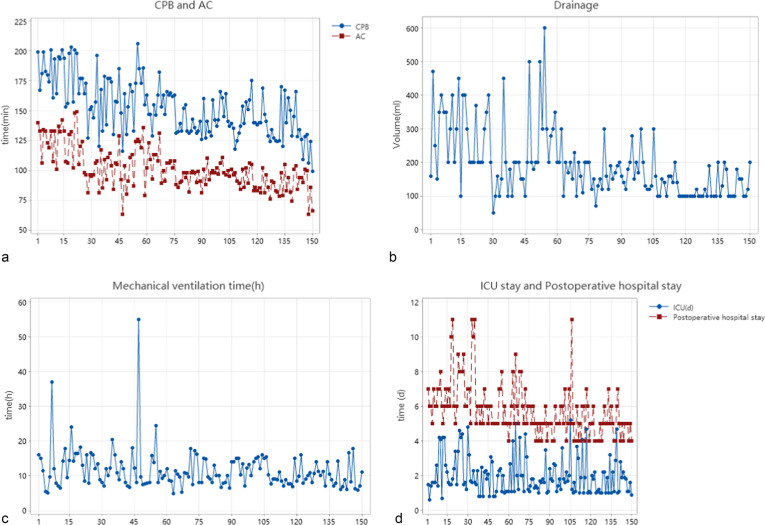
One hundred and fifty consecutive patients who underwent minimally invasive MVP alone without concurrent surgery were evaluated. Using cardiopulmonary bypass (CPB) time and aortic clamping (AC) time as evaluation variables, we visualized the learning curve for minimally invasive MVP using cumulative sum analysis. We also analyzed important postoperative variables such as postoperative drainage, duration of mechanical ventilation, ICU stay and postoperative hospital stay.
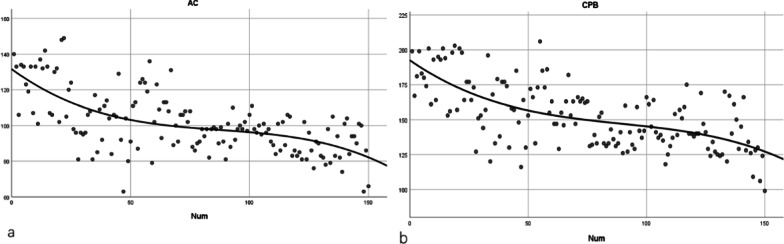
The slope of the fitted curve was negative after 75 procedures, and the learning curve could be crossed after the completion of the 75th procedure when AC and CPB time were used as evaluation variables. And as the number of surgical cases increased, CPB, AC, postoperative drainage, duration of mechanical ventilation, ICU stay and postoperative hospital stay all showed different degrees of decrease. The incidence of postoperative adverse events is similar to conventional Mitral valvuloplasty.
Compared to conventional MVP, minimally invasive MVP provides the same satisfactory surgical results and stabilization can be achieved gradually after completion of the 75th procedure.
评估微创二尖瓣成形术(MVP)的学习曲线。
微创 MVP 的特点是创伤小、出血少、术后恢复时间短。任何新手术的学习曲线都需要进行评估,以确定其学习和复制的难易程度。然而,微创二尖瓣技术是一个广泛的概念,尚未对微创二尖瓣成形术的结果和学习曲线进行进一步分析。
评估了 150 例单独接受微创 MVP 治疗而未同时进行手术的连续患者。我们使用体外循环(CPB)时间和主动脉夹闭(AC)时间作为评估变量,通过累积和分析来可视化微创 MVP 的学习曲线。我们还分析了术后引流、机械通气时间、重症监护病房(ICU)停留时间和术后住院时间等重要的术后变量。
当 AC 和 CPB 时间作为评估变量时,在 75 例手术后,拟合曲线的斜率为负值,并且可以在完成第 75 例手术后穿过学习曲线。随着手术例数的增加,CPB、AC、术后引流、机械通气时间、ICU 停留时间和术后住院时间均呈不同程度的下降。术后不良事件的发生率与传统 MVP 相似。
与传统 MVP 相比,微创 MVP 提供了相同满意的手术结果,并且在完成第 75 例手术后可以逐渐稳定。