Division of Developmental Biology, Cincinnati Children's Hospital Medical Center, Cincinnati, Ohio; Center for Stem Cell and Organoid Medicine, Cincinnati Children's Hospital Medical Center, Cincinnati, Ohio; Department of Cell Biology and Physiology, University of North Carolina at Chapel Hill, School of Medicine, Chapel Hill, North Carolina.
Division of Developmental Biology, Cincinnati Children's Hospital Medical Center, Cincinnati, Ohio; Center for Stem Cell and Organoid Medicine, Cincinnati Children's Hospital Medical Center, Cincinnati, Ohio.
Cell Mol Gastroenterol Hepatol. 2023;15(6):1293-1310. doi: 10.1016/j.jcmgh.2022.12.016. Epub 2023 Jan 4.
BACKGROUND & AIMS: The intestinal stem cell niche is exquisitely sensitive to changes in diet, with high-fat diet, caloric restriction, and fasting resulting in altered crypt metabolism and intestinal stem cell function. Unlike cells on the villus, cells in the crypt are not immediately exposed to the dynamically changing contents of the lumen. We hypothesized that enteroendocrine cells (EECs), which sense environmental cues and in response release hormones and metabolites, are essential for relaying the luminal and nutritional status of the animal to cells deep in the crypt.
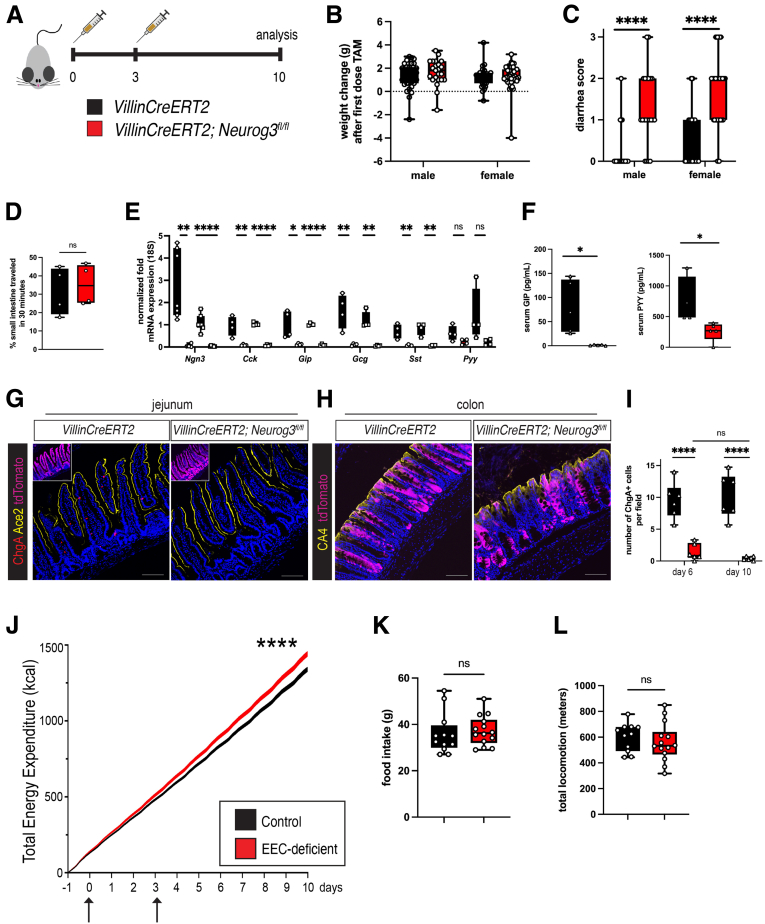
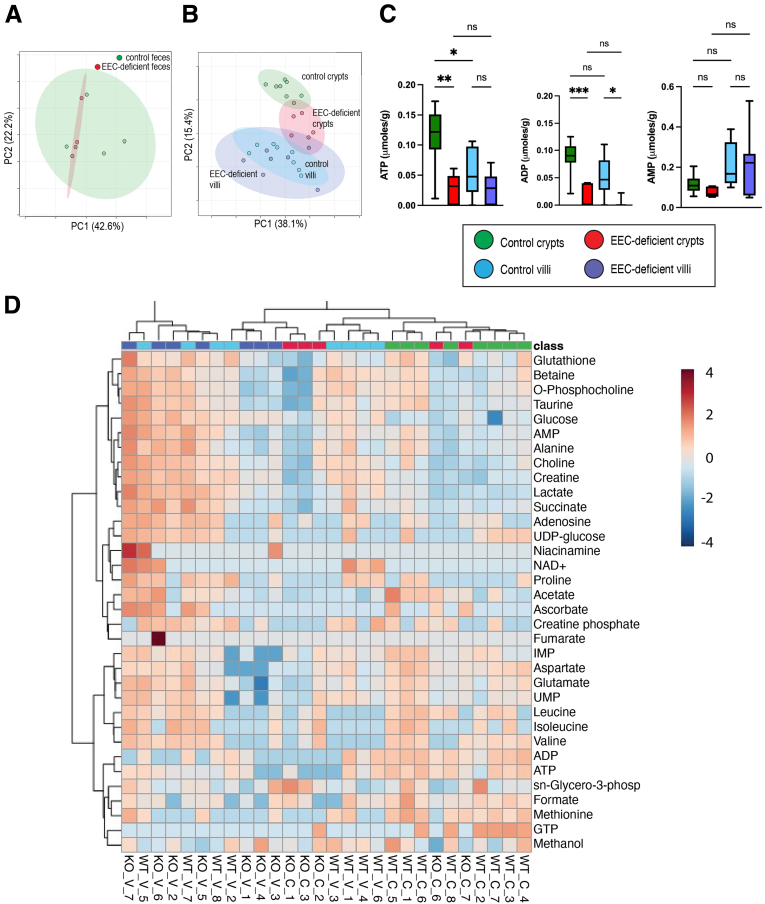
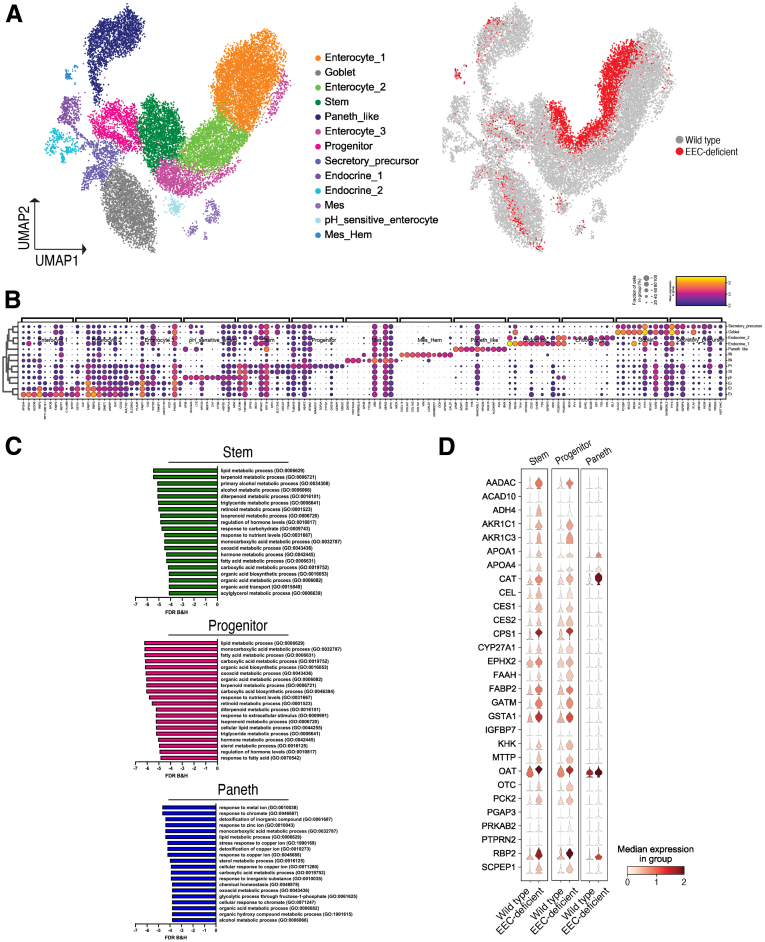
We used the tamoxifen-inducible VillinCreERT2 mouse model to deplete EECs (Neurog3) from adult intestinal epithelium and we generated human intestinal organoids from wild-type and NEUROGENIN 3 (NEUROG3)-null human pluripotent stem cells. We used indirect calorimetry, H-Nuclear Magnetic Resonance (NMR) metabolomics, mitochondrial live imaging, and the Seahorse bioanalyzer (Agilent Technologies) to assess metabolism. Intestinal stem cell activity was measured by proliferation and enteroid-forming capacity. Transcriptional changes were assessed using 10x Genomics single-cell sequencing.
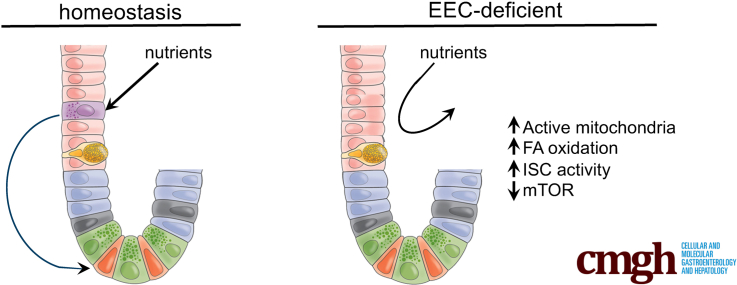
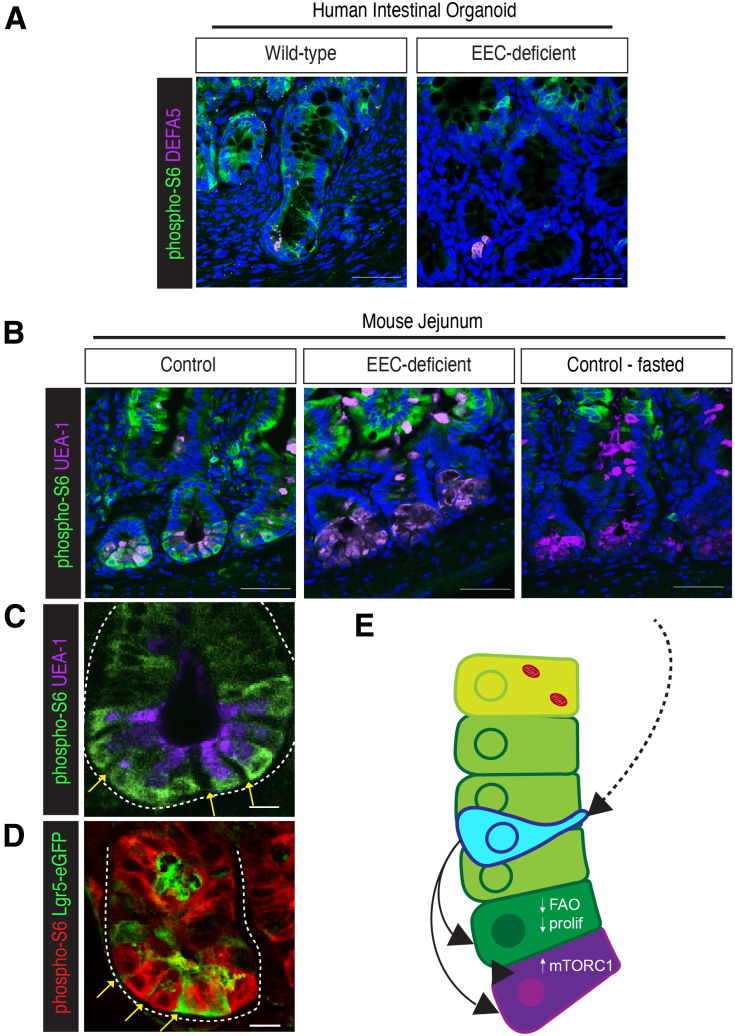
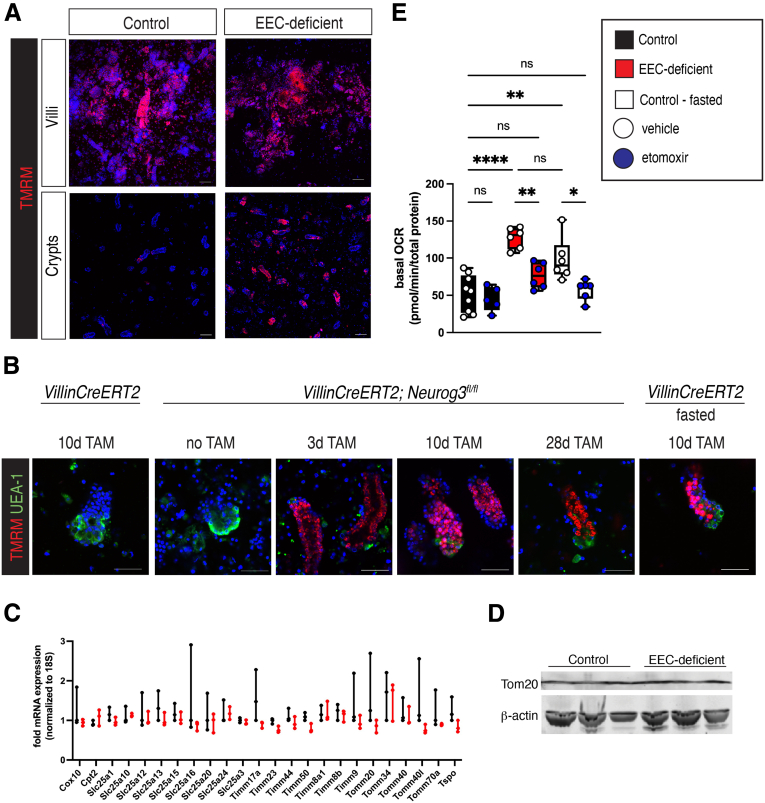
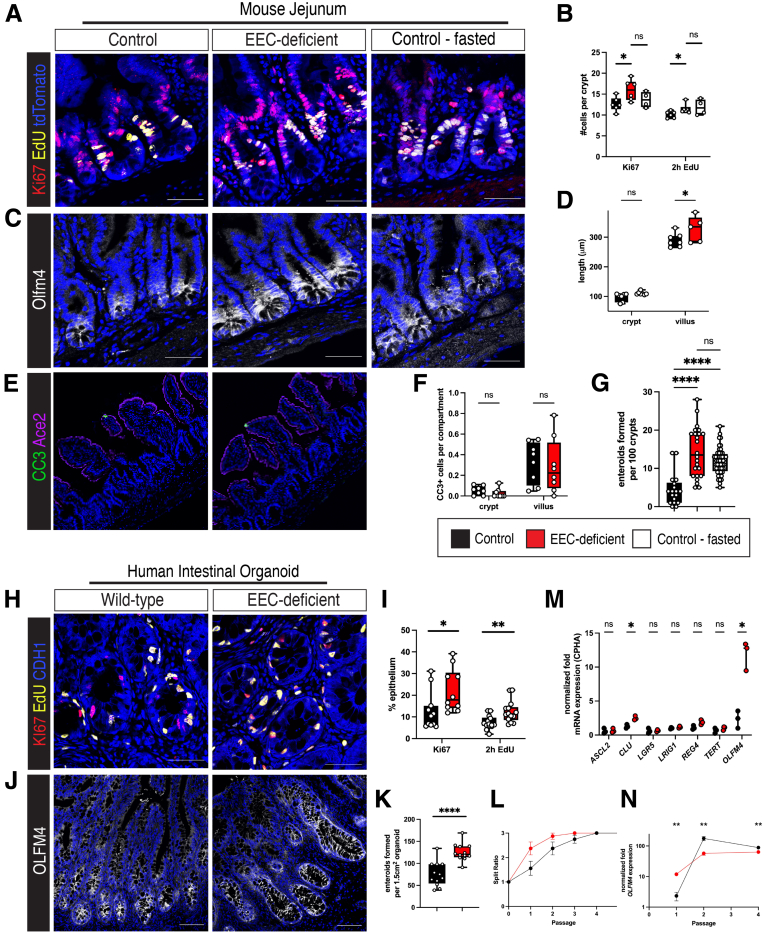
Loss of EECs resulted in increased energy expenditure in mice, an abundance of active mitochondria, and a shift of crypt metabolism to fatty acid oxidation. Crypts from mouse and human intestinal organoids lacking EECs displayed increased intestinal stem cell activity and failed to activate phosphorylation of downstream target S6 kinase ribosomal protein, a marker for activity of the master metabolic regulator mammalian target of rapamycin (mTOR). These phenotypes were similar to those observed when control mice were deprived of nutrients.
EECs are essential regulators of crypt metabolism. Depletion of EECs recapitulated a fasting metabolic phenotype despite normal levels of ingested nutrients. These data suggest that EECs are required to relay nutritional information to the stem cell niche and are essential regulators of intestinal metabolism.
肠道干细胞龛对饮食变化非常敏感,高脂肪饮食、热量限制和禁食会导致隐窝代谢和肠道干细胞功能改变。与绒毛上的细胞不同,隐窝中的细胞不会立即暴露于腔内容物的动态变化中。我们假设,肠内分泌细胞(EECs)能够感知环境线索,并相应地释放激素和代谢物,对于将动物腔内容物和营养状态传递给隐窝深处的细胞至关重要。
我们使用他莫昔芬诱导的VillinCreERT2 小鼠模型来耗尽成年肠道上皮中的 EEC(Neurog3),并从野生型和 NEUROGENIN 3(NEUROG3)缺失的人多能干细胞中生成人类肠道类器官。我们使用间接量热法、H-核磁共振(NMR)代谢组学、线粒体活体成像和 Seahorse 生物分析仪(Agilent Technologies)来评估代谢。通过增殖和类器官形成能力来测量肠道干细胞活性。使用 10x Genomics 单细胞测序来评估转录变化。
EEC 的缺失导致小鼠能量消耗增加,活跃线粒体增多,隐窝代谢向脂肪酸氧化转变。缺乏 EEC 的小鼠和人类肠道类器官的隐窝显示出增强的肠道干细胞活性,并且无法激活下游靶标 S6 激酶核糖体蛋白的磷酸化,这是哺乳动物雷帕霉素靶蛋白(mTOR)代谢主调节因子活性的标志物。这些表型与控制小鼠缺乏营养时观察到的表型相似。
EEC 是隐窝代谢的重要调节因子。尽管摄入的营养水平正常,但 EEC 的缺失会再现禁食代谢表型。这些数据表明,EEC 被要求将营养信息传递到干细胞龛,并对肠道代谢进行必要的调节。