Department of Psychology, Southwestern University, Georgetown, TX, 78626, USA.
Department of Biology, Francis Marion University, Florence, SC, 29506, USA.
Biol Sex Differ. 2023 Jan 6;14(1):1. doi: 10.1186/s13293-022-00485-5.
GnRH agonists have been used to halt the development of puberty in children with precocious puberty since the 1980s. Recently, drugs like Lupron Depot (leuprolide acetate), have been used to suppress pubertal progression in adolescents who are questioning their gender identity. However, few preclinical studies have been conducted to investigate potential effects of using GnRH agonists in this context.
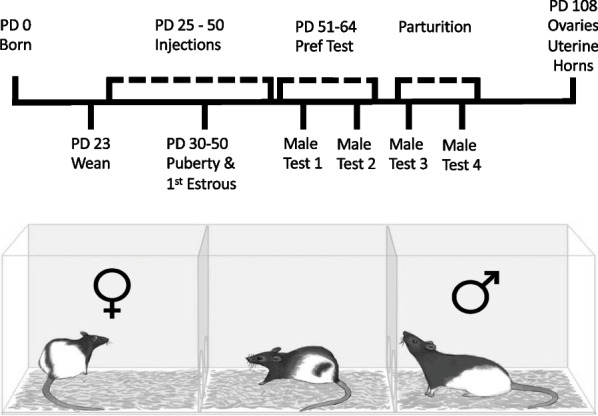
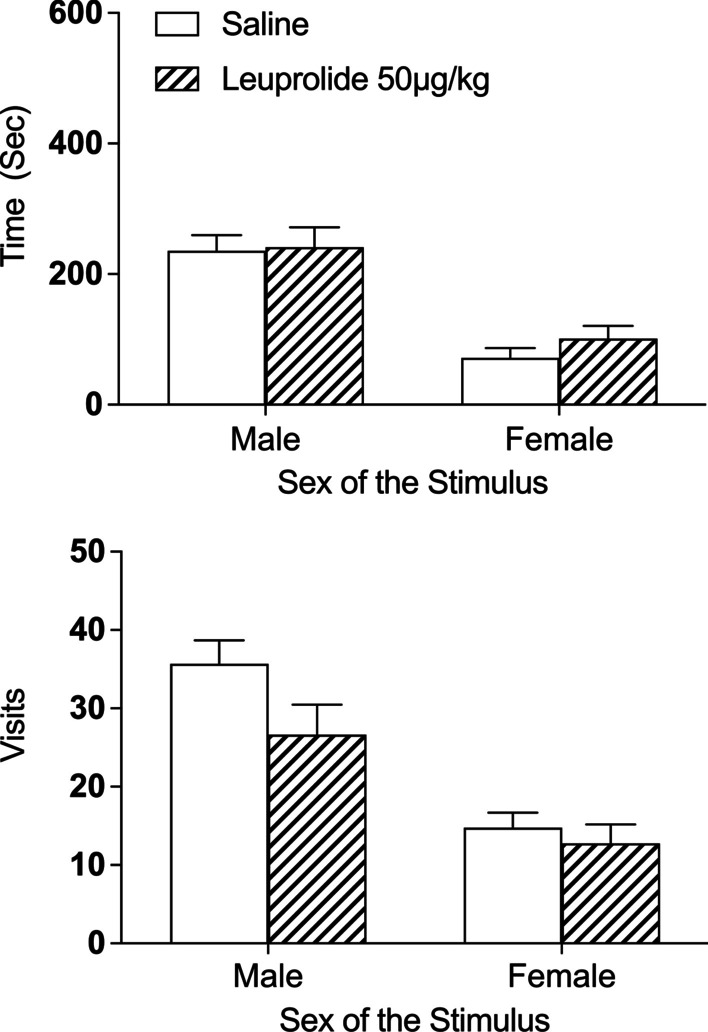
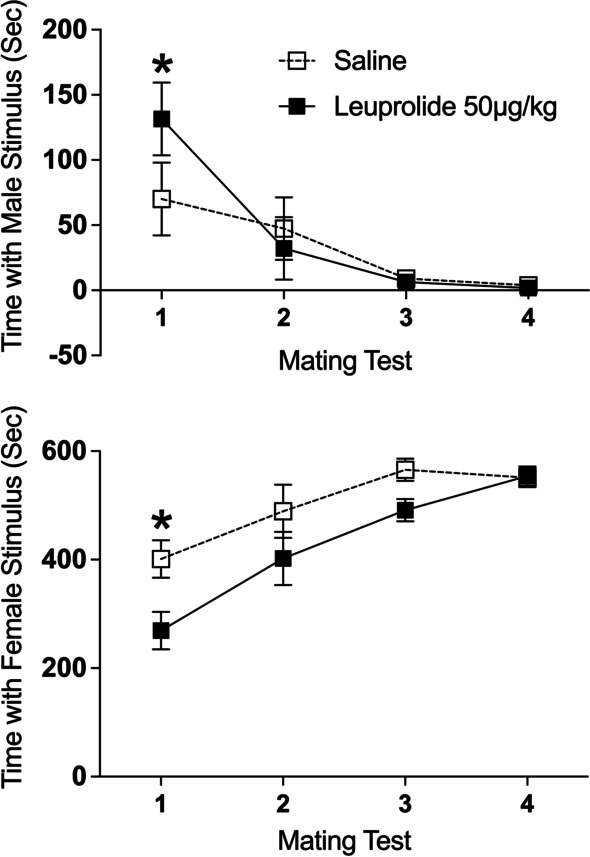
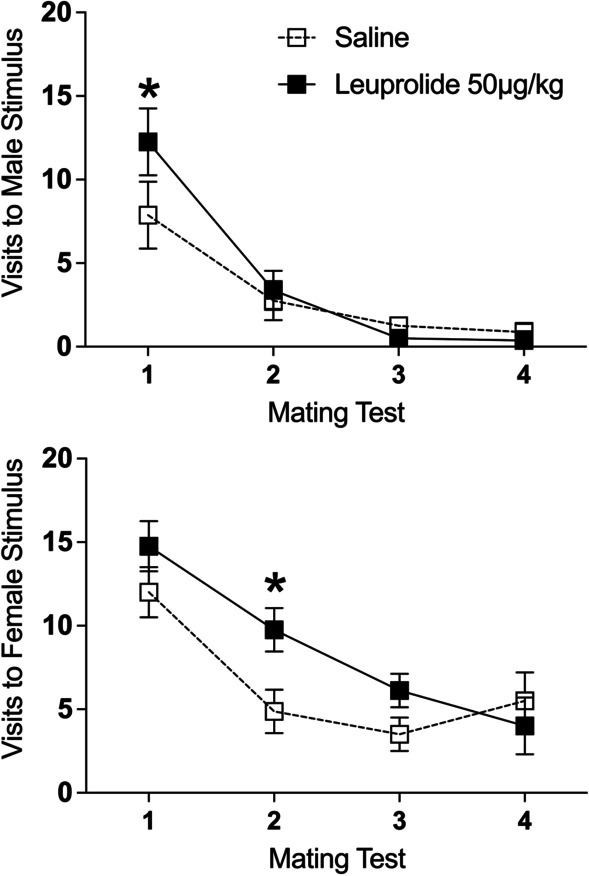
The present study tested the effects of daily leuprolide treatment (50 µg/kg, postnatal day (PD) 25-50) on pubertal onset in female (i.e., vaginal opening) and male (i.e., preputial separation) Long-Evans rats. The first estrous cycle immediately after vaginal opening was also measured. Sexual behavior and sexual motivation were tested using the partner-preference paradigm. Female rats were tested during the first behavioral estrus after treatment ended (between PD 51-64). Male rats were tested weekly for four consecutive weeks starting three days after treatment ended (PD 53).
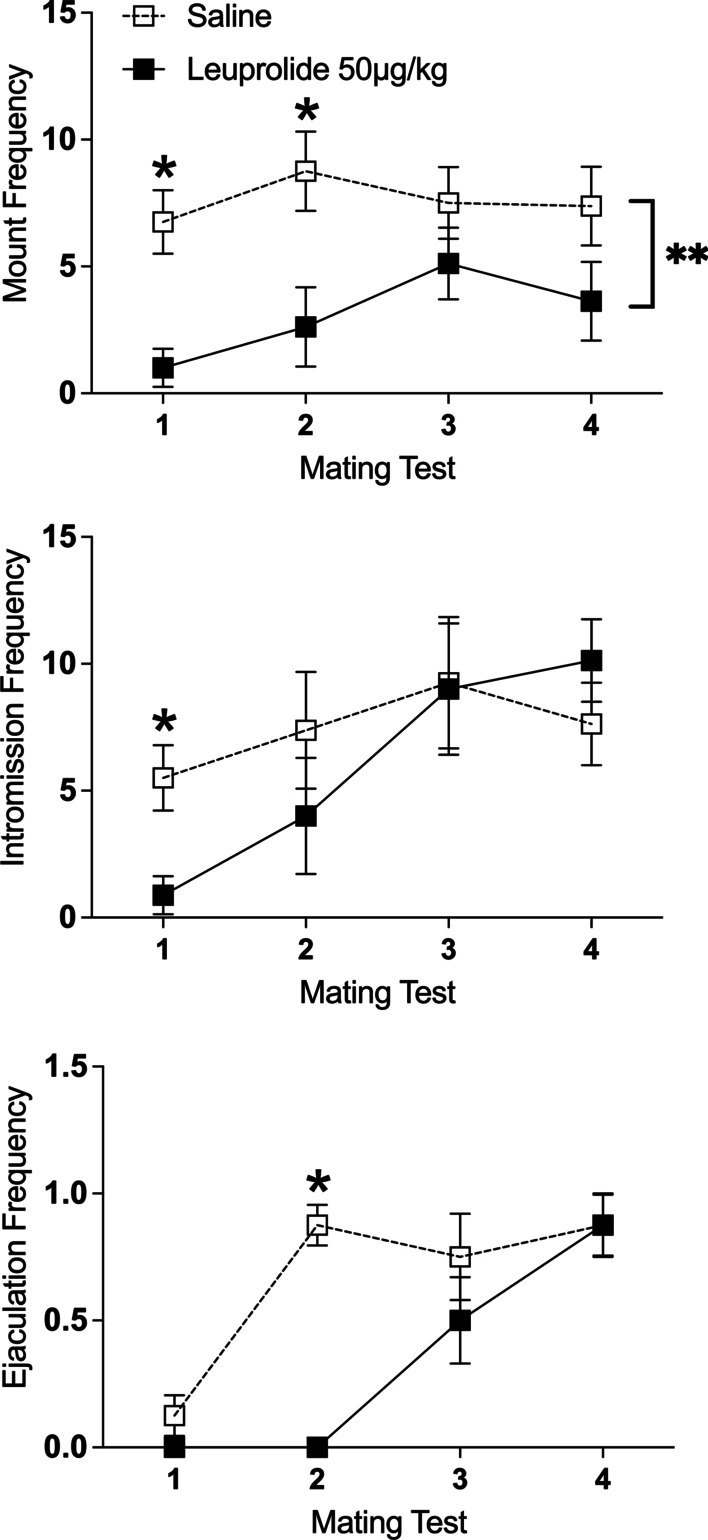
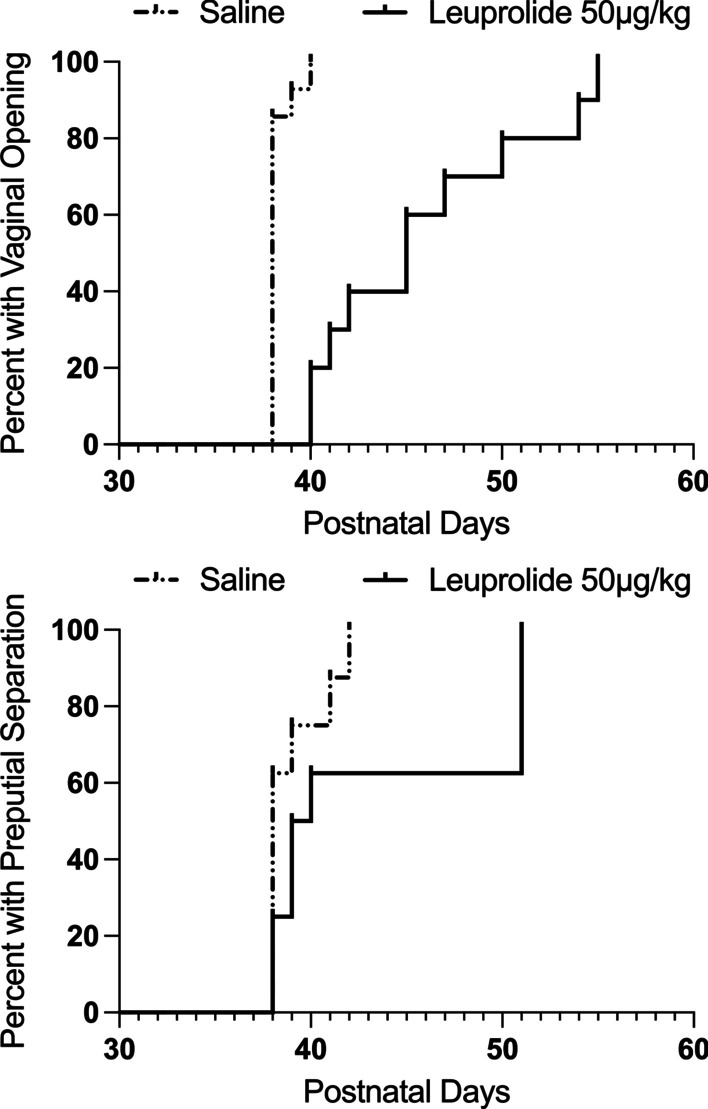
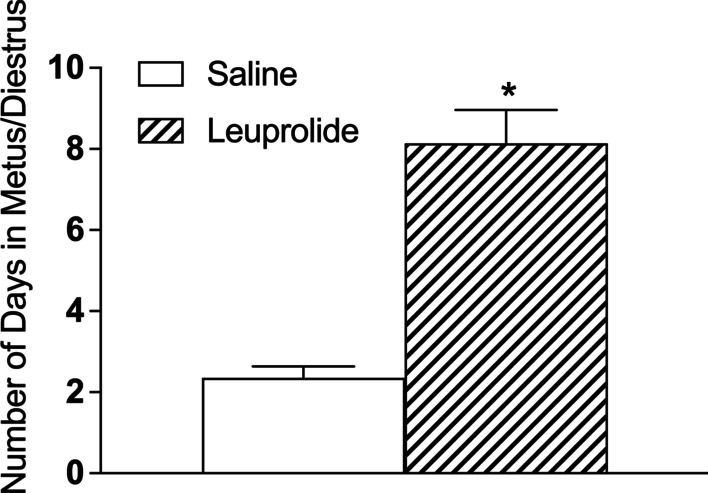
Consistent with previous findings, leuprolide significantly delayed pubertal onset in both female and male rats. In addition, the first estrous cycle during the treatment period was disrupted by leuprolide, as indicated by a failure to cycle into estrus after vaginal opening until treatment ended. However, leuprolide affected neither sexual motivation nor fertility when female rats were tested within 14 days of leuprolide treatment ending. In contrast, the development of copulatory behavior and sexual motivation was significantly delayed by leuprolide in male rats; however, mature reproductive behavior was observed by the fourth week post-treatment.
Taken together with previous findings, the present results indicate that male rats may be more sensitive to periadolescent leuprolide administration, taking longer to overcome the effects of leuprolide than female rats. Nevertheless, not long after leuprolide treatment is discontinued, sex-typical reproductive physiology and behavior emerge fully in female and male rats, indicating that the drug's effects are not permanent. If translatable to humans, leuprolide may be a reversible option to give adolescents more time to consider their gender identity with minimal long-term effects on sexual development.
自 20 世纪 80 年代以来,促性腺激素释放激素激动剂(GnRH agonists)已被用于抑制性早熟儿童的青春期发育。最近,像 Lupron Depot(醋酸亮丙瑞林)这样的药物已被用于抑制正在质疑自己性别认同的青少年的青春期进展。然而,很少有临床前研究调查在这种情况下使用 GnRH 激动剂的潜在影响。
本研究测试了每天给予亮丙瑞林(50µg/kg,出生后第 25-50 天)治疗对雌性(即阴道开口)和雄性(即包皮分离)长耳大白鼠青春期开始的影响。还测量了阴道开口后立即出现的第一个发情周期。使用伴侣偏好范式测试性行为和性动机。雌性大鼠在治疗结束后(第 PD51-64 天)的第一个行为发情期进行测试。雄性大鼠在治疗结束后三天开始每周测试一次,持续四周。
与之前的发现一致,亮丙瑞林显著延迟了雌性和雄性大鼠的青春期开始。此外,亮丙瑞林在治疗期间破坏了第一个发情周期,表现为阴道开口后直至治疗结束都未能发情周期。然而,当雌性大鼠在亮丙瑞林治疗结束后 14 天内进行测试时,亮丙瑞林既不影响性动机也不影响生育能力。相比之下,亮丙瑞林显著延迟了雄性大鼠的交配行为和性动机的发展;然而,在治疗后第四周观察到成熟的生殖行为。
结合之前的发现,本研究结果表明,雄性大鼠可能对青春期前的亮丙瑞林给药更敏感,比雌性大鼠需要更长的时间才能克服亮丙瑞林的影响。然而,在停止亮丙瑞林治疗后不久,雌性和雄性大鼠完全出现了典型的生殖生理学和行为,表明该药物的影响不是永久性的。如果可转化为人类,亮丙瑞林可能是一种可逆的选择,可以给青少年更多的时间来考虑自己的性别认同,同时对性发育的长期影响最小。