The Institute for Comprehensive Gender Dysphoria Research, 489 Main Street, Warren, RI, 02885, USA.
Arch Sex Behav. 2021 Nov;50(8):3353-3369. doi: 10.1007/s10508-021-02163-w. Epub 2021 Oct 19.
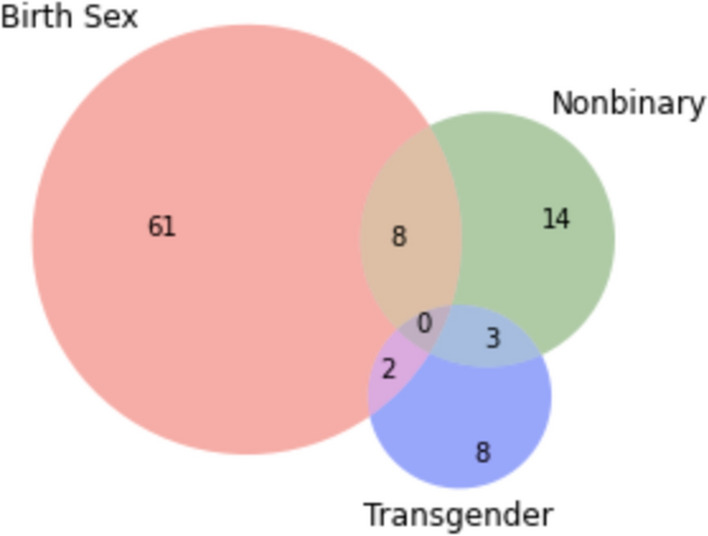
The study's purpose was to describe a population of individuals who experienced gender dysphoria, chose to undergo medical and/or surgical transition and then detransitioned by discontinuing medications, having surgery to reverse the effects of transition, or both. Recruitment information with a link to an anonymous survey was shared on social media, professional listservs, and via snowball sampling. Sixty-nine percent of the 100 participants were natal female and 31.0% were natal male. Reasons for detransitioning were varied and included: experiencing discrimination (23.0%); becoming more comfortable identifying as their natal sex (60.0%); having concerns about potential medical complications from transitioning (49.0%); and coming to the view that their gender dysphoria was caused by something specific such as trauma, abuse, or a mental health condition (38.0%). Homophobia or difficulty accepting themselves as lesbian, gay, or bisexual was expressed by 23.0% as a reason for transition and subsequent detransition. The majority (55.0%) felt that they did not receive an adequate evaluation from a doctor or mental health professional before starting transition and only 24.0% of respondents informed their clinicians that they had detransitioned. There are many different reasons and experiences leading to detransition. More research is needed to understand this population, determine the prevalence of detransition as an outcome of transition, meet the medical and psychological needs of this population, and better inform the process of evaluation and counseling prior to transition.
这项研究的目的是描述一群经历性别焦虑、选择接受医学和/或手术转变、然后通过停止用药、进行手术逆转转变效果或两者兼而有之来进行转变后逆转的个体。研究人员在社交媒体、专业列表服务器上以及通过滚雪球抽样分享了带有匿名调查链接的招募信息。在 100 名参与者中,69%为女性,31.0%为男性。转变后逆转的原因多种多样,包括:经历歧视(23.0%);对自己的出生性别更舒适地认同(60.0%);对过渡潜在的医疗并发症感到担忧(49.0%);以及认为自己的性别焦虑是由特定的事情引起的,如创伤、虐待或心理健康状况(38.0%)。同性恋恐惧症或难以接受自己是女同性恋、男同性恋或双性恋,是 23.0%的人转变和随后转变后逆转的原因之一。大多数(55.0%)人认为,他们在开始转变之前没有得到医生或心理健康专业人士的充分评估,只有 24.0%的受访者告知他们的临床医生他们已经转变后逆转。有许多不同的原因和经历导致转变后逆转。需要更多的研究来了解这一人群,确定转变后逆转作为转变结果的普遍性,满足这一人群的医疗和心理需求,并在转变前更好地为评估和咨询过程提供信息。