• 文献检索
  • 文档翻译
  • 深度研究
  • 学术资讯
  • Suppr Zotero 插件Zotero 插件
  • 邀请有礼
  • 套餐&价格
  • 历史记录
应用&插件
Suppr Zotero 插件Zotero 插件浏览器插件Mac 客户端Windows 客户端微信小程序
定价
高级版会员购买积分包购买API积分包
服务
文献检索文档翻译深度研究API 文档MCP 服务
关于我们
关于 Suppr公司介绍联系我们用户协议隐私条款
关注我们

Suppr 超能文献

核心技术专利:CN118964589B侵权必究
粤ICP备2023148730 号-1Suppr @ 2026

文献检索

告别复杂PubMed语法,用中文像聊天一样搜索,搜遍4000万医学文献。AI智能推荐,让科研检索更轻松。

立即免费搜索

文件翻译

保留排版,准确专业,支持PDF/Word/PPT等文件格式,支持 12+语言互译。

免费翻译文档

深度研究

AI帮你快速写综述,25分钟生成高质量综述,智能提取关键信息,辅助科研写作。

立即免费体验

群居雄性小鼠的攻击行为:一项系统综述。

Aggression in Group-Housed Male Mice: A Systematic Review.

作者信息

Weber Elin M, Zidar Josefina, Ewaldsson Birgit, Askevik Kaisa, Udén Eva, Svensk Emma, Törnqvist Elin

机构信息

Department of Animal Environment and Health, Swedish University of Agricultural Sciences, 532 23 Skara, Sweden.

Department of Animal Environment and Health, Swedish University of Agricultural Sciences, 750 07 Uppsala, Sweden.

出版信息

Animals (Basel). 2022 Dec 30;13(1):143. doi: 10.3390/ani13010143.

DOI:10.3390/ani13010143
PMID:36611751
原文链接:https://pmc.ncbi.nlm.nih.gov/articles/PMC9817818/
Abstract

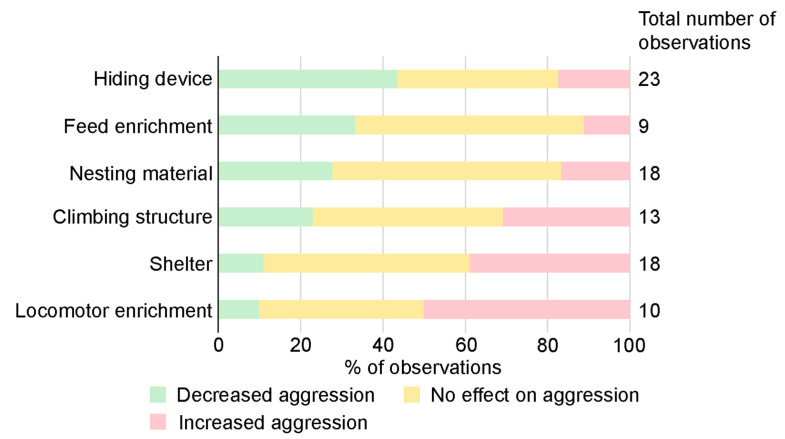
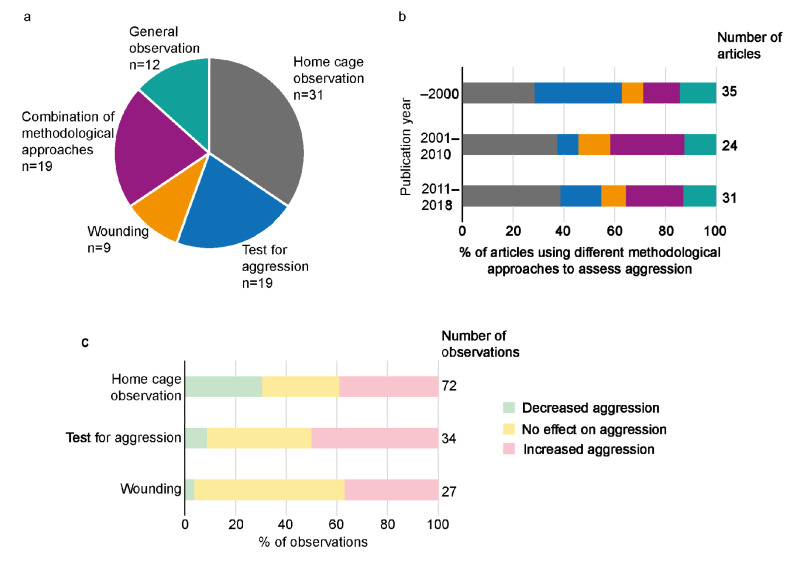
Aggression among group-housed male mice is a major animal welfare concern often observed at animal facilities. Studies designed to understand the causes of male mice aggression have used different methodological approaches and have been heterogeneous, using different strains, environmental enrichments, housing conditions, group formations and durations. By conducting a systematic literature review based on 198 observed conclusions from 90 articles, we showed that the methodological approach used to study aggression was relevant for the outcome and suggested that home cage observations were better when studying home cage aggression than tests provoking aggression outside the home cage. The study further revealed that aggression is a complex problem; one solution will not be appropriate for all animal facilities and all research projects. Recommendations were provided on promising tools to minimize aggression, based on the results, which included what type of environmental enrichments could be appropriate and which strains of male mice were less likely to be aggressive.

摘要

群居雄性小鼠之间的攻击行为是动物设施中经常观察到的一个主要动物福利问题。旨在了解雄性小鼠攻击行为原因的研究采用了不同的方法,而且存在异质性,使用了不同的品系、环境富集方式、饲养条件、分组形式和持续时间。通过基于90篇文章的198条观察结论进行系统的文献综述,我们表明用于研究攻击行为的方法与结果相关,并建议在研究笼内攻击行为时,笼内观察比在笼外诱发攻击行为的测试更好。该研究进一步揭示,攻击行为是一个复杂的问题;一种解决方案并不适用于所有动物设施和所有研究项目。基于研究结果,提供了关于有望将攻击行为降至最低的工具的建议,其中包括哪种类型的环境富集可能合适,以及哪些品系的雄性小鼠攻击性较小。
https://cdn.ncbi.nlm.nih.gov/pmc/blobs/931d/9817818/9378de5561fd/animals-13-00143-g004.jpg
https://cdn.ncbi.nlm.nih.gov/pmc/blobs/931d/9817818/9e8a50df54ad/animals-13-00143-g001.jpg
https://cdn.ncbi.nlm.nih.gov/pmc/blobs/931d/9817818/8e6036feba52/animals-13-00143-g002.jpg
https://cdn.ncbi.nlm.nih.gov/pmc/blobs/931d/9817818/bfbc1066f974/animals-13-00143-g003.jpg
https://cdn.ncbi.nlm.nih.gov/pmc/blobs/931d/9817818/9378de5561fd/animals-13-00143-g004.jpg
https://cdn.ncbi.nlm.nih.gov/pmc/blobs/931d/9817818/9e8a50df54ad/animals-13-00143-g001.jpg
https://cdn.ncbi.nlm.nih.gov/pmc/blobs/931d/9817818/8e6036feba52/animals-13-00143-g002.jpg
https://cdn.ncbi.nlm.nih.gov/pmc/blobs/931d/9817818/bfbc1066f974/animals-13-00143-g003.jpg
https://cdn.ncbi.nlm.nih.gov/pmc/blobs/931d/9817818/9378de5561fd/animals-13-00143-g004.jpg

相似文献

1
Aggression in Group-Housed Male Mice: A Systematic Review.群居雄性小鼠的攻击行为:一项系统综述。
Animals (Basel). 2022 Dec 30;13(1):143. doi: 10.3390/ani13010143.
2
The epidemiology of fighting in group-housed laboratory mice.群居饲养实验鼠的争斗行为的流行病学研究。
Sci Rep. 2020 Oct 6;10(1):16649. doi: 10.1038/s41598-020-73620-0.
3
The impact of cage dividers on mouse aggression, dominance and hormone levels.笼内隔板对小鼠攻击行为、支配地位和激素水平的影响。
PLoS One. 2024 Feb 7;19(2):e0297358. doi: 10.1371/journal.pone.0297358. eCollection 2024.
4
Cage aggression in group-housed laboratory male mice: an international data crowdsourcing project.群养实验室雄性小鼠的笼斗行为:一项国际数据众包项目。
Sci Rep. 2019 Oct 23;9(1):15211. doi: 10.1038/s41598-019-51674-z.
5
Who's the Boss? Assessing Convergent Validity of Aggression Based Dominance Measures in Male Laboratory Mice, .谁是老大?评估雄性实验小鼠中基于攻击行为的支配地位测量方法的收敛效度
Front Vet Sci. 2021 Jul 9;8:695948. doi: 10.3389/fvets.2021.695948. eCollection 2021.
6
Partial cage division significantly reduces aggressive behavior in male laboratory mice.部分笼舍分隔可显著降低雄性实验小鼠的攻击行为。
Lab Anim. 2018 Aug;52(4):384-393. doi: 10.1177/0023677217753464. Epub 2018 Feb 6.
7
The effect of early life experience, environment, and genetic factors on spontaneous home-cage aggression-related wounding in male C57BL/6 mice.早期生活经历、环境和遗传因素对雄性 C57BL/6 小鼠自发性笼内攻击相关创伤的影响。
Lab Anim (NY). 2017 Mar 22;46(4):176-184. doi: 10.1038/laban.1225.
8
Aggression in group-housed laboratory mice: why can't we solve the problem?群体饲养实验小鼠的攻击行为:我们为何无法解决这个问题?
Lab Anim (NY). 2017 Mar 22;46(4):157-161. doi: 10.1038/laban.1219.
9
Group and Single Housing of Male Mice: Collected Experiences from Research Facilities in Sweden.雄性小鼠的群居与单居饲养:来自瑞典研究机构的经验总结
Animals (Basel). 2019 Nov 21;9(12):1010. doi: 10.3390/ani9121010.
10
What is the impact of low testosterone levels on the anatomical and behavioral repertoire of long-term enriched housing of male mice?低睾酮水平对长期饲养在丰富环境中的雄性小鼠的解剖结构和行为表现有何影响?
Behav Processes. 2014 Oct;108:57-64. doi: 10.1016/j.beproc.2014.09.025. Epub 2014 Sep 26.

引用本文的文献

1
Inhibition of efflux pumps by FDA-approved drugs oxiconazole and sertaconazole restores antibiotic susceptibility in multidrug-resistant .美国食品药品监督管理局(FDA)批准的药物奥昔康唑和舍他康唑对流出泵的抑制作用可恢复多重耐药菌的抗生素敏感性。
Antimicrob Agents Chemother. 2025 Sep 3;69(9):e0032025. doi: 10.1128/aac.00320-25. Epub 2025 Aug 4.
2
Tryptophan hydroxylase 2 deficiency alters autism-related behavioural phenotypes in rats.色氨酸羟化酶2缺乏会改变大鼠自闭症相关的行为表型。
Sci Rep. 2025 Jul 1;15(1):20522. doi: 10.1038/s41598-025-05684-9.
3
Efflux pump modulation by Montelukast and its roles in restoring antibiotic susceptibility in multidrug-resistant Staphylococcus aureus.

本文引用的文献

1
Environmental Enrichment for Rats and Mice Housed in Laboratories: A Metareview.实验室饲养大鼠和小鼠的环境丰富化:一项元综述。
Animals (Basel). 2022 Feb 9;12(4):414. doi: 10.3390/ani12040414.
2
Quantitative standardization of resident mouse behavior for studies of aggression and social defeat.量化群居小鼠的行为以研究攻击行为和社会挫败。
Neuropsychopharmacology. 2021 Aug;46(9):1584-1593. doi: 10.1038/s41386-021-01018-1. Epub 2021 May 3.
3
The PRISMA 2020 statement: an updated guideline for reporting systematic reviews.PRISMA 2020 声明:系统评价报告的更新指南。
孟鲁司特对流出泵的调节作用及其在恢复多重耐药金黄色葡萄球菌对抗生素敏感性中的作用
EBioMedicine. 2025 Apr;114:105658. doi: 10.1016/j.ebiom.2025.105658. Epub 2025 Mar 28.
4
The impact of co-housing on murine aging studies.共居对小鼠衰老研究的影响。
Geroscience. 2025 Jan 14. doi: 10.1007/s11357-024-01480-x.
5
Beyond fur color: differences in socio-emotional behavior and the oxytocin system between male BL6 and CD1 mice in adolescence and adulthood.超越毛色:青春期和成年期雄性C57BL/6小鼠与CD1小鼠在社会情感行为和催产素系统方面的差异
Front Neurosci. 2024 Dec 9;18:1493619. doi: 10.3389/fnins.2024.1493619. eCollection 2024.
6
A survey of hypothalamic phenotypes identifies molecular and behavioral consequences of MYT1L haploinsufficiency in male and female mice.一项对下丘脑表型的调查确定了雄性和雌性小鼠中MYT1L单倍体不足的分子和行为后果。
bioRxiv. 2024 Nov 25:2024.11.25.625294. doi: 10.1101/2024.11.25.625294.
7
Modelling a Western Lifestyle in Mice: A Novel Approach to Eradicating Aerobic Spore-Forming Bacteria from the Colonic Microbiome and Assessing Long-Term Clinical Outcomes.在小鼠中模拟西方生活方式:从结肠微生物群中根除需氧芽孢杆菌并评估长期临床结果的新方法。
Biomedicines. 2024 Oct 7;12(10):2274. doi: 10.3390/biomedicines12102274.
8
Quantifying the Impact of Co-Housing on Murine Aging Studies.量化合居对小鼠衰老研究的影响。
bioRxiv. 2024 Aug 7:2024.08.06.606373. doi: 10.1101/2024.08.06.606373.
9
Disengagement of somatostatin neurons from lateral septum circuitry by oxytocin and vasopressin restores social-fear extinction and suppresses aggression outbursts in Prader-Willi syndrome model.催产素和血管升压素使生长激素释放抑制因子神经元脱离外侧隔核回路,从而恢复社交恐惧的消退,并抑制 Prader-Willi 综合征模型中的攻击爆发。
Biol Psychiatry. 2024 Apr 15;95(8):785-799. doi: 10.1016/j.biopsych.2023.10.016. Epub 2023 Oct 29.
10
SAUSI: an integrative assay for measuring social aversion and motivation.SAUSI:一种用于测量社交厌恶和动机的综合检测方法。
bioRxiv. 2024 Dec 7:2024.05.13.594023. doi: 10.1101/2024.05.13.594023.
BMJ. 2021 Mar 29;372:n71. doi: 10.1136/bmj.n71.
4
Postweaning Grouping as a Strategy to Reduce Singly Housed Male Mice.断奶后分组作为减少单笼饲养雄性小鼠的一种策略。
Animals (Basel). 2020 Nov 17;10(11):2135. doi: 10.3390/ani10112135.
5
The epidemiology of fighting in group-housed laboratory mice.群居饲养实验鼠的争斗行为的流行病学研究。
Sci Rep. 2020 Oct 6;10(1):16649. doi: 10.1038/s41598-020-73620-0.
6
The ARRIVE guidelines 2.0: Updated guidelines for reporting animal research.ARRIVE 指南 2.0:报告动物研究的更新指南。
PLoS Biol. 2020 Jul 14;18(7):e3000410. doi: 10.1371/journal.pbio.3000410. eCollection 2020 Jul.
7
Group and Single Housing of Male Mice: Collected Experiences from Research Facilities in Sweden.雄性小鼠的群居与单居饲养:来自瑞典研究机构的经验总结
Animals (Basel). 2019 Nov 21;9(12):1010. doi: 10.3390/ani9121010.
8
Cage aggression in group-housed laboratory male mice: an international data crowdsourcing project.群养实验室雄性小鼠的笼斗行为:一项国际数据众包项目。
Sci Rep. 2019 Oct 23;9(1):15211. doi: 10.1038/s41598-019-51674-z.
9
Implementing strategies to reduce singly housed male mice.实施减少单笼饲养雄性小鼠的策略。
Lab Anim. 2019 Oct;53(5):508-510. doi: 10.1177/0023677219845028. Epub 2019 May 1.
10
Postnatal TrkB ablation in corticolimbic interneurons induces social dominance in male mice.皮质边缘神经元中产后 TrkB 消融诱导雄性小鼠社会优势行为。
Proc Natl Acad Sci U S A. 2018 Oct 16;115(42):E9909-E9915. doi: 10.1073/pnas.1812083115. Epub 2018 Oct 3.