Department of Human Anatomy and Neurobiology, School of Basic Medical Science, Central South University, Changsha 430013, China.
Xiangya School of Medicine, Central South University, Changsha 430013, China.
Molecules. 2022 Dec 21;28(1):52. doi: 10.3390/molecules28010052.
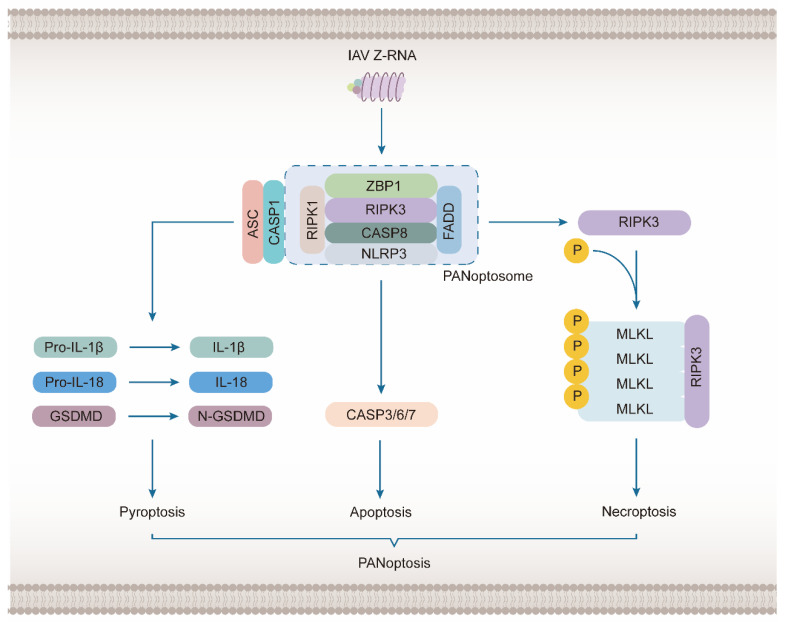
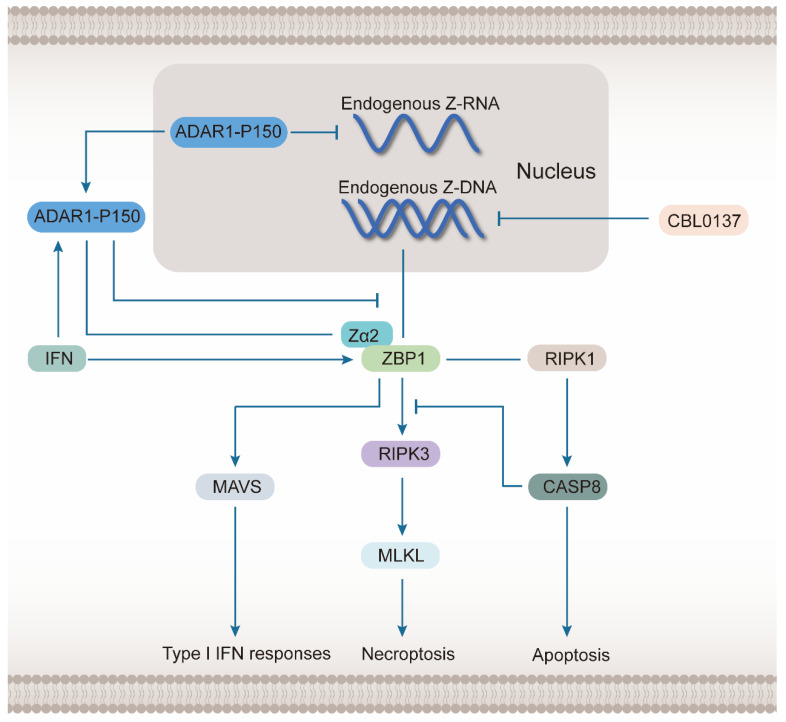
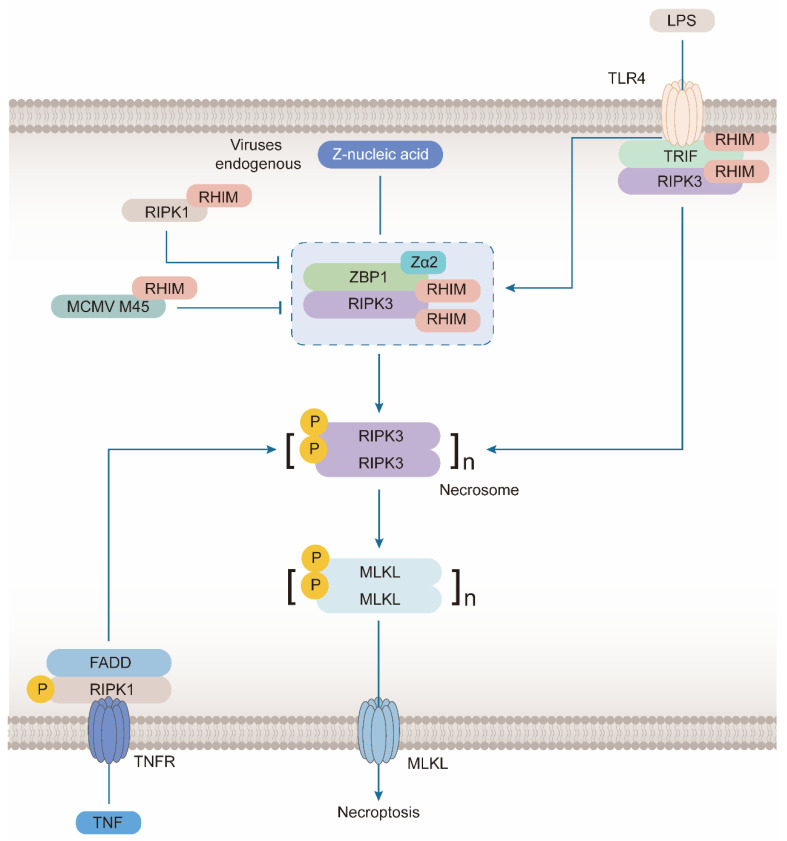
Cell death is a fundamental pathophysiological process in human disease. The discovery of necroptosis, a form of regulated necrosis that is induced by the activation of death receptors and formation of necrosome, represents a major breakthrough in the field of cell death in the past decade. Z-DNA-binding protein (ZBP1) is an interferon (IFN)-inducing protein, initially reported as a double-stranded DNA (dsDNA) sensor, which induces an innate inflammatory response. Recently, ZBP1 was identified as an important sensor of necroptosis during virus infection. It connects viral nucleic acid and receptor-interacting protein kinase 3 (RIPK3) via two domains and induces the formation of a necrosome. Recent studies have also reported that ZBP1 induces necroptosis in non-viral infections and mediates necrotic signal transduction by a unique mechanism. This review highlights the discovery of ZBP1 and its novel findings in necroptosis and provides an insight into its critical role in the crosstalk between different types of cell death, which may represent a new therapeutic option.
细胞死亡是人类疾病中基本的病理生理过程。在过去十年中,细胞死亡领域的一个重大突破是发现了细胞程序性坏死,这是一种由死亡受体激活和形成坏死小体诱导的受调控的细胞坏死形式。Z-DNA 结合蛋白 (ZBP1) 是一种干扰素 (IFN) 诱导蛋白,最初被报道为双链 DNA (dsDNA) 传感器,可诱导先天炎症反应。最近,ZBP1 被鉴定为病毒感染过程中细胞程序性坏死的重要传感器。它通过两个结构域连接病毒核酸和受体相互作用蛋白激酶 3 (RIPK3),并诱导坏死小体的形成。最近的研究还报道,ZBP1 在非病毒感染中诱导细胞程序性坏死,并通过独特的机制介导坏死信号转导。本文重点介绍了 ZBP1 的发现及其在细胞程序性坏死中的新发现,并深入探讨了其在不同类型细胞死亡之间相互作用中的关键作用,这可能代表一种新的治疗选择。