KU Leuven, Department of Microbiology, Immunology & Transplantation, Rega Institute, Laboratory of Virology & Chemotherapy, Leuven, Belgium.
Aligos Therapeutics, Inc., South San Francisco, California, USA.
mBio. 2023 Feb 28;14(1):e0281522. doi: 10.1128/mbio.02815-22. Epub 2023 Jan 10.
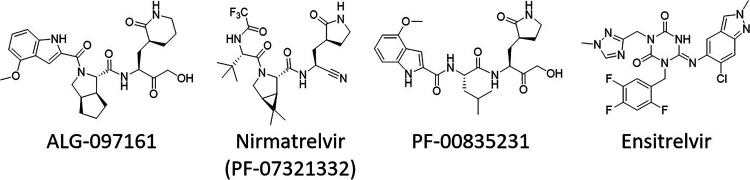
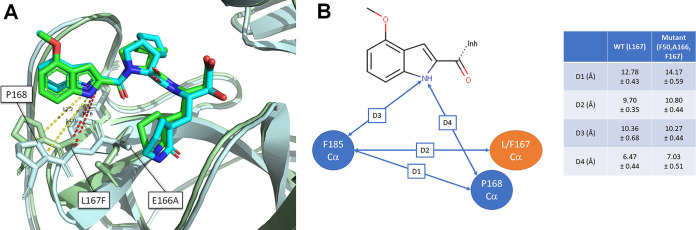
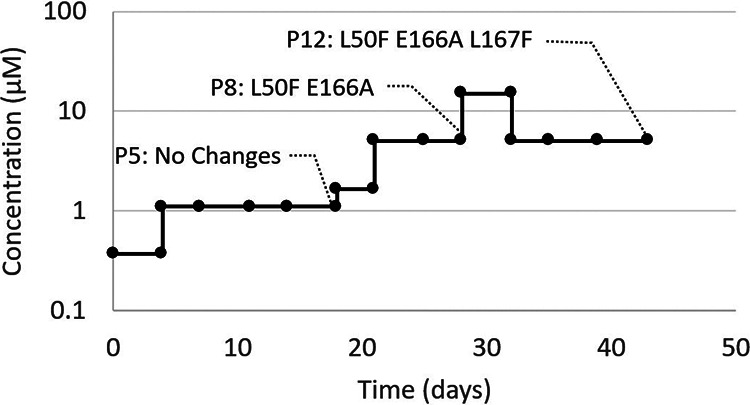
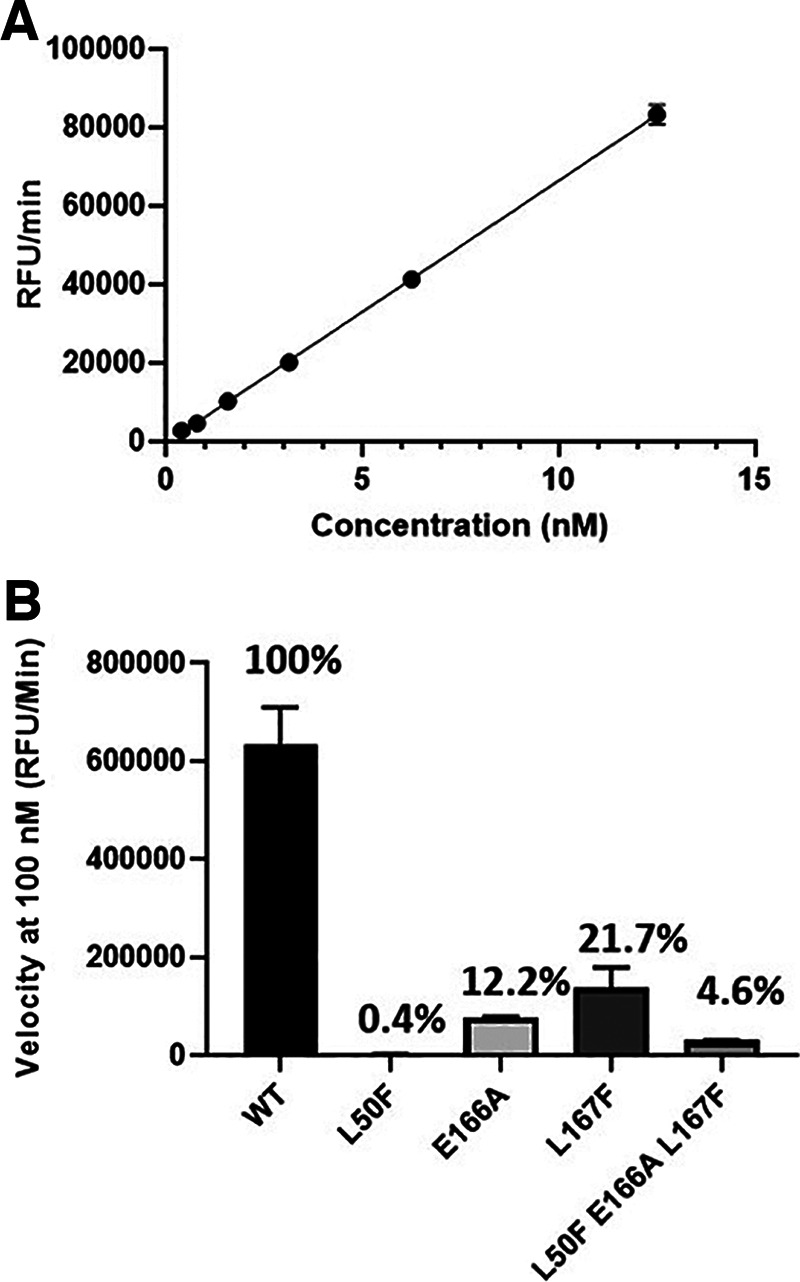
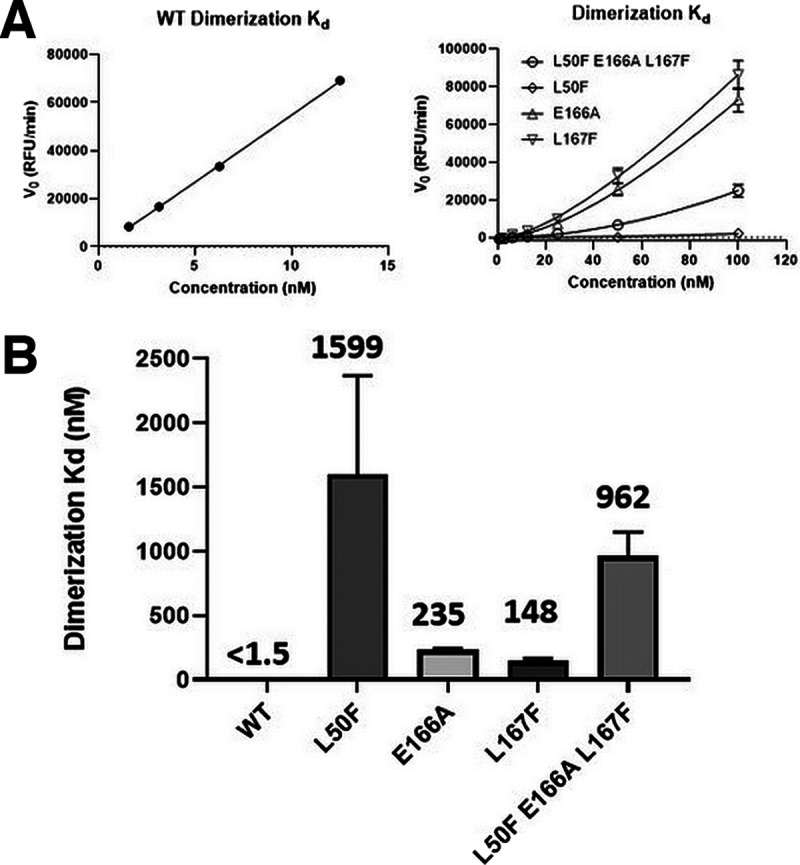
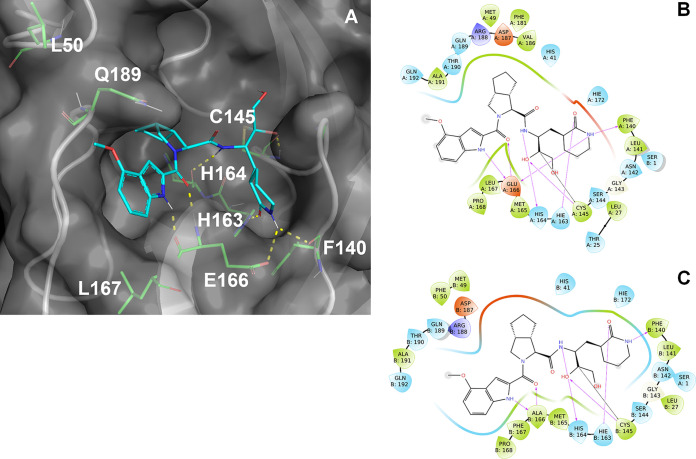
The SARS-CoV-2 main protease (3CLpro) has an indispensable role in the viral life cycle and is a therapeutic target for the treatment of COVID-19. The potential of 3CLpro-inhibitors to select for drug-resistant variants needs to be established. Therefore, SARS-CoV-2 was passaged in the presence of increasing concentrations of ALG-097161, a probe compound designed in the context of a 3CLpro drug discovery program. We identified a combination of amino acid substitutions in 3CLpro (L50F E166A L167F) that is associated with a >20× increase in 50% effective concentration (EC) values for ALG-097161, nirmatrelvir (PF-07321332), PF-00835231, and ensitrelvir. While two of the single substitutions (E166A and L167F) provide low-level resistance to the inhibitors in a biochemical assay, the triple mutant results in the highest levels of resistance (6× to 72×). All substitutions are associated with a significant loss of enzymatic 3CLpro activity, suggesting a reduction in viral fitness. Structural biology analysis indicates that the different substitutions reduce the number of inhibitor/enzyme interactions while the binding of the substrate is maintained. These observations will be important for the interpretation of resistance development to 3CLpro inhibitors in the clinical setting. Paxlovid is the first oral antiviral approved for treatment of SARS-CoV-2 infection. Antiviral treatments are often associated with the development of drug-resistant viruses. In order to guide the use of novel antivirals, it is essential to understand the risk of resistance development and to characterize the associated changes in the viral genes and proteins. In this work, we describe for the first time a pathway that allows SARS-CoV-2 to develop resistance against Paxlovid . The characteristics of antiviral resistance development may be predictive for the clinical situation. Therefore, our work will be important for the management of COVID-19 with Paxlovid and next-generation SARS-CoV-2 3CLpro inhibitors.
SARS-CoV-2 主要蛋白酶(3CLpro)在病毒生命周期中起着不可或缺的作用,是治疗 COVID-19 的治疗靶点。需要确定 3CLpro 抑制剂选择耐药变体的潜力。因此,SARS-CoV-2 在不断增加的 ALG-097161 浓度下传代,ALG-097161 是在 3CLpro 药物发现计划的背景下设计的探针化合物。我们确定了 3CLpro 中的一组氨基酸取代(L50F E166A L167F),与 ALG-097161、nirmatrelvir(PF-07321332)、PF-00835231 和 ensitrelvir 的 50%有效浓度(EC)值增加超过 20 倍相关。虽然两个单取代(E166A 和 L167F)在生化测定中提供了对抑制剂的低水平耐药性,但三重突变导致最高水平的耐药性(6 倍至 72 倍)。所有取代都与酶 3CLpro 活性的显著丧失相关,表明病毒适应性降低。结构生物学分析表明,不同的取代减少了抑制剂/酶相互作用的数量,同时保持了底物的结合。这些观察结果对于解释临床环境中 3CLpro 抑制剂的耐药性发展非常重要。Paxlovid 是第一种批准用于治疗 SARS-CoV-2 感染的口服抗病毒药物。抗病毒治疗通常与耐药病毒的发展有关。为了指导新型抗病毒药物的使用,了解耐药性发展的风险并描述病毒基因和蛋白质的相关变化至关重要。在这项工作中,我们首次描述了一种允许 SARS-CoV-2 对 Paxlovid 产生耐药性的途径。抗病毒耐药性发展的特征可能对临床情况具有预测性。因此,我们的工作对于使用 Paxlovid 和下一代 SARS-CoV-2 3CLpro 抑制剂管理 COVID-19 非常重要。