Children's Brain Tumour Research Centre, School of Medicine, Biodiscovery Institute, University of Nottingham, Nottingham, UK.
School of Pharmacy, University of Nottingham, Nottingham, UK.
Acta Neuropathol Commun. 2023 Jan 11;11(1):6. doi: 10.1186/s40478-022-01496-4.
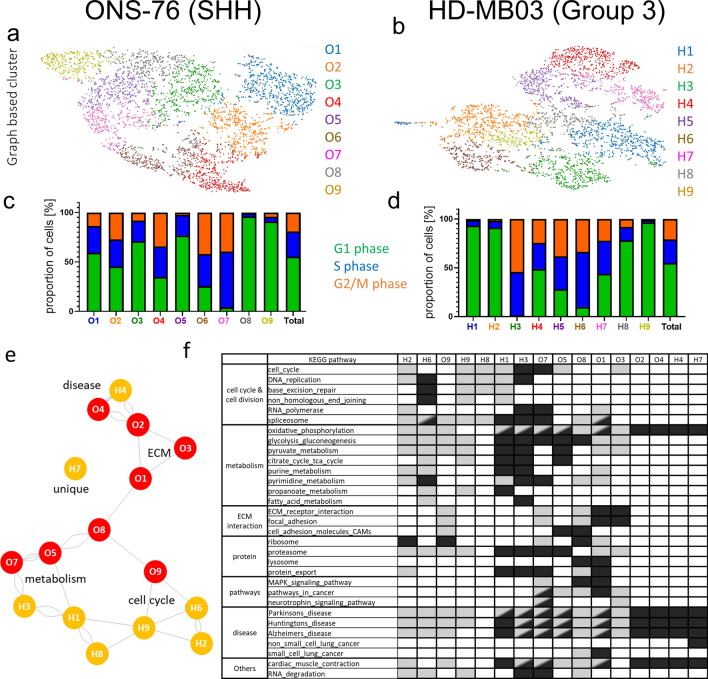
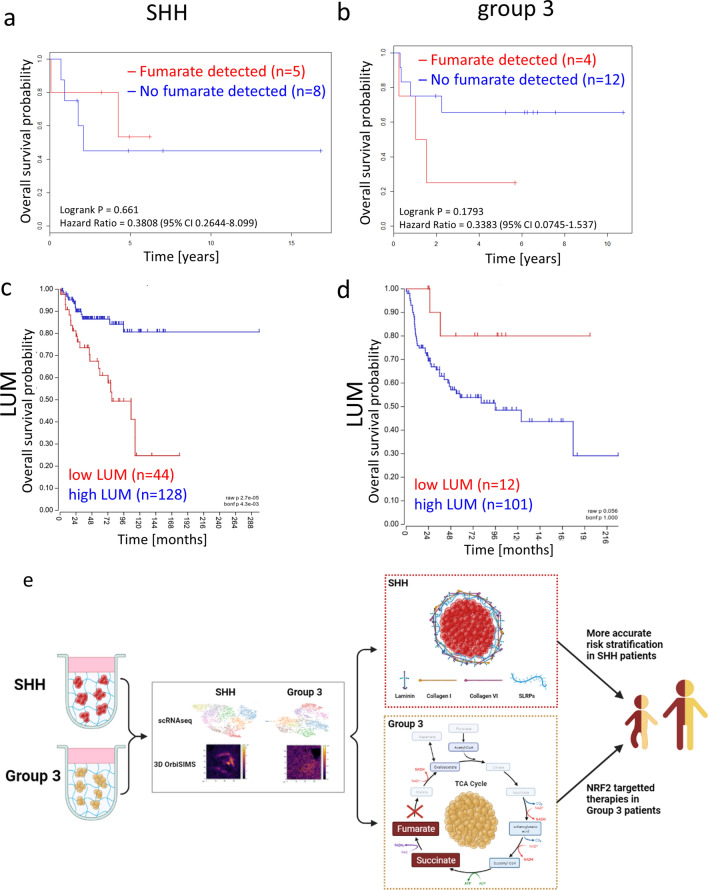
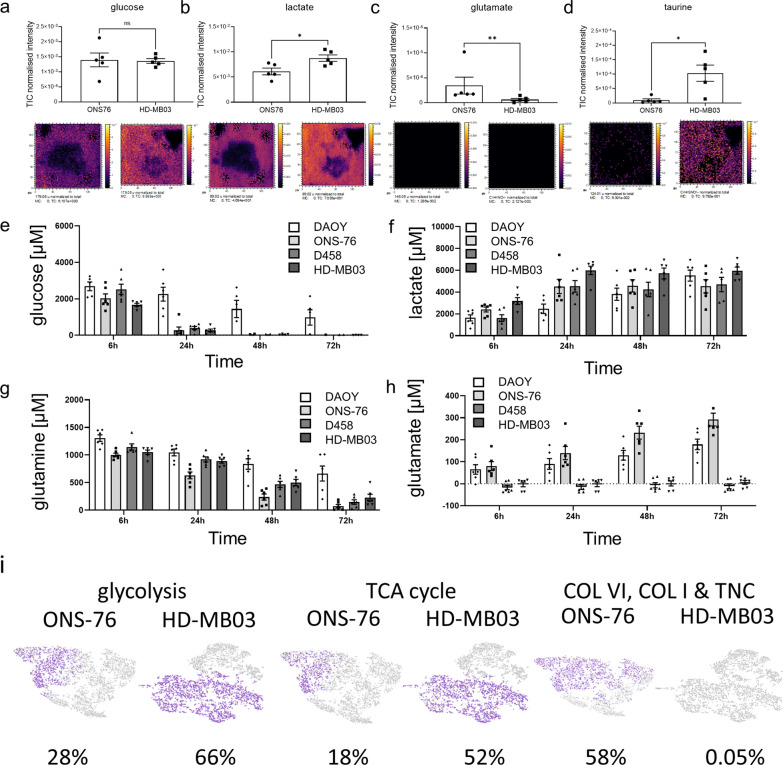
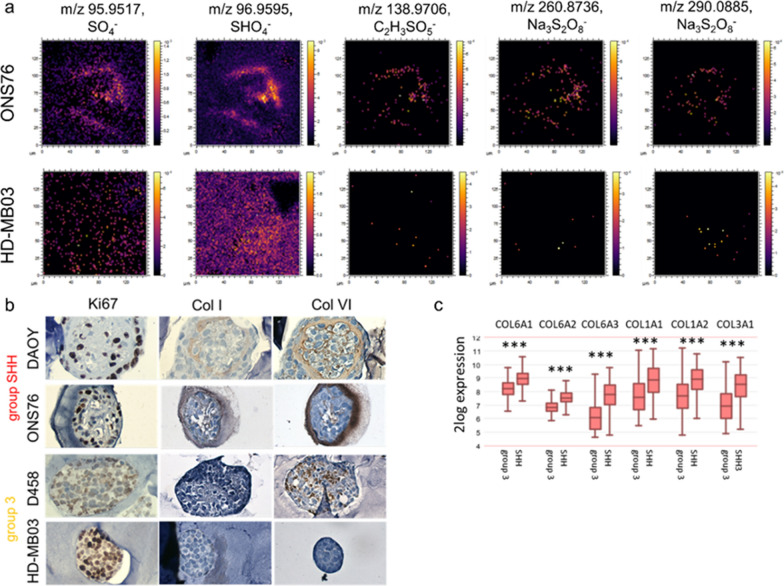
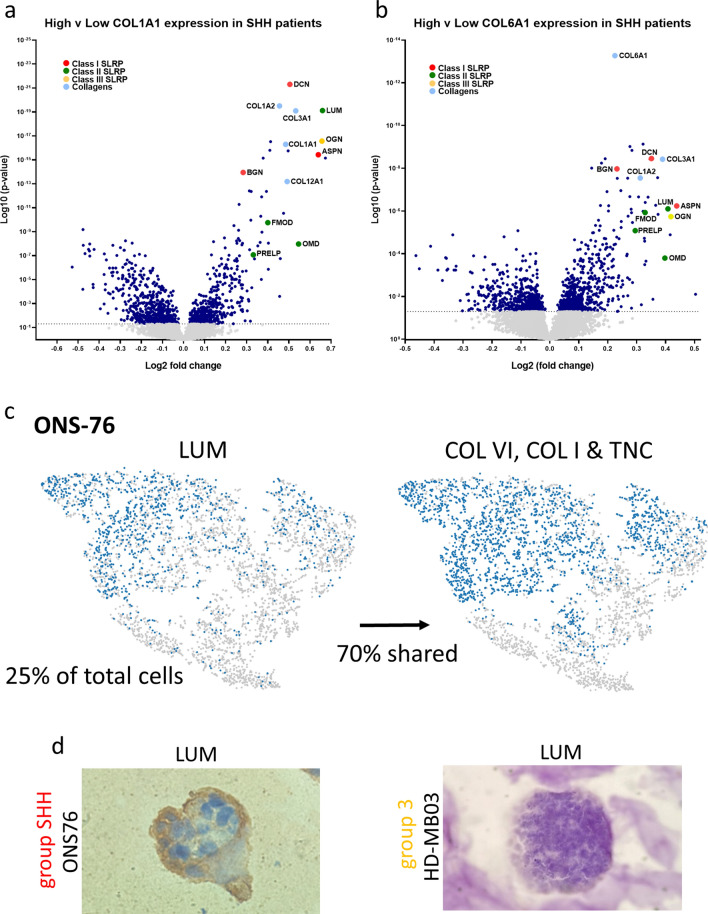
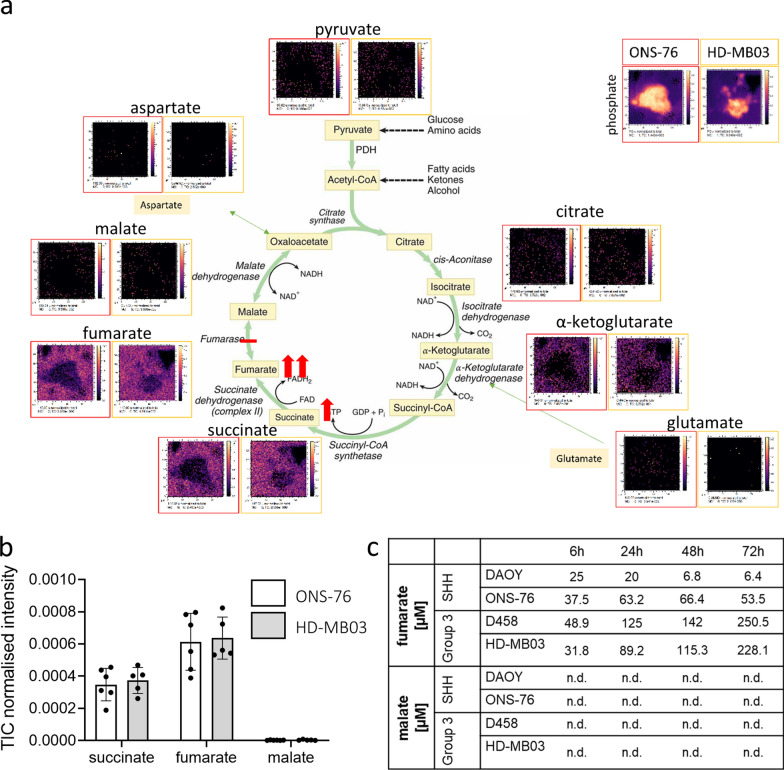
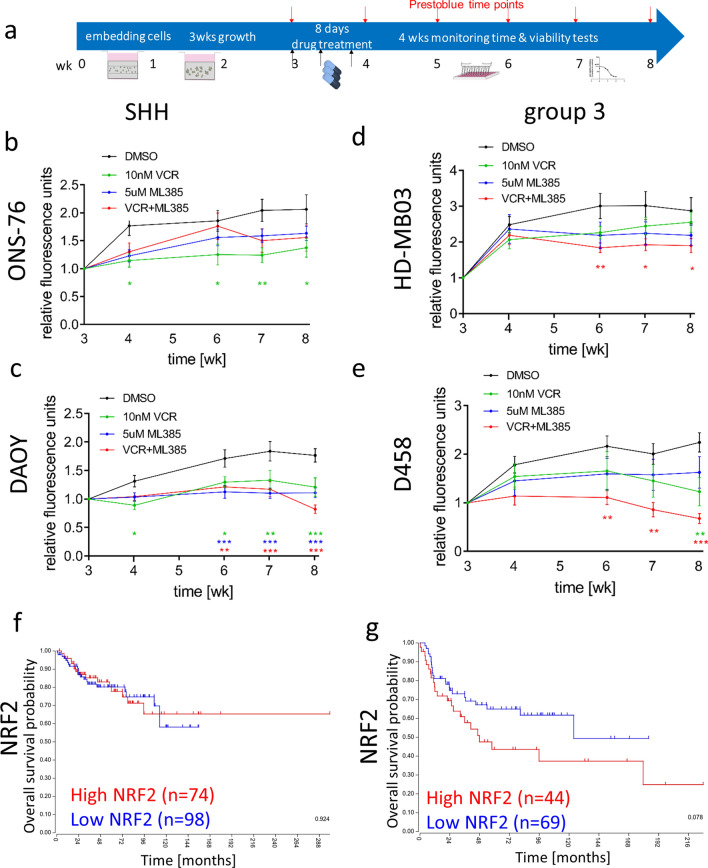
The most common malignant brain tumour in children, medulloblastoma (MB), is subdivided into four clinically relevant molecular subgroups, although targeted therapy options informed by understanding of different cellular features are lacking. Here, by comparing the most aggressive subgroup (Group 3) with the intermediate (SHH) subgroup, we identify crucial differences in tumour heterogeneity, including unique metabolism-driven subpopulations in Group 3 and matrix-producing subpopulations in SHH. To analyse tumour heterogeneity, we profiled individual tumour nodules at the cellular level in 3D MB hydrogel models, which recapitulate subgroup specific phenotypes, by single cell RNA sequencing (scRNAseq) and 3D OrbiTrap Secondary Ion Mass Spectrometry (3D OrbiSIMS) imaging. In addition to identifying known metabolites characteristic of MB, we observed intra- and internodular heterogeneity and identified subgroup-specific tumour subpopulations. We showed that extracellular matrix factors and adhesion pathways defined unique SHH subpopulations, and made up a distinct shell-like structure of sulphur-containing species, comprising a combination of small leucine-rich proteoglycans (SLRPs) including the collagen organiser lumican. In contrast, the Group 3 tumour model was characterized by multiple subpopulations with greatly enhanced oxidative phosphorylation and tricarboxylic acid (TCA) cycle activity. Extensive TCA cycle metabolite measurements revealed very high levels of succinate and fumarate with malate levels almost undetectable particularly in Group 3 tumour models. In patients, high fumarate levels (NMR spectroscopy) alongside activated stress response pathways and high Nuclear Factor Erythroid 2-Related Factor 2 (NRF2; gene expression analyses) were associated with poorer survival. Based on these findings we predicted and confirmed that NRF2 inhibition increased sensitivity to vincristine in a long-term 3D drug treatment assay of Group 3 MB. Thus, by combining scRNAseq and 3D OrbiSIMS in a relevant model system we were able to define MB subgroup heterogeneity at the single cell level and elucidate new druggable biomarkers for aggressive Group 3 and low-risk SHH MB.
儿童中最常见的恶性脑瘤是髓母细胞瘤(MB),它可细分为四个具有临床相关性的分子亚群,但缺乏基于不同细胞特征的靶向治疗选择。在这里,通过比较最具侵袭性的亚组(第 3 组)和中间(SHH)亚组,我们发现肿瘤异质性存在显著差异,包括第 3 组中独特的代谢驱动亚群和 SHH 中的基质产生亚群。为了分析肿瘤异质性,我们通过单细胞 RNA 测序(scRNAseq)和 3D OrbiTrap 二次离子质谱(3D OrbiSIMS)成像,在 3D MB 水凝胶模型中对单个肿瘤结节进行了细胞水平的分析。除了鉴定出特征性的 MB 已知代谢物外,我们还观察到了结节内和结节间的异质性,并鉴定出了亚群特异性的肿瘤亚群。我们表明,细胞外基质因子和黏附途径定义了独特的 SHH 亚群,并构成了含硫物种的独特壳状结构,其中包含一系列小富含亮氨酸的蛋白聚糖(SLRPs),包括胶原蛋白组织者亮氨酸。相比之下,第 3 组肿瘤模型的特征是具有多种亚群,其氧化磷酸化和三羧酸(TCA)循环活性大大增强。广泛的 TCA 循环代谢物测量显示,琥珀酸盐和富马酸盐水平非常高,而丙二酸水平几乎检测不到,特别是在第 3 组肿瘤模型中。在患者中,高琥珀酸盐水平(NMR 光谱)以及应激反应途径的激活和核因子红细胞 2 相关因子 2(NRF2;基因表达分析)与较差的存活率相关。基于这些发现,我们预测并证实 NRF2 抑制可增加第 3 组 MB 的长期 3D 药物治疗试验中长春新碱的敏感性。因此,我们通过在相关模型系统中结合 scRNAseq 和 3D OrbiSIMS,能够在单细胞水平上定义 MB 亚群异质性,并为侵袭性第 3 组和低风险 SHH MB 阐明新的可药物治疗的生物标志物。