• 文献检索
  • 文档翻译
  • 深度研究
  • 学术资讯
  • Suppr Zotero 插件Zotero 插件
  • 邀请有礼
  • 套餐&价格
  • 历史记录
应用&插件
Suppr Zotero 插件Zotero 插件浏览器插件Mac 客户端Windows 客户端微信小程序
定价
高级版会员购买积分包购买API积分包
服务
文献检索文档翻译深度研究API 文档MCP 服务
关于我们
关于 Suppr公司介绍联系我们用户协议隐私条款
关注我们

Suppr 超能文献

核心技术专利:CN118964589B侵权必究
粤ICP备2023148730 号-1Suppr @ 2026

文献检索

告别复杂PubMed语法,用中文像聊天一样搜索,搜遍4000万医学文献。AI智能推荐,让科研检索更轻松。

立即免费搜索

文件翻译

保留排版,准确专业,支持PDF/Word/PPT等文件格式,支持 12+语言互译。

免费翻译文档

深度研究

AI帮你快速写综述,25分钟生成高质量综述,智能提取关键信息,辅助科研写作。

立即免费体验

ADR3,一种新一代的 i 型人 RANKL 抗体,抑制破骨细胞形成和骨吸收。

ADR3, a next generation i-body to human RANKL, inhibits osteoclast formation and bone resorption.

机构信息

School of Biomedical Sciences, University of Western Australia, Perth, Western Australia, Australia.

Department of Biochemistry and Genetics, La Trobe Institute for Molecular Science, La Trobe University, Victoria, Australia; AdAlta Pty. Ltd, Bundoora, Victoria, Australia.

出版信息

J Biol Chem. 2023 Feb;299(2):102889. doi: 10.1016/j.jbc.2023.102889. Epub 2023 Jan 9.

DOI:10.1016/j.jbc.2023.102889
PMID:36634847
原文链接:https://pmc.ncbi.nlm.nih.gov/articles/PMC9929471/
Abstract

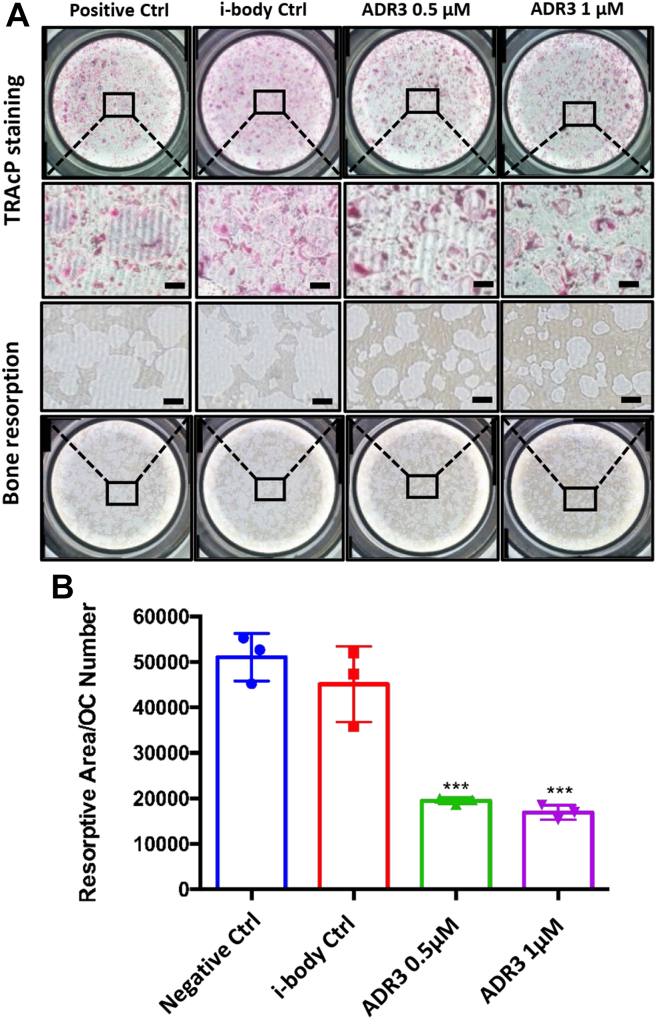
Osteoporosis is a chronic skeletal condition characterized by low bone mass and deteriorated microarchitecture of bone tissue and puts tens of millions of people at high risk of fractures. New therapeutic agents like i-bodies, a class of next-generation single-domain antibodies, are needed to overcome some limitations of conventional treatments. An i-body is a human immunoglobulin scaffold with two long binding loops that mimic the shape and position of those found in shark antibodies, the variable new antigen receptors of sharks. Its small size (∼12 kDa) and long binding loops provide access to drug targets, which are considered undruggable by traditional monoclonal antibodies. Here, we have successfully identified a human receptor activator of nuclear factor-κB ligand (RANKL) i-body, ADR3, which demonstrates a high binding affinity to human RANKL (hRANKL) with no adverse effect on the survival or proliferation of bone marrow-derived macrophages. Differential scanning fluorimetry suggested that ADR3 is stable and able to tolerate a wide range of physical environments (including both temperature and pH). In addition, in vitro studies showed a dose-dependent inhibitory effect of ADR3 on osteoclast differentiation, podosome belt formation, and bone resorption activity. Further investigation on the mechanism of action of ADR3 revealed that it can inhibit hRANKL-mediated signaling pathways, supporting the in vitro functional observations. These clues collectively indicate that hRANKL antagonist ADR3 attenuates osteoclast differentiation and bone resorption, with the potential to serve as a novel therapeutic to protect against bone loss.

摘要

骨质疏松症是一种慢性骨骼疾病,其特征是骨量低、骨组织微观结构恶化,使数千万人面临骨折的高风险。需要新型治疗药物,如 i 体,一类下一代单域抗体,以克服传统治疗方法的一些局限性。i 体是一种人免疫球蛋白支架,具有两个长结合环,模仿鲨鱼抗体中发现的形状和位置,即鲨鱼的可变新抗原受体。其小尺寸(约 12 kDa)和长结合环可使药物靶点能够与药物结合,这些靶点被认为是传统单克隆抗体无法治疗的。在这里,我们成功地鉴定了一种人核因子-κB 配体(RANKL)i 体 ADR3,它与人 RANKL(hRANKL)具有高亲和力,对骨髓来源的巨噬细胞的存活或增殖没有不良影响。差示扫描荧光法表明 ADR3 稳定且能够耐受广泛的物理环境(包括温度和 pH 值)。此外,体外研究表明 ADR3 对破骨细胞分化、足突带形成和骨吸收活性具有剂量依赖性抑制作用。对 ADR3 作用机制的进一步研究表明,它可以抑制 hRANKL 介导的信号通路,支持体外功能观察。这些线索共同表明,hRANKL 拮抗剂 ADR3 可抑制破骨细胞分化和骨吸收,具有预防骨质流失的潜在新型治疗作用。

https://cdn.ncbi.nlm.nih.gov/pmc/blobs/ab6c/9929471/a88090493714/gr7.jpg
https://cdn.ncbi.nlm.nih.gov/pmc/blobs/ab6c/9929471/ee06ec9023de/gr1.jpg
https://cdn.ncbi.nlm.nih.gov/pmc/blobs/ab6c/9929471/2191f72e2513/gr2.jpg
https://cdn.ncbi.nlm.nih.gov/pmc/blobs/ab6c/9929471/eb5f6347da79/gr3.jpg
https://cdn.ncbi.nlm.nih.gov/pmc/blobs/ab6c/9929471/d6bb025430ef/gr4.jpg
https://cdn.ncbi.nlm.nih.gov/pmc/blobs/ab6c/9929471/15ac1e339667/gr5.jpg
https://cdn.ncbi.nlm.nih.gov/pmc/blobs/ab6c/9929471/abb4cb770538/gr6.jpg
https://cdn.ncbi.nlm.nih.gov/pmc/blobs/ab6c/9929471/a88090493714/gr7.jpg
https://cdn.ncbi.nlm.nih.gov/pmc/blobs/ab6c/9929471/ee06ec9023de/gr1.jpg
https://cdn.ncbi.nlm.nih.gov/pmc/blobs/ab6c/9929471/2191f72e2513/gr2.jpg
https://cdn.ncbi.nlm.nih.gov/pmc/blobs/ab6c/9929471/eb5f6347da79/gr3.jpg
https://cdn.ncbi.nlm.nih.gov/pmc/blobs/ab6c/9929471/d6bb025430ef/gr4.jpg
https://cdn.ncbi.nlm.nih.gov/pmc/blobs/ab6c/9929471/15ac1e339667/gr5.jpg
https://cdn.ncbi.nlm.nih.gov/pmc/blobs/ab6c/9929471/abb4cb770538/gr6.jpg
https://cdn.ncbi.nlm.nih.gov/pmc/blobs/ab6c/9929471/a88090493714/gr7.jpg

相似文献

1
ADR3, a next generation i-body to human RANKL, inhibits osteoclast formation and bone resorption.ADR3,一种新一代的 i 型人 RANKL 抗体,抑制破骨细胞形成和骨吸收。
J Biol Chem. 2023 Feb;299(2):102889. doi: 10.1016/j.jbc.2023.102889. Epub 2023 Jan 9.
2
The fungal metabolite (+)-terrein abrogates osteoclast differentiation via suppression of the RANKL signaling pathway through NFATc1.真菌代谢产物(+)-terrein 通过抑制 NFATc1 来阻断核因子 κB 受体激活因子配体信号通路从而抑制破骨细胞分化。
Int Immunopharmacol. 2020 Jun;83:106429. doi: 10.1016/j.intimp.2020.106429. Epub 2020 Mar 26.
3
A 15-amino acid C-terminal peptide of beta-defensin-3 inhibits bone resorption by inhibiting the osteoclast differentiation and disrupting podosome belt formation.β-防御素-3 的一个 15 氨基酸 C 末端肽通过抑制破骨细胞分化和破坏破骨细胞足突带形成来抑制骨吸收。
J Mol Med (Berl). 2017 Dec;95(12):1315-1325. doi: 10.1007/s00109-017-1589-2. Epub 2017 Sep 9.
4
Chlorogenic acid inhibits osteoclast differentiation and bone resorption by down-regulation of receptor activator of nuclear factor kappa-B ligand-induced nuclear factor of activated T cells c1 expression.绿原酸通过下调核因子-κB 受体活化因子配体诱导的激活 T 细胞核因子 c1 的表达抑制破骨细胞分化和骨吸收。
Biol Pharm Bull. 2013;36(11):1779-86. doi: 10.1248/bpb.b13-00430. Epub 2013 Aug 28.
5
Water extract of the fruits of Alpinia oxyphylla inhibits osteoclast differentiation and bone loss.益智果实的水提物抑制破骨细胞分化和骨丢失。
BMC Complement Altern Med. 2014 Sep 23;14:352. doi: 10.1186/1472-6882-14-352.
6
Activation of liver X receptor (LXR) inhibits receptor activator of nuclear factor κB ligand (RANKL)-induced osteoclast differentiation in an LXRβ-dependent mechanism.肝 X 受体 (LXR) 的激活通过 LXRβ 依赖的机制抑制核因子 κB 受体激活剂配体 (RANKL)诱导的破骨细胞分化。
J Biol Chem. 2011 Sep 23;286(38):33084-94. doi: 10.1074/jbc.M111.235937. Epub 2011 Jul 22.
7
Arctigenin suppresses receptor activator of nuclear factor κB ligand (RANKL)-mediated osteoclast differentiation in bone marrow-derived macrophages.芝麻素抑制核因子-κB 受体激活剂配体(RANKL)介导的破骨细胞分化。
Eur J Pharmacol. 2012 May 5;682(1-3):29-36. doi: 10.1016/j.ejphar.2012.02.026. Epub 2012 Feb 24.
8
Crocin inhibits RANKL-induced osteoclast formation and bone resorption by suppressing NF-κB signaling pathway activation.西红花苷通过抑制核因子κB信号通路的激活来抑制核因子κB受体活化因子配体诱导的破骨细胞形成和骨吸收。
Immunobiology. 2017 Apr;222(4):597-603. doi: 10.1016/j.imbio.2016.11.009. Epub 2016 Nov 15.
9
GPR120 Inhibits RANKL-Induced Osteoclast Formation and Resorption by Attenuating Reactive Oxygen Species Production in RAW264.7 Murine Macrophages.GPR120 通过抑制 RAW264.7 鼠源巨噬细胞中活性氧的产生来抑制 RANKL 诱导的破骨细胞形成和吸收。
Int J Mol Sci. 2021 Sep 29;22(19):10544. doi: 10.3390/ijms221910544.
10
Calcium/calmodulin-dependent kinase activity is required for efficient induction of osteoclast differentiation and bone resorption by receptor activator of nuclear factor kappa B ligand (RANKL).核因子κB受体激活配体(RANKL)高效诱导破骨细胞分化和骨吸收需要钙/钙调蛋白依赖性激酶活性。
J Cell Physiol. 2007 Sep;212(3):787-95. doi: 10.1002/jcp.21076.

引用本文的文献

1
Heme metabolism mediates RANKL-induced osteoclastogenesis via mitochondrial oxidative phosphorylation.血红素代谢通过线粒体氧化磷酸化介导RANKL诱导的破骨细胞生成。
J Bone Miner Res. 2025 May 24;40(5):639-655. doi: 10.1093/jbmr/zjaf040.
2
Antioxidant enzyme Prdx1 inhibits osteoclastogenesis via suppressing ROS and NFATc1 signaling pathways.抗氧化酶Prdx1通过抑制ROS和NFATc1信号通路来抑制破骨细胞生成。
J Cell Physiol. 2024 Dec;239(12):e31431. doi: 10.1002/jcp.31431. Epub 2024 Sep 12.
3
A broadly cross-reactive i-body to AMA1 potently inhibits blood and liver stages of Plasmodium parasites.
一种广泛交叉反应的 i 体对 AMA1 具有强大的抑制作用,可抑制疟原虫的血液和肝脏阶段。
Nat Commun. 2024 Aug 22;15(1):7206. doi: 10.1038/s41467-024-50770-7.
4
Novel Osteoporosis Therapeutic Targets Derived from Medical Biotechnology.源自医学生物技术的新型骨质疏松症治疗靶点
Avicenna J Med Biotechnol. 2024 Jan-Mar;16(1):1-2. doi: 10.18502/ajmb.v16i1.14164.
5
Small Antibodies with Big Applications: Nanobody-Based Cancer Diagnostics and Therapeutics.小抗体,大应用:基于纳米抗体的癌症诊断与治疗
Cancers (Basel). 2023 Nov 29;15(23):5639. doi: 10.3390/cancers15235639.