Graduate School of Biostudies, Kyoto University, Yoshida-Konoe, Sakyo, Kyoto, 606-8501, Japan.
IFOM-KU Joint Research Laboratory, Graduate School of Medicine, Kyoto University, Yoshida-Konoe, Sakyo, Kyoto, 606-8501, Japan.
Sci Rep. 2023 Jan 12;13(1):645. doi: 10.1038/s41598-023-27598-0.
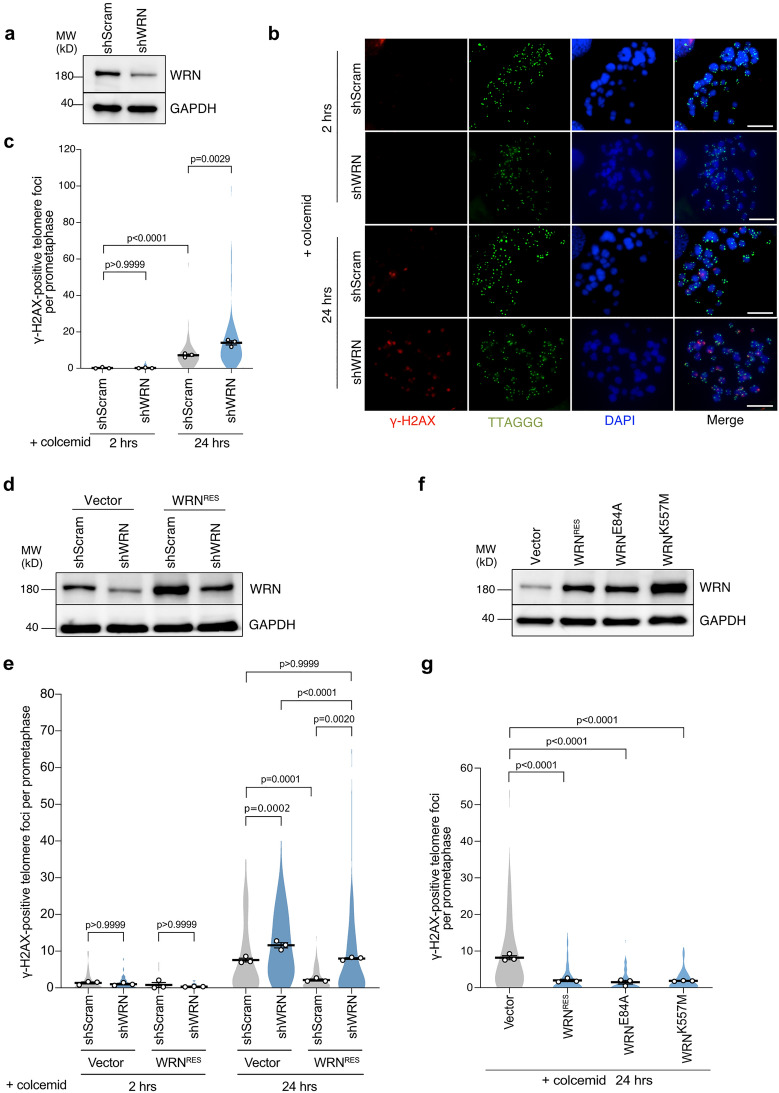
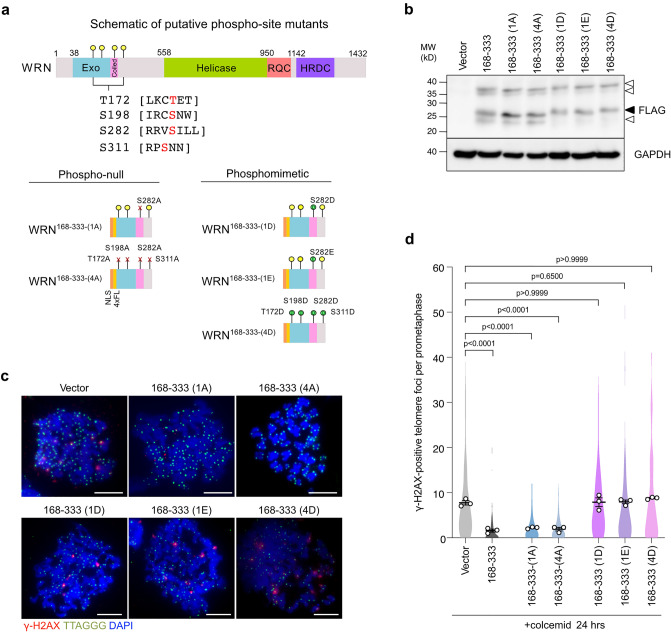
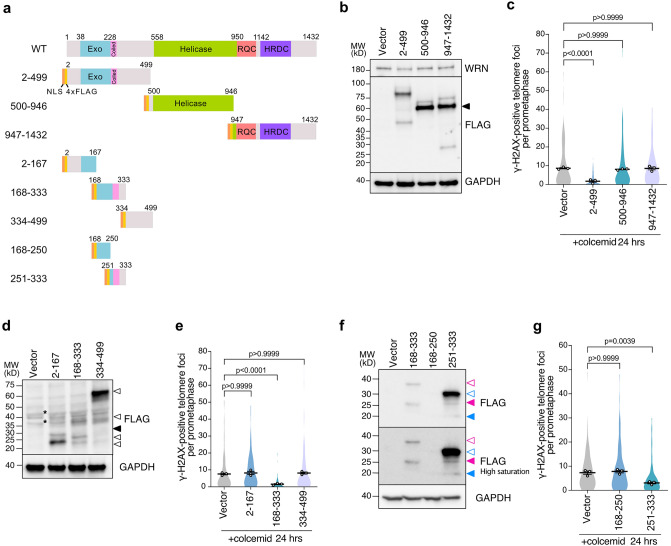
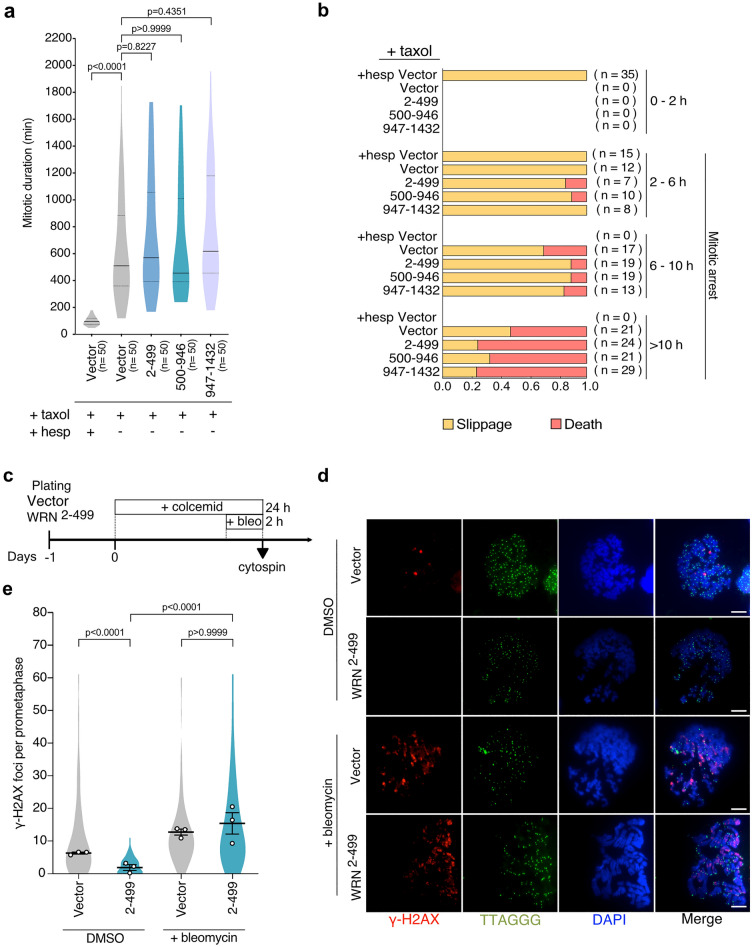
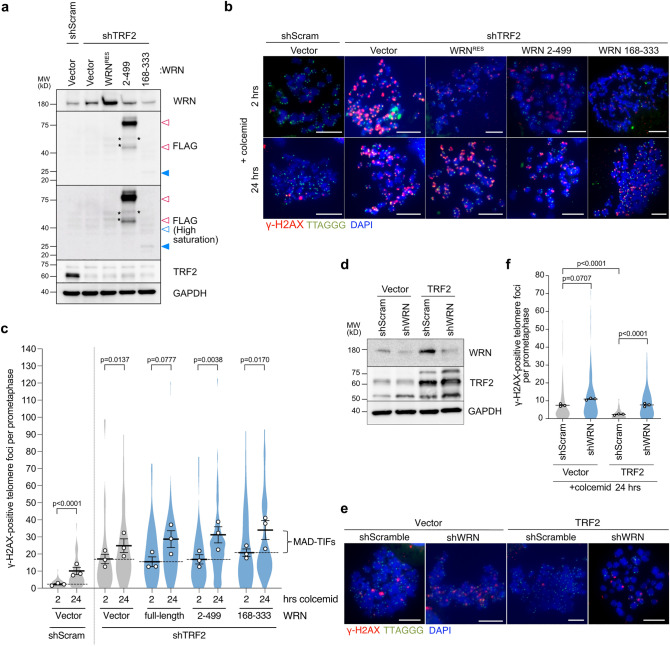
Telomeric ends form a loop structure (T-loop) necessary for the repression of ATM kinase activation throughout the normal cell cycle. However, cells undergoing a prolonged mitotic arrest are prone to lose the T-loop, resulting in Aurora B kinase-dependent mitotic telomere deprotection, which was proposed as an anti-tumor mechanism that eliminates precancerous cells from the population. The mechanism of mitotic telomere deprotection has not been elucidated. Here, we show that WRN, a RECQ helicase family member, can suppress mitotic telomere deprotection independently of its exonuclease and helicase activities. Truncation of WRN revealed that N-terminus amino acids 168-333, a region that contains a coiled-coil motif, is sufficient to suppress mitotic telomere deprotection without affecting both mitotic Aurora B-dependent spindle checkpoint and ATM kinase activity. The suppressive activity of the WRN fragment is diminished in cells partially depleted of TRF2, while WRN is required for complete suppression of mitotic telomere deprotection by TRF2 overexpression. Finally, we found that phosphomimetic but not alanine mutations of putative Aurora B target sites in the WRN fragment abolished its suppressive effect. Our findings reveal a non-enzymatic function of WRN, which may be regulated by phosphorylation in cells undergoing mitotic arrest. We propose that WRN enhances the protective function of TRF2 to counteract the hypothetical pathway that resolves the mitotic T-loop.
端粒末端形成一个环结构(T 环),对于在整个正常细胞周期中抑制 ATM 激酶的激活是必需的。然而,经历长时间有丝分裂停滞的细胞容易失去 T 环,导致 Aurora B 激酶依赖性有丝分裂端粒去保护,这被认为是一种抗肿瘤机制,可以从群体中消除癌前细胞。有丝分裂端粒去保护的机制尚未阐明。在这里,我们表明,WRN,一种 RECQ 解旋酶家族成员,可以独立于其外切酶和解旋酶活性来抑制有丝分裂端粒去保护。WRN 的截断表明,包含卷曲螺旋基序的 N 端氨基酸 168-333 足以抑制有丝分裂端粒去保护,而不影响有丝分裂 Aurora B 依赖性纺锤体检查点和 ATM 激酶活性。WRN 片段的抑制活性在部分耗尽 TRF2 的细胞中减弱,而 WRN 是 TRF2 过表达完全抑制有丝分裂端粒去保护所必需的。最后,我们发现,WRN 片段中假定的 Aurora B 靶位点的磷酸模拟突变而不是丙氨酸突变消除了其抑制作用。我们的发现揭示了 WRN 的一种非酶功能,它可能在经历有丝分裂停滞的细胞中受到磷酸化的调节。我们提出,WRN 增强了 TRF2 的保护功能,以抵消解决有丝分裂 T 环的假设途径。