Noonan Megan L, Ni Pu, Solis Emmanuel, Marambio Yamil G, Agoro Rafiou, Chu Xiaona, Wang Yue, Gao Hongyu, Xuei Xiaoling, Clinkenbeard Erica L, Jiang Guanglong, Liu Sheng, Stegen Steve, Carmeliet Geert, Thompson William R, Liu Yunlong, Wan Jun, White Kenneth E
Department of Medical and Molecular Genetics, Indiana University School of Medicine, Indianapolis, IN, 46202, USA.
Laboratory of Clinical and Experimental Endocrinology, Department of Chronic Diseases and Metabolism, KU Leuven, 3000, Leuven, Belgium.
Bone Res. 2023 Jan 18;11(1):7. doi: 10.1038/s41413-022-00241-w.
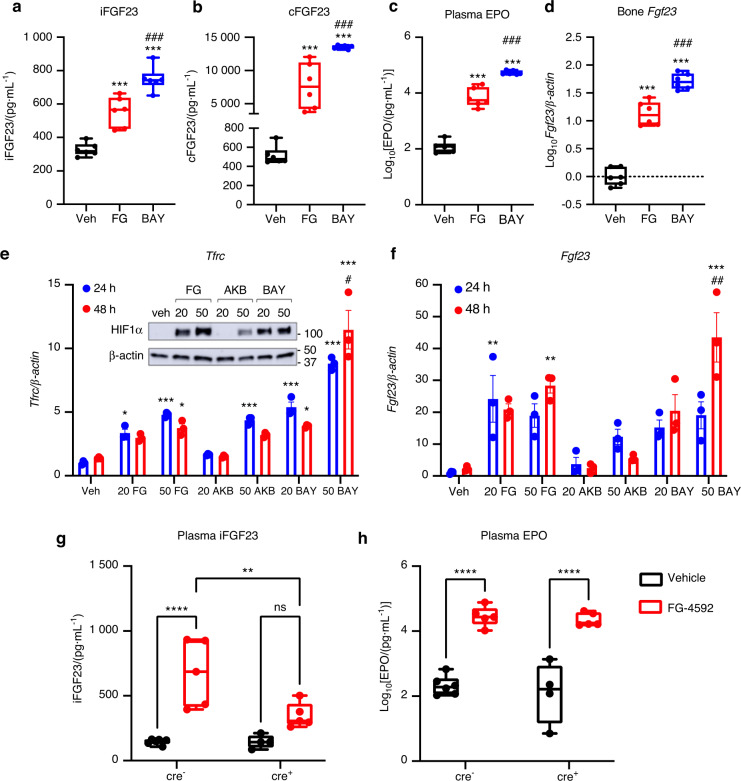
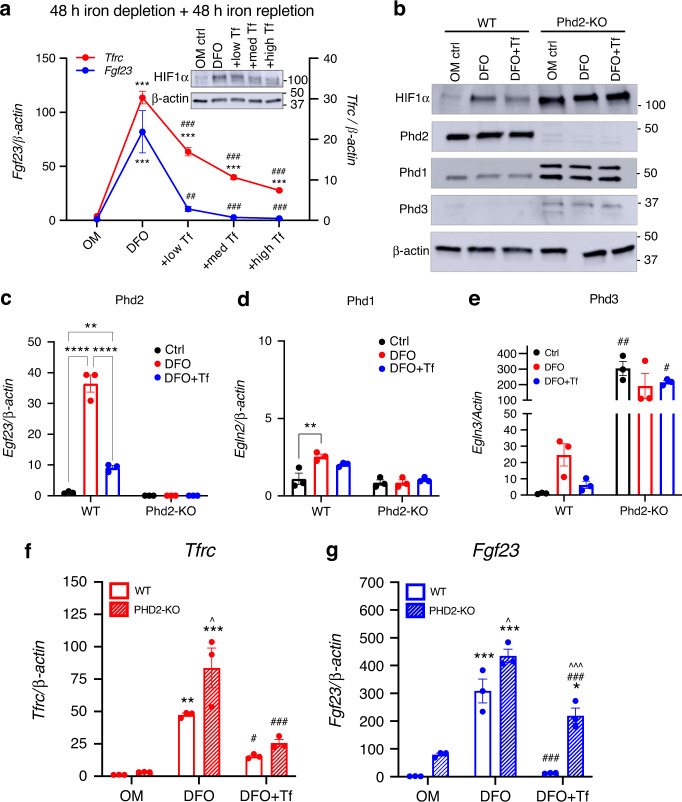
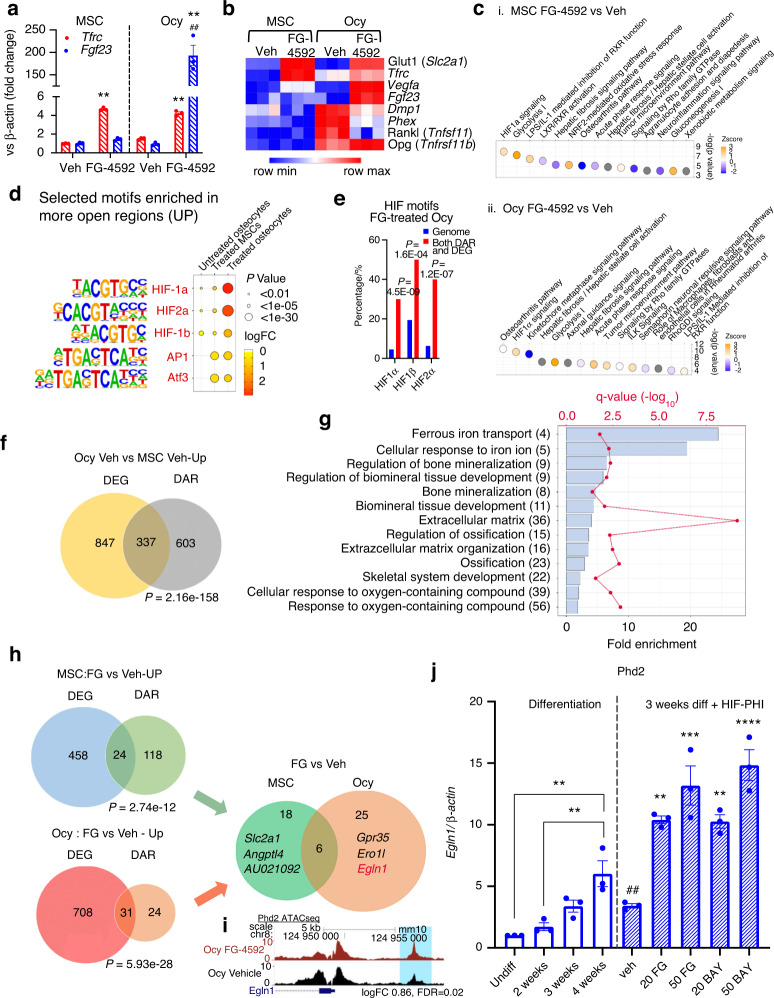
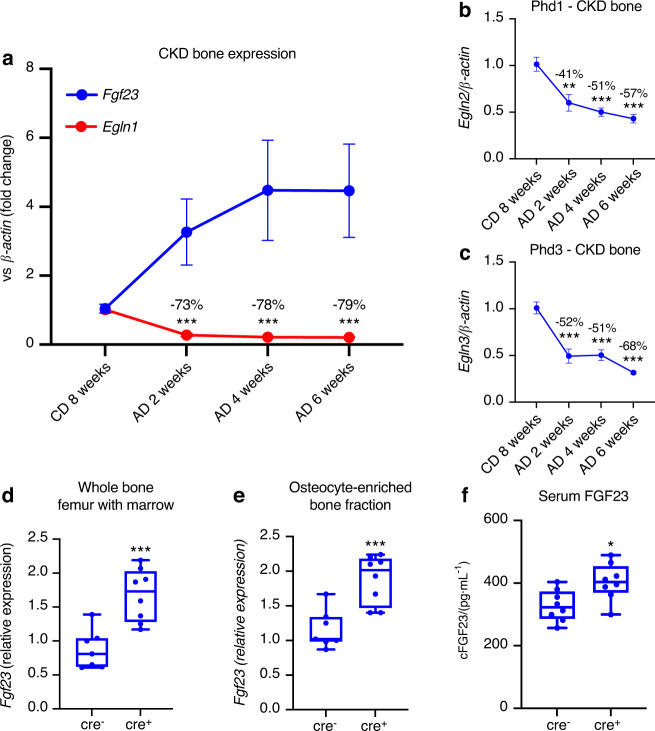
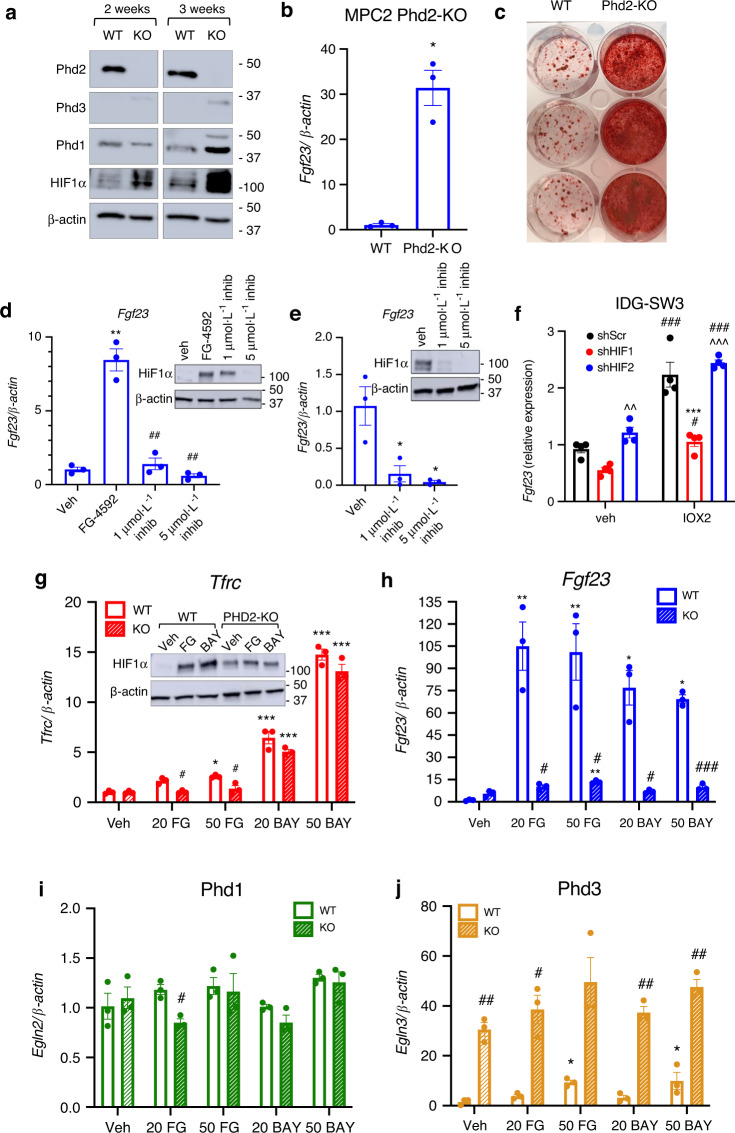
Osteocytes act within a hypoxic environment to control key steps in bone formation. FGF23, a critical phosphate-regulating hormone, is stimulated by low oxygen/iron in acute and chronic diseases, however the molecular mechanisms directing this process remain unclear. Our goal was to identify the osteocyte factors responsible for FGF23 production driven by changes in oxygen/iron utilization. Hypoxia-inducible factor-prolyl hydroxylase inhibitors (HIF-PHI) which stabilize HIF transcription factors, increased Fgf23 in normal mice, as well as in osteocyte-like cells; in mice with conditional osteocyte Fgf23 deletion, circulating iFGF23 was suppressed. An inducible MSC cell line ('MPC2') underwent FG-4592 treatment and ATACseq/RNAseq, and demonstrated that differentiated osteocytes significantly increased HIF genomic accessibility versus progenitor cells. Integrative genomics also revealed increased prolyl hydroxylase Egln1 (Phd2) chromatin accessibility and expression, which was positively associated with osteocyte differentiation. In mice with chronic kidney disease (CKD), Phd1-3 enzymes were suppressed, consistent with FGF23 upregulation in this model. Conditional loss of Phd2 from osteocytes in vivo resulted in upregulated Fgf23, in line with our findings that the MPC2 cell line lacking Phd2 (CRISPR Phd2-KO cells) constitutively activated Fgf23 that was abolished by HIF1α blockade. In vitro, Phd2-KO cells lost iron-mediated suppression of Fgf23 and this activity was not compensated for by Phd1 or -3. In sum, osteocytes become adapted to oxygen/iron sensing during differentiation and are directly sensitive to bioavailable iron. Further, Phd2 is a critical mediator of osteocyte FGF23 production, thus our collective studies may provide new therapeutic targets for skeletal diseases involving disturbed oxygen/iron sensing.
骨细胞在缺氧环境中发挥作用,以控制骨形成的关键步骤。成纤维细胞生长因子23(FGF23)是一种关键的磷酸盐调节激素,在急性和慢性疾病中,低氧/铁会刺激其产生,然而,指导这一过程的分子机制仍不清楚。我们的目标是确定负责由氧/铁利用变化驱动的FGF23产生的骨细胞因子。稳定缺氧诱导因子转录因子的缺氧诱导因子脯氨酰羟化酶抑制剂(HIF-PHI)可增加正常小鼠以及类骨细胞中的Fgf23;在条件性骨细胞Fgf23缺失的小鼠中,循环中的iFGF23受到抑制。一种可诱导的间充质干细胞系(“MPC2”)接受了FG-4592处理和ATACseq/RNAseq检测,结果表明,与祖细胞相比,分化的骨细胞显著增加了HIF基因组的可及性。整合基因组学还显示脯氨酰羟化酶Egln1(Phd2)的染色质可及性和表达增加,这与骨细胞分化呈正相关。在慢性肾病(CKD)小鼠中,Phd1-3酶受到抑制,这与该模型中FGF23的上调一致。体内条件性敲除骨细胞中的Phd2导致Fgf23上调,这与我们的研究结果一致,即缺乏Phd2的MPC2细胞系(CRISPR Phd2-KO细胞)持续激活Fgf23,而这种激活被HIF1α阻断所消除。在体外,Phd2-KO细胞失去了铁介导的对Fgf23的抑制作用,并且这种活性不能被Phd1或-3补偿。总之,骨细胞在分化过程中适应了氧/铁传感,并且对生物可利用铁直接敏感。此外,Phd2是骨细胞FGF23产生的关键介质,因此我们的集体研究可能为涉及氧/铁传感紊乱的骨骼疾病提供新的治疗靶点。