Pacific Northwest Evidence-Based Practice Center, Department of Medical Informatics and Clinical Epidemiology, Oregon Health & Science University, BICC; 3181 SW Sam Jackson Park Road, Portland, OR, 97239, USA.
Department of Family Medicine, School of Medicine, Oregon Health & Science University, BICC; 3181 SW Sam Jackson Park Road, Portland, OR, 97239, USA.
J Gen Intern Med. 2023 May;38(7):1735-1743. doi: 10.1007/s11606-023-08033-6. Epub 2023 Jan 17.
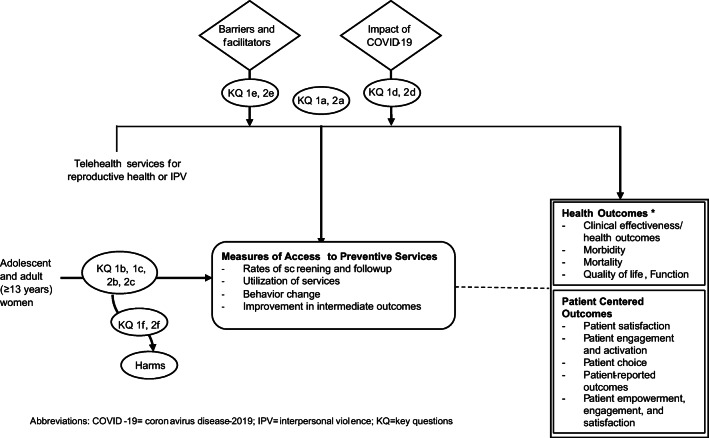
Telehealth delivery of preventive health services may improve access to care; however, its effectiveness and adverse effects are unknown. We conducted a comparative effectiveness review on the effectiveness and harms of telehealth interventions for women's reproductive health and intimate partner violence (IPV) services.
We searched MEDLINE, Cochrane Library, CINAHL, and Scopus for English-language studies (July 2016 to May 2022) for randomized controlled trials (RCTs) and observational studies of telehealth strategies for women's reproductive health and IPV versus usual care. Two investigators identified studies and abstracted data using a predefined protocol. Study quality was assessed using study design-specific standardized methods; disagreements were resolved through consensus.
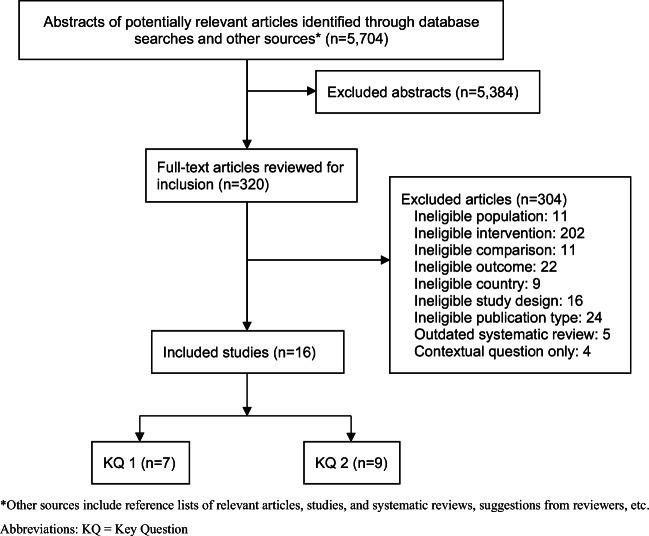
Eight RCTs, 1 nonrandomized trial, and 7 observational studies (n=10 731) were included (7 studies of contraceptive care and 9 of IPV services). Telehealth interventions to supplement contraceptive care demonstrated similar rates as usual care for contraceptive use, sexually transmitted infections, and pregnancy (low strength of evidence [SOE]); evidence on abortion was insufficient. Outcomes were also similar between telehealth interventions to replace or supplement IPV services and comparators for repeat IPV, depression, posttraumatic stress disorder, fear of partner, coercive control, self-efficacy, and safety behaviors (low SOE). In these studies, telehealth barriers included limited internet access, digital literacy, technical challenges, and confidentiality concerns. Strategies to ensure safety increased telehealth use for IPV services. Evidence on access, health equity, or harms was lacking.
Telehealth interventions for contraceptive care and IPV services demonstrate equivalent clinical and patient-reported outcomes versus in-person care, although few studies are available. Effective approaches for delivering these services and how to best mobilize telehealth, particularly for women facing barriers to care remain uncertain.
PROSPERO CRD42021282298.
远程医疗提供预防保健服务可能会改善获得医疗保健的机会,但它的有效性和不良影响尚不清楚。我们对远程医疗干预措施在妇女生殖健康和亲密伴侣暴力(IPV)服务方面的有效性和危害进行了一项比较效果评估。
我们搜索了 MEDLINE、Cochrane 图书馆、CINAHL 和 Scopus 中的英文文献(2016 年 7 月至 2022 年 5 月),以确定针对妇女生殖健康和 IPV 的远程医疗策略的随机对照试验(RCT)和观察性研究,与常规护理相比。两名调查员使用预定义的方案确定研究并提取数据。使用特定于研究设计的标准化方法评估研究质量;通过共识解决分歧。
共纳入 8 项 RCT、1 项非随机试验和 7 项观察性研究(n=10731)(7 项关于避孕护理,9 项关于 IPV 服务)。补充避孕护理的远程医疗干预措施与常规护理在避孕、性传播感染和妊娠方面的使用率相似(低证据强度[SOE]);关于堕胎的证据不足。远程医疗干预措施替代或补充 IPV 服务与对照组在重复 IPV、抑郁、创伤后应激障碍、对伴侣的恐惧、强制性控制、自我效能和安全行为方面的结局也相似(低 SOE)。在这些研究中,远程医疗障碍包括互联网接入有限、数字素养、技术挑战和保密性问题。确保安全的策略增加了对 IPV 服务的远程医疗使用。缺乏关于获取途径、健康公平或危害的证据。
避孕护理和 IPV 服务的远程医疗干预措施与面对面护理相比,具有同等的临床和患者报告结局,尽管可用的研究很少。提供这些服务的有效方法以及如何最好地调动远程医疗,特别是对面临护理障碍的妇女,仍然不确定。
PROSPERO CRD42021282298。