Godoy Luis A, Chen Joy, Ma Weijie, Lally Jag, Toomey Kyra A, Rajappa Prabhu, Sheridan Roya, Mahajan Shirish, Stollenwerk Nicholas, Phan Chinh T, Cheng Danny, Knebel Robert J, Li Tianhong
Division of Thoracic Surgery, Department of Surgery, University of California Davis School of Medicine, Sacramento, CA, USA.
Medical Student, University of California Davis School of Medicine, Sacramento, CA, USA.
Biomark Res. 2023 Jan 18;11(1):7. doi: 10.1186/s40364-022-00444-7.
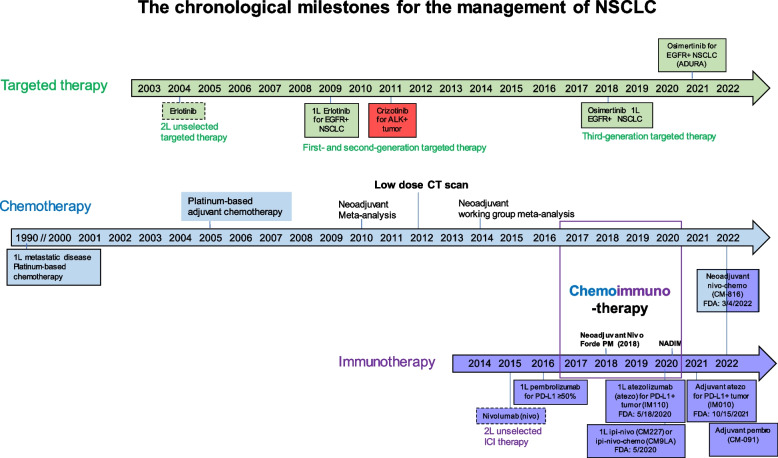
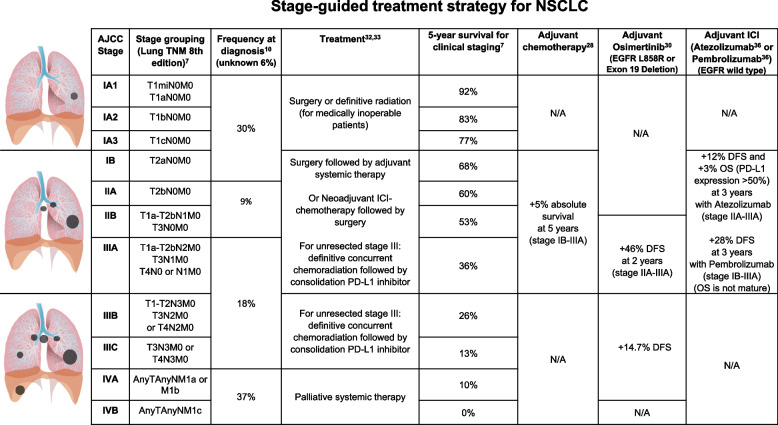
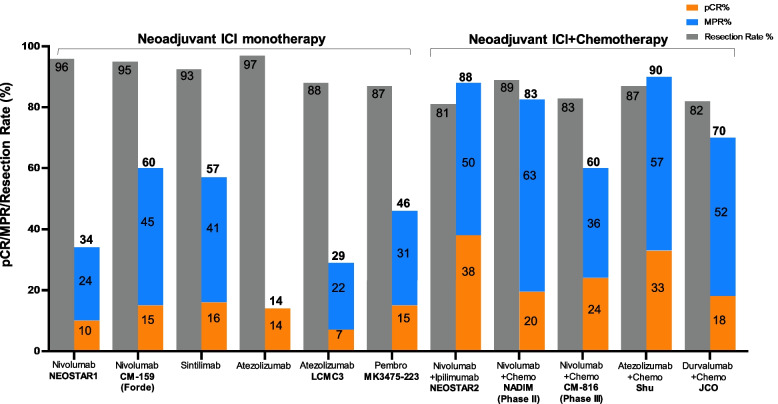
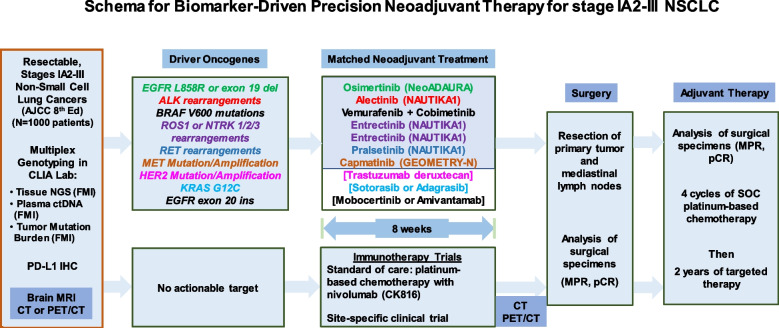
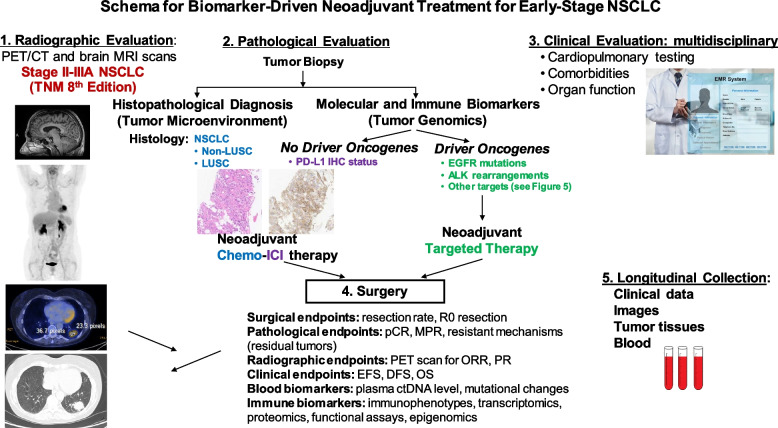
Over the past decade, targeted therapy for oncogene-driven NSCLC and immune checkpoint inhibitors for non-oncogene-driven NSCLC, respectively, have greatly improved the survival and quality of life for patients with unresectable NSCLC. Increasingly, these biomarker-guided systemic therapies given before or after surgery have been used in patients with early-stage NSCLC. In March 2022, the US FDA granted the approval of neoadjuvant nivolumab and chemotherapy for patients with stage IB-IIIA NSCLC. Several phase II/III trials are evaluating the clinical efficacy of various neoadjuvant immune checkpoint inhibitor combinations for non-oncogene-driven NSCLC and neoadjuvant molecular targeted therapies for oncogene-driven NSCLC, respectively. However, clinical application of precision neoadjuvant treatment requires a paradigm shift in the biomarker testing and multidisciplinary collaboration at the diagnosis of early-stage NSCLC. In this comprehensive review, we summarize the current diagnosis and treatment landscape, recent advances, new challenges in biomarker testing and endpoint selections, practical considerations for a timely multidisciplinary collaboration at diagnosis, and perspectives in emerging neoadjuvant precision systemic therapy for patients with resectable, early-stage NSCLC. These biomarker-guided neoadjuvant therapies hold the promise to improve surgical and pathological outcomes, reduce systemic recurrences, guide postoperative therapy, and improve cure rates in patients with resectable NSCLC.
在过去十年中,针对致癌基因驱动的非小细胞肺癌(NSCLC)的靶向治疗以及针对非致癌基因驱动的NSCLC的免疫检查点抑制剂,分别极大地提高了不可切除NSCLC患者的生存率和生活质量。越来越多的是,这些在手术前或手术后给予的生物标志物指导的全身治疗已用于早期NSCLC患者。2022年3月,美国食品药品监督管理局(FDA)批准了纳武利尤单抗新辅助治疗联合化疗用于IB-IIIA期NSCLC患者。几项II/III期试验正在分别评估各种新辅助免疫检查点抑制剂联合方案用于非致癌基因驱动的NSCLC以及新辅助分子靶向治疗用于致癌基因驱动的NSCLC的临床疗效。然而,精准新辅助治疗的临床应用需要在早期NSCLC诊断时的生物标志物检测和多学科协作方面进行模式转变。在这篇综述中,我们总结了当前的诊断和治疗格局、最新进展、生物标志物检测和终点选择方面的新挑战、诊断时及时进行多学科协作的实际考虑因素,以及可切除的早期NSCLC患者新兴的新辅助精准全身治疗的前景。这些生物标志物指导的新辅助治疗有望改善手术和病理结果、减少全身复发、指导术后治疗并提高可切除NSCLC患者的治愈率。