Infectious Disease Clinical Research Program, Department of Preventive Medicine and Biostatistics, Uniformed Services University of the Health Sciences, Bethesda, Maryland.
The Henry M. Jackson Foundation for the Advancement of Military Medicine, Inc, Bethesda, Maryland.
JAMA Netw Open. 2023 Jan 3;6(1):e2251360. doi: 10.1001/jamanetworkopen.2022.51360.
Understanding the factors associated with post-COVID conditions is important for prevention.
To identify characteristics associated with persistent post-COVID-19 symptoms and to describe post-COVID-19 medical encounters.
DESIGN, SETTING, AND PARTICIPANTS: This cohort study used data from the Epidemiology, Immunology, and Clinical Characteristics of Emerging Infectious Diseases With Pandemic Potential (EPICC) study implemented in the US military health system (MHS); MHS beneficiaries aged 18 years or older who tested positive for SARS-CoV-2 from February 28, 2020, through December 31, 2021, were analyzed, with 1-year follow-up.
SARS-CoV-2 infection.
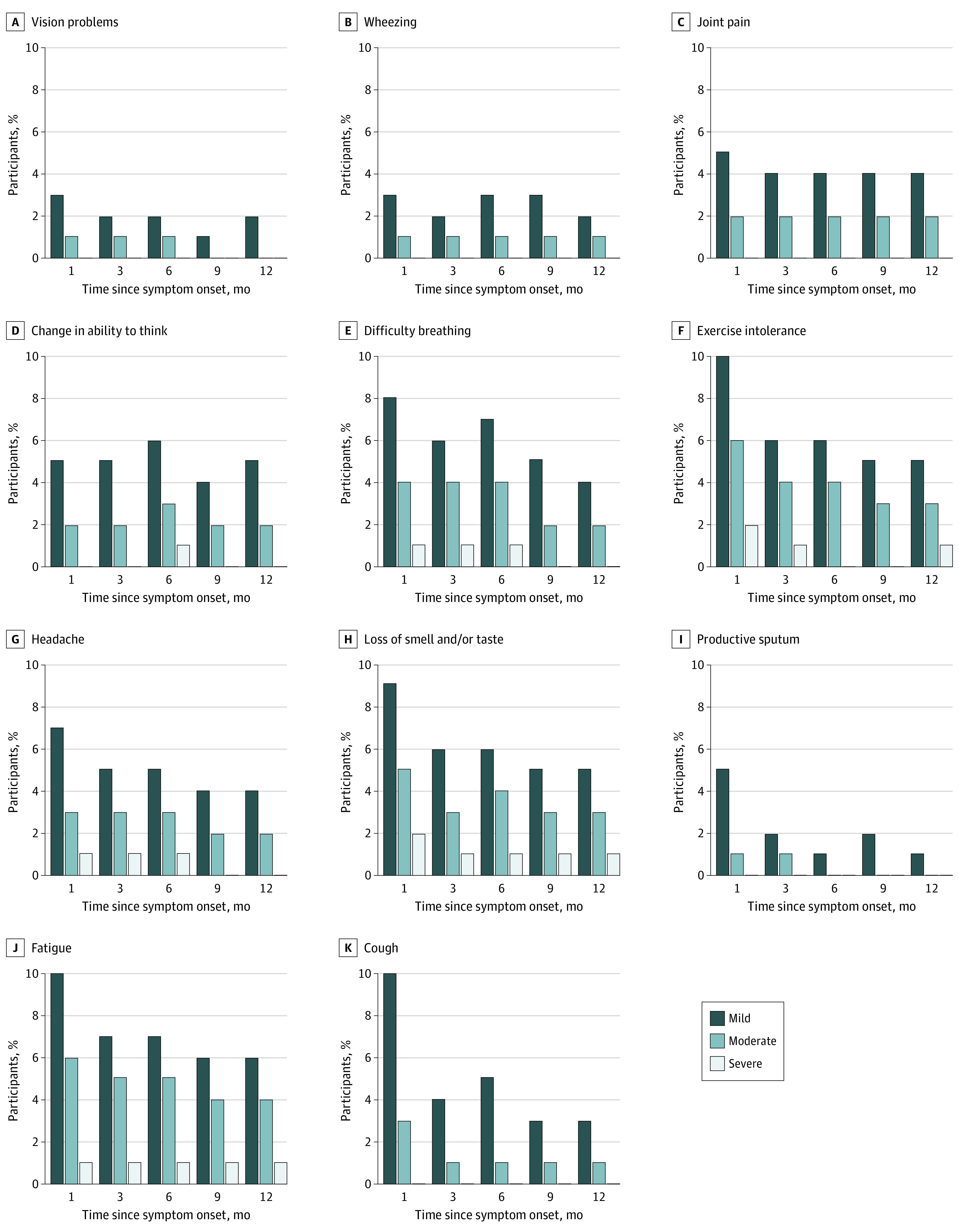
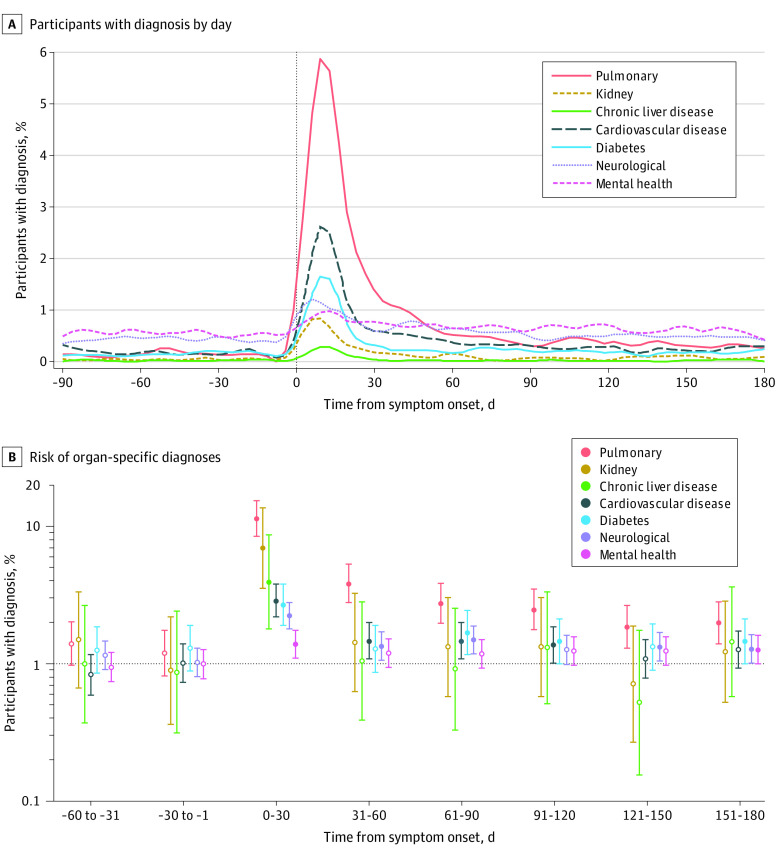
The outcomes analyzed included survey-reported symptoms through 6 months after SARS-CoV-2 infection and International Statistical Classification of Diseases and Related Health Problems, Tenth Revision diagnosis categories reported in medical records 6 months following SARS-CoV-2 infection vs 3 months before infection.
More than half of the 1832 participants in these analyses were aged 18 to 44 years (1226 [66.9%]; mean [SD] age, 40.5 [13.7] years), were male (1118 [61.0%]), were unvaccinated at the time of their infection (1413 [77.1%]), and had no comorbidities (1290 [70.4%]). A total of 728 participants (39.7%) had illness that lasted 28 days or longer (28-89 days: 364 [19.9%]; ≥90 days: 364 [19.9%]). Participants who were unvaccinated prior to infection (risk ratio [RR], 1.39; 95% CI, 1.04-1.85), reported moderate (RR, 1.80; 95% CI, 1.47-2.22) or severe (RR, 2.25; 95% CI, 1.80-2.81) initial illnesses, had more hospitalized days (RR per each day of hospitalization, 1.02; 95% CI, 1.00-1.03), and had a Charlson Comorbidity Index score of 5 or greater (RR, 1.55; 95% CI, 1.01-2.37) were more likely to report 28 or more days of symptoms. Among unvaccinated participants, postinfection vaccination was associated with a 41% lower risk of reporting symptoms at 6 months (RR, 0.59; 95% CI, 0.40-0.89). Participants had higher risk of pulmonary (RR, 2.00; 95% CI, 1.40-2.84), diabetes (RR, 1.46; 95% CI, 1.00-2.13), neurological (RR, 1.29; 95% CI, 1.02-1.64), and mental health-related medical encounters (RR, 1.28; 95% CI, 1.01-1.62) at 6 months after symptom onset than at baseline (before SARS-CoV-2 infection).
In this cohort study, more severe acute illness, a higher Charlson Comorbidity Index score, and being unvaccinated were associated with a higher risk of reporting COVID-19 symptoms lasting 28 days or more. Participants with COVID-19 were more likely to seek medical care for diabetes, pulmonary, neurological, and mental health-related illness for at least 6 months after onset compared with their pre-COVID baseline health care use patterns. These findings may inform the risk-benefit ratio of COVID-19 vaccination policy.
了解与新冠后状况相关的因素对于预防至关重要。
确定与持续的新冠后症状相关的特征,并描述新冠后医疗就诊情况。
设计、地点和参与者:本队列研究使用了在美国军事卫生系统(MHS)中实施的传染病流行潜力的流行病学、免疫学和临床特征(EPICC)研究的数据;分析了 2020 年 2 月 28 日至 2021 年 12 月 31 日期间 SARS-CoV-2 检测呈阳性的 MHS 受益人的数据,并进行了为期 1 年的随访。
SARS-CoV-2 感染。
分析的结果包括 SARS-CoV-2 感染后 6 个月内通过调查报告的症状,以及 SARS-CoV-2 感染后 6 个月与感染前 3 个月相比在医疗记录中报告的国际疾病分类和相关健康问题第十版诊断类别。
这些分析中超过一半的 1832 名参与者年龄在 18 至 44 岁之间(1226 [66.9%];平均[标准差]年龄为 40.5[13.7]岁),男性(1118 [61.0%]),感染时未接种疫苗(1413 [77.1%]),无合并症(1290 [70.4%])。共有 728 名参与者(39.7%)疾病持续 28 天或更长时间(28-89 天:364 [19.9%];≥90 天:364 [19.9%])。未接种疫苗的参与者(风险比[RR],1.39;95%置信区间[CI],1.04-1.85)、报告中度(RR,1.80;95%CI,1.47-2.22)或重度(RR,2.25;95%CI,1.80-2.81)初始疾病、住院天数较多(每住院一天的 RR,1.02;95%CI,1.00-1.03)和Charlson 合并症指数评分为 5 或更高(RR,1.55;95%CI,1.01-2.37)的患者更有可能报告 28 天或更长时间的症状。在未接种疫苗的参与者中,感染后接种疫苗与报告 6 个月时症状的风险降低 41%相关(RR,0.59;95%CI,0.40-0.89)。与基线(在 SARS-CoV-2 感染之前)相比,参与者在症状出现后 6 个月时更有可能出现肺部(RR,2.00;95%CI,1.40-2.84)、糖尿病(RR,1.46;95%CI,1.00-2.13)、神经(RR,1.29;95%CI,1.02-1.64)和心理健康相关的医疗就诊(RR,1.28;95%CI,1.01-1.62)。
在这项队列研究中,更严重的急性疾病、更高的 Charlson 合并症指数评分和未接种疫苗与报告持续 28 天或更长时间的新冠后症状的风险增加相关。与新冠前基线健康护理使用模式相比,患有新冠的参与者在症状出现后至少 6 个月内更有可能因糖尿病、肺部、神经和心理健康相关疾病寻求医疗护理。这些发现可能为新冠疫苗接种政策的风险效益比提供信息。